REVIEW · FRANKFURT
Frankfurt – Private tour with Licensed guide
Book on Viator →Operated by BlackBuck Travels · Bookable on Viator
Frankfurt hits differently when you walk it with a guide and a plan. This private, licensed tour strings together the city’s big “story chapters” in about 3 hours, from medieval squares to Goethe’s home, with WWII memory stops built in. I especially like how it stays practical: you choose from multiple daily start times, and you finish right near St. Paul’s Church.
Two things I like a lot. First, the route gives you top sights without turning your day into a sprint between far-flung neighborhoods. Second, the guide format is private, so you can ask questions and adjust at walking pace, whether you’re traveling as a couple, family, or a small group.
One thing to consider: the tour is non-refundable and can’t be changed, so it’s smart to lock in dates you’re confident about.
In This Review
- Key points worth knowing before you go
- Why a 3-hour private walk is ideal for Frankfurt first-timers
- Starting at Römerberg: the medieval heart you can actually feel
- Lutheran church origins, a 1600 half-timbered house, and a city that rebuilt
- Crossing the footbridge (1868) to the cathedral era
- Karmeliter Kloster wall paintings and the memorial stops that stay serious
- The indoor market hall and plazas: where daily Frankfurt shows up
- Frankfurt Stock Exchange viewing and Thurn und Taxis baroque contrast
- Old Opera House and Goethe’s birthplace: culture shaped by damage and repair
- St. Paul’s Church: the political symbol that ends your walk strong
- Value for money: $450 per group, licensed guide, and a route that saves time
- Should you book this private tour of Frankfurt highlights?
- FAQ
- How long is the Frankfurt private tour?
- What’s the meeting point and the ending point?
- Is this a private tour, and how many people are included?
- What’s included in the price?
- Do I need to bring a paper ticket?
- Is public transportation included?
- What is the cancellation policy?
Key points worth knowing before you go
- Licensed private guide for a focused 3-hour walk with room for questions
- Römerberg to St. Paul’s Church is a smooth ending point near a major landmark
- WWII and Holocaust memory stops (including the Wollheim Memorial and the Warsaw Ghetto site) are part of the walk
- Frankfurt Stock Exchange viewing fits into the route with real-world context on trading hours
- Indoor market hall stop adds a taste of daily life (but it’s closed Sundays and holidays)
Why a 3-hour private walk is ideal for Frankfurt first-timers
If you only have a short window in Frankfurt, you need two things: smart routing and someone who can explain what you’re seeing. This tour is built for that. You meet in the city center at Römerberg and cover major landmarks on foot, with a clear sequence so the old town doesn’t feel like a pile of pretty buildings.
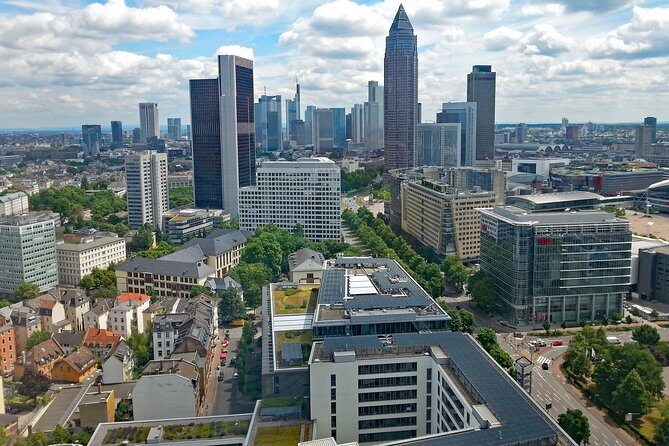
It also helps that Frankfurt isn’t just one vibe. You’ll see medieval architecture, Protestant churches tied to German politics, big cultural sites, and modern finance. In a few hours, you get a working picture of how the city thinks and how it rebuilt after the 20th century.
And because it’s private (up to 15 people), you’re not stuck with a rigid pace set by a large group. You can ask for more detail, slow down at photo spots, or focus on the areas that matter most to you.
You can also read our reviews of more guided tours in Frankfurt

Starting at Römerberg: the medieval heart you can actually feel
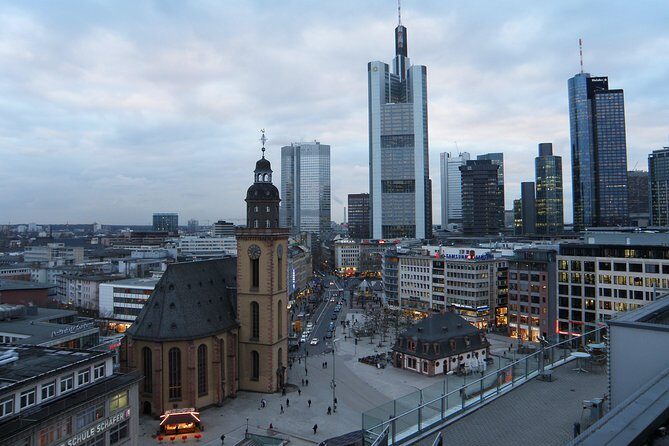
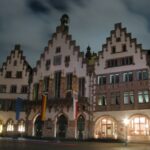
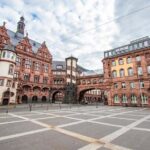
Your tour starts at Römerberg, the center of Frankfurt’s medieval old town. This is where the city’s story begins to make sense. The Römer building complex anchors the square, and the setting makes it easy to understand why this area mattered for centuries.
From there, you’ll look closely at the three stepped gable facades—a classic Frankfurt old-town look. These details matter because they show the city’s “civic pride” style. Without a guide, it’s easy to see facades as decorations. With one, they start to read like signals of power and prosperity.
If you like walking where the locals have always gathered, you’re in the right place. Römerberg is the kind of starting point that gives you momentum fast. You’ll also appreciate the stop structure: you get a landmark, then you get the context, then you move on.
Lutheran church origins, a 1600 half-timbered house, and a city that rebuilt
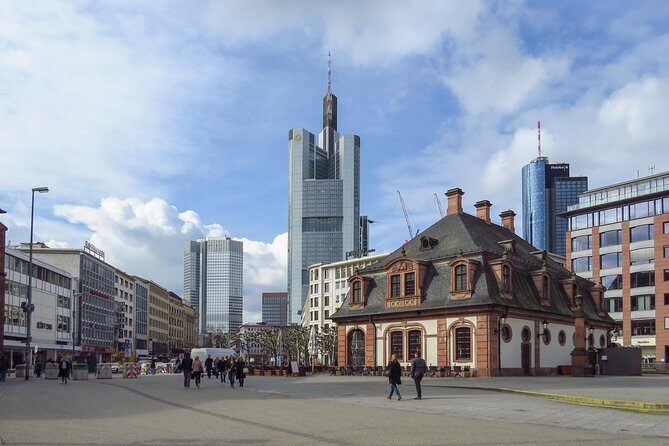
Frankfurt’s old town isn’t just preserved—it’s also survived, then returned. One highlight on the walk is the medieval Lutheran church, tied to an early chapel built in the mid-12th century. That time depth changes how you look at the building. You’re not only seeing architecture; you’re seeing long continuity.
Next comes a half-timbered house built in 1600. The key detail is that it survived the air raids of World War II. That’s not just trivia. It’s a reminder that parts of the old town were not wiped out, even though much of the city was damaged.
You’ll also see how the guide connects history to what you can spot in front of you. Half-timber structure, church foundations, and rebuilt-looking streets all become clues. It makes the walking feel like a guided reading, not a checklist.
Crossing the footbridge (1868) to the cathedral era
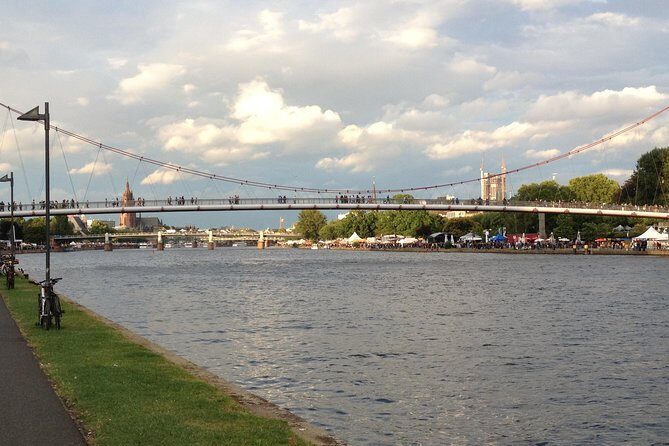
At some point, you’ll cross the footbridge said to be the first wrought iron bridge built in 1868. This is a great “shift” moment in the tour. You start in medieval styles, then you move into the era when engineering and metalwork changed what cities could build.
After that, you’ll visit a Gothic church established in 1295. The big twist is what happened later: it transformed into the cathedral in 1993. That sequence is why I think this stop works so well. You get a before-and-after story, and you understand how institutions can evolve without losing their physical identity.
Even if you’re not a cathedral person, this is the kind of information that makes the site click. A guide helps you connect architectural style to what the church became, and why that matters in modern Frankfurt.
Karmeliter Kloster wall paintings and the memorial stops that stay serious
The tour includes the Karmeliter Kloster, known for the largest religious wall paintings from the 1500s. This is one of those stops that can surprise you. Wall paintings at this scale are hard to “get” from the outside, so seeing it on a guided walk is a big advantage.
From there, the tone changes in an important way. You’ll visit the Wollheim Memorial, connected to a survivor from a concentration camp. The emotional weight here is real, and the value of a guide is practical: you’re not guessing at meaning. You’re getting the historical framing so the memorial lands with the right context.
The tour also covers the site associated with the Warsaw Ghetto, established by German authorities in November 1940. The tour information is blunt: over 400,000 Jews were imprisoned there, and from there Jews were deported to Nazi concentration camps and mass killing centers. This isn’t a sightseeing detour. It’s part of learning what happened and how cities remember.
If you’re sensitive to heavy history, plan for it. Bring that mindset so you’re ready to slow down and absorb.
You can also read our reviews of more private tours in Frankfurt



The indoor market hall and plazas: where daily Frankfurt shows up
After the memorial stops, the tour brings you back to everyday life with a visit to the indoor market hall. You’ll see stalls of fresh fruits, vegetables, and regional specialties. This is the “human scale” counterpoint that makes the history stops easier to process.
There’s one important timing detail: the market hall is closed on Sundays and holidays. If your chosen start time lands on one of those days, you might want to double-check whether that specific stop still fits your day.
You’ll also visit one of the famous plazas in the city. Plazas are more than open space; they’re Frankfurt’s social room. A guide helps you understand why people gather there, and how the surrounding buildings support that role.
This part of the tour works especially well if you like markets and want a quick feel for local food culture without turning your entire day into a separate meal mission.
Frankfurt Stock Exchange viewing and Thurn und Taxis baroque contrast
One of the most “modern Frankfurt” moments is the view of the exchange trading platform of the Frankfurt Stock Exchange (FSE). The tour info notes it runs as a continuous auction from 8:00 to 20:00 CET Monday to Friday. Knowing the trading hours helps you understand that you’re watching a real system, not just architecture.
Next comes the Princely House of Thurn and Taxis, featuring 18th-century Baroque architecture. That juxtaposition is the magic: finance buildings and money rhythms near ornate baroque grandeur. It’s a reminder that Frankfurt’s economic importance and artistic ambitions grew side by side.
Even in 3 hours, this section gives you a credible sense of what Frankfurt does today. It’s not just “Germany’s banking city” as a slogan. You’ll see the physical clues.
Old Opera House and Goethe’s birthplace: culture shaped by damage and repair
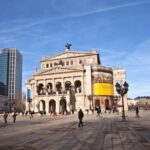
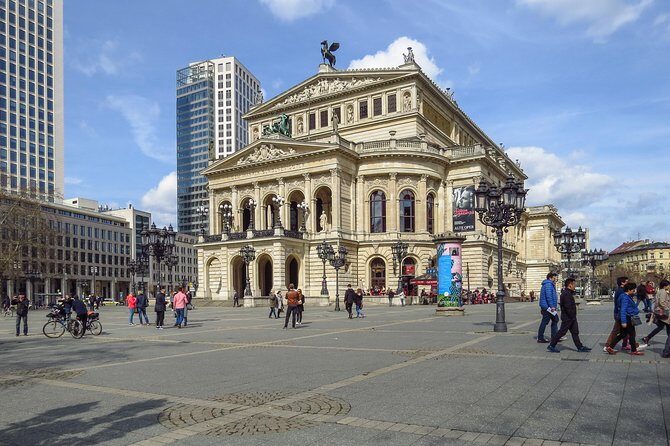
Then the tour turns toward culture. You’ll visit the Old Opera House, renovated after it was destroyed in World War II bombings. This stop is powerful because it connects a landmark to the city’s recovery story.
Right after, you’ll visit the family residence of Johann Wolfgang von Goethe, where he was born. Goethe is one of those names you’ll recognize, but a guided stop helps you understand why his birthplace matters in Frankfurt’s identity. You’re not only learning about literature; you’re standing in the space where a key German voice started.
If you’re the type who likes seeing how culture is anchored to real places, this pair of stops is strong. Opera, then Goethe—both are about ideas and public life, and both are tied to rebuilding and legacy.
St. Paul’s Church: the political symbol that ends your walk strong
The tour concludes at St. Paul’s Church (Paulskirche), near Paulsplatz. This church is described as a political symbol of Germany, and it’s an excellent final stop because it reframes what you’ve been walking through.
You started at medieval civic space. You passed through churches with deep roots and meanings. You stood in areas tied to WWII memory. Then you finish at a place linked to political identity. That arc makes the whole tour feel connected instead of random.
Ending at St. Paul’s Church also gives you flexibility afterward. You’re placed at a major landmark area rather than an odd corner of the old town, which makes it easier to continue your day.
Value for money: $450 per group, licensed guide, and a route that saves time
The price is $450 per group, up to 15 people, for about 3 hours. That’s the big value point: you’re paying for a private, licensed guide, not just entry-level commentary.
How it can be a deal depends on your group size. If you’re traveling as a small family or a couple, you’ll feel the per-person cost more. If you can share the group total with several people, the math gets friendlier fast. Either way, you’re essentially buying time saved and context earned—no awkward guesswork, no “we’re standing here but what is it?” moments.
You also get a mobile ticket, which is simple and reduces fuss once you arrive. The tour is designed to be near public transportation, and the meeting point at Römerberg is straightforward for getting to and from.
One more detail: the tour is guided by an official licensed tour guide, and people who’ve been on it talk about guides answering questions and being accommodating, including for wheelchair users. Since the tour is mostly walking, this is a real consideration if your mobility needs are specific. When a guide can adjust, it can make the difference between enjoying the day and rushing through it.
Finally, there’s the not-fun part: it’s non-refundable and can’t be changed for any reason. If your dates aren’t firm, that’s the only serious downside in the pricing/value equation.
Should you book this private tour of Frankfurt highlights?
I’d book it if you want a clean, efficient way to see Frankfurt’s main landmarks in one go and you care about getting the meaning behind them. It’s especially smart for a first visit because it connects old town identity (Römerberg), cultural anchors (Goethe and the Old Opera), and modern relevance (the Stock Exchange) without turning the day into logistics.
I’d skip it if you already know Frankfurt well or you prefer self-directed exploring with no structured stops. And if you might need to change dates, the non-refundable rule makes this a “commit when you’re sure” kind of booking.
If your goal is to come away with a real sense of Frankfurt—medieval, modern, and memory included—this private licensed walk is a strong value.
FAQ
How long is the Frankfurt private tour?
It runs for approximately 3 hours.
What’s the meeting point and the ending point?
You meet at Römerberg, 60311 Frankfurt am Main-Innenstadt I and the tour ends at St. Paul’s Church, Paulsplatz 11, 60311 Frankfurt am Main.
Is this a private tour, and how many people are included?
Yes. It’s private, and it’s set up for a group of up to 15 people.
What’s included in the price?
The tour includes an official tour guide.
Do I need to bring a paper ticket?
No. The tour offers a mobile ticket.
Is public transportation included?
No, public transportation and private transportation are not included.
What is the cancellation policy?
This experience is non-refundable and cannot be changed for any reason. If you cancel or request an amendment, the amount you paid won’t be refunded.