REVIEW · BERLIN
Berlin: The Feuerle Collection Meditation Experience
Book on GetYourGuide →Operated by The Feuerle Collection · Bookable on GetYourGuide
Your phone can wait for one calm hour. This is the kind of Berlin experience that swaps sightseeing noise for a structured stillness, where you move through the Feuerle Collection and spend time meditating in front of major art—early Khmer sculptures, Imperial and scholar Chinese furniture, and contemporary works.
I love that meditation is optional. You’re there for silence and a mobile detox feeling, but you’re not locked into any “follow the leader” format. I also love the art jump-cuts: centuries of Khmer carving and Chinese furniture, then contemporary names like Anish Kapoor and Nobuyoshi Araki, all placed so your attention has to slow down and do the work.
One drawback to plan for: it’s not a guided tour. If you want step-by-step explanations of each object, you’ll have to rely on your own curiosity (or accept that the point is to feel, not get facts).
In This Review
- Key takeaways before you go
- Meditation meets museum art, without the lecture
- Before you go: what to do with your body and your phone
- Sound Room passage: a quiet corridor that changes the pace
- The underground Lake Room: where stillness feels physical
- Khmer sculptures: attention to form, not explanation
- Imperial and scholar Chinese furniture: where stillness meets function
- Contemporary works by Kapoor, Iglesias, Fuss, Zeng Fanzhi, Byars, and Araki
- Not a guided tour: how to make the hour feel worth it
- Duration and group energy: plan for a focused hour
- Price and value: what $25 buys you here
- Who should book this Berlin meditation session
- Should you book the Feuerle Collection Meditation Experience?
- FAQ
- Is meditation required for this experience?
- How long is the Feuerle Collection Meditation Experience?
- Is this a guided tour?
- What’s included in the ticket?
- Is the experience wheelchair accessible?
- Who is it not suitable for?
Key takeaways before you go
- Silent, mobile-detox feel: The experience is built around stillness, with a phone-down vibe.
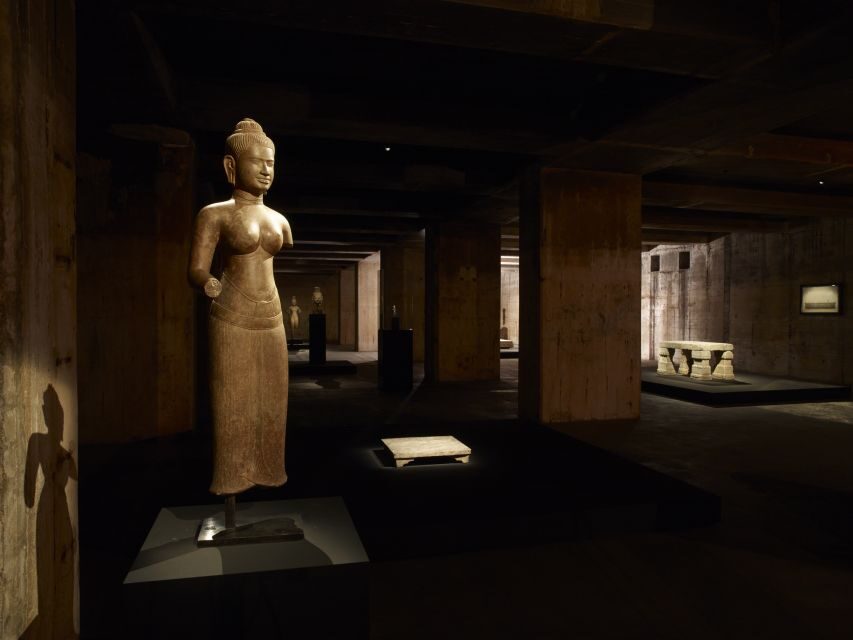
- Sound Room to Lake Room route: You don’t just sit—you walk through key spaces.
- Khmer sculptures and Imperial Chinese furniture: You’ll contemplate art spanning centuries.
- Contemporary art in the mix: Big modern names show up beside historic objects.
- Yoga mat and blanket included: You can settle in without hunting for supplies.
- No guided tour: You’ll need to bring your own approach to observation.
Meditation meets museum art, without the lecture
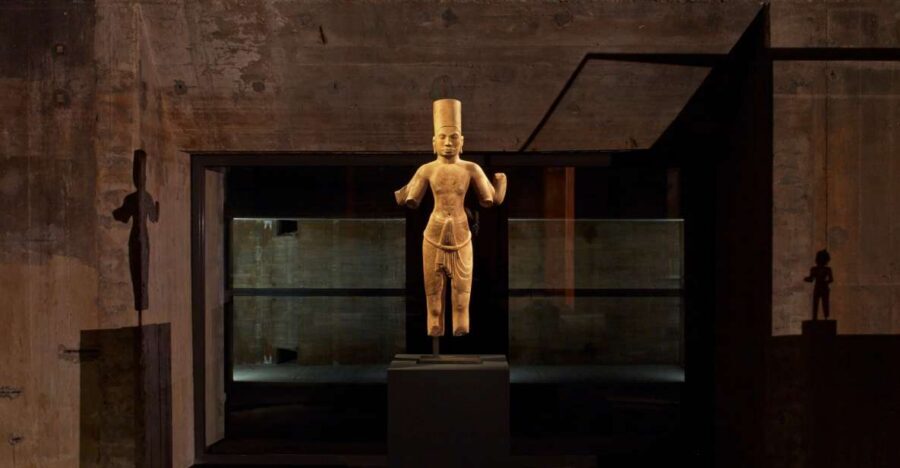
This 1-hour experience at the Feuerle Collection is designed like a quiet journey. You enter for a silent session where the art is the guide, but not in a “museum talk” kind of way. The atmosphere is meant to push you away from constant input and toward slow attention.
What makes it interesting isn’t just that it’s art in Berlin. It’s the contrast. You’re asked to sit and contemplate early Khmer sculpture from roughly the 7th to 13th century, then shift your focus to Imperial and scholar Chinese furniture spanning from about the 2nd century B.C. to the 17th century. And right there in your path, you also meet contemporary works by artists such as Anish Kapoor, Cristina Iglesias, Adam Fuss, Zeng Fanzhi, James Lee Byars, and Nobuyoshi Araki.
The result is a kind of mental “reset button.” One review summed it up as a disconnection moment—especially for people who enjoy Chinese art and contemporary works with an edge. You may find yourself thinking less about facts and more about form, texture, spacing, and presence.
You can also read our reviews of more tours and experiences in Berlin.



Before you go: what to do with your body and your phone
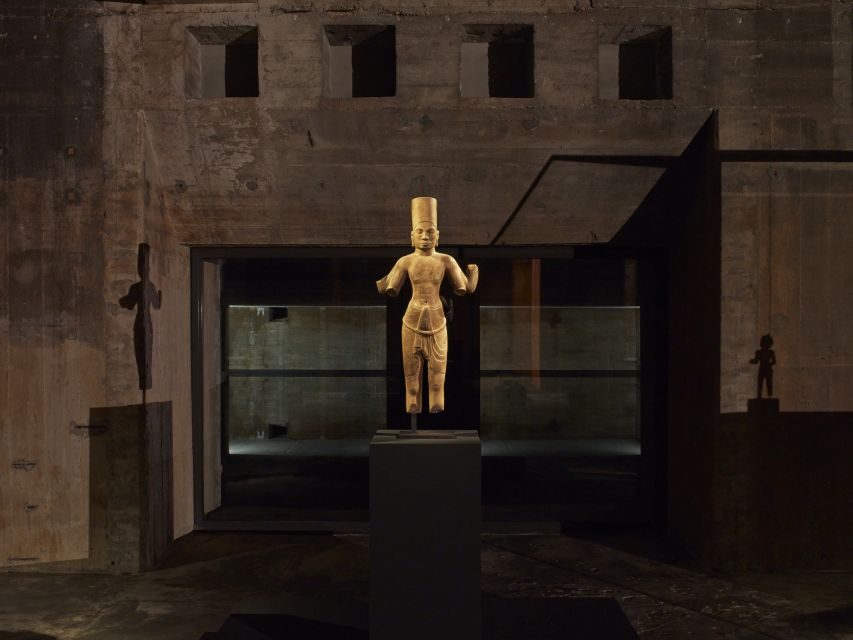
You’re going to spend an hour in a silent environment, and the event is built around a mobile detox idea. That means you should show up ready to put your phone away and let your attention settle. You don’t need to turn this into a big challenge, but you’ll get more from the experience if you treat it as an actual practice hour.
You’ll also get a yoga mat and a blanket included. That’s a practical detail worth noting, because it makes the “sit and wait” part more comfortable. If you tend to get restless, this setup helps you stay longer in one place without feeling like you’re fighting the floor or the temperature.
Wear something you can sit still in. You’ll be stopping, meditating, and walking between rooms. Being comfortable matters here more than style.
And keep your expectations realistic. This isn’t a standard museum visit with free wandering and chatter. The collection is open only for meditation, and the whole experience is built around that quiet purpose.
Sound Room passage: a quiet corridor that changes the pace
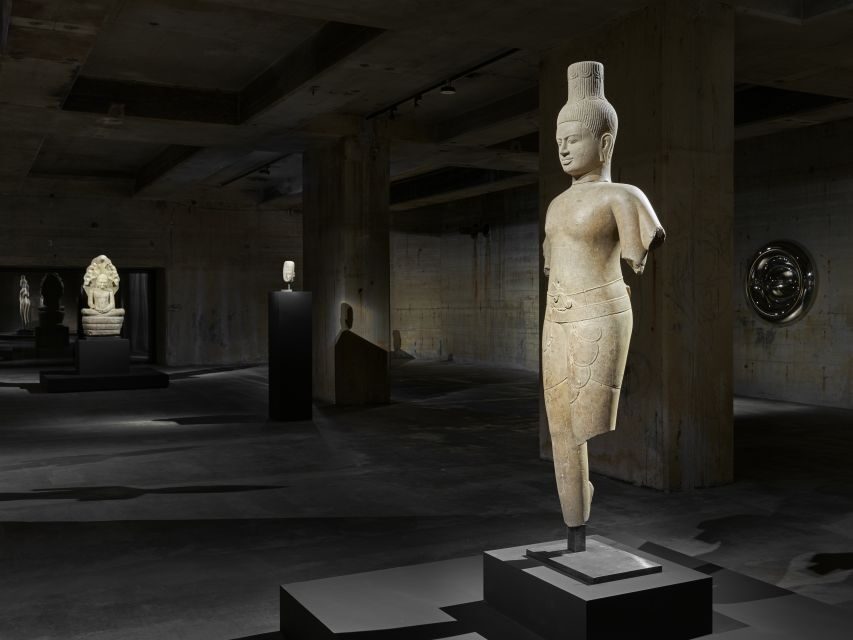
A key part of this experience is that it starts with motion through special space—specifically, the passage to the Sound Room. You walk there as part of the session, not as a separate photo stop.
This is the moment where you’ll feel the structure of the day. The silence isn’t an afterthought. It’s part of how the room works. You’re moving your body slowly while your mind is asked to follow at a calmer speed.
One practical tip: don’t try to multitask mentally. If you’re thinking about what you’ll do afterward, it’s harder to let the Sound Room do its job. Treat it like the opening “breath” of the session. Once you arrive, the experience is ready for contemplation.
The underground Lake Room: where stillness feels physical
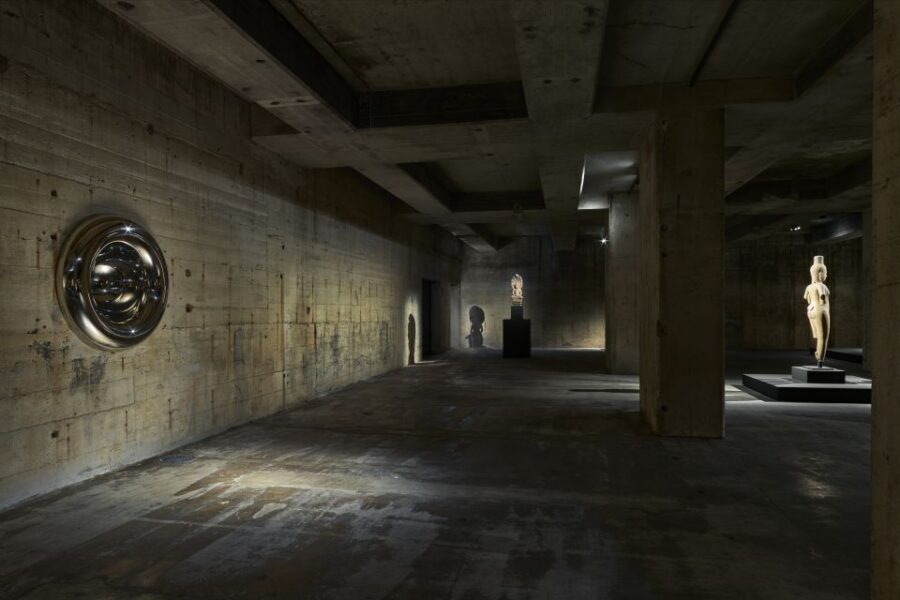
After the Sound Room, you move on to walk in the Lake Room—and it’s described as an underground space. That setting matters because it naturally changes your sense of scale and sound. Even if you’re not meditating the entire time, the environment encourages slower observation.
This is also the place where you’ll likely understand why they include the blanket and mat. Sitting longer in a quieter, enclosed space is easier when you’re not battling discomfort.
You’ll stop as you move through the space and meditate among the artworks. The point isn’t to rush from piece to piece like you would in a museum. It’s to let your attention stay near one idea—one texture, one shape, one carved surface—until it starts to feel familiar in a new way.
If you’re the type who likes to observe without performing (no “let’s take a video of everything” energy), this room can be a great match.
Khmer sculptures: attention to form, not explanation
One of the most rewarding parts of this experience is the chance to sit with early Khmer sculptures from roughly the 7th to 13th century A.D. These works tend to reward close looking. The details aren’t just decorative. They carry meaning through proportions, repetition, and the way light moves across carved surfaces.
Since the experience is explicitly not a guided tour, you won’t get a narrator walking you through symbolism step-by-step. That might sound frustrating if you’re used to museum audio guides. But it can also make the hour feel more personal, because you’re not being told what to notice—you’re choosing it.
Try this approach: pick one thing to track for a few minutes. It can be the edge of a carving, the balance of a figure, the rhythm of lines. When you return to that one focus, you’ll feel your mind slow down without forcing it.




Imperial and scholar Chinese furniture: where stillness meets function
Then you shift into another time scale with Imperial and scholar Chinese furniture, spanning from about the 2nd century B.C. to the 17th century A.D. This portion works especially well in a meditation format because furniture is meant for use. That turns “art viewing” into something closer to experiencing.
Chinese furniture often carries a careful relationship between structure and elegance. In a quiet room, those details can feel almost architectural. You’re not just looking at an object. You’re looking at how a room might hold a person.
Again, you won’t have a guide explaining every historical detail. But you also won’t have to force yourself through a checklist. Your own senses do the sorting. For people who genuinely like Chinese art, this stop can feel like a focused, respectful “conversation” instead of a rushed viewing session.
Contemporary works by Kapoor, Iglesias, Fuss, Zeng Fanzhi, Byars, and Araki
The Feuerle Collection doesn’t stop at historic art. In the contemporary stretch, you can experience works by a strong lineup: Anish Kapoor, Cristina Iglesias, Adam Fuss, Zeng Fanzhi, James Lee Byars, and Nobuyoshi Araki.
Here’s why this matters in a meditation experience: contemporary art often challenges easy interpretation. It can be hard to label quickly. That’s exactly what can make a quiet hour useful. When you’re not trying to “figure it out” with speed, you can let your reaction rise slowly—curiosity, discomfort, intrigue, calm.
One provided review specifically called out Chinese art lovers and people who like erotic art. That doesn’t mean every work is the same kind of theme, but it does suggest the contemporary side may include pieces that feel bold or provocation-adjacent. If you’re someone who prefers art that stays “polite,” you might find some contemporary works more intense than you expected.
Still, that intensity can be part of the value: you get to experience a full range of tone while keeping the same quiet, contemplative framework.
Not a guided tour: how to make the hour feel worth it
This experience is open only for meditation. There’s no guided explanation and no classic museum tour route where someone points things out for you. That’s the core tradeoff.
So how do you get the best results? Treat the session like a self-guided practice. You can meditate quietly, or you can choose not to meditate at all and simply walk around quietly and enjoy the art. The event description even notes that mediation isn’t mandatory.
If you’re new to meditation, you might worry you’re doing it wrong. You’re not. In this kind of setting, “not doing it wrong” is the whole point. You can sit, breathe, and observe. If your mind wanders, gently bring it back to one artwork or one physical sensation.
If you’re an art fan who hates silence at museums, give yourself permission to try a softer mode of engagement. Don’t force deep spiritual thinking. Just slow down and let your eyes stay on fewer things longer.
Duration and group energy: plan for a focused hour
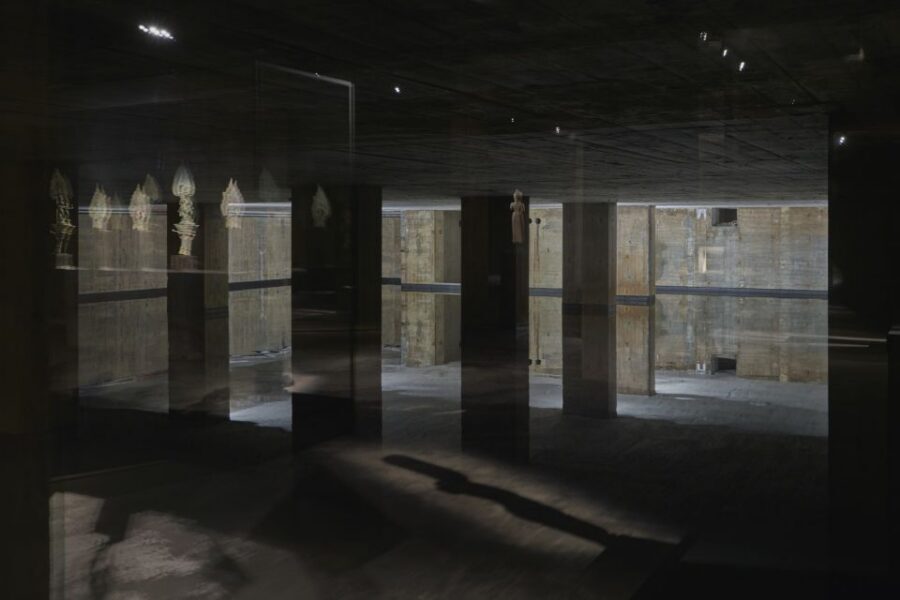
The event lasts 1 hour. That’s short enough that it doesn’t become a big scheduling burden, but long enough to change your mindset if you actually follow the silent, contemplative flow.
Reviews mention the experience working well in a small-group feel. Even if you can’t count on exact numbers, you should expect a more intimate vibe than a typical tour bus kind of scene. The room setups—Sound Room and underground Lake Room—also suggest an environment designed for controlled quiet.
Because it’s only an hour, you don’t want to rush. But you also don’t need to worry about spending half a day. It’s a “reset” stop you can fit between busier Berlin activities.
Price and value: what $25 buys you here
At $25 per person, you’re not paying for a guided talk or an extended museum day. You’re paying for something more specific: access to a collection experience built around silent meditation, plus comfort tools (yoga mat and blanket), plus the guided-feeling structure of moving through spaces like the Sound Room and the Lake Room.
If your ideal museum day is active learning and explanations, this might not feel like the best value. But if your ideal Berlin afternoon includes quiet time, slow looking, and a deliberate break from screens, $25 starts to make sense.
It’s also a decent “micro-escape” price. One hour of real mental downtime can be more valuable than you expect—especially in a city where the sights can pile up fast.
Who should book this Berlin meditation session
This experience is a good match if you want one of these things:
- A quiet art pause in the middle of a busy Berlin schedule
- A chance to look slowly at Khmer sculpture, Chinese furniture, and contemporary art without needing explanations
- A self-guided meditation hour where participation is flexible
It’s not the best fit if you’re bringing kids. The experience is not suitable for children under 16.
And if you’re the type who needs a guide to enjoy art—if you feel lost without context—you may find the no-guidance format limiting. Still, you might also like it if you can treat the art like a quiet anchor rather than a quiz.
Should you book the Feuerle Collection Meditation Experience?
Book it if you want an hour in Berlin that’s more “attention training” than sightseeing. The combination of silence, the Sound Room passage, and the underground Lake Room makes it feel intentionally designed. Add the included mat and blanket, plus the chance to sit with Khmer sculpture, Chinese furniture, and contemporary artists like Kapoor and Araki—and it becomes a rare kind of cultural break.
Skip it if you mainly want guided storytelling, lots of free roaming, or a museum visit with lively interpretation. This is meditation-focused, with optional meditation and quiet walking, not a lecture.
If you’re on the fence, think about your own travel style. If you can enjoy art without needing every detail explained, this is likely to feel worth your time.
FAQ
Is meditation required for this experience?
No. Meditation is not mandatory. You can also choose to walk around quietly and enjoy the art.
How long is the Feuerle Collection Meditation Experience?
It lasts 1 hour.
Is this a guided tour?
No. It is not a guided tour. The collection is open only for meditation.
What’s included in the ticket?
A yoga mat and a blanket are included.
Is the experience wheelchair accessible?
Yes, it is wheelchair accessible.
Who is it not suitable for?
It is not suitable for children under 16 years.