REVIEW · BERLIN
Berlin: Experience the Alternative Kreuzberg on a Bike Tour
Book on Viator →Operated by FREE BERLIN Bike Tours · Bookable on Viator
Berlin changes fast, and this ride shows why. You start with familiar central streets, then switch gears into alternative Kreuzberg and nearby neighborhoods like Friedrichshain and Kreuzkolln, where you’ll learn the city through architecture, street culture, and the Wall’s afterlife. I especially like the small-team feel (groups are kept to 4–15) and the way guides bring the places to life with personal, funny street-level stories—people like Rico, Rufus, Jake, Bjorn, Vincent, and Karl have led tours here.
There’s one thing to consider: this tour is not just about speed. You stop often for explanations and photos, and on rainy days you’ll still ride, so plan on dressing for weather and expect a little “bike day” mess—one smart tip from past guests is to wear tight trousers, because the chain can grab loose fabric.
In This Review
- Key things I’d focus on before you book
- Why biking Kreuzberg feels more real than walking
- Price and value: what $42.33 buys you here
- Where to meet, what time to arrive, and what to bring
- Nikolaiviertel to Kreuzberg: the pivot from postcard Berlin to street Berlin
- Engelbecken: a quick lesson in how buildings shape daily life
- Das Baumhaus and the Wall-adjacent mindset
- Wall-edge art and the occupied-artist story you can see in the streets
- YAAM viewpoint: the TV Tower, the river, and why orientation matters
- East Side Gallery and Oberbaumbrücke: the Wall as art and as boundary
- Osthafen and the Spree break: borderland, restriction, and today’s creative use
- A stop for a controversial sculpture: interpretations matter here
- Falckensteinstraße and Görlitzer Park: diversity you can read block by block
- Liegnitzer Straße and the car loft: capitalism, but make it Berlin
- Waterfront Dolce Vita: Turkish market days and a bohemian pause
- Admiralbrücke sunset versus Kottbusser Tor pressure
- How the guides make or break this tour (and who you might meet)
- What’s included (and what you should plan for)
- Who this bike tour is best for
- Should you book this alternative Kreuzberg bike tour?
- FAQ
- How long is the bike tour?
- What does the tour cost?
- Is the bicycle and helmet included?
- What language is the tour in?
- Where does the tour start and end?
- Do I need to worry about weather?
- Is this tour family-friendly?
Key things I’d focus on before you book
- A Wall-focused route with modern Berlin all around it, from the East Side Gallery to riverfront borderland spots
- A guide-made route via the Free Berlin concept, so your exact stops can vary run to run
- Included bike + helmet, which makes it easy to show up and go
- Alternative Kreuzberg through contrast, not just famous landmarks: courtyards, backstreets, bridges, and parks
- Frequent storytelling stops, so you trade a bit of nonstop riding for context that sticks
Why biking Kreuzberg feels more real than walking
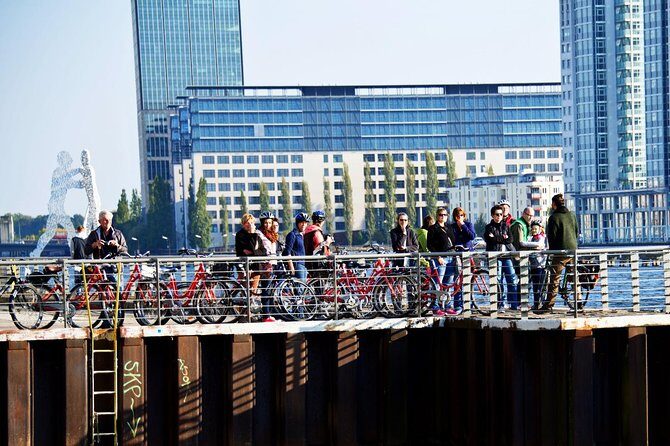
If Berlin is a mood, this tour follows that mood on two wheels. You don’t just pass sights—you get the rhythm of the city: side streets, small breaks by the Spree, sudden views opening up over rooftops, and then more neighborhoods that feel lived-in rather than curated.
I like that the tour leans hard into the alternative side, but it does not treat it like a theme park. You see how Kreuzberg’s culture, housing, and activism show up in everyday space—along streets, courtyards, parks, and under bridges—long before you reach the big Wall symbols.
And you still get the famous anchors. The East Side Gallery and Oberbaumbrücke are on the route, but they are treated as starting points for understanding what came before and what replaced it.
You can also read our reviews of more cycling tours in Berlin

Price and value: what $42.33 buys you here
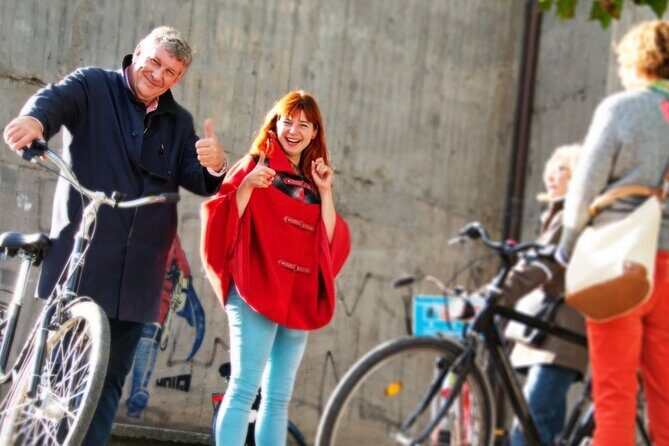
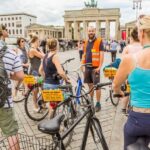
At $42.33 per person for about 3 hours, you’re paying for more than movement. You’re buying a planned route, a professional guide, and the practical stuff that saves time and hassle: the bike and helmet are included.
This price also makes sense because the group size stays small (max 15). In a group that size, you can actually hear the guide without playing audio roulette over traffic noise.
Also, the Free Berlin concept matters for value. Each guide designs their own route, so you’re not paying for a generic checklist. If you’ve already done a classic highlights walking tour, this one helps you rebalance your Berlin understanding.
Where to meet, what time to arrive, and what to bring
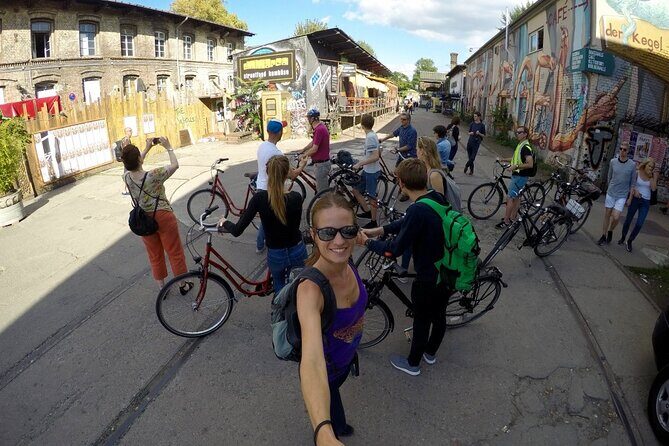
You’ll start at Free Berlin Bike Tours & Rental, Poststraße 11, 10178 Berlin. The tour start time listed is 2:24 pm, and it ends back at the meeting point.
Plan to arrive a little early so you can get fitted, check your helmet, and feel ready. The tour runs in all weather, so bring a real rain layer if skies look questionable. Past guests have also joked that bike chains can dirty clothing, so if you care about pristine pants, wear something you don’t mind getting a bit marked.
You’ll be using the provided bike, and the riding is designed so most people can join. It’s not described as a hardcore workout.
Nikolaiviertel to Kreuzberg: the pivot from postcard Berlin to street Berlin
The first stop is Nikolaiviertel. The way this tour frames it is smart: it’s likely the last stop that feels like an “established” world, where Berlin looks polished and easy. Then you move into areas where the city feels closer to how people actually live.
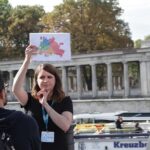
This is where the tour starts doing its main job: setting expectations. The guide doesn’t just say what’s here. They explain why the city looks the way it does and what you should notice next.
Then you roll into Kreuzberg, one of Berlin’s best-known neighborhoods for a reason. The tour treats Kreuzberg like a melting pot with stories, not a single identity. Expect the guide to connect culture, conflict, and creativity to specific streets and buildings as you go.
A practical note: Kreuzberg can feel busy depending on the time of day, and you’re on a bike. Keep your attention up, especially at intersections, and let the guide pace the group.
Engelbecken: a quick lesson in how buildings shape daily life
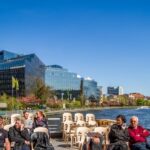
A short stop brings you to Engelbecken, described as a calm pocket between pre-fab buildings, older styles, and modern architecture. This kind of place is easy to miss when you’re only chasing big monuments, but it’s perfect for understanding what a city really does after decades of change.
What I like about stops like this is that they make Berlin readable. You start seeing how time layers onto neighborhoods: different construction styles, different urban needs, and different ways people carve out space.
The tour gives you just enough time to look around and take photos without dragging. You’ll likely walk away with a better sense of the city’s texture rather than just a collection of names.
Das Baumhaus and the Wall-adjacent mindset
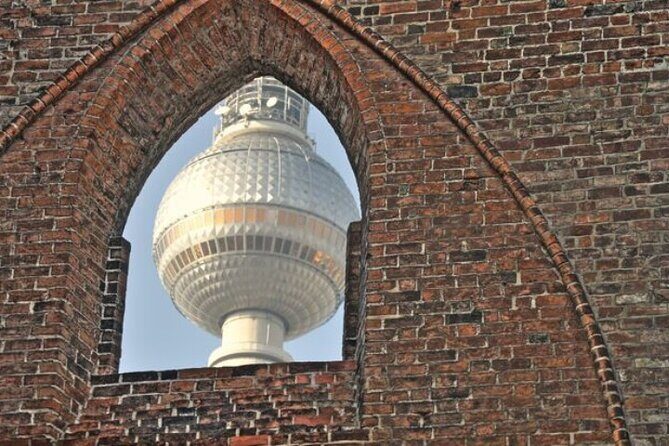
Next is Das Baumhaus, framed as a treehouse by the Wall. The stop centers on a story of a guest worker adapting to Kreuzberg mentality, including the idea of bold ownership and territory—very Berlin, very street-level.
Even if you’ve never heard this story before, the point lands fast: the Wall wasn’t only a barrier. It also created zones where creativity, improvisation, and stubborn survival became part of the local identity.
The drawback here is also simple. If you love the pure visuals and want fewer explanations, you may feel the tour is heavy on storytelling at times. Still, the stop length is short, so you get the scene and the context without a long detour.
Wall-edge art and the occupied-artist story you can see in the streets
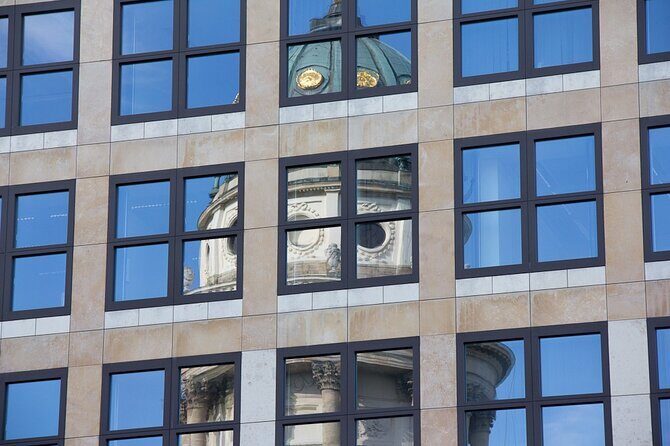
After Das Baumhaus, you visit an area described as a remarkable place for artists that grew out of multiple squattings. The narrative includes the early days of the scene, its peak in the 1980s, and another phase in the early 2000s, with the result that the building became a room for artists of many kinds.
This is one of those stops where the guide’s role matters. From the street, you might only register the building. With the story, you start to see the logic behind why it exists and what it represents in a city shaped by political division and reinvention.
You’ll likely get a couple of key takeaways here:
- how protest turns into space
- how space turns into community
- how that community changes over time
YAAM viewpoint: the TV Tower, the river, and why orientation matters
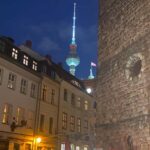
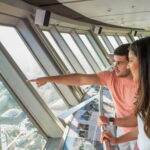
A later stop is the YAAM area, known as an incredible club spot. The tour also makes this about viewpoint and orientation, because from here you can see the TV Tower, Holzmarkt, Oberbaumbrücke, and the Spree.
That’s a useful trick for Berlin. Even if you don’t plan to memorize maps, a skyline view gives you a mental anchor. After this, the Wall and borderland stops feel less random, more like a connected story.
Try taking your photos quickly and then step back. Views like this are best when you actually look, not when you film everything at arm’s length.
East Side Gallery and Oberbaumbrücke: the Wall as art and as boundary
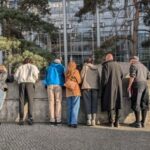
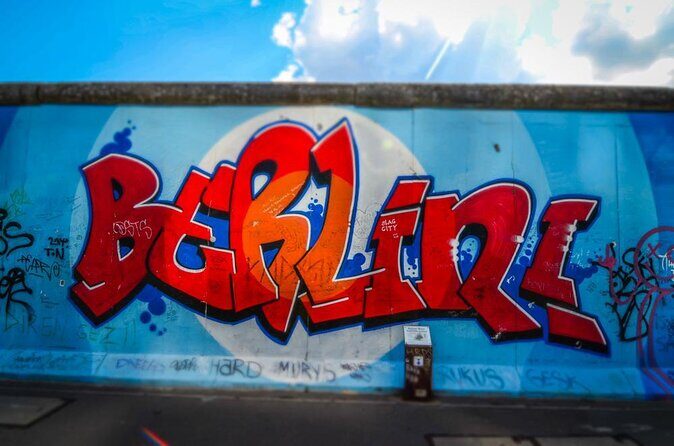
Then you reach East Side Gallery, described as the longest remaining stretch of the Berlin Wall, packed with spectacular art. It sits right within a redesigned business quarter now, which makes the contrast hit harder.
The tour’s framing is clear: you’re seeing the Wall not as an old relic, but as a living canvas that changed meaning over time.
From there you cross to Oberbaumbrücke, the landmark that stands for crossing borders in any meaning. You’ll understand this bridge less as a structure and more as an idea—movement, division, and reunification.
A small practical point: bridges can get breezy. If it’s cool out, you’ll feel it. A light layer helps.
Osthafen and the Spree break: borderland, restriction, and today’s creative use
Next is Osthafen, once restricted borderland and now a spot for young urban creatives. The guide connects it to the GDR’s obsession with the Wall, borderland, and restrictions on freedom, then brings you back to the human scale with the river.
This is the part of the tour that feels like a reset. The Spree offers a place to slow down, even if just for a few minutes.
Also, seeing borderland spaces after they’ve changed use is one of Berlin’s best lessons. It’s not just what the Wall did. It’s what the city did afterward.
A stop for a controversial sculpture: interpretations matter here
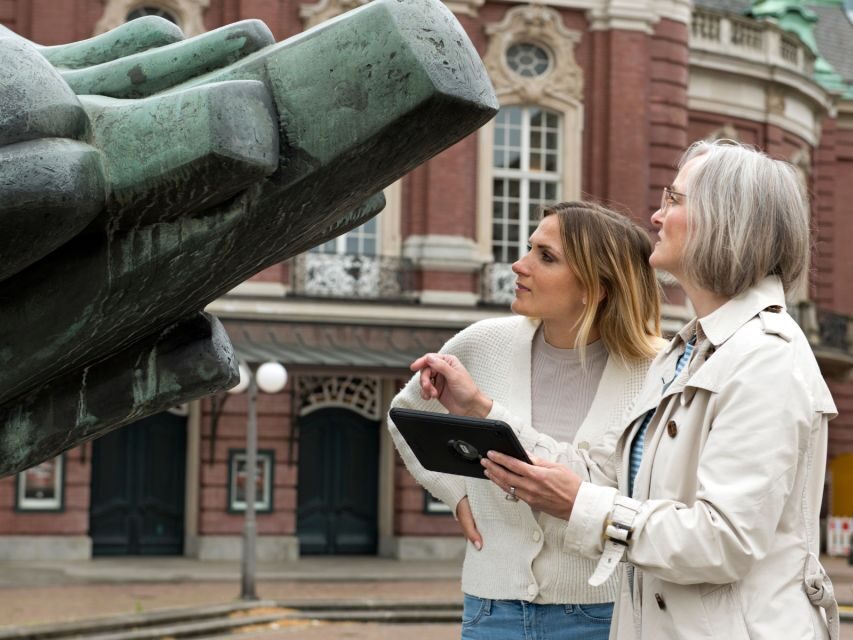
The route includes a stop at a unique sculpture that has led to multiple interpretations, with the official explanation described as the least sensible.
You might not agree with the official story, and that’s kind of the point. Berlin often treats meaning as something people argue into existence, and public art is one place you can watch that happen.
If you’re the type who loves symbolism, you’ll enjoy this stop. If you’d rather keep your brain on streets and architecture, you can still treat it as a quick pause while the guide explains how people read the city.
Falckensteinstraße and Görlitzer Park: diversity you can read block by block
You then head to Falckensteinstraße, described as a perfect example of Kreuzberg’s diversity of buildings, people, and history. The tour characterizes it as big-city life with a sense of escapism, which is a great way to describe many of Berlin’s streets: you can feel chaos nearby and still find calm on a particular corner.
Next is Görlitzer Park, once a former train station in Berlin’s railway system, now transformed into a park. The tour ties it to the thin line between alternative life and anarchy—again, more social story than engineering story.
This is also a good stop to stretch your legs. Parks are where a bike tour becomes a human tour.
Liegnitzer Straße and the car loft: capitalism, but make it Berlin
A stop at Liegnitzer Straße points you to a place described as completely inconspicuous, yet a strong example of capitalism in the heart of a melting pot. The focus is a building where you can take your car up to your balcony.
It’s a fun contrast moment. The tour uses it to show that Kreuzberg is not just stereotypes. Different priorities and lifestyles share the same geography, often right next door.
If you want Berlin that surprises you in small ways, this is the kind of stop that delivers.
Waterfront Dolce Vita: Turkish market days and a bohemian pause
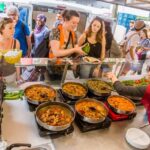
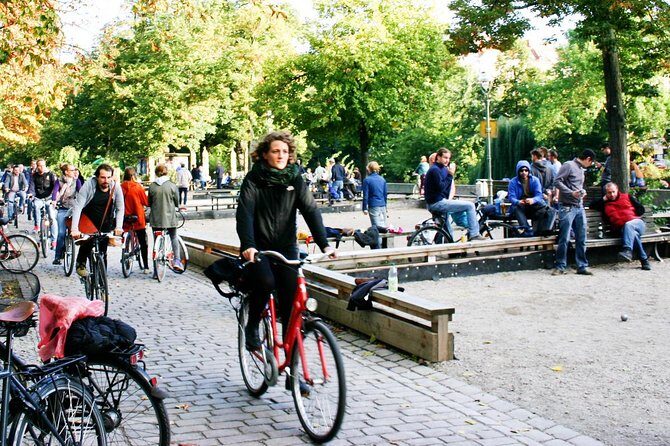
Later, you reach a waterfront area framed as Dolce Vita. It includes a Turkish market on Tuesday and Friday, plus a break from the big-city hustle in a bohemian neighborhood.
One of the clever ideas here is that this is not only about food browsing. The tour mentions people playing boule, which turns the stop into a chance to watch everyday culture rather than just walk through it.
This is also where you’ll feel the pacing shift. You’ve done a lot of Wall and borderland context already, so the waterfront stop gives your brain a place to land.
Admiralbrücke sunset versus Kottbusser Tor pressure
The tour moves to Admiralbrücke, where you can start a night in a bar or just catch a summer sunset with hundreds of strangers. The guide’s tone here is welcoming—Berlin’s nighttime energy is presented as casual, not performative.
Then you swing to Kottbusser Tor, positioned as a contrast: brutal 1970s architecture, drug scene energy, and heavy traffic. It’s not presented as something to sensationalize. It’s presented as part of the city’s real texture.
By now, you’ll have enough context to see why the tour is arranged like this: joy, then pressure, then back to understanding.
How the guides make or break this tour (and who you might meet)
One thing that stands out from what people consistently say about this experience is guide quality and safety. Guides like Rico, Rufus, Jake, Bjorn, Vincent, and Karl are repeatedly praised for friendliness, humor, and keeping riders comfortable.
Even better, the guides don’t just recite facts. They use personal stories, architecture notes, and history-as-experience details to help the area click. Some guides also help groups with translation needs, which is a great bonus if English isn’t your first language.
This matters because bike tours can turn into a blur if nobody is explaining what you’re looking at. Here, the stops are frequent on purpose, so you learn while you move.
What’s included (and what you should plan for)
Included in the tour:
- use of bicycle
- use of helmet
- professional guide
- Free Berlin concept route design
- family-friendly setup, with infant seats available on request
Not included:
- food and drinks unless specified
So come ready to buy snacks only if you want them. You’ll have plenty of walking stops for photos and quick looks, but you shouldn’t expect a full meal included.
Who this bike tour is best for
This is a great fit if you:
- want alternative Berlin without sacrificing the Wall story
- like guided context more than wandering solo
- enjoy architecture and street culture, not only museums
- want a ride that works for a wide range of fitness levels
You may not love it as much if you:
- want nonstop cycling with minimal stops
- hate explanations and prefer quiet sightseeing
- are very sensitive to rain since it runs in all weather
Should you book this alternative Kreuzberg bike tour?
I’d book it if you want a Berlin picture that goes past the postcard core. You’ll get the big names like the East Side Gallery, but the real payoff is how the route keeps teaching you through smaller, lived-in scenes—courtyards, bridges, riverfront borderland spots, and streets like Falckensteinstraße and Liegnitzer Straße.
The value is strong because the bike and helmet are handled, the group is kept small, and the Free Berlin concept helps keep the experience from feeling copy-paste. Add in guides who keep things safe and funny, and you get a tour that’s both practical and memorable.
If you’re short on time and you want to understand Kreuzberg fast, this is one of the better ways to do it.
FAQ
How long is the bike tour?
It’s about 3 hours.
What does the tour cost?
The price is $42.33 per person.
Is the bicycle and helmet included?
Yes. Bike use and helmet use are included.
What language is the tour in?
It’s offered in English, and it can also operate in German depending on the selected option.
Where does the tour start and end?
It starts at Free Berlin Bike Tours & Rental, Poststraße 11, 10178 Berlin, and ends back at the meeting point.
Do I need to worry about weather?
The tour operates in all weather conditions, so dress appropriately.
Is this tour family-friendly?
Yes. Children are welcome, and infant seats can be provided on request.