REVIEW · BERLIN
Berlin, Alexanderplatz: Leisure experience in the Immersive Gamebox
Book on GetYourGuide →Operated by Immersive Gamebox Berlin · Bookable on GetYourGuide
Gaming meets motion in Berlin’s center. Immersive Gamebox is a hands-on, group game experience in projection-powered rooms, and I like the no-VR, barrier-free format plus the way you actually move while you play. It’s built for shared brainpower—puzzles and challenges work best when you act like a team.
One thing to keep in mind: some content is shown in its original language, so if you’re relying only on English or German, you might need to follow along by context as you go.
In This Review
- Quick hits before you go
- Immersive Gamebox Berlin: the “game room” idea in plain terms
- What you do during the game: puzzles, challenges, and teamwork
- How the no-VR setup changes the experience (and makes it easier to enjoy)
- Your 1-hour window: what the timing likely feels like
- Where it fits in your Berlin day: good pairings and smart sequencing
- Price and value: is $30 per person fair?
- Accessibility and who should plan around the rules
- Team-building, birthdays, and friend hangouts: why it works
- Languages at the venue: what to expect with English and German
- Drinks on site: a small add-on that changes the vibe
- Practical tips to get more fun out of the game
- Should you book Immersive Gamebox Berlin?
- FAQ
- Where is Immive Gamebox located in Berlin?
- How long is the Immersive Gamebox experience?
- Is a VR headset required?
- What games do you play at Immersive Gamebox?
- What languages are available?
- Is it wheelchair accessible?
- Can we order drinks during or after the game?
- Who is it not suitable for?
- Is there free cancellation?
Quick hits before you go
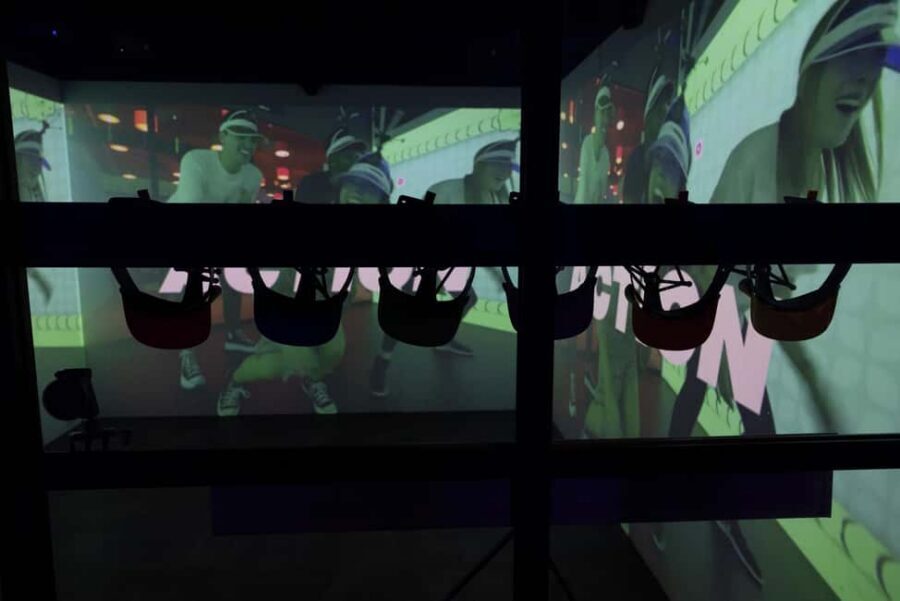
- No VR headset needed: you play using projection rooms and motion detection instead
- Movement is part of the game: you won’t just sit and tap through screens
- Teamwork drives the fun: puzzles and challenges are meant for groups working together
- Friendly, family-aware vibe: the atmosphere feels welcoming, including for kids
- Real Berlin-location convenience: it’s in the Alexanderplatz area, useful when your day is packed
- Drinks available on site: you can add refreshments for an extra charge
Immersive Gamebox Berlin: the “game room” idea in plain terms
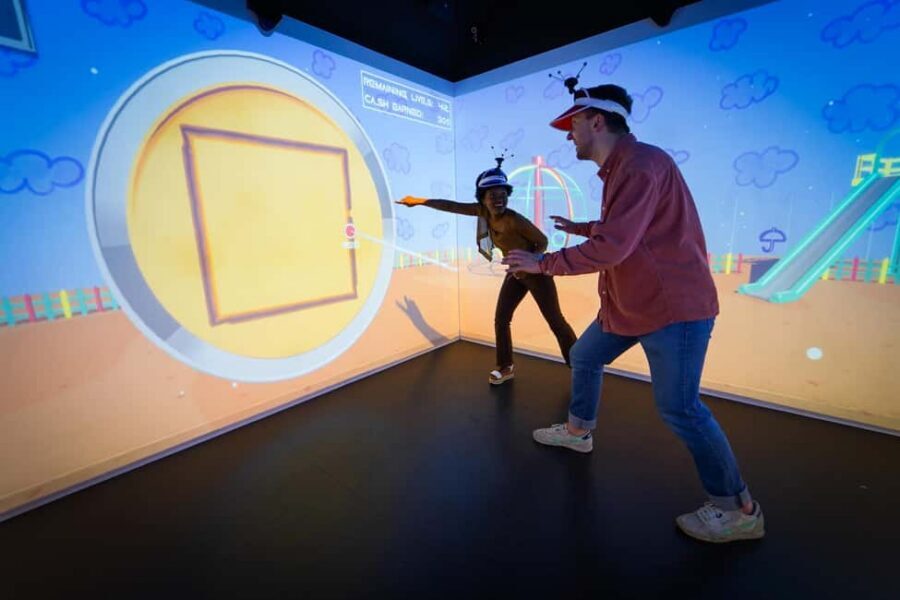
Immersive Gamebox Berlin is one of those places that sounds futuristic, but the experience is actually easy to understand once you’re inside. You and your group get into a specially designed room that uses projection technology and motion detection. Instead of putting on a VR headset, you interact with a digital world around you—often while moving—so the game feels physical, not just visual.
Why I think this matters for you: Berlin has plenty of museums and indoor attractions, but sometimes you want something that pulls you out of your seat and gets a bit loud, playful, and competitive (in a good way). This setup is built for that. You’re not just watching something happen. You’re part of what triggers the action.
It also helps that the format is designed to be barrier-free without VR. If you don’t love headsets, if you’re traveling with people who get motion sick, or if your group just wants a simpler setup, this is a big advantage.
You can also read our reviews of more tours and experiences in Berlin.



What you do during the game: puzzles, challenges, and teamwork
At Immersive Gamebox, you pick a game and jump in. The core idea is shared problem-solving in a digital environment: you’ll work together to solve puzzles and master challenges. The games are built to reward communication—who’s looking where, who’s trying what, who’s calling out patterns—so you’re not waiting for one person to do everything.
From a practical standpoint, that means your group dynamic matters more than your individual gaming skills. If you’re traveling with friends, you’ll likely have the most fun when you split roles naturally: one person focuses on visual cues, another tries actions quickly, and someone else keeps track of what worked before.
It’s also a good “everyone contributes” kind of activity. Even if you’re not a gamer, the motion-and-projection format gives you enough intuitive feedback to keep going. And if your group includes people who don’t always agree on activities, this one tends to settle that argument fast, because the game keeps everyone in the same loop.
How the no-VR setup changes the experience (and makes it easier to enjoy)
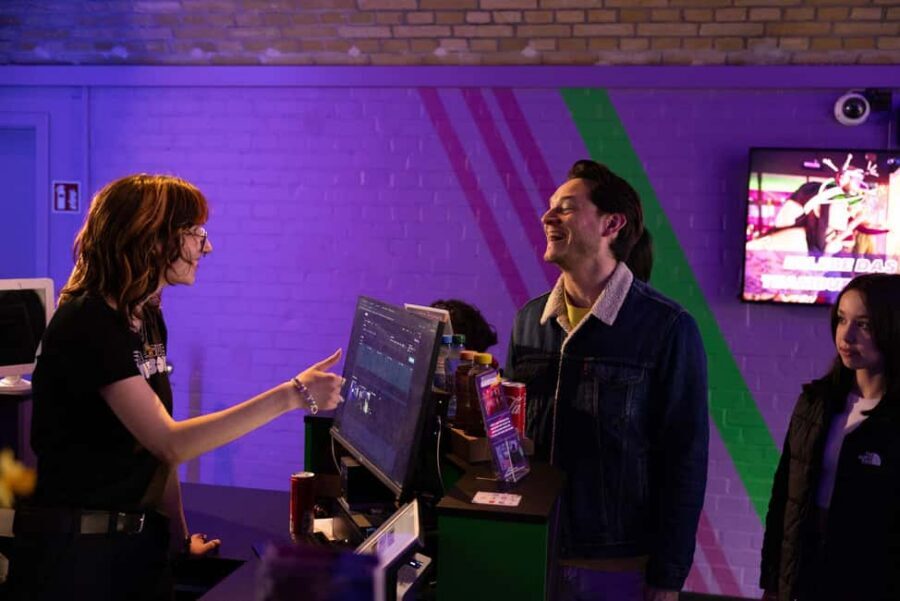
The biggest difference here versus VR attractions is that you can stay socially connected. With VR, you often end up isolated behind a headset. Here, you’re in the same space as the other people in your group, sharing the room, reacting to what’s happening in front of you.
The venue uses projection and motion detection, so your movements and actions matter. You still get that “digital world reacts to me” feeling, but you keep your senses: you can hear each other, you can laugh when something goes wrong, and you can reset without fumbling with gear.
For people who worry about comfort, it’s also a simpler kind of immersion (yes, the name is Immersive Gamebox, but the key point is the method). No headset means fewer distractions and fewer issues with fit, fogging, or claustrophobia.
If you like playful movement, you’ll probably enjoy it. If you strongly prefer quiet activities, the physical interaction might feel like too much. But for most groups, it’s an excellent change of pace.
Your 1-hour window: what the timing likely feels like
The booking duration listed is 1 hour, and the included experience also mentions 1–2 hours of gaming depending on the desired game. That tells me the schedule works around game start times, and the “play time” can vary based on the format you choose.
So how should you plan your day? Treat it like a focused block, not an all-day commitment. You’ll want to arrive with a little patience, since you’re coordinating with your group and getting set up for your room and game selection. Once you start, the pace feels continuous—your team is thinking and acting, then reacting again.
If your Berlin day is built around transit and nearby sights, Alexanderplatz is handy. You’re in a central zone with lots of options before and after, so you can pair it with other indoor stops without ruining your schedule.
Where it fits in your Berlin day: good pairings and smart sequencing
Alexanderplatz makes this easier than out-in-the-suburbs alternatives. Before your game, you can use the area for a quick coffee or snack so nobody shows up hungry. Afterward, you’ll likely want a low-effort cooldown: sit-down food, a short walk, or even just browsing shops nearby.
This is not the best activity if you need calm and quiet. It’s for energy. Think of it like: a fun, competitive break between sightseeing blocks. It can also work well as a rainy-day plan, since you’re indoors in a purpose-built venue.
A small practical note: because the games include challenges and puzzles, going in with your group mentally ready to communicate helps. If you’re tired or split up in mood, the experience can feel harder to enjoy. If you’re up for teamwork and laughing when you miss a step, it’s much more rewarding.




Price and value: is $30 per person fair?
The price listed is about $30 per person, and you’re paying for access to the venue for the number of people booked, plus a game session (the experience duration is listed as 1 hour, and the game time is described as 1–2 hours depending on the chosen game).
Here’s how I’d judge value fairly: you’re not just buying a ticket to a passive attraction. You’re paying for a shared activity with technology (projection + motion detection), a structured game format, and team-based gameplay that keeps you engaged the whole time.
For groups, $30 often feels more reasonable than it first sounds, because it’s a shared, active experience—something you can’t replicate at home. And if you’re traveling with people who won’t enjoy another museum, this is one of the easier ways to get everyone involved without a ton of planning.
If you’re going solo, value is harder to measure because these games are meant for teamwork. You’d still be able to play, but you may enjoy it less if the activity doesn’t feel natural as a group bonding moment.
Accessibility and who should plan around the rules
Immersive Gamebox Berlin is wheelchair accessible, and it avoids VR headsets, which can matter for comfort. That’s a strong combination.
The “not suitable for” rules are important:
- children under 3 years
- babies under 1 year
- people over 95 years
So it’s family-friendly in spirit, but it’s not for the very smallest kids or the oldest participants. If your group includes someone who falls near the age edges, it’s worth checking how your specific situation matches the rules before you book.
Also note that some content is shown in its original language. That doesn’t mean you can’t participate—it means you might need to rely on visuals, teamwork, and what the room cues you to do.
Team-building, birthdays, and friend hangouts: why it works
This is a solid option for groups that want something different from typical entertainment. The activity is built for friends, families, and colleagues, and it’s explicitly teamwork-based, meaning you’re not just “doing an activity together.” You’re solving the same challenges at the same time.
That’s exactly why it can work for celebrations. You get a shared story: what your team tried, what went wrong, what finally clicked. Even without knowing the exact game ahead of time, the structure supports that group memory.
For team-building, it’s also useful because the activity naturally encourages communication. People point, explain, test actions, and learn quickly. If your group likes light competition and collaboration, this format tends to land well.
Languages at the venue: what to expect with English and German
The host or greeter supports English and German, which helps you get oriented and comfortable. You won’t be guessing the whole time.
Still, some content can be shown in its original language. So I recommend going in with a flexible mindset. Don’t assume that every on-screen prompt will be translated perfectly into your preferred language. The good news: the gameplay includes puzzles and challenges tied to what you’re seeing and doing, so language barriers usually affect the tone more than your ability to participate.
If you have people who are anxious about language, this no-headset, group-in-the-room format can calm things down, since you’ll still be able to coordinate together.
Drinks on site: a small add-on that changes the vibe
You can order drinks on site for an additional charge. That might sound like a minor detail, but it matters for how the activity feels. If someone needs a break, or your group wants to mark the end of a game with something, having the option on site reduces friction.
It also makes the experience easier to fit into a longer hangout day. You can stay in the mode you want: snack and reset before you head back out.
Practical tips to get more fun out of the game
You’ll get the best experience if you go in ready to cooperate and move.
Here are a few practical things that help:
- Wear comfortable clothes and shoes you don’t mind using with your body (since motion is part of the gameplay).
- Pick roles quickly as a team: who calls out, who tries actions, who watches cues.
- Keep your energy up at the start. Many games feel best when everyone is tuned in early.
- Don’t overthink the language issue. If you can coordinate visually with your group, you’ll usually stay in the game.
- If you’re traveling with kids, lean into the fact that it’s a friendly, family-capable environment for the right age range.
Also, because there’s a host or greeter, it helps to arrive with your group together rather than splitting up. You’ll want to get your bearings fast as a unit.
Should you book Immersive Gamebox Berlin?
I’d book it if you want an active, group-based break from typical Berlin sightseeing. The biggest reasons are the no-VR format, the motion-and-projection setup, and the fact that the games are designed around teamwork and shared problem-solving. If your group includes people who don’t always agree on what to do, this is one of the easiest compromises because it’s fun, hands-on, and built for togetherness.
Skip it if you need a quiet experience, if your group includes someone who falls outside the age suitability rules, or if you’re extremely dependent on fully translated content in English or German. The original-language content note is the main potential snag.
FAQ
Where is Immive Gamebox located in Berlin?
It’s in Berlin’s Alexanderplatz area.
How long is the Immersive Gamebox experience?
The duration is listed as 1 hour, and the included gaming time is described as 1–2 hours depending on the desired game.
Is a VR headset required?
No. You get a barrier-free immersive experience without VR headsets.
What games do you play at Immersive Gamebox?
You choose a game and play in projection-powered rooms where you experience challenges, solve puzzles, and work through adventures together.
What languages are available?
The host or greeter speaks English and German, and some content may be shown in its original language.
Is it wheelchair accessible?
Yes, it’s wheelchair accessible.
Can we order drinks during or after the game?
Drinks can be ordered on site for an additional charge.
Who is it not suitable for?
It’s not suitable for children under 3 years, babies under 1 year, and people over 95 years.
Is there free cancellation?
Yes. You can cancel up to 24 hours in advance for a full refund.
If you tell me your group size and ages (roughly), I can help you decide whether it’s a great fit for your Berlin itinerary.