REVIEW · AUGSBURG
Augsburg: Historical Highlights Private Walking Tour
Book on GetYourGuide →Operated by Travmonde OÜ · Bookable on GetYourGuide
Roman roots to big names in one stroll. This Augsburg private walking tour strings together the city’s main stories fast: Roman beginnings from 15 B.C., the Town Hall’s six floors, plus stops tied to Wolfgang Amadeus Mozart’s father and Berthold Brecht. I especially like how you can tweak the focus with your local guide on the spot. One possible drawback: at $362 per group, it’s best when you have enough people to make the per-person cost feel fair.
You’ll spend about 2 hours walking through the old city, moving from landmark to landmark without turning it into a marathon. You start at the Fuggerei, then you finish at the SchaezlerPalais, which survived World War II without a scratch. It’s a straightforward “highlights, explained well” kind of tour, ideal if you want context without spending all day reading plaques.
In This Review
- Key things to know before you go
- Meeting at the Fuggerei: why this landmark sets the tone
- Roman Augsburg from 15 B.C. to provincial capital
- Augsburg Town Hall and the six-floor claim you’ll want to verify
- Fugger power: how merchants shaped Augsburg beyond money
- Mozart’s father and Berthold Brecht on the same walk
- SchaezlerPalais finale: a WWII survivor you can actually see
- What the 2-hour pacing feels like (and how to make it work for you)
- Price and value: $362 per group up to 15
- Who this tour suits best in Augsburg
- Should you book this Augsburg highlights private walking tour?
- FAQ
- Where does the tour meet?
- How long is the walking tour?
- What is the price?
- Is the tour private?
- What languages are offered?
- What’s included in the tour price?
- Are entrance fees included?
- What are some of the main sights you’ll see?
- Is the tour cancellable?
- Is the tour wheelchair accessible?
Key things to know before you go
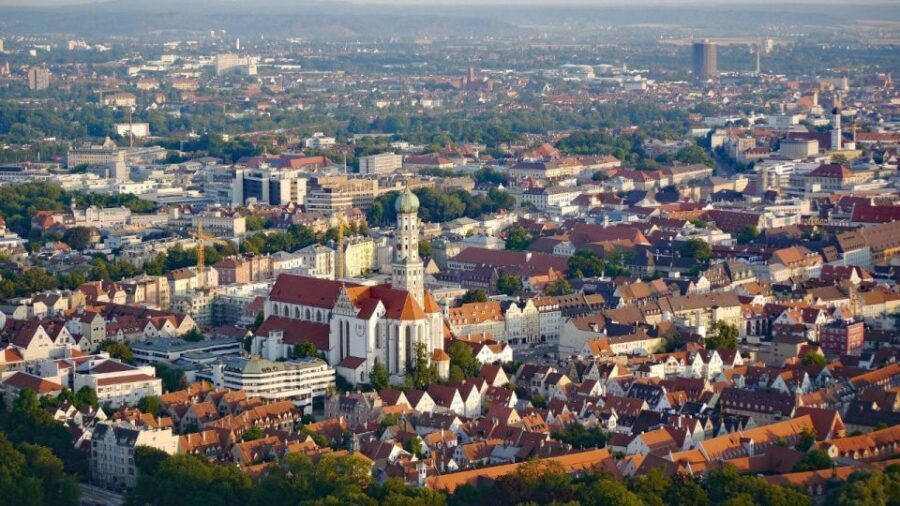
- Meeting at the Fuggerei: Augsburg’s famous social settlement sets the historical tone immediately
- 15 B.C. Roman origins: you’ll connect the city’s founding to how it grew under Roman rule
- The Town Hall’s six floors: a standout architectural claim you’ll want to see up close
- Culture on the same route: Mozart’s father and Berthold Brecht show how Augsburg feeds German arts
- A WWII survivor finale: you end at SchaezlerPalais, noted for surviving the war intact
Meeting at the Fuggerei: why this landmark sets the tone
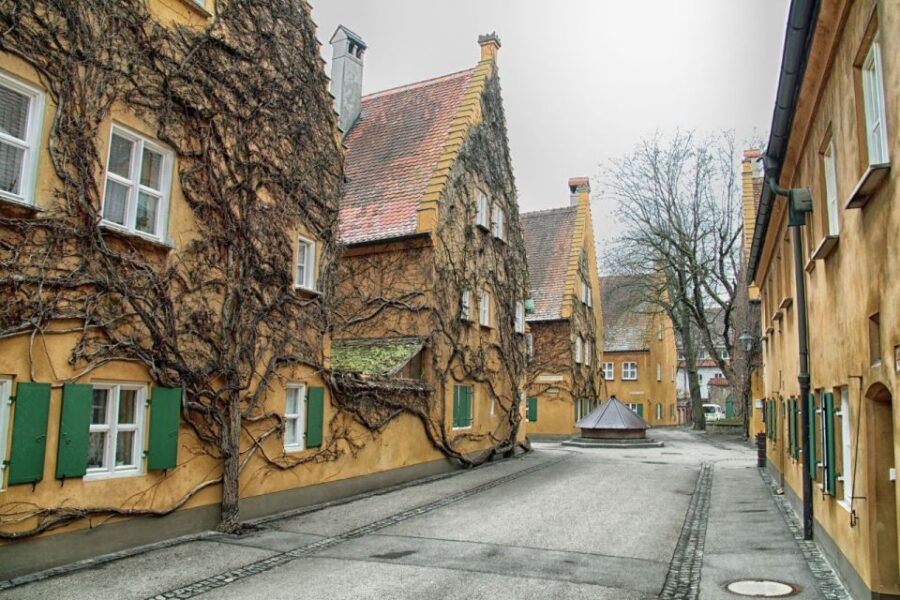
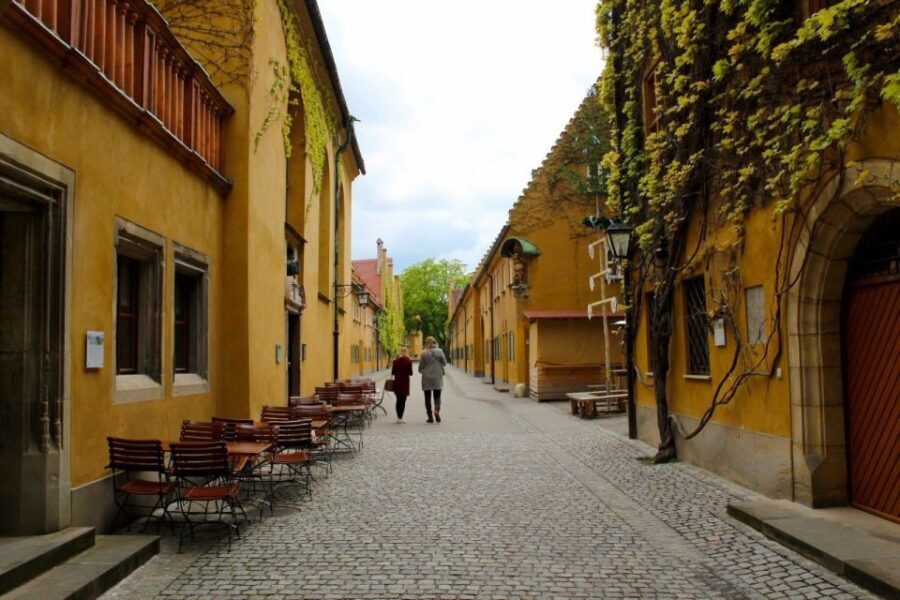
The tour starts at the Fuggerei, and that choice makes a lot of sense. Instead of beginning with a monument, you begin with a system of care—linked to the Fugger family, who founded what’s described as the oldest social settlement in world history.
Even if you’re not a history superfan, I like the way this start anchors everything else you’ll see. Augsburg’s story isn’t only emperors and buildings; it’s also how powerful families shaped daily life, often through very practical social projects.
You can also read our reviews of more walking tours in Augsburg



Roman Augsburg from 15 B.C. to provincial capital
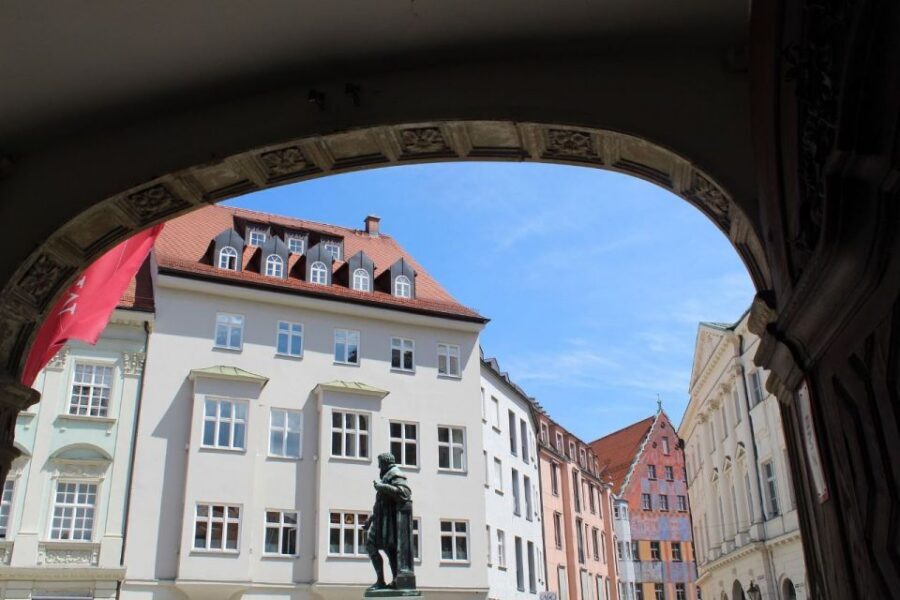
Next, you’ll follow the thread back to the city’s origins as a Roman colony in 15 B.C. This is where your guide’s explanations matter, because Roman Augsburg can sound abstract until someone shows how it functioned as a provincial Roman capital.
You’ll learn what it took for a Roman settlement to grow enough to matter politically. That includes the kind of infrastructure and regional importance that turns a place into a capital, not just a trading spot.
And you’ll get the modern anchor too: Augsburg today is the capital of the Swabia region in Bavaria, and it’s often cited as Germany’s third oldest city. I find it helps to hear that continuity—because it makes the streets you’re walking feel older than just the dates on signs.
Augsburg Town Hall and the six-floor claim you’ll want to verify
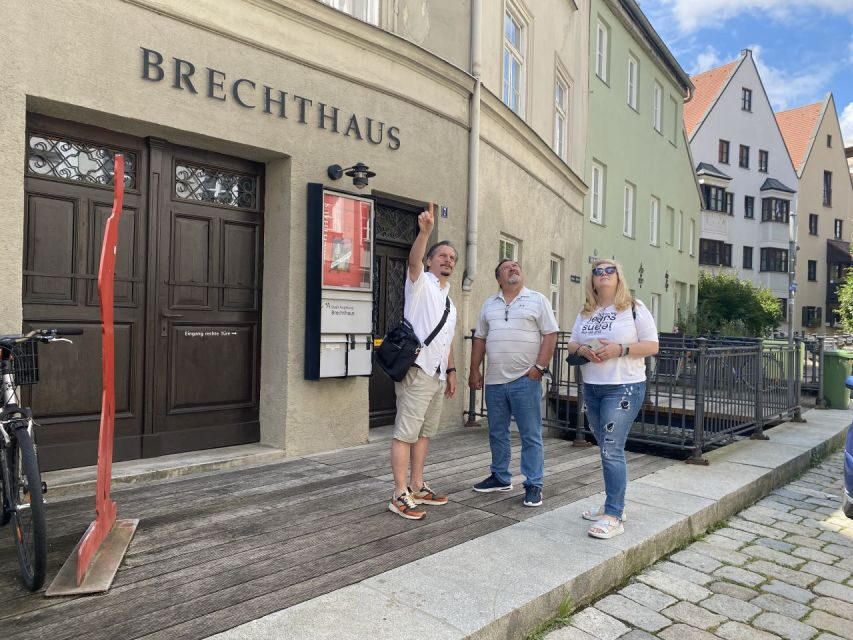
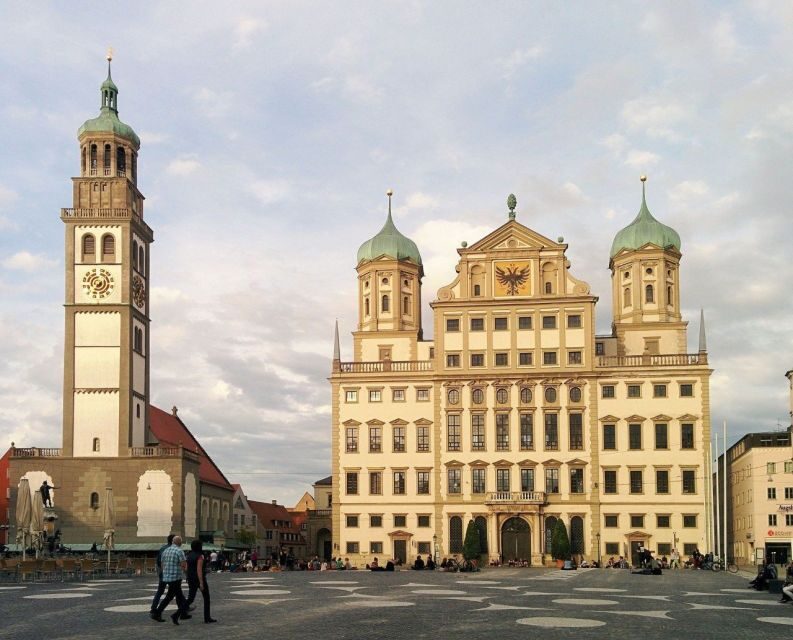
One of the biggest stops is the Augsburg Town Hall. The standout detail here is that it’s described as the first building in the world to have 6 floors, which is the kind of fact that makes people lean in when they’re standing in front of it.
Why I like this stop: a town hall isn’t just pretty stone. It’s where civic power shows up in architecture. When you learn that Augsburg’s civic identity got expressed in that bold way, the rest of the imperial-and-merchant story starts to click.
In a two-hour tour, this is also a smart use of time. It’s a major landmark, it’s walkable from the broader old-city core, and it gives you a visual reference point for what your guide is talking about.
Fugger power: how merchants shaped Augsburg beyond money
The Fugger name pops up more than once on this tour, and that’s because their influence is tied to both Augsburg’s big-picture wealth and its public-facing choices. You’ll hear how the Fugger family helped found the Fuggerei, described as the oldest social settlement in world history.
This is one of those moments where a private guide pays off. You’re not just collecting dates—you’re learning how a merchant dynasty could shape social policy and city identity.
If you like connecting economics to culture, this part will feel practical. Augsburg’s evolution becomes easier to understand when you see how power worked—who had it, and how they used it.
Mozart’s father and Berthold Brecht on the same walk
Augsburg isn’t only Roman and merchant history, and the tour makes sure you don’t miss the arts side. You’ll see Wolfgang Amadeus Mozart’s father’s birthplace, plus you’ll explore the birthplace of the acclaimed German artist and writer, Berthold Brecht.
I like having both of these culture stops in the same walking block because it changes how you picture the city. You’re not treating Augsburg like a museum of ancient ruins. You’re seeing it as a place that produced people who mattered in European music and literature.
Also, your guide can usually help you connect the dots without turning it into a lecture. In a short tour, that’s the difference between hearing a name and actually understanding why the birthplace detail is worth your attention.
You can also read our reviews of more private tours in Augsburg

SchaezlerPalais finale: a WWII survivor you can actually see
You end at the SchaezlerPalais. The key detail here is that it survived World War II without a scratch, which gives the stop extra emotional weight.
This isn’t just a historical footnote. When a building in the city’s core survives a modern catastrophe, it becomes a physical bridge between eras. You’re standing in a place that carries the memory of what was lost around it.
If you like finishing a tour with something tangible—something that still exists in solid form—this ending lands well. It’s a clear “last chapter” moment after all the stories you’ve heard about Augsburg’s earlier eras.
What the 2-hour pacing feels like (and how to make it work for you)
A two-hour private walking tour is built for efficiency. You’re not going to hit everything the city offers, but you will cover the major highlights with enough explanation to make them meaningful.
Here’s the practical approach I recommend: before you set off, decide what matters most to you. Roman Augsburg? Civic architecture like the Town Hall? The Fugger story and the Fuggerei? Or the art-and-literature stops with Mozart’s father and Brecht? Then tell your guide your priorities, because the highlights can be customized on the spot for your group.
Group size also changes the vibe. It’s a private group with a maximum of up to 15 people, and that matters in a walking format. Smaller groups tend to move more smoothly, ask more questions, and get more back-and-forth. If your group is at the upper limit, it can still work, but you should expect a slightly more structured pace.
One more note: entrance fees aren’t included. That means any paid stops that require tickets (if they come up during your route) are on you. For planning, it’s best to treat this as a guided walking highlights tour where most value comes from stories, orientation, and seeing key exteriors and landmarks.
Price and value: $362 per group up to 15
Let’s talk money plainly. The price is $362 per group up to 15 people for a duration of 2 hours. Whether that feels like a deal depends on how you split it.
For a couple, it can feel steep if you compare it to a standard walking tour with many strangers. But for a small group of friends or a family that wants a private pace and direct Q&A, the value can swing the other way fast. Private guiding is often about control—your questions, your focus, and your time budget.
Also, the tour’s strongest selling point is not just the list of sites. It’s the guided connections between them: 15 B.C. to Roman provincial status, merchant power and social projects, and then the arts and key literary figures. If you’re the type who wants context you can carry into the rest of your day, paying for a guide is usually a better use of your vacation time than wandering and trying to piece it together from plaques alone.
Who this tour suits best in Augsburg
This is a good match if you want a compact overview that still feels explained, not rushed. You’ll enjoy it most if you care about at least one of these themes: Augsburg’s Roman beginnings, the civic identity around the Town Hall, the Fugger influence and the Fuggerei, or the city’s connections to major German cultural figures.
It’s also a solid choice for travelers who are short on time. With just 2 hours, you can get your bearings and leave with a clear sense of what parts of Augsburg you want to return to later on your own.
One consideration: it’s not suitable for wheelchair users. If mobility is a factor for anyone in your group, you’ll want to look for another format.
Should you book this Augsburg highlights private walking tour?
Book it if you want a focused walk through Augsburg’s biggest storylines, with the chance to tailor the order of what you emphasize. I especially like the mix: Roman foundations, a standout civic stop at the Town Hall, the social-project significance of the Fuggerei, and culture anchors like Mozart’s father and Berthold Brecht—all capped by the SchaezlerPalais ending that survived World War II.
Skip or reconsider if you’re traveling solo and trying to keep costs minimal, because $362 per group can be hard to justify at low headcounts. In that case, a cheaper group tour might suit you better.
If you do book, I’d go in with two or three priorities and a couple of questions ready. That’s how you get the best result from a private 2-hour format.
FAQ
Where does the tour meet?
Meet at the Fuggerei.
How long is the walking tour?
The tour duration is 2 hours.
What is the price?
It’s $362 per group, up to 15 people.
Is the tour private?
Yes, it’s a private guided tour.
What languages are offered?
The live guide speaks German and English.
What’s included in the tour price?
A local professional tour guide and a private guided tour are included.
Are entrance fees included?
No, entrance fees are not included.
What are some of the main sights you’ll see?
You’ll see the Augsburg Town Hall (described as the first building in the world to have 6 floors), the Fuggerei, the birthplace of Wolfgang Amadeus Mozart’s father, and the birthplace of Berthold Brecht. You’ll also finish at the SchaezlerPalais.
Is the tour cancellable?
Yes. Free cancellation is available up to 24 hours in advance for a full refund.
Is the tour wheelchair accessible?
No, it’s not suitable for wheelchair users.