REVIEW · FRANKFURT
7-Day Taste of Central Europe Tour to Paris, Amsterdam, Brussels and more!
Book on Viator →Operated by goEUgo International Limited · Bookable on Viator
Central Europe packs a lot fast, but it still feels organized. What makes this tour interesting is the mix: German classics, two full days in Paris, and side trips that add real flavor (Champagne around Reims, Luxembourg, and Trier). I like that you get hotel + breakfast included for most nights, and I also like the built-in free-time windows that keep you from feeling glued to the bus. One possible drawback to plan for: the schedule runs on tight time slots, and some people find it rushed if you need frequent bathroom stops or extra wandering time.
You’ll start in Frankfurt and spend 6 nights in comfortable 3-star (minimum) hotels, then finish back in Frankfurt (with note that the last day has no hotel included). The route is coach-based with air-conditioning and a tour manager, and the group is capped at 15—small enough for a real group vibe, big enough to meet people. Based on past departures, guides like Amanda, Lex Tang, and Florian have been credited with being on-time and helpful, though language quality can vary by departure—so I’d check your expectations before assuming perfect English narration.
In This Review
- Key highlights that matter (not just names on a map)
- A 7-Day Coach Tour That Hits Paris, Amsterdam, Brussels, and More
- Frankfurt Start: Easy Launch From Main Hauptbahnhof
- Bonn and Cologne: Beethoven to the Cathedral
- Amsterdam by Canal Ring, Zaanse Schans, and Optional Cruise Time
- Brussels and the Atomium Before Paris Lights
- Paris, But Controlled: Champs-Élysées, Louvre, Seine, and Versailles
- Reims, Champagne Vines, and Luxembourg’s Grand Duchy Mood
- Trier, Rüdesheim, and the Rhine-Mosel Confluence Feel on the Way Back
- Hotels, Breakfast, and How the Schedule Really Works
- Price and Logistics: Is $968.14 Good Value?
- Guide Language and Group Dynamics: What to Expect
- Who This Tour Suits Best
- Should You Book This 7-Day Taste of Central Europe Tour?
- FAQ
- Where does the tour start and end?
- What’s included in the price?
- Are breakfasts included?
- Is there hotel accommodation on the last day?
- Is Keukenhof Gardens always included?
- How big is the group?
Key highlights that matter (not just names on a map)
- Frankfurt to Paris in one smooth route: you get day-one orientation momentum instead of wasting time on logistics.
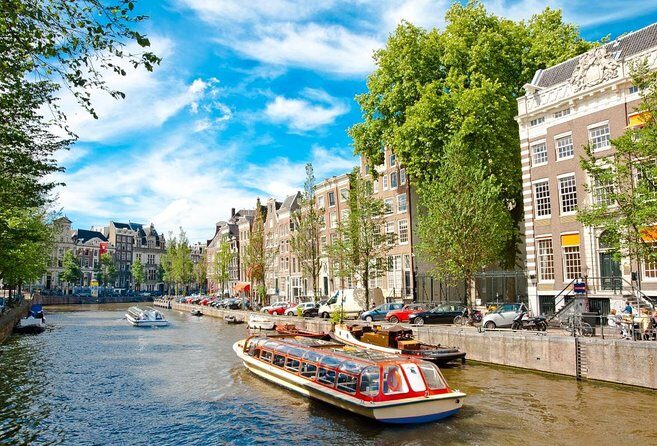
- Amsterdam with Dutch countryside flavor: Zaanse Schans clogs/cheese/windmills plus canal-area time, and an optional canal cruise.
- Brussels stops built for quick context: Atomium and Grand Place, with time to sample Belgian food on your own.
- Paris, but controlled: you’ll see Champs-Élysées, Arc de Triomphe area, Louvre highlights, a Seine cruise, and Versailles.
- Champagne + Luxembourg + Trier in the back half: Reims for coronation history, Luxembourg for grand-duchy charm, Trier for Roman scale.
- Small group size (max 15): easier pacing and fewer bottlenecks than bigger coach tours.
A 7-Day Coach Tour That Hits Paris, Amsterdam, Brussels, and More
This is a classic coach “taste” tour: not a slow travel sampler, but a practical way to hit major cities and a couple of countryside highlights without planning every turn yourself. If you’re visiting Europe for the first time, it can also be a confidence builder. You’ll learn how each place “ticks” while still getting guided orientation for the big landmarks.
What I like about this format is that it protects your energy for the sightseeing that actually matters. You’re not constantly checking transport timetables or hunting addresses under time pressure. And because you’re traveling by coach with an experienced driver, you’re usually moving between places while someone else handles the navigation.
The flip side is you trade deep immersion for variety. You’ll see a lot, but you won’t have the time to treat Paris like a week-long project. If you love lingering, expect to feel the clock.
A few more Frankfurt tours and experiences worth a look

Frankfurt Start: Easy Launch From Main Hauptbahnhof
The trip begins at Frankfurt (Main) Hauptbahnhof, with a start time of 8:30 am. That matters more than it sounds. Frankfurt’s main station is a transport hub, so it’s usually simpler to arrive the morning of departure than if the start were in a less-connected neighborhood.
Also, this tour is designed so your first “wow” moment doesn’t arrive three hours into the day. You’ll head out to Bonn in the morning right away. That helps you avoid the common tour problem where day one feels like pure transfer time.
One practical note: the tour allows one luggage item up to 30 kg plus one small carry-on. Pack light if you want to move quickly at stations and during hotel check-ins.
Bonn and Cologne: Beethoven to the Cathedral
Bonn is a great opener because it’s not trying to be Paris. It’s smaller, calmer, and full of cues to Germany’s more recent history. On day one you’ll do an orientation stroll and you’ll pass the Rococo-fronted town hall and the Beethoven-Haus area. You get to connect Beethoven to place—useful if you’re the type who likes hearing the music and then seeing where the story began.
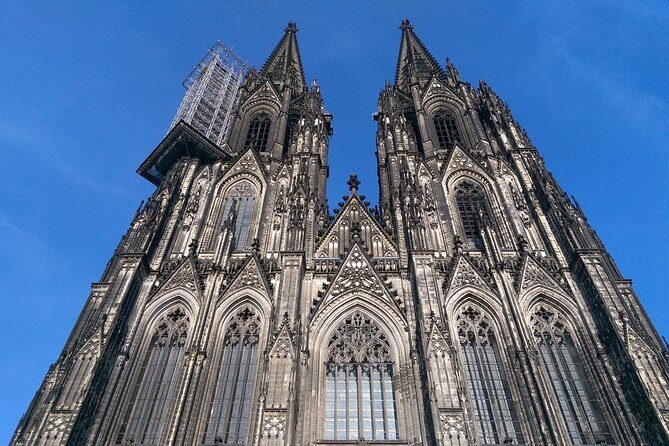
Then comes Cologne Cathedral, the UNESCO-listed Gothic giant you’ve seen in photos a million times. Seeing it in person is different: the scale lands fast. You’ll go inside for about an hour, then you’ll have time to explore Cologne further. If you’re hungry for local flavor, it’s a good day to try something simple and regional rather than over-planning.
After Cologne, you continue toward the Netherlands. This is where the “taste” approach starts to make sense: you’re stacking iconic architecture days back-to-back, then easing into Amsterdam’s different rhythm.
Amsterdam by Canal Ring, Zaanse Schans, and Optional Cruise Time
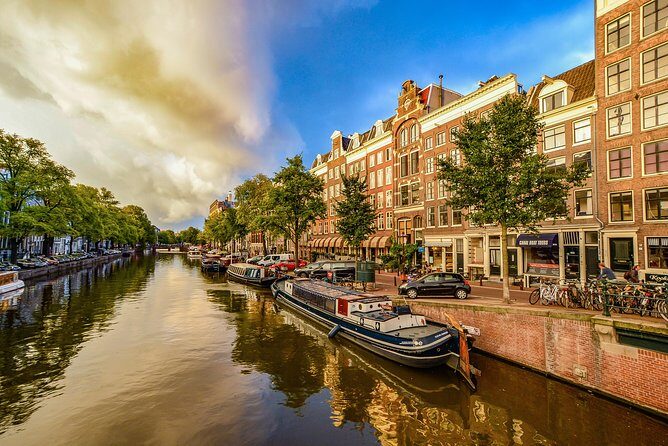
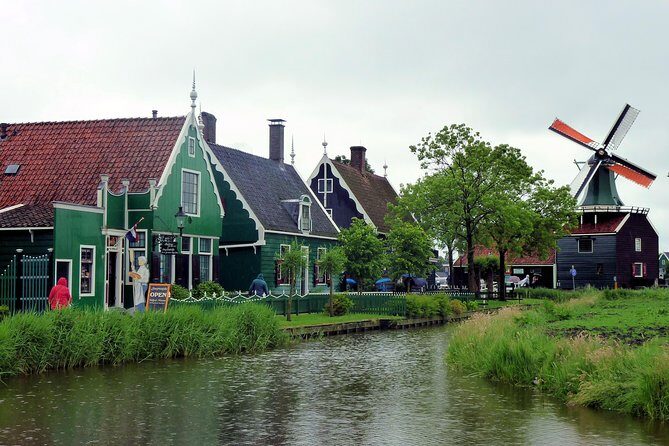
Amsterdam is where this tour usually earns its “best of” reputation: the city is photogenic, easy to navigate on foot, and different from the German leg. You’ll start with Zaanse Schans, the model village-style stop famous for traditional Holland imagery—windmills, clogs, and cheese. It’s a great way to understand the countryside look without renting a car.
Back in Amsterdam, you’ll get time near the Canal Ring and a stop connected to a diamond factory, where cutting techniques have been practiced for centuries. If you’re not into industrial crafts, you can still treat it as a quick culture stop and focus on the city afterward.
You’ll also visit Dam Square, which is Amsterdam at full volume: royal palace setting, big square energy, and shopping nearby. You get free time built into the day for personal exploring and dinner plans.
There’s an optional hour-long canal cruise. I like optional activities like this because they let you match your mood—if the weather is good and you want views from water level, do it. If you’d rather walk and poke into cafés, skip it and roam.
One season detail: Keukenhof Gardens is included only if your dates line up with mid-March to mid-May. If you’re traveling outside that window, you won’t count on the garden stop.
Brussels and the Atomium Before Paris Lights
Brussels is quick on this route, but it’s not random. The Atomium is a distinctive “you can’t mistake it” structure from the 1958 World’s Fair. Even without extra explanation, the shapes and views make it worth the stop. It also serves as a mental transition: you’re leaving the Netherlands behind and stepping into Belgium’s EU-centered vibe.
In Brussels, you’ll spend time around Grand Place and you’ll see Manneken Pis. This is one of those moments where the famous tiny statue still makes you smile, mostly because it’s such a well-known symbol. You’ll also get free time to try Belgian food on your own, which is where Brussels tends to shine.
Then it’s on to Paris—bright lights, bigger crowds, and a city that loves to surprise you if you walk with purpose instead of chasing a checklist.


Paris, But Controlled: Champs-Élysées, Louvre, Seine, and Versailles
Paris here works like a guided itinerary with enough breathing room to make it enjoyable. You’ll have two days that cover the big classics, with a structure that prevents decision fatigue.
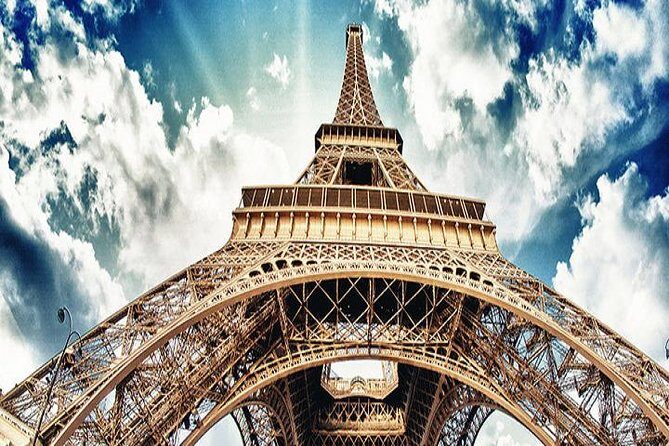
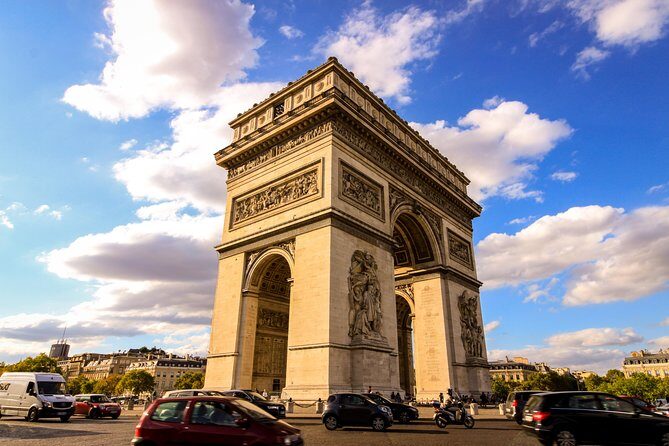
Day one starts with the Champs-Élysées drive, passing through key historic spots like the Place de la Concorde. You’ll also see the Arc de Triomphe area and have a short stop near the Eiffel Tower—just note you won’t climb it on this tour.
You’ll take in Napoleon’s tomb area at Les Invalides, then continue into the evening with an optional Paris add-on possibility. You also visit Versailles on day four, framed as the royal residence until the French Revolution changed everything.
Day two is built around art and river views. The Louvre visit includes major highlights like Venus de Milo, Winged Victory of Samothrace, and Mona Lisa. If you want a faster, more meaningful plan inside, opt for a guided gallery tour—because the Louvre is huge and you can burn time wandering without realizing it.
Then comes the Seine River cruise, which is a smart move on a day when you’ve already walked a lot. From the water, you get landmark views in one go (including Notre-Dame area and Pont Alexandre III). After that, the tour includes time around Palais Garnier and an option related to Galeries Lafayette—plus some members can choose an optional dinner/show experience.
One practical “watch this” note: multiple guide schedules can affect how Paris feels. In some departures, people have flagged that the Paris hotel may be farther out than expected, which impacts the evenings. Also, some departures have tighter free-time than others. If you care about evenings, bring snacks and plan one or two low-effort plans near where you’re staying.
Reims, Champagne Vines, and Luxembourg’s Grand Duchy Mood
This is the part of the trip that adds texture beyond city-icons. On day six, you travel from Paris to the Champagne region, with a stop at Reims.
In Reims you’ll visit Cathedrale Notre-Dame de Reims, tied to coronation history for French kings starting in the 11th century. Even if you’re not a cathedral expert, this is one of those places where the stones carry political weight. You also get the sense of why Champagne is more than a drink—it’s tied to regional identity.
From there, you move to Luxembourg, described as the world’s only remaining Grand Duchy. You’ll do an orientation walk around Place de la Constitution and see Pont Adolphe. Then you’ll have time to explore on your own. I like Luxembourg on a day like this because it’s a “slowdown” compared to Paris energy—more pause, more photo angles, and fewer must-see speed traps.
Trier, Rüdesheim, and the Rhine-Mosel Confluence Feel on the Way Back
The final city leg brings you into Germany again with history that feels unusually layered.
First up is Trier, Germany’s oldest city and Karl Marx’s birthplace. You’ll see the Karl-Marx-Haus from the outside and then do a walking tour into the center. You’ll also see Porta Nigra, the Roman city gate known for being one of the best-preserved north of the Alps. Trier feels like a “small city big past” stop, and Porta Nigra is the kind of Roman structure that makes you stop walking for a minute.
Then you move toward Koblenz, famous as the confluence of the Rhine and Mosel rivers. You have choices here: you can enjoy a lunch by the water, and there’s an optional scenic Rhine boat cruise if you want views without more walking.
Finally, you pass through Rüdesheim, a wine-making town, and then you’re back in Frankfurt at the end of the tour—finishing near the original meeting point. Your last day does not include hotel accommodation, so plan your return travel accordingly.
Hotels, Breakfast, and How the Schedule Really Works
Your accommodation is set as 3-star minimum hotels, with twin/double/single rooms and private facilities. Breakfast is included for 6 mornings, which is a big deal on a tour like this. It keeps your mornings simpler and helps you avoid spending extra time finding breakfast places while you’re moving between cities.
As for the daily rhythm, the tour uses guided stops plus blocks of free time, but the pacing is still built for “many places in a few days.” One thing you should be ready for is strict timing. If you’re the type who gets stressed when you miss the group by a few minutes, this could feel challenging. If you like a clear plan and enjoy checking off landmarks efficiently, you’ll probably love it.
Also, you’re on a coach a lot. People who prefer frequent bathroom breaks sometimes find that the schedule can feel tight. If that’s important to you, think ahead: hydrate, use rest stops when they’re offered, and don’t assume every leg will allow a long personal detour.
Price and Logistics: Is $968.14 Good Value?
This tour is priced at $968.14 per person and is described as offering hotel and breakfast for most of the week, plus coach transport and an experienced tour manager. You’re also covering multiple countries and several major cities, which is usually where self-planning gets expensive fast—especially when you factor in transportation time and the cost of guided entries or timed ticket decisions.
What makes the value equation work:
- Accommodation for 6 nights and breakfast are included.
- You’re traveling by air-conditioned coach with scheduled stops.
- You don’t have to coordinate day-to-day logistics across borders.
What can reduce the “value feel”:
- Gratuities are not included (listed as €70 per person).
- Many attraction entries and optional activities aren’t included, so your final spend depends on what you choose (canal cruise, diamond factory time, Versailles-related choices, and any boat cruise).
- If you end up disappointed by Paris hotel location or you need more downtime than the schedule offers, you may feel the cost more sharply.
My practical take: it’s a good value if you want structure and variety and you’re flexible about how “free time” feels. If you want slow travel, you’d likely be happier booking separate stays and trains.
Guide Language and Group Dynamics: What to Expect
The tour is offered in English, but real-world departures vary. Some guides—like Amanda, Lex Tang, and Florian—have been praised for being helpful, detailed, and on time. Other experiences have had issues where English narration wasn’t clear or felt uneven.
What you can do to protect yourself:
- When you join, check what language support you’re getting and whether the guide team covers both groups well.
- If you hear a lot of confusion, ask a simple question early and see how the answers land.
- Keep expectations realistic: coach touring prioritizes pace, so if communication isn’t smooth, it can make the day feel more rushed.
Also, be aware that some optional activities may be offered with extra charges depending on the day and local pricing. If something isn’t clearly part of your plan, confirm before paying. That small habit prevents the most annoying travel surprise.
Who This Tour Suits Best
This is a strong match if:
- You’re on your first Europe trip and want a guided path through major cities like Paris, Amsterdam, and Brussels.
- You want multiple countries without the stress of day-to-day planning.
- You like a steady mix of guided stops and time to wander, shop, and grab your own meals.
It’s less ideal if:
- You’re chasing deep, long stays in one city (especially Paris).
- You need lots of unscheduled time every day.
- You get uncomfortable with tight group timing or frequent bathroom planning.
Should You Book This 7-Day Taste of Central Europe Tour?
I’d book it if you want an efficient “starter pack” of Central Europe—Germany’s big cities, the Netherlands’ canal-life mood, Belgium’s EU-era character, and Paris with major highlights plus Versailles and river views. The included hotels and breakfasts are what make the week feel manageable, and the route is designed to reduce planning stress while still giving you memorable city moments.
I’d think twice if your priority is slow wandering, flexible timing, or maximum comfort with language consistency every single day. If you do book, make your own checklist: decide in advance what optional add-ons you really want (like canal cruise or scenic boat time), and don’t count on last-minute changes to magically create extra time.
FAQ
Where does the tour start and end?
The tour starts at Frankfurt (Main) Hauptbahnhof (Am Hauptbahnhof, 60329 Frankfurt am Main) and ends back at the same meeting point.
What’s included in the price?
Included are accommodation in comfortable 3-star (min.) hotels, daily transportation on air-conditioned coaches, the tour manager, and breakfast for 6 days.
Are breakfasts included?
Yes. Breakfast is included for 6 mornings during the tour.
Is there hotel accommodation on the last day?
No. The tour notes that hotel accommodation is not provided on the last day.
Is Keukenhof Gardens always included?
Keukenhof Gardens is included only if your travel dates match mid-March to mid-May (for the Red Line departure).
How big is the group?
The tour has a maximum group size of 15 travelers.
If you tell me your travel month and whether you care more about Paris or more about countryside stops, I can help you judge if this pace matches your style.