REVIEW · MUNICH
500 Years of Munich Architecture (Max. 16 Guests)
Book on GetYourGuide →Operated by Philipp's Munich Tours · Bookable on GetYourGuide
Munich buildings tell a 500-year story, and this walk starts with the Frauenkirche while Philipp guides you through it in a max 16-person group. It’s a focused architecture timeline that stays human, asking and answering questions as you go.
I especially like the way the tour connects style to people and power. You’ll see churches, palaces, and civic buildings through the lens of social and political conditions, then cool it down with an Isar River stroll that mixes nature with Art Nouveau details and street art.
One thing to consider: it’s not suitable for wheelchair users or people with mobility impairments, and you’ll want comfortable shoes for the churches and outdoor walking.
In This Review
- Key highlights at a glance
- A Munich architecture timeline that doesn’t feel like a lecture
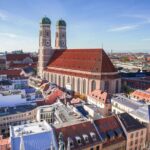
- Meeting at Frauenplatz and starting with the Frauenkirche
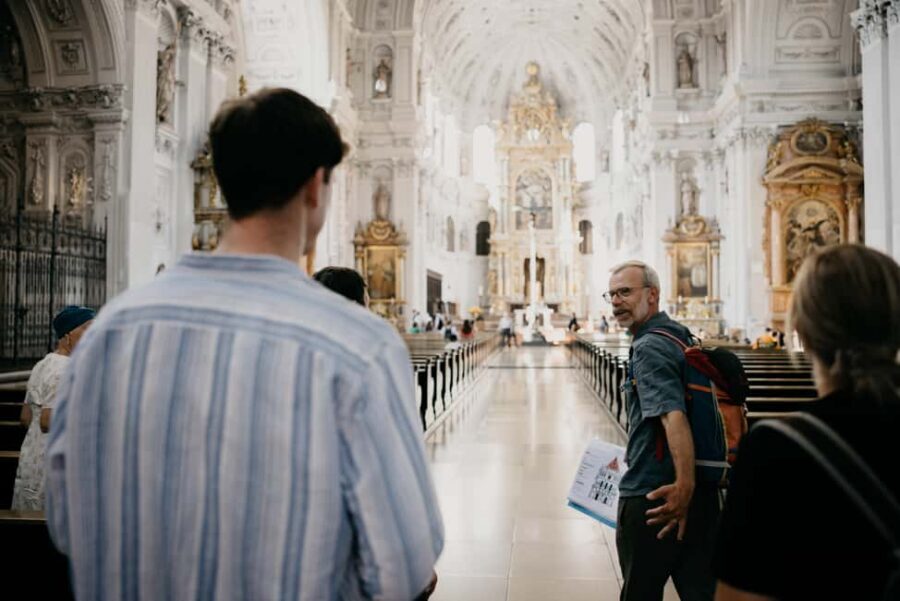
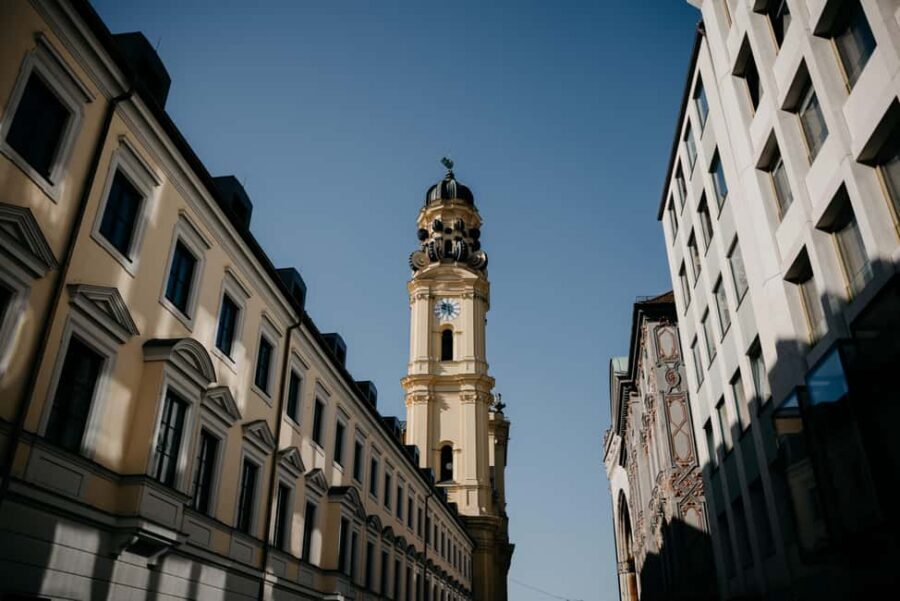
- St. Michael’s, Trinity Church, and Theatine Church: churches with a purpose
- Opera and Maximilianstraße: where culture and city planning meet
- Civic architecture and the “not always in the postcard” Munich
- The Isar River stretch: Art Nouveau, street art, and fresh air
- Finishing at Gasteig rooftop terrace for wide skyline views
- Price and value: why $30 can feel like a bargain
- Who this tour is best for (and who should skip)
- Practical details to make your day smoother
- Should you book 500 Years of Munich Architecture?
- FAQ
- How long is the Munich architecture tour?
- Where do we meet?
- What’s the price?
- What languages is the tour offered in?
- Is food or drinks included?
- What’s included in the tour?
- Is it wheelchair accessible or suitable for mobility impairments?
- What are the cancellation terms?
Key highlights at a glance
- Architect-led clarity from Philipp: an architect plus certified official guide, so buildings get explained in plain language
- A true 500-years timeline: Romanesque to Modern, with stops tied to changing eras
- Churches and civic landmarks, not just facades: you’ll walk away understanding why designs changed
- Isar River part is the reset: Art Nouveau, street art, and time outdoors
- Gasteig rooftop finish: wide Munich skyline views when weather cooperates
A Munich architecture timeline that doesn’t feel like a lecture
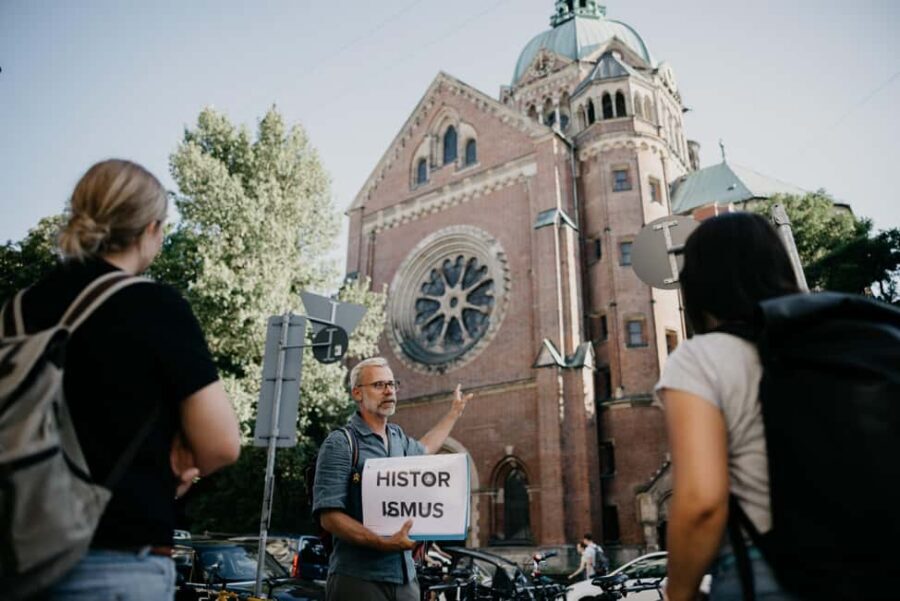
This is the kind of Munich tour that helps you see the city instead of just looking at it. The core idea is simple: start with major landmarks in the center, then let architectural styles move forward in time—Romanesque through Gothic, Baroque, Rococo, Neoclassical, Historicism, and finally Modern—until you reach the river and the city’s newer edges.
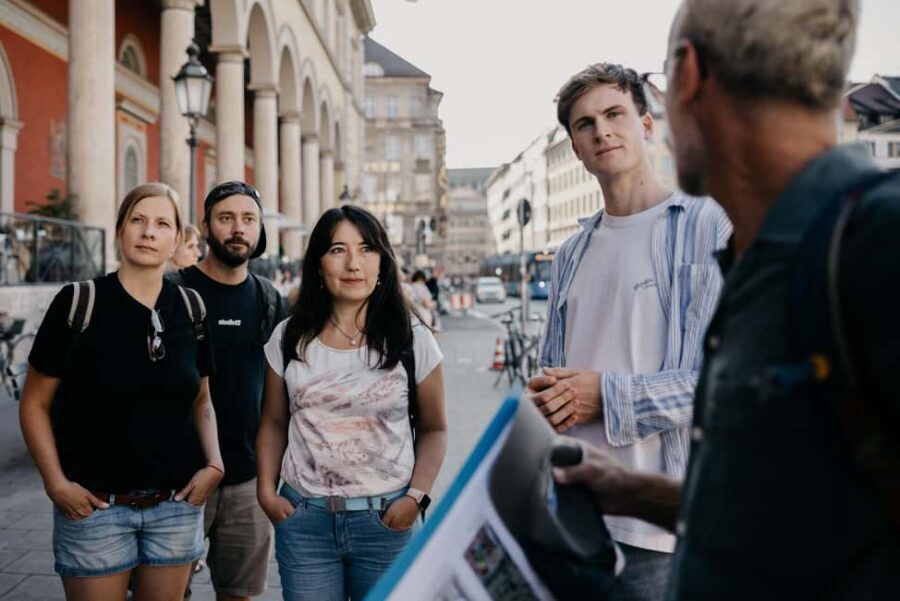
What makes it work is the guide’s professional angle. With Philipp, you’re not getting vague “this is pretty” commentary. You’re getting structure, intention, and context: how styles relate to the era’s politics, society, and ambition. That’s a big reason the group stays small at up to 16—you get room to ask questions and get answers that actually fit what you’re looking at.
And because it’s only 150 minutes, you avoid the trap of trying to cover too much. You leave with a coherent story arc instead of a scattered stack of photos.
You can also read our reviews of more tours and experiences in Munich.
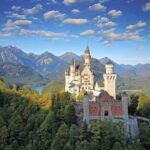
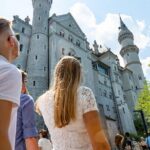

Meeting at Frauenplatz and starting with the Frauenkirche
You meet outside Frauenplatz 1, right in front of the entrance to the Frauenkirche. It’s a smart starting point because it immediately anchors the tour in Munich’s most recognizable Gothic landmark. Even if you’ve only passed by before, standing at the entrance helps you understand why this church became a visual center of gravity.
From here, the tour builds outward from the old heart of town. You’re not just ticking off major sights—you’re learning how Munich’s “identity look” got shaped over centuries. In practice, that means Philipp points out what to notice, then ties it back to what people wanted from architecture at that moment: power, faith, civic presence, and prestige.
If you like architectural tours that feel grounded rather than academic, this opening sets the tone.
St. Michael’s, Trinity Church, and Theatine Church: churches with a purpose
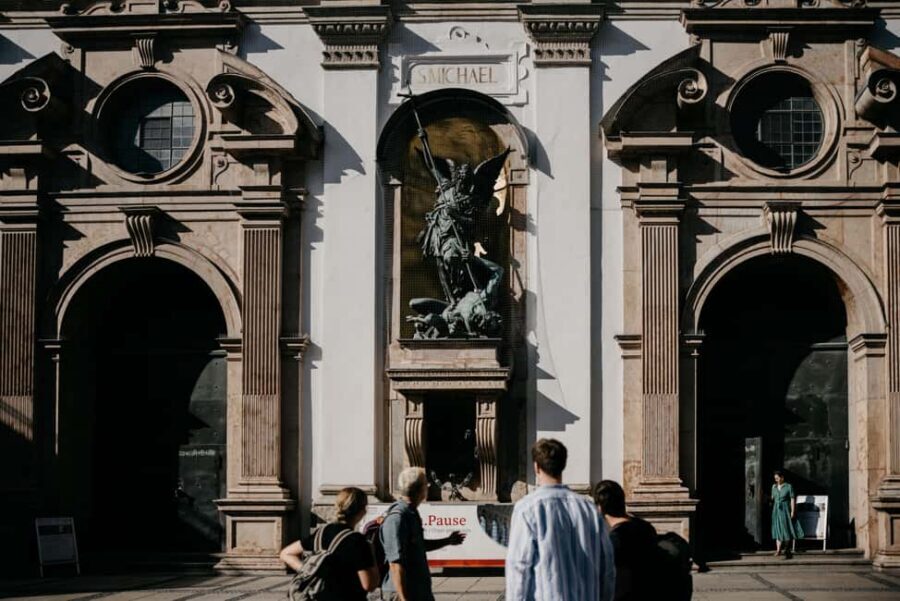
After the Frauenkirche, you head to St. Michael’s Church. This stop matters because it adds another layer to the religious and artistic language of the city—useful when you’re trying to understand the shift from earlier styles into later ones.
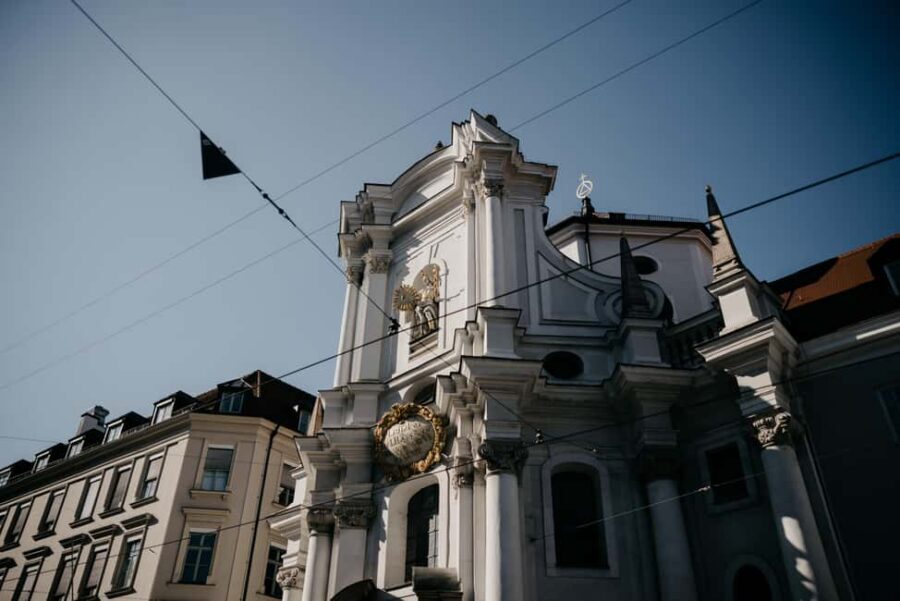
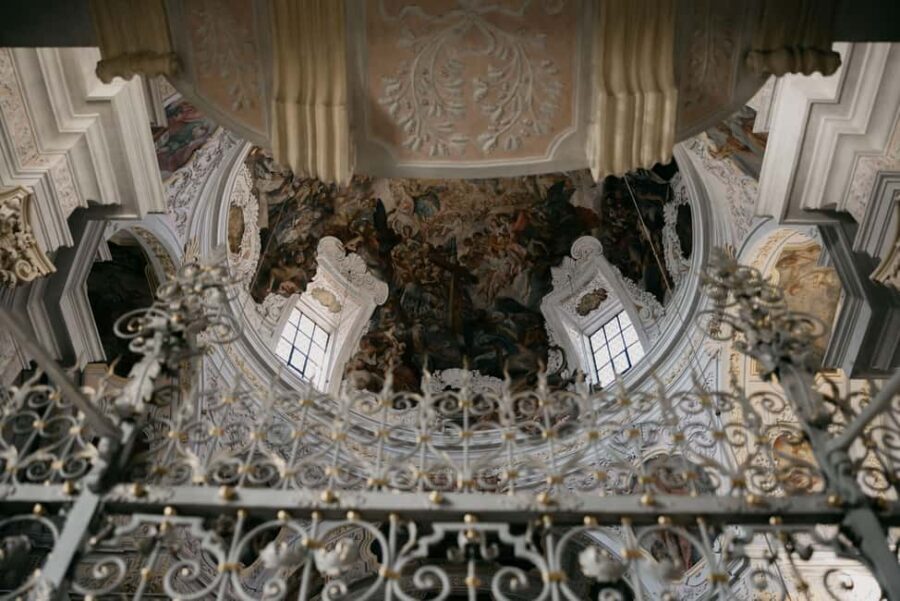
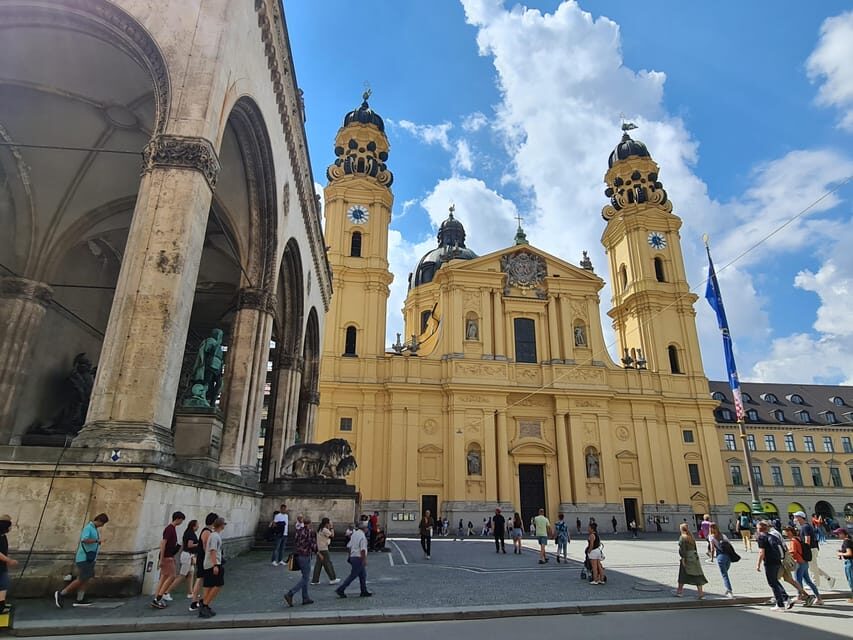
Then come two more churches that help you “hear” Munich’s changing style. You’ll visit the Trinity Church, and you’ll also stop at the Theatine Church. These are the kinds of buildings where the details can feel endless, but the tour keeps it manageable by giving you a way to read the architecture instead of getting lost in decoration.
What I like about this portion is the pacing. Churches can be heavy, but the tour keeps attention moving: you look, you get the key idea, then you move on. By the time you reach the next civic buildings, you’re already better at recognizing what era you’re standing in—and why.
Opera and Maximilianstraße: where culture and city planning meet
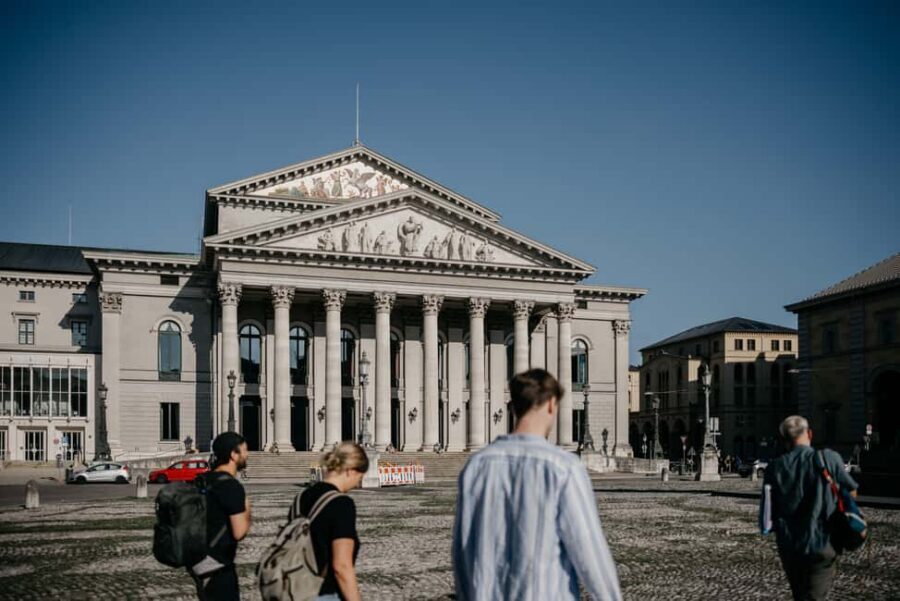
Once you leave the church lane, the tour shifts to city life. You’ll visit the Bavarian State Opera, a strong reminder that architecture in Munich isn’t only about churches. Big cultural institutions are part of the city’s visual messaging, too.
From there you get a guided look at Maximilianstraße. This is one of those streets where architecture and status go together. Philipp’s approach helps you notice that streets aren’t just routes—they’re stages. The buildings along the way show how Munich projected its ambitions.
This is also a good moment for the “architect brain” to click for you. Even if you’re not an architecture nerd, you’ll start recognizing how design choices affect how a place feels: scale, rhythm, entrances, and how buildings frame views.
Civic architecture and the “not always in the postcard” Munich
The second half of the walk includes stops that feel more local than tourist-only. You’ll visit St. Lukas and get guided through Müllersche Volksbad. These are excellent for understanding Munich beyond the headline monuments, because they represent everyday civic life expressed in buildings.
You’ll also visit the Sudetendeutsches Museum. Museums can be tricky on a short walking tour, because the building alone may not tell you everything. But in this format, the goal is to use the museum context to connect architecture to the city’s story—what Munich chose to preserve, present, and show.
Between these stops, you’ll also get architectural era clues tied to what you’re seeing: Baroque influence, Rococo-era refinement, and later Neoclassical and Historicism style elements. You might not always get every style in a single named building, but the tour keeps the time progression clear so the eras don’t blur together.
One practical takeaway: after this portion, you’ll likely find yourself spotting stylistic “tells” on your own—curves vs. straight lines, ornament density, and how façades handle symmetry.


The Isar River stretch: Art Nouveau, street art, and fresh air
At some point, you leave the tight city center rhythm and head toward the Isar River. This change of pace is one of the best parts of the overall experience, because architecture gets paired with atmosphere. You’re not walking from one landmark to the next without breathing space.
Along the river, you’ll see Art Nouveau, street art, and a modern museum element as the tour moves into the more recent layers of Munich. This is where the “500 years” theme stops feeling like an indoor slideshow and starts feeling like a living timeline.
You also get to enjoy the nature side of the route. That matters because it helps you process what you just learned. Churches and grand streets can stack up fast. The river walk resets your attention, so you’re more likely to remember what style meant what—not just that it existed.
And yes, you’ll also encounter graffiti and Jugendstil-style details along the way, which makes Munich feel less like a frozen museum and more like a city where art keeps changing hands.
Finishing at Gasteig rooftop terrace for wide skyline views
The tour ends at the Dachgarten auf dem Gasteig—a rooftop terrace with views over Munich’s skyline. This finish is a smart design choice. It gives your brain a final “big picture” moment after the up-close architectural focus.
Weather matters here, because rooftop visibility is everything. But when conditions cooperate, the combination of height and historic-to-modern context is powerful. You can look out across rooftops and towers, then mentally connect them to the era you just walked through.
Also, this is a great place to stay calm and ask your last questions without rushing. You’re not trying to cram in another sight; you’re letting the city settle into focus.
Price and value: why $30 can feel like a bargain
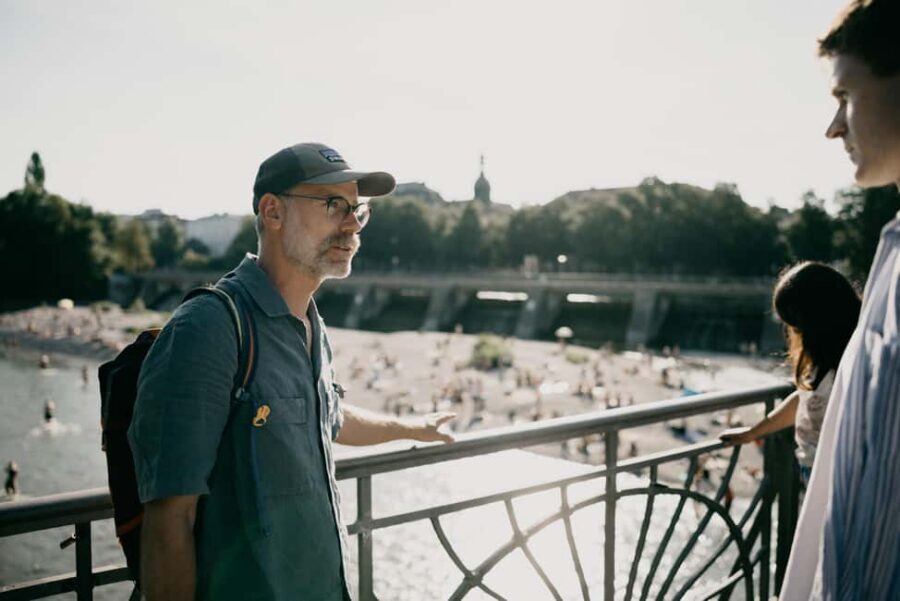
At about $30 per person for 150 minutes, this isn’t priced like a “big attraction” excursion. You’re paying for a small-group format and for Philipp’s time as an architect plus certified official guide (Philipp is listed as a member of MGV & BVGD). That combination tends to produce better explanations than the usual one-size-fits-all city guide.
You also get a couple of extras that are genuinely useful:
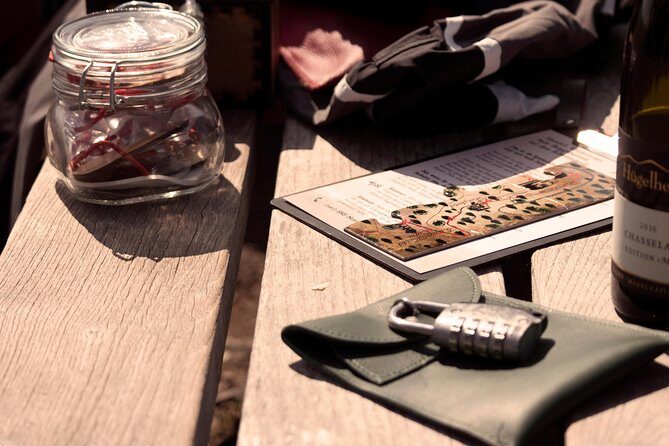
- a digital map with Philipp’s favorite Munich spots
- a small postcard gift tied to a tour highlight
- exclusive insights into less obvious architectural details, not just textbook facts
Food isn’t included, and transportation to and from the meeting point isn’t included. That said, the tour fits well into a day where you’ll already be walking around central Munich. If you’re the type who likes to add one well-structured experience rather than juggling five separate tickets, this format is strong value.
Who this tour is best for (and who should skip)
This experience is a good match if you:
- want a clear architectural timeline without getting buried in details
- like explanations with professional structure, not only casual commentary
- enjoy walking outdoors, especially along the Isar
- want a family-friendly option that still feels meaningful
It’s not a match if you:
- use a wheelchair or need mobility accommodations (it’s listed as not suitable for mobility impairments and wheelchair users)
Group size stays small, so it’s easier to hear explanations and ask questions. Languages are English, German, and Spanish, which helps if your travel group isn’t all the same native language.
Practical details to make your day smoother
- Bring comfortable shoes. You’ll be on your feet for churches, streets, and outdoor stretches.
- Plan on walking from central Munich toward the river area and back into the city’s newer edge at Gasteig.
- Avoid smoking on the tour.
- If you’re sensitive to weather, remember the rooftop and river portions are marked as weather dependent.
If you want a quick navigation tip: the easiest route is by S-Bahn or subway (U3/U6) to Marienplatz, then a pleasant 10-minute walk to the meeting point.
Should you book 500 Years of Munich Architecture?
I’d book it if you want the fastest way to understand Munich’s building evolution in one coherent line. The big win is Philipp’s architect-guided teaching style paired with a route that moves from landmark Gothic Munich to Baroque/Rococo/Neoclassical layers, then to the Isar’s more modern expressions, ending with a skyline payoff at Gasteig.
Skip it if you need wheelchair-friendly access, or if you’d rather spend your sightseeing time on museums with lots of indoor seating. This tour is active and walking-based, so comfy shoes and a good headspace matter.
If your goal is to leave Munich with more than photos—if you want to recognize styles and know what they mean—this one is a strong choice.
FAQ
How long is the Munich architecture tour?
The duration is 150 minutes.
Where do we meet?
You meet outside the entrance to the Frauenkirche cathedral at Frauenplatz 1.
What’s the price?
It’s listed at $30 per person.
What languages is the tour offered in?
The live tour guide offers English, German, and Spanish.
Is food or drinks included?
No. Food and drinks are not included.
What’s included in the tour?
You get Philipp as your local architect and certified city guide, a postcard gift, exclusive insights into architectural details, and a digital map with Philipp’s favorite Munich spots.
Is it wheelchair accessible or suitable for mobility impairments?
No. It is not suitable for people with mobility impairments or wheelchair users.
What are the cancellation terms?
Free cancellation is available up to 24 hours in advance for a full refund.