REVIEW · HAMBURG
10 secrets of Hamburg’s old town – exciting scavenger hunt tour
Book on Viator →Operated by townadventure - explore cities playfully · Bookable on Viator
Hamburg becomes way more fun with a puzzle trail. This smartphone-led scavenger hunt strings together classic stops from the Hamburg City Hall to old churches and canal bridges, turning sightseeing into a “find the clue, answer the riddle, move on” route. It’s built for exploring at your own pace, with your guide in your pocket instead of a loud group behind you.
I like two things a lot: the smart, on-foot flow through major landmarks, and the fact that most stops are admission-ticket free to see from outside. It also feels practical because you get a start link for the activity, and it ends right back at the meeting spot—no extra hassle.
One thing to consider: some questions can be tricky. The built-in hints help, and having the option to use the internet can make the tougher moments less stressful.
In This Review
- Quick hit: what you’ll do
- Key points to know before you go
- How the scavenger hunt works in real life (no stiff guide voice)
- Rathausmarkt and the Hamburg Town Hall: start where the city speaks
- St. Petri Kirche: the old parish church that anchors the route
- Kornhausbrücke and the Zollkanal: customs history in bridge form
- Hauptkirche St. Katharinen: the tower that still does its job
- Trostbrücke and the Nikolaifleet: where the medieval city port mattered
- Crowds, pace, and why the self-guided format feels right
- Price and value: $36.10 per group can be a steal (or just fair)
- Where this hunt fits your Hamburg trip
- Should you book the Hamburg old-town scavenger hunt?
- FAQ
- Where does the scavenger hunt start?
- How long does the tour take?
- What does it cost?
- Is this tour private?
- Is admission included for stops like churches?
- How do I follow the tour?
- Does it end back at the start?
- Is it easy to reach by public transportation?
Quick hit: what you’ll do
You’ll follow prompts on your phone and solve puzzles as you walk from one historic “secret” to the next. Timing is flexible, but the tour has a loose rhythm (about 15 minutes at each featured stop, plus the walking between). Expect to spend roughly 2 to 3 hours total.
This works best if you like moving at your own speed and don’t mind thinking for a minute. It’s also set up for small groups: the price is per group (up to 5), so friends or family can split the cost.
Key points to know before you go
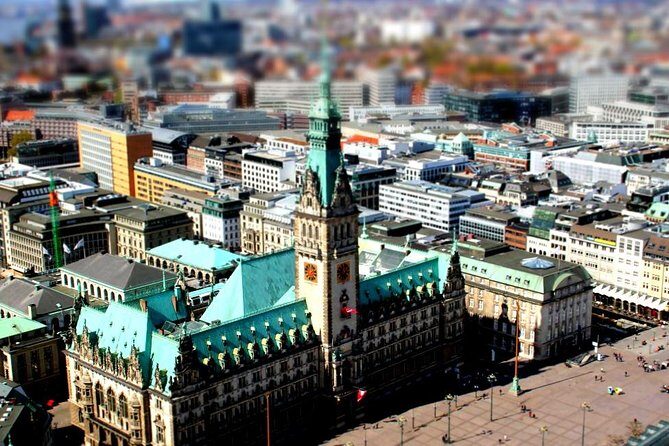
- City Hall kickoff at Rathausmarkt: start right where the city’s civic power shows.
- Church-and-bridge route: St. Petri, St. Katharinen, Kornhausbrücke, and Trostbrücke keep the story moving.
- Puzzle format, not a lecture: you learn by answering and noticing details.
- Small-group private tour: only your group participates.
- Built-in hints (and online help if needed): some questions are harder, and support is part of the system.
- Walkable old-town focus: you return to the meeting point when you finish.
You can also read our reviews of more tours and experiences in Hamburg.

How the scavenger hunt works in real life (no stiff guide voice)
This isn’t a bus-tour script. It’s a self-guided hunt where your phone leads the way and asks you to solve puzzles tied to what you’re seeing. That changes the vibe fast: you slow down when something catches your eye, and you don’t have to wait for the group that’s always a few minutes behind.
The “secret” part is what makes it stick. Instead of passively looking at famous facades, you’re hunting for specific answers. That means you’ll likely remember more than you would from a standard walking tour, because you’re actively scanning details—shapes, locations, and historical clues—then confirming your guess through the prompt system.
It also helps that the route focuses on landmark exteriors and waterfront viewpoints, not museum-heavy stops. The tour gives you stops like St. Peter’s Church and several major churches in the old town area, which you can usually appreciate without needing to pay for separate entry tickets.
If you prefer strict schedules and a live narrator who answers every question immediately, this might feel different. But if you want structure without hand-holding, it’s a strong match.
Rathausmarkt and the Hamburg Town Hall: start where the city speaks
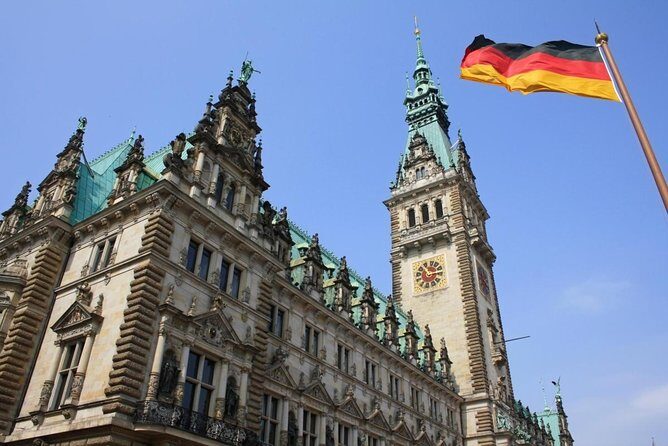
Your tour begins at Rathausmarkt 1. The first stop is the Hamburg City Hall, the seat of the Hamburg Parliament and the Senate of the Free and Hanseatic City of Hamburg. In plain terms: this is where the city’s public life has long been staged.
Architecturally, it’s a showpiece. The building was constructed from 1886 to 1897 in the historicist style of the Neo-Renaissance. Even if architecture isn’t your thing, it’s the kind of place where puzzle questions make sense: you can look up, notice symmetry and style choices, and then connect those details to the city’s identity.
Practical tip: treat the first stop as your warm-up. The hunt is easiest when you start relaxed, ready to read clues and try answers. You don’t need to rush. The tour allots about 15 minutes here, but you can take a little longer if you’re scanning the building more carefully.
Possible drawback: if you dislike “look-and-figure-it-out” tasks, the opening puzzles might feel like work. The upside is that after the first checkpoint, the rhythm clicks and you’ll know what the system expects.
St. Petri Kirche: the old parish church that anchors the route
Next up is St. Petri Kirche (St. Peter’s Church). This is described as the oldest parish church in Hamburg. It’s named after the Apostle Peter, and it’s also one of the city’s five main churches.
This stop is great for two reasons. First, it’s old. Second, it’s central. If you’re trying to get oriented in Hamburg’s old town, St. Petri acts like a reference point. You’re not just looking at another church; you’re tying together names, locations, and the city’s long religious and civic geography.
Because the tour stays focused on the exterior experience, you can keep moving without fighting ticket lines. The stop is allocated around 15 minutes, which is just enough time to slow down, read the clues, and absorb the church’s role in the neighborhood.
A consideration: churches can be windy and cool in the open plazas, especially near waterways. Dress like you’re walking between historic walls, not like you’re sitting in a warm café the whole time.
Kornhausbrücke and the Zollkanal: customs history in bridge form
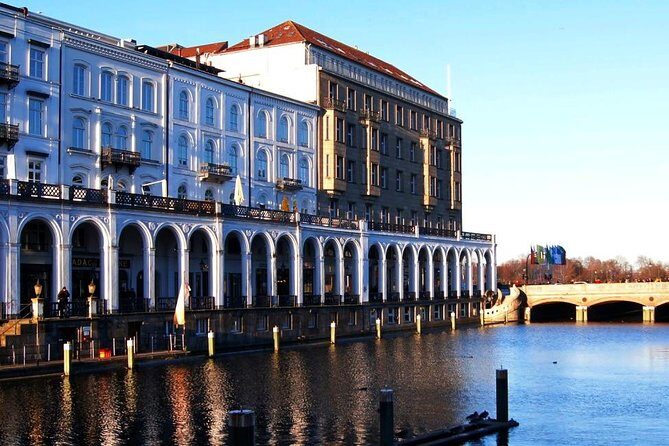
Then you head to Kornhausbrücke, built over the Zollkanal (customs channel). This is where the hunt starts to feel like it’s teaching you “why this city is shaped the way it is,” not only “what to look at.”
Here’s the key historical context you’ll be working with: the customs channel ran on the northern edge of the Speicherstadt. Until 2013, it formed the customs border between Hamburg’s old town area and the then free port area. The bridge sits at a crossroads of trade, shipping, and city boundaries.
The tour info also points out that the canal system was tied to larger shipping changes, including a bypass created when the 1888 free port area came into play. It’s the kind of detail that helps you understand Hamburg beyond postcard views—this city’s waterways weren’t just scenery; they were infrastructure.
This stop is also about how you see the city. You’ll be able to look across the canal and think about old logistics: goods moving in, customs decisions, and how a border could be drawn by water.
Time-wise, it’s another 15-minute checkpoint. That’s enough to do the puzzle without feeling like you’re rushing at a single location for an hour.





Hauptkirche St. Katharinen: the tower that still does its job
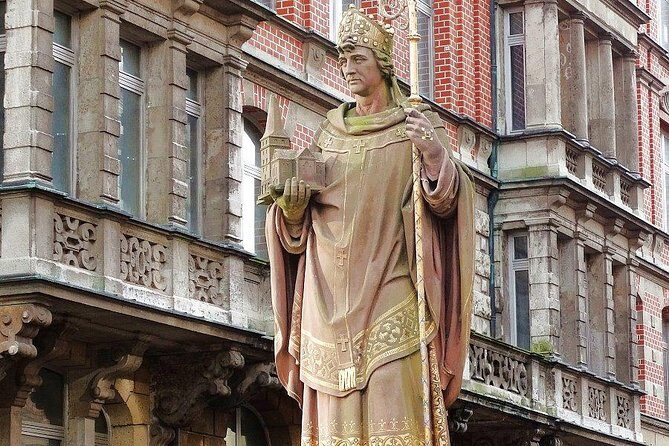
At Hauptkirche St. Katharinen (St. Katharinen), you’re looking at one of Hamburg’s five main churches. The tour’s highlight here is its tower: the tower dates to the 13th century and is considered the oldest upright structure in Hamburg that still fulfills its function.
This is a strong “aha” stop. Towers aren’t just decoration; they were built to keep time, guide, signal, and support the church’s long-running role. The clue-based format helps you notice that difference. You’re not only seeing a skyline detail—you’re connecting it to centuries of use.
One practical advantage: this is a good place for a short pause. Even if you’re in a hurry, the tower draws your eyes upward, and the hunt gives you a reason to do it instead of just moving past.
The stop is set for 15 minutes. If you naturally want longer—because you keep turning your head to look at the tower from different angles—you can. Just remember the tour is designed as a loop back to the start, and your overall time window is 2 to 3 hours.
Trostbrücke and the Nikolaifleet: where the medieval city port mattered

Your final featured stop is Trostbrücke, spanning the Nikolaifleet. This bridge originally connected two key areas: the episcopal old town around the cathedral and St. Peter’s Church, and the count’s new town. That means it sat between power centers and civic life.
The name and location also point to a deeper story. Here was the medieval center of the city and the innermost part of the port from the Middle Ages until the Hamburg fire in 1842. In other words, this wasn’t just a pretty crossing—it was part of the city’s working heart.
For the hunt, this stop is valuable because it ties your route together. You started at the City Hall, then saw major churches, and now you’re finishing with a bridge that explains the old port geography. The puzzle here likely helps you synthesize what you’ve seen: Hamburg’s identity is shaped by civic authority and by water-based trade.
Time-wise again, it’s about 15 minutes. When you finish, you end back at the meeting point near where you started.
Crowds, pace, and why the self-guided format feels right
The biggest quality of this hunt is that it removes friction. You don’t have to keep up with a fast-moving guide. You don’t have to worry about losing track of the group at a crosswalk. Instead, you have a phone-led prompt system that keeps you moving.
The route is also designed so you can take a few extra seconds here and there. That matters in old European cities where you might want to stop and look at architectural details, canal reflections, or church towers from multiple angles.
Your pacing is the real benefit. Even the timing hints (roughly 15 minutes per stop) mean you’ll get a sense of progress without feeling trapped.
One more practical point: the puzzle difficulty can vary. The reviews included mention that some questions are difficult, but hints—and even using the internet—can help you solve them. So if you’re the type who gets stuck and spirals, don’t worry: you’re not expected to brute-force every answer on your own.
Price and value: $36.10 per group can be a steal (or just fair)
At $36.10 per group (up to 5), the price is pretty easy to evaluate: it’s not $36 per person, it’s $36 per team. If you’re traveling as two people, you’re splitting that cost. With a full group of five, it becomes about $7.22 per person before any extras you might choose to buy nearby.
What you get for the money is also practical:
- the hunt itself
- all fees and taxes
- a start link tied to your booking
What you don’t get is entry cards for public institutions. That said, the tour’s featured stops are listed as having admission ticket free for the sights you’ll focus on. So most of the time, you’re paying for the experience, not for extra museum tickets.
So when is it best value? When you’re visiting with 2–5 people and you like the “walk and figure it out” style. If you’re alone, the price might feel higher per person—but if you value the self-paced route and the puzzle structure, it can still be a fun way to get bearings in the old town.
Where this hunt fits your Hamburg trip
This is a great choice when you:
- want to explore the old town without joining a large crowd
- prefer learning through puzzles and prompts, not long spoken narration
- like walking and stopping when something grabs your attention
- want a route that links civic buildings, churches, and canal history in one flow
It’s also a smart “first day in town” option. Starting at City Hall and moving through St. Petri, Kornhausbrücke, St. Katharinen, and Trostbrücke gives you a map-like understanding of Hamburg’s center.
But it may not be ideal if you:
- need a live guide to answer questions instantly
- hate puzzles or dislike reading clues on a phone
- specifically want interior access to museums or paid attractions (since entry cards are not included)
Should you book the Hamburg old-town scavenger hunt?
I’d book it if you want a playful, structured walk through the iconic parts of Hamburg’s center, with the city teaching you as you solve clues. The best part is the mix: big-name landmarks plus canal-and-church context, all on a route that doesn’t require you to sit through a lecture or wait for a group.
Skip it if you want a traditional guided tour with deep explanations delivered face-to-face, or if you’re counting on bundled entry tickets to paid sights. For everyone else who likes walking, noticing, and learning by doing, this is a solid way to spend a couple of hours in Hamburg.
FAQ
Where does the scavenger hunt start?
It starts at Rathausmarkt 1, 20095 Hamburg, Germany.
How long does the tour take?
The duration is about 2 to 3 hours.
What does it cost?
It costs $36.10 per group, with room for up to 5 people.
Is this tour private?
Yes. It’s private, so only your group will participate.
Is admission included for stops like churches?
The stops are listed as admission ticket free, but entry cards for public institutions are not included. If a specific site requires an entry card, you’ll need that on your own.
How do I follow the tour?
You’ll follow it via your smartphone, which provides the guidance, puzzles, and clues as you walk.
Does it end back at the start?
Yes. The activity ends back at the meeting point.
Is it easy to reach by public transportation?
The meeting point is near public transportation. Service animals are also allowed, and most travelers can participate.
If you want, tell me your travel dates and who’s going (1, 2, or a small group), and I can help you decide whether to plan it for a first-day orientation stroll or a calmer second-day walk.