REVIEW · WITTENBERG
Wittenberg Private Guided Walking Tour
Book on GetYourGuide →Operated by Travmonde OÜ · Bookable on GetYourGuide
Luther’s door is still the main event. In this 2-hour private walk, I like how you connect the famous landmarks to the people behind them, from the 95 Theses to Katharina von Bora. Two things I especially enjoy are the stop-by-stop storytelling and the way the guide can tailor the pace to your interests.
A small drawback to consider: it’s an old-town walking route, so comfortable shoes matter, and some church areas may involve entrance fees that aren’t included.
In This Review
- Key Highlights You’ll Notice Fast
- Entering Lutherstadt Wittenberg: Why This Town Works as a Walking Tour
- Meeting Point at Luther’s House: Start Where the Story Feels Close
- Castle Church and the 95 Theses Door: The Moment Everyone Still Names
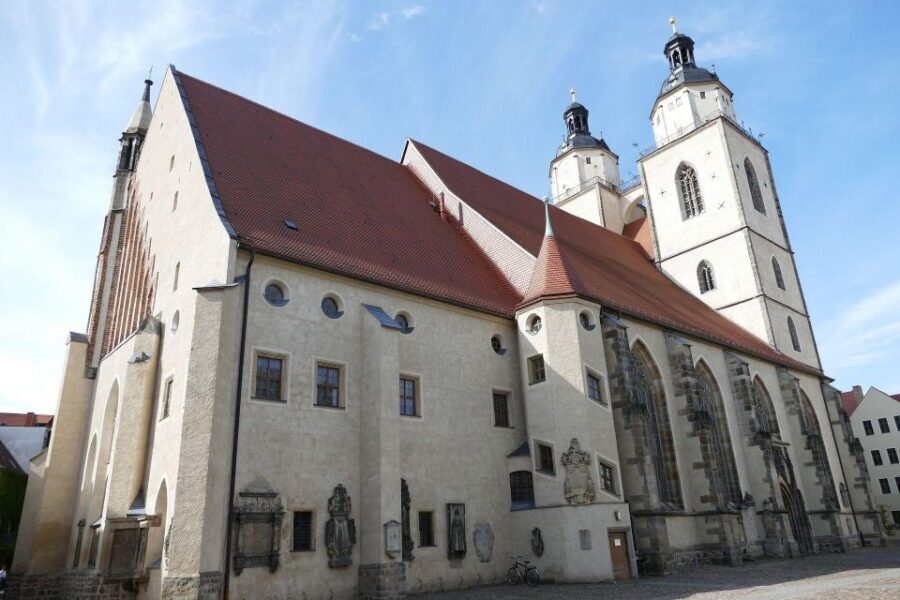
- Stadtkirche: Luther Preached Here, and History Keeps Repeating
- Luther’s Oak: The Papal Bull, the Fire, and Why the Oak Was Planted
- Connecting the Dots: From Wittenberg to a World-Changing Break
- How Customizing Works in a Private 2-Hour Group
- Price and Value: When $280 Per Group Makes Sense
- What to Wear, Bring, and Plan for a Comfortable Walk
- Who This Tour Is Best For in Wittenberg
- Should You Book This Wittenberg Private Guided Walking Tour?
- FAQ
- How long is the Wittenberg private guided walking tour?
- Where does the tour meet?
- Is this tour private?
- What group size is it priced for?
- What languages are offered?
- What’s included in the price?
- Are entrance fees included?
- Can I change plans if my trip is uncertain?
- What key sites does the tour cover?
Key Highlights You’ll Notice Fast
- The door tied to October 31, 1517 and the start of the Protestant Reformation
- Stadtkirche (Luther preached here) plus the story of his marriage to Katharina von Bora
- Annual marriage reenactment during a festival tied to Luther and Katharina
- Luther’s Oak and the dramatic episode involving burning documents and the Papal Bull
- A guided route through Wittenberg’s UNESCO-listed Reformation memorial landscape
- A private group up to 15, with English or German guidance and on-the-spot customizing
Entering Lutherstadt Wittenberg: Why This Town Works as a Walking Tour

Wittenberg can feel surprising at first. It’s not a huge city, and that’s part of the point: the Reformation sprang from a place you can actually cover on foot without rushing. This tour is built for that reality, moving you through the historic center so the events don’t stay trapped in textbooks.
You’ll get a tight timeline and clear geography. Instead of bouncing randomly between plaques, you follow the threads that connect Luther’s ideas to specific locations. The result is easier to remember later, because your brain tags each idea to a spot.
One practical note I appreciate: the group is private, so you’re not stuck listening to a generic script while trying to hear over the crowd. You can ask follow-up questions, and the guide can keep the pace matched to your group.
Meeting Point at Luther’s House: Start Where the Story Feels Close
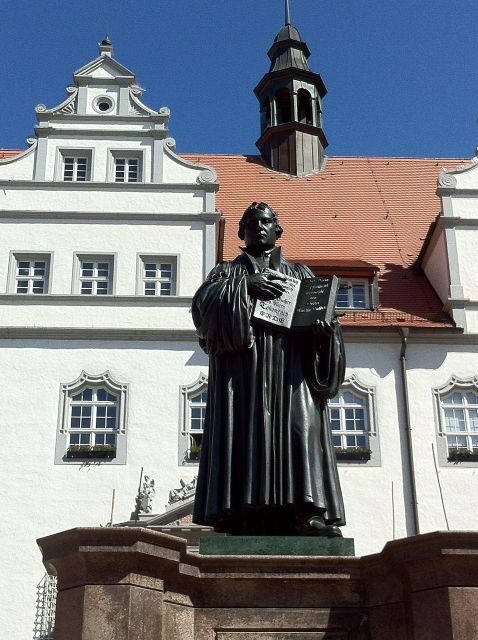
The tour starts in front of Luther’s House at Collegienstraße 54, 06886 Lutherstadt Wittenberg. That matters more than it sounds. You begin in the personal space of the man at the center of everything, not at some far-off monument.
From there, you move through the historic core where the Reformation sites are concentrated. The guide walks with your group only (no mixing), so the first few minutes set the tone: where you’re going, why it mattered, and what to watch for.
If you’re visiting in cooler weather, plan for wind and cold along the route. One of the best bits of real-world guidance from this style of tour is how well a good guide keeps everyone engaged even when the day feels brisk.
Castle Church and the 95 Theses Door: The Moment Everyone Still Names
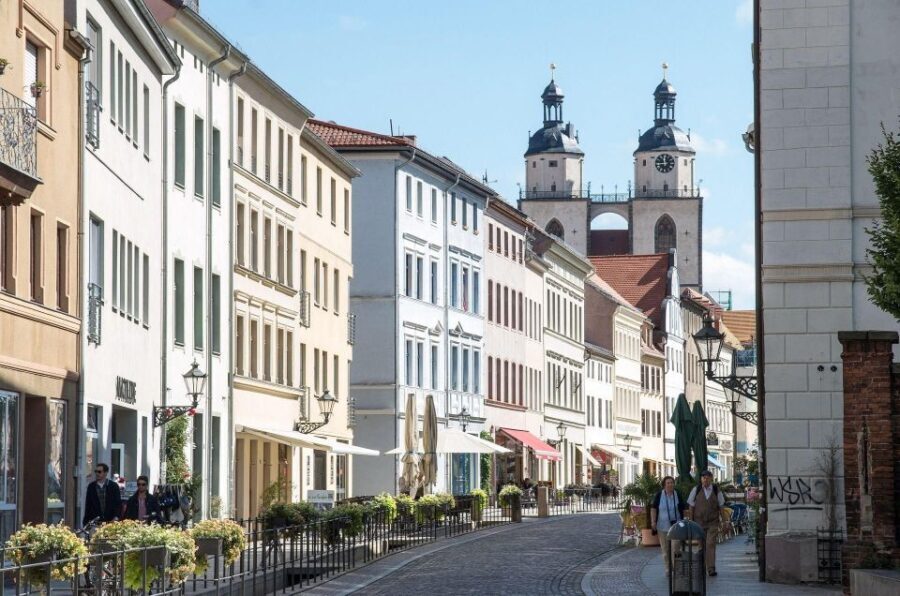
The centerpiece stop is the Castle Church and the famous door where Martin Luther nailed his 95 Theses. The date anchors the story: October 31, 1517. That’s the kind of detail you’ll remember, because it’s tied to the physical setting right in front of you.
Here’s what makes this stop valuable for your understanding: it’s not just about the act. It’s about why it spread and why it stuck. The guide’s job is to connect that door to the broader shift that followed, and to explain how a local action became a religious revolution.
As you look at the area, pay attention to how the guide frames the conflict. The Reformation wasn’t only theological; it also involved power, institutions, and threats tied to authority. When the story is told in the context of what you’re standing near, it feels less abstract.
A helpful thing to expect from a good guide in this location: you’ll likely get connections to art and the way ideas were presented in public. In past experiences with guides like Silvio, the storytelling has included connections across literature and visual culture, which makes the churches and memorial sites feel more “alive” instead of purely instructional.
Stadtkirche: Luther Preached Here, and History Keeps Repeating
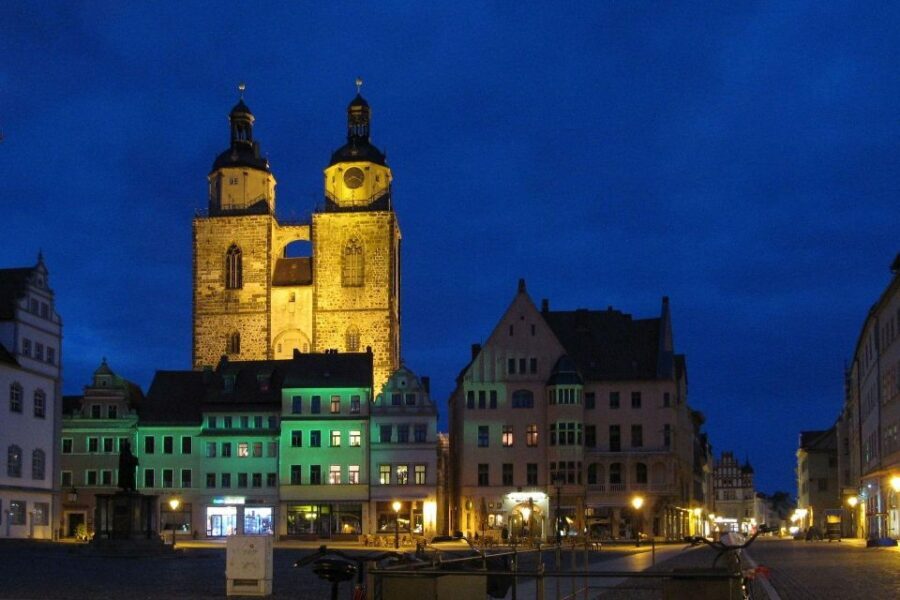
Next comes the Stadtkirche, the older church where Luther preached and where he and Katharina von Bora were married. This is where the story moves from public debate into personal life.
That marriage detail is more than a footnote. It helps you understand that the Reformation wasn’t only about conflict and scripture; it was also about ordinary human decisions—faith expressed through daily life. Once you know that, the church setting feels different, like you can see how belief shaped real relationships.
One of the most distinctive elements tied to this site is that their marriage is reenacted every year during a popular festival. That means the town doesn’t just preserve history behind glass. It revisits it regularly, turning the past into something people in the present actively perform and remember.
If you’re thinking, Wait, how can a wedding reenactment still work centuries later?—that’s exactly the kind of question this tour helps you answer. You’ll see how Wittenberg’s memorial culture keeps the Reformation readable for current visitors.
Practical consideration: you may be in and around church interiors depending on the day and what’s open. Since entrance fees aren’t included, check whether you’ll need tickets for specific areas you want to see.
Luther’s Oak: The Papal Bull, the Fire, and Why the Oak Was Planted
Then you’ll go to Luther’s Oak, a site with one of the most dramatic stories in the whole route. This is where Luther’s supporters burned documents associated with Catholic doctrine, and where Luther himself is described as throwing in the Papal Bull that threatened him with excommunication.
The power of this stop is that it turns a political threat into an image you can hold in your head. Instead of hearing about excommunication only as a historical concept, you get the sense of how serious the moment was—and how visible it was to people in the town.
There’s also a timeline detail that makes the site feel thoughtfully remembered: the oak tree was planted in 1830 to mark and celebrate this event. That means you’re not only looking at a 16th-century story; you’re also seeing how later generations chose to commemorate it.
What I like about including Luther’s Oak in a walking tour is that it broadens the Reformation narrative. Castle Church and Stadtkirche can stay focused on institutions and preaching. Luther’s Oak adds the street-level drama—the public confrontation and the symbolism of destroying a threat.
If you care about how history becomes memory, this stop rewards you. You’ll see how the town turns an episode into a physical landmark and then builds ongoing meaning around it.
Connecting the Dots: From Wittenberg to a World-Changing Break
One of the most useful parts of a guided route is how it ties each location to the bigger arc. You’ll learn how the events of the 16th century changed the foundations of Christendom, starting from Luther’s life and preaching in Wittenberg.
Wittenberg has also been described as the Rome of the Protestants, and the tour context explains why that nickname fits. A town can carry that kind of identity when the memorial sites are grouped and when the story is repeated through local tradition.
You’ll also hear how many of these Luther memorial sites were added to the UNESCO World Heritage list in 1996. That UNESCO connection matters in a practical way: it signals that the places you’re visiting aren’t just old buildings. They’re part of a recognized historical landscape designed to preserve meaning, not just stone.
A small-but-important takeaway for you: when the guide keeps the story chronological (1517 to the upheavals that follow, plus how later generations commemorate moments like the 1830 oak planting), you leave with a clearer mental map. That’s what makes a walking tour feel worth more than reading a brochure.
How Customizing Works in a Private 2-Hour Group
The tour is private, and that’s the main reason people feel satisfied with the time. You’re not sharing your route with strangers, so the guide can adapt without losing control of the pace.
You can also expect possible customizing on the spot. If you’re more interested in Luther’s life than the politics, or you want more about Katharina von Bora and the marriage festival tradition, a good guide can shift emphasis while still hitting the key sites.
This flexibility is one of the reasons a guide like Silvio stands out in previous experiences. In at least one case, the guide adapted to the group’s interests and kept everyone engaged despite a cold winter day. That tells me the real skill here isn’t only having facts—it’s delivering them in a way that keeps your group listening.
If you like tours where you can ask follow-up questions, this format is a strong match. If you prefer silent sightseeing with minimal talking, you might find a guided walk a bit interactive. But you can usually set the tone early by telling your guide what you want to focus on.
Price and Value: When $280 Per Group Makes Sense
At $280 per group (up to 15), this tour isn’t priced like a solo museum guide. It’s priced like shared value. The longer-term question for you is: how many people are in your group?
If you’re traveling as a couple or a small group, it can still be a fair way to see multiple major sites with one local professional, without hunting down separate tickets and explanations. If you have a bigger group up to 15, the value improves quickly because the cost is capped per group rather than per person.
You should also factor in that entrance fees aren’t included. That’s normal, but it can change the final cost a bit depending on how many church areas you enter. Still, even with that in mind, the tour’s value comes from interpretation: someone guiding you through key moments like the door with the 95 Theses and the story behind Luther’s Oak.
In other words, you’re paying for the connections. In Wittenberg, that’s the difference between walking past buildings and actually understanding why those buildings matter.
What to Wear, Bring, and Plan for a Comfortable Walk
This is a walking tour in a historic center. That means your comfort affects your enjoyment more than you might expect.
I recommend:
- Comfortable shoes with good traction
- Layers if you’re visiting in cool months
- A jacket you can handle if you’re outside for parts of the route
Even on a short 2-hour walk, weather can shift how long you want to pause for stories and photos. The upside is that this itinerary is compact, so you’re not stuck on the move all day.
Also, if you have specific questions you care about—like what the Papal Bull threat meant in context or how Katharina von Bora fits into the Reformation story—write them down on your phone. A private guide can make short work of what you’re curious about.
Who This Tour Is Best For in Wittenberg
This tour is a great fit if you want:
- A focused walk through the most famous Luther-linked locations
- Clear explanations of key events like the 95 Theses and the start of the Protestant Reformation
- Time spent understanding people, not just dates
It also works well for visitors who feel overwhelmed by religious history in general. Instead of reading everything at once, you follow a route and hear the story in pieces tied to real places.
If you’re traveling with German-speaking friends or family, the availability of English and German guidance is a plus. If your group has mixed interests, the private setup and on-the-spot customizing can help prevent anyone from feeling bored.
If you’re the type who only wants outdoor viewing and quick stops, you might feel the tour is more explanatory than you’d like. But if you enjoy hearing how sites connect to events, you’ll probably leave with more than photos.
Should You Book This Wittenberg Private Guided Walking Tour?
I’d book it if you want a short, high-impact way to understand why Wittenberg became a world reference point for the Reformation. The combination of the Castle Church door linked to October 31, 1517, the Stadtkirche connection to Luther and Katharina von Bora, and the dramatic Luther’s Oak episode gives you a storyline that feels complete in just two hours.
I’d skip it if you’re planning a very casual stroll with no interest in guided context, or if you’re expecting everything to be fully self-directed. This is a guide-led experience, and its strength is interpretation.
If you can match the format—private group, good shoes, and some curiosity—this tour is one of the most sensible ways to spend time in Wittenberg without turning your day into a logistics puzzle.
FAQ
How long is the Wittenberg private guided walking tour?
It lasts 2 hours.
Where does the tour meet?
The meeting point is in front of Luther’s House, Collegienstraße 54, 06886 Lutherstadt Wittenberg.
Is this tour private?
Yes. It’s a private group tour with your guide working with your group only.
What group size is it priced for?
The price is listed per group up to 15 people.
What languages are offered?
The live guide is available in English and German.
What’s included in the price?
A local professional guide who is with your group only. There may also be possible customizing with your local guide on the spot.
Are entrance fees included?
No. Entrance fees are not included.
Can I change plans if my trip is uncertain?
You have free cancellation up to 24 hours in advance for a full refund, and there is also a reserve now & pay later option.
What key sites does the tour cover?
You’ll see Luther’s Theses location tied to the Castle Church door, Stadtkirche, Katharina von Bora’s story connected to the marriage, and Luther’s Oak.