REVIEW · LEIPZIG
Tower tour of St. Thomas Church
Book on GetYourGuide →Operated by Leipzig Erleben GmbH · Bookable on GetYourGuide
Leipzig changes at 50 meters up. A tower climb like this is packed with surprises, from 232 steps to the historic bells at the top. I also like that the guide builds the story as you go, with real 1813 clues carved into the tower, not just a quick look-and-leave. The main catch: it’s not for everyone, since it isn’t suitable for wheelchair users and the stairs can be a lot for people who don’t do steps well.
You get a focused, 1-hour guided experience (live guide in German) that starts at the tower entrance on Thomaskirchhof and ends right back where you began. Expect a calm, orderly climb with set stops along the way, plus a look at the tower keeper’s apartment that ran from 1533 to 1917. If you hate tight stairs or you’re dealing with altitude sensitivity, you’ll want to think twice before booking.
What you’ll walk away with is more than a view. You’ll come out understanding how St. Thomas Church watched over Leipzig for centuries—and why the tower’s preserved chimes still matter.
In This Review
- Key Things You’ll Notice on This Tower Tour
- How the Thomaskirchhof Tower Tour Fits Into Your Day
- Climb St. Thomas Church: 232 Steps for a 50-Meter Leipzig View
- Guided Stops That Turn the Tower Into a Story
- 1813 Battle Clues Up Close: Graffiti and a Cannonball
- Tower Keeper Apartment (1533–1917) on Three Levels
- Historic Bells and Their Meaningful Sounds
- Price and Timing: Is $16 Good Value for This Tour?
- Who Should Book This Tower Tour
- Final Take: Should You Book the St. Thomas Church Tower Tour?
- FAQ
- How long is the St. Thomas Church tower tour?
- How high is the viewpoint?
- Is a guide included?
- What is the price?
- What can I see besides the view?
- Where does the tour start and end?
- Is it suitable for children or wheelchair users?
Key Things You’ll Notice on This Tower Tour
- 50-meter panoramic view over Leipzig, reached by climbing the tower
- Guided ascent with stops, so you’re not just counting steps
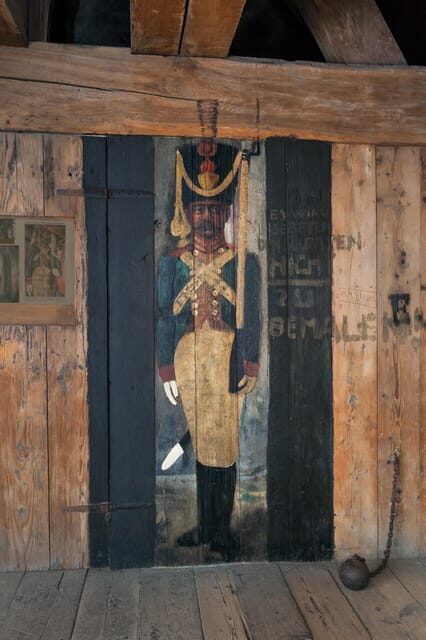
- 1813 “graffiti” of a Saxon foot artilleryman, visible in the masonry
- A cannonball stuck in the tower beams, tied to the fighting in 1813
- Tower keeper apartment (1533–1917) across three levels
- Historic bells with distinct sounds and meanings
How the Thomaskirchhof Tower Tour Fits Into Your Day
This is a simple plan that works well even if your Leipzig schedule is tight. The tour runs about 1 hour, and the pace is designed for people who want both the climb and the story without turning it into a half-day event.
The meeting point is the entrance to the tower at Thomaskirchhof, and the tour ends back there. That matters because you don’t need to plan extra transport or worry about getting turned around in the neighborhood after your climb.
Price is listed at $16 per person, which is pretty reasonable when you factor in two things: you’re paying for a guided experience plus admission to the tower itself. In other words, it’s not just a “stand there and look” ticket. You’re paying for someone to explain what you’re seeing as the tower gradually opens up the city view.
Language is German, so if you don’t read much German, this can still be fun visually—but it’s best if you’re comfortable with guided tours or at least can follow along with some key words.
Also note the practicality: this isn’t stroller friendly, and it’s not wheelchair accessible. The tour is designed around climbing, not around flexibility for mobility needs. And if you have altitude sickness concerns, the description says it’s not suitable—so trust that warning.
You can also read our reviews of more tours and experiences in Leipzig.



Climb St. Thomas Church: 232 Steps for a 50-Meter Leipzig View
The headline is the view. You’ll climb to a height of about 50 meters and look out over Leipzig from the tower.
The climb itself is part of the attraction. With 232 steps, it’s not a “five-minute workout,” but it’s also not a marathon. If you can handle stairs steadily, you’ll likely find the steps feel earned rather than punishing—especially because the guide makes several planned stops along the way.
One underrated value of a guided tower climb is that it changes your attention. Instead of thinking, How long is this? you start noticing details: where light falls in the stairwell, what the tower surfaces reveal, and how the tower’s history connects to the city around you. By the time you reach the height, the view feels like a payoff, not just the destination.
What the height means in real terms: Leipzig’s streets, blocks, and landmarks can look very different when you’re above the roofline. From a tower, you get the “map in your head” effect—your brain starts linking major streets and neighborhoods into one layout.
If you’re traveling with time limits, the timing helps. At roughly 1 hour, you’re unlikely to get stuck on the wrong side of a meal schedule or evening plans.
Guided Stops That Turn the Tower Into a Story
This tour isn’t just about reaching the top. The ascent includes multiple stops where your guide gives context about the church and the city of Leipzig.
That’s the main reason I think this works better than self-guided climbs. When you’re inside a historic church tower, details can look random if nobody explains them. With a guide, those details become clues—and the climb becomes a guided walk through Leipzig’s layers.
The tour style is built around “look, then understand.” As you move upward, the story keeps pace with your changing perspective. That makes the tower feel like a timeline rather than a staircase.
You’ll also see that the tower is preserved in more than one way. It’s not only the architecture that’s intact; the chimes are described as completely preserved as well. So as you climb, you’re learning what was cared for—and why.
One more practical detail: the tour is live and in German. That means your experience will be shaped by the guide’s explanations. If German is your weak spot, you can still enjoy the physical experience and the visible 1813 features, but full appreciation is easier when you can follow the tour narrative.
1813 Battle Clues Up Close: Graffiti and a Cannonball
If you like history that feels immediate, this is a highlight you’ll remember. During the climb, you’ll come across two specific 1813 elements: a historical “graffiti” and a cannonball lodged in the tower.
The graffiti is tied to a Saxon foot artilleryman from the Battle of Nations in 1813. The inscription is in the masonry, and it’s described as evidence of what happened during that conflict. You’re not just hearing about the battle—you’re seeing a mark left in the building itself.
The cannonball is equally striking. The description says it got stuck in the beams of the tower during fighting in 1813. Even without dramatic staging, that’s the kind of object that makes a battle feel close. It’s a physical result of conflict, still present in the structure.
Why this matters for your travel experience: wars in Europe often get discussed in big, general terms. But these kinds of preserved marks translate those events into something you can point to. They help you connect Leipzig to the wider European story in a way that feels concrete.
And because this happens during the ascent, it keeps the climb from becoming repetitive. Every time the guide stops you, something changes—new context, new object, new reason to look around.
Tower Keeper Apartment (1533–1917) on Three Levels
Another standout part of the tour is the historic tower keeper’s apartment. You’ll see it described as inhabited from 1533 to 1917, and it spans three levels.
This is one of those experiences that shifts you from big-history thinking to everyday-life thinking. From the tower keeper’s apartment, you can imagine what it meant to guard the city for long periods. The tour indicates you’ll learn first-hand what their duties were and how their families experienced Leipzig’s transformation over the centuries.
The three-level layout matters because it suggests a real home environment, not just a storage space. You’re moving through different parts of the apartment as part of the guided narrative, which makes it easier to picture how work and living would have blended.
In a lot of European churches, the main floor and the exterior get the attention. Here, the tour gives you a different angle: the view isn’t only outward. You also get a perspective inward—how people lived within the tower and how the tower functioned as a working post.
If you’re the kind of traveler who likes practical history—how people actually did their jobs—this section is likely to feel especially satisfying.



Historic Bells and Their Meaningful Sounds
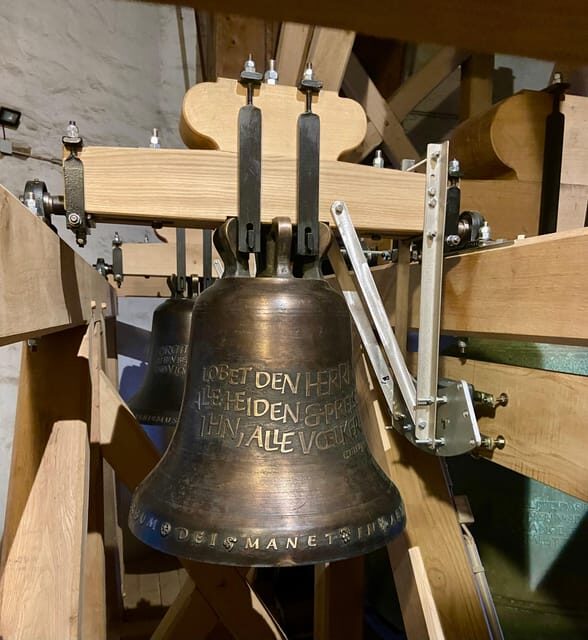
At the top, the tour turns from “see the marks” to “hear the story.” The description emphasizes the church’s bells and says the chimes are completely preserved.
You’ll visit the tower and see the bells, and the guide explains what makes each bell special. Each one has its own sound and its own meaning, and the tour is designed to help you understand what messages they proclaimed.
Even if you don’t catch every word of the explanation in German, the concept is easy to grasp: bells weren’t only music. They were communication. In a city, they can mark time, events, and moments that mattered.
That’s why this part pairs well with the rest of the tour. Earlier stops deal with the tower’s role during conflict and long-term guarding. The bells connect the tower to day-to-day public life—how the church tower worked as a signal system for Leipzig.
Price and Timing: Is $16 Good Value for This Tour?
At $16 per person for a guided tower visit, I’d call it solid value—mainly because you’re getting three things together that often cost separately elsewhere: a guided climb, tower admission, and access to the tower interior story features.
You’re not only paying for the view at 50 meters. You’re also paying for:
- guided stops on the ascent,
- 1813 features like the Saxon foot artilleryman inscription and the cannonball,
- and the tour keeper apartment plus the bell information.
The tour duration helps too. A lot of “heritage” activities balloon into something longer than you planned. Here, it’s roughly 1 hour, which makes it easier to fit into sightseeing days.
The one “timing” consideration is starting times. The schedule depends on availability, so you’ll want to pick a slot that matches your walking stamina and the rest of your day.
Who Should Book This Tower Tour
This is a strong match if you want a mix of views and tangible history. If you enjoy learning as you move—rather than standing still—the guided stops during the climb will keep you engaged.
It’s especially good for:
- people who like city panoramas but also want context,
- history-focused travelers who enjoy preserved details from 1813,
- travelers who don’t mind stairs in exchange for great payoff.
It’s not a match if:
- you need wheelchair access,
- you’re traveling with children under 6,
- you’re avoiding stairs or you have concerns about altitude sickness.
If you’re comfortable climbing, even at a steady pace, this feels like a “do it once” Leipzig experience. It’s not only about what you see from above. It’s about why the tower mattered below—and what’s left behind to prove it.
Final Take: Should You Book the St. Thomas Church Tower Tour?
Yes, if your ideal Leipzig day includes a 50-meter panorama plus a guided, story-driven climb. For $16, the value comes from more than the height: you get the 1813 markers, the tower keeper apartment across three levels, and the explanation of the historic bells.
I’d book it sooner rather than later if you enjoy structured sights. The tour is timed well, it loops back to the same meeting point, and it’s designed around “look up, then understand.” If stairs are a problem for you, skip it—this one is built on steps, not alternatives.
If you want a memorable tower experience in Leipzig that connects view, sound, and history in one hour, this is a very worthwhile choice.
FAQ
How long is the St. Thomas Church tower tour?
The tour lasts about 1 hour.
How high is the viewpoint?
The panoramic view is from about 50 meters up.
Is a guide included?
Yes. The tour includes a live guide, and the guide language is German.
What is the price?
The price is listed as $16 per person.
What can I see besides the view?
You’ll visit the tower area with the historic bells, and you’ll see 1813-related features including the Saxon foot artilleryman inscription and a cannonball stuck in the tower beams. The tour also includes the tower keeper’s apartment across three levels.
Where does the tour start and end?
It starts at the entrance to the tower at Thomaskirchhof and ends back at the meeting point.
Is it suitable for children or wheelchair users?
It is not suitable for children under 6 years and not suitable for wheelchair users.