REVIEW · BERLIN
Tour in Berlin from Warnemünde and Rostock Cruise Port
Book on GetYourGuide →Operated by T J Travel · Bookable on GetYourGuide
Berlin hits differently when you see it in daylight. This cruise-port tour strings together big landmark stops with meaning-heavy sites like the Holocaust Memorial and the Topography of Terror. I like that it’s guided by an English-speaking professional and run with a clear goal: back to your ship on time. One thing to consider is the long day and the ride time—Berlin is far enough that you’ll feel the hours on the coach.
What I like most is the balance: West Berlin glamour at Charlottenburg Palace and Ku’damm, then straight into the Germany-you-can’t-ignore stops around the Reichstag, the Holocaust Memorial, and the Cold War. The other clear win is the pacing for a cruise schedule: you get short, focused guided visits rather than wandering and guessing. The possible downside is that some stops are photo stops with limited time, so if you love deep museum time, you’ll have to come back on your next trip.
If you want a fast, thoughtful Berlin day without stress, this is built for you. Just plan on comfort (the coach is air-conditioned, but you’ll still sit a lot) and bring snacks or patience for the midday break.
In This Review
- Key highlights at a glance
- Berlin in one long day: why this works from a cruise port
- The coach ride from Warnemünde: comfort, timing, and what to expect
- Charlottenburg Palace and the Ku’damm pass: West Berlin charm without the guesswork
- Reichstag exterior and Brandenburg Gate: the postcard views with political meaning
- Holocaust Memorial: where a photo stop becomes a guided moment
- Alexanderplatz and the Victory Column pass: big city scale in quick glimpses
- Hitler’s bunker area: the one longer stop for reflection, then lunch
- Museum Island and Bebelplatz: UNESCO architecture meets 1933 censorship
- Checkpoint Charlie: Cold War tension, explained on the ground
- Topography of Terror: the last stop that sticks with you
- Price and logistics: what $211 buys you (and what it doesn’t)
- Who this tour fits best (and who should choose another plan)
- Should you book this Berlin cruise excursion?
- FAQ
- How long is the Berlin tour from the Warnemünde cruise port?
- Where do I meet the guide?
- Is transportation included, and is it air-conditioned?
- Will I have time to eat during the tour?
- Is the tour guided in English?
- Is the tour wheelchair accessible?
- How does the tour handle getting back to the ship on time?
Key highlights at a glance
- Air-conditioned coach with guaranteed return to your ship, so you’re not gambling with Berlin traffic
- Charlottenburg Palace with a real guided walk, not just a drive-by
- Reichstag exterior + Brandenburg Gate for the classic “Berlin skyline” photos
- Holocaust Memorial and Topography of Terror for a guided look at difficult history
- Checkpoint Charlie and Bebelplatz that connect the Cold War and 1933 Nazi book burnings
- One longer stop at Hitler’s bunker area with time to breathe, eat, and use restrooms
Berlin in one long day: why this works from a cruise port
This tour is basically a “greatest hits” route, but with intent. Berlin can sprawl, and the city’s meaning changes block by block—so the value here is having a plan that links landmarks to history without you needing a subway map and a full day of figuring it out.
You’ll see both the polished, ceremonial Berlin—palaces, monuments, grand government symbolism—and the places that force you to slow down. I appreciate that the guide doesn’t treat these as random stops. Each one gets enough context to make the photos feel earned.
The day is long at 10 hours, and you should know what that means: your feet will be walking on and off throughout, but the biggest time-sink is the coach ride. For cruise passengers, that’s often the price of admission. If you’re worried about fatigue, this route still makes sense because it keeps the “wandering” part small.
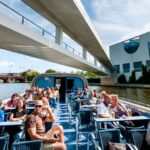
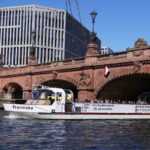
You can also read our reviews of more boat tours in Berlin
The coach ride from Warnemünde: comfort, timing, and what to expect
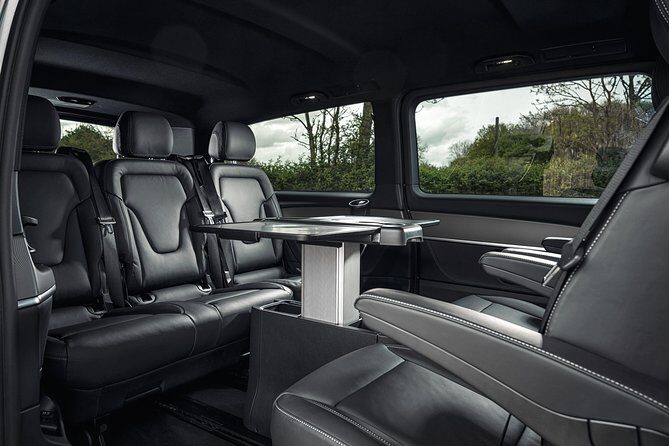
You start at the Warnemünde Cruise Center, then board a modern, air-conditioned coach for the ride into Berlin. The schedule lists about 3 hours each way, which is plenty for a nap, but don’t be shocked if your real door-to-door timing runs long due to traffic and crowds. Berlin roads can get busy, and large group pickups can stretch timing.
This is where I’d give you two practical tips:
- Wear shoes you can stand in. Some stops are short, but you still move.
- Bring a layer. Coaches can swing from chilly to warm.
One more cruise-specific detail matters: the operator promises a guaranteed return to your ship on time. That doesn’t mean traffic won’t affect the day; it means the plan accounts for the ship window. For many cruise travelers, that guarantee is worth more than squeezing in an extra site that could jeopardize the return.
Charlottenburg Palace and the Ku’damm pass: West Berlin charm without the guesswork
Your first Berlin stop is Charlottenburg Palace, with a photo stop and a guided tour (about 30 minutes). This matters because a palace outside the context of the guide can feel like “pretty buildings.” With the explanation, you get a better sense of the style and why this palace is such an anchor for Berlin’s royal-era story.
Then you’ll cruise past Kurfürstendamm (Ku’damm), Berlin’s famous shopping and cultural thoroughfare. Even if you don’t hop out, it’s a useful contrast. One side of the city feels curated and grand; the other side of the day moves you into memory and politics.
If you’re deciding whether West Berlin belongs on your itinerary, this is a solid way to include it. You don’t lose half the day; you get the visual sense of the city’s more elegant side and then pivot.
Reichstag exterior and Brandenburg Gate: the postcard views with political meaning
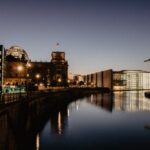
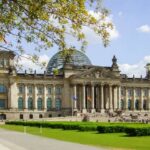
Next comes the Reichstag Building exterior for a short photo stop and a guided look (around 15 minutes). You’re not going inside, but the façade still lands. This is one of those places where understanding the role of the building changes how you read the architecture. It’s tied to German democracy, and the guide’s job is to connect what you see to what it represents.
From there, you’ll reach the Brandenburg Gate, another photo stop plus guided time (about 10 minutes). The timing is brief, but the gate is one of Berlin’s best “distance markers.” It’s the kind of landmark that helps you understand the city’s layout and the idea of unity that grew around it over time.
Here’s the practical point: when you’re on a time-limited tour, you want landmarks that tell you where you are and what Berlin is about. Reichstag and Brandenburg Gate do both.
Holocaust Memorial: where a photo stop becomes a guided moment
The Holocaust Memorial is next, with a photo stop and guided explanation (about 15 minutes). This is not a place to rush through on your own. The design—2,711 concrete slabs spread across a large field—can feel abstract until someone helps you read it as a space meant for reflection.
Don’t treat this as another “sight.” Plan to slow your pace for a few minutes. Bring yourself back to the guide’s framing, because the site is built to make you feel something physically: disorientation, silence, and the sense of scale.
A small practical note: the ground can be exposed, depending on weather. Keep an eye on your clothing choices. You’ll want comfort more than fashion here.

Alexanderplatz and the Victory Column pass: big city scale in quick glimpses
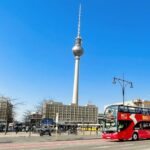
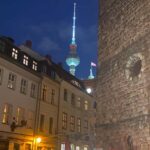
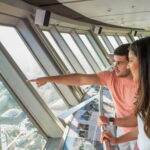
You’ll pass Alexanderplatz, including the World Clock and the Fernsehturm (TV Tower) area. This is the part of the day that’s more about orientation and “getting a feel for Berlin’s present.” You won’t have long here, but you’ll notice how Berlin mixes monumental, practical urban life.
You also pass the Victory Column (Siegessäule), topped with the golden figure of Victoria, honoring Prussian military victories. The guide’s context turns the column from a random monument into something you can read as part of a historical worldview—one that later got reinterpreted as Berlin changed.
These passes are short, but they’re useful. They prevent the day from feeling like only museums and heavy sites. Berlin is a living city, and seeing that urban layer helps the rest of the history land better.
Hitler’s bunker area: the one longer stop for reflection, then lunch
The most emotionally serious stop on this route is the brief time at Hitler’s bunker site (the Führerbunker area). You’ll have a photo stop and guided time (about 1 hour), plus a break that functions as your lunch window. The guide will help you find a place with convenient dining options and restroom facilities nearby.
This is the part of the day where your energy matters. The tour provides time, but you should use it wisely:
- Eat something that keeps you going. Food isn’t included, so plan ahead.
- Use the restroom before you walk the memorial-style areas.
Even if you’ve read books about Nazi Germany, seeing the bunker area’s location is different. The guide’s framing helps you understand that this isn’t just a “dark tourist stop.” It’s a marker of how catastrophe happened—and how close it was to everyday life.
If you’re the type who gets overwhelmed in heavy historical spaces, pace yourself. Take the break seriously.
Museum Island and Bebelplatz: UNESCO architecture meets 1933 censorship
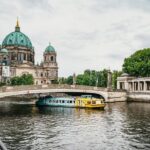
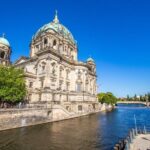
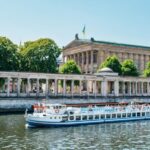
After lunch, the route heads toward Museum Island for a short guided visit (about 15 minutes). Museum Island is recognized as a UNESCO World Heritage Site, and the area includes major landmarks like Berlin Cathedral and the Old Museum. Even in a quick stop, the architecture and layout help you understand why this part of Berlin matters.
Next is Bebelplatz, with a guided visit (about 10 minutes). This is the site tied to the Nazi book burnings in 1933. The “book” story hits harder when you realize censorship doesn’t just erase voices—it replaces how a society thinks.
This stop is a reminder that history is not only about buildings and battles. It’s about information, language, and who gets to speak.
Checkpoint Charlie: Cold War tension, explained on the ground
You’ll then reach Checkpoint Charlie, with a guided stop (about 20 minutes). This is the most famous crossing point between East and West Berlin during the Cold War, and the guide connects it to the real atmosphere of that era—especially the 1961 standoff moments when tanks faced off.
Checkpoint Charlie is also one of those places where you can easily end up with a touristy vibe. The best way to make it meaningful is to use the guide’s context and pay attention to what the crossing meant in daily life, not just the location itself.
Even if you don’t love Cold War history, the explanation makes it click. Berlin is basically a living map of that division.
Topography of Terror: the last stop that sticks with you
Your final destination is Topography of Terror, with a photo stop and guided time (about 15 minutes). This area is tied to the former headquarters of the SS and Gestapo, and it’s meant to help you contemplate the consequences tied to the Berlin Wall era and the Nazi regime.
It’s short on this tour, so don’t expect a full museum experience. Instead, think of it like a guided “closing chapter” to the day: you’ve seen the symbols (Reichstag, Brandenburg Gate), the memorial spaces (Holocaust Memorial), the human-political turning point (bunker area), and the divided-city markers (Checkpoint Charlie). Topography of Terror ties it together.
When the day ends, you’ll likely feel a little quiet. That’s normal. This tour doesn’t end with a shopping street; it ends with memory work.
Price and logistics: what $211 buys you (and what it doesn’t)
At $211 per person for a 10-hour day, this isn’t a budget hop-on-hop-off. But it can still feel like good value if you compare it to the alternative: paying for multiple tickets, figuring out transportation across a spread-out city, and risking timing with a cruise departure.
You do get several key cost-savers included:
- Pickup and drop-off from the cruise port
- Guaranteed return to your ship on time
- Modern air-conditioned transport
- A certified English-speaking guide
- Customer support (24/7)
What’s not included is food and beverages. The itinerary includes a lunch break near the bunker area, and the guide helps you find convenient dining and restrooms. Still, you’ll want to budget for meals and snacks.
For me, the best “value signal” is the mix of guided time with realistic stop durations. You’re not paying to stare at monuments for hours. You’re paying for a guided day plan that gets you back to the ship without panic.
Who this tour fits best (and who should choose another plan)
This tour fits well if you:
- Are on a cruise schedule and need a time-efficient Berlin hit
- Want both the iconic skyline and the harder historical sites with context
- Prefer guided navigation over subway planning
It may not fit you if:
- You need wheelchair access (it’s not wheelchair accessible)
- You get strained by long sits and transfers (even with comfort, it’s a long day)
- You want longer museum time or deep interior access
If you’re traveling with a stroller, note that strollers are allowed, but the overall route still involves walking in and out of stops. Infants must sit on laps, and the tour notes a moderate fitness level requirement.
Should you book this Berlin cruise excursion?
I’d book it if you want a well-paced Berlin day that covers the big sights and the key memorials without leaving you to manage logistics. It’s especially compelling when your time is limited and you want the guide to make sense of places like the Holocaust Memorial, Bebelplatz, and Topography of Terror.
I’d skip or swap tours if your priority is long museum hours, major interior visits, or step-free comfort. Since it’s not wheelchair accessible and several stops are brief, this one is designed for people who can handle a fast rhythm.
If that sounds like you, this tour has the right mix: iconic Berlin visuals by day, plus the serious sites that explain why the city looks the way it does today.
FAQ
How long is the Berlin tour from the Warnemünde cruise port?
The tour runs for 10 hours total.
Where do I meet the guide?
You meet at the Warnemünde Cruise Center holding a sign that reads J A T.
Is transportation included, and is it air-conditioned?
Yes. You get modern air-conditioned coach transport, with pickup and drop-off from the cruise port.
Will I have time to eat during the tour?
Food and beverages are not included, but there is a break time during the stop near the bunker area, and the guide will help you find a place to eat and use restrooms.
Is the tour guided in English?
Yes. There is a certified English-speaking guide.
Is the tour wheelchair accessible?
No. The tour is not wheelchair accessible. Strollers are allowed.
How does the tour handle getting back to the ship on time?
The tour includes a guaranteed return to your ship on time, and the operator advises that most tours depart about 30 minutes after ship arrivals.