REVIEW · BERLIN
The Old Berlin Tour: Travel Through Time With a Historian
Book on Viator →Operated by Stewart Sean Devin · Bookable on Viator
Berlin tells its story one block at a time. This Old Berlin Tour is built like a guided timeline, with an English-speaking historian helping you connect medieval sites to the Berlin Wall without getting lost in dates. I especially loved how the guide, Sean Stewart, pushes you to notice with a purpose instead of snapping photos constantly, and I liked the small-group feel (up to 8) that keeps the pace easy and the questions real. The main drawback to watch for is that it’s only about 2 hours, so you won’t linger long at any one stop.
If you want Berlin to make sense fast, this walk does that job. You start at Espresso House near Rathausstraße, then move through four focused stops in roughly 15 minutes each, ending at Berlin Cathedral. Bring comfortable shoes and plan for good weather—this experience needs it to run smoothly.
In This Review
- Key Points Worth Knowing Before You Go
- Why This Old Berlin Walk Feels Like Reading a City
- Price and Timing: What $23 Buys You in About Two Hours
- Finding the Group: Alexanderplatz Area Convenience, Clear Meeting Point
- Stop 1: Alexanderplatz and the Idea of Vanished Streets
- Stop 2: Franziskaner Klosterkirche, Berlin’s Medieval Romantic Ruin
- Stop 3: St. Mary’s Church and the Weight of Medieval Importance
- Stop 4: Nikolaiviertel and Reconstructed Medieval Streets
- Walking Pace, Group Size, and How Sean Stewart Teaches
- What to Expect When You Finish at Berlin Cathedral
- Who This Tour Fits Best (And Who Might Prefer Something Else)
- Weather, Comfort, and Practical Tips That Actually Help
- Should You Book the Old Berlin Tour?
- FAQ
- How long is the Old Berlin Tour?
- What does the $23 price include?
- Where do I meet for the tour?
- Where does the tour end?
- Are tickets required for the stops?
- Do I need to plan for food or drinks?
- What’s the group size?
- What happens if weather is bad?
- What’s the cancellation policy?
Key Points Worth Knowing Before You Go
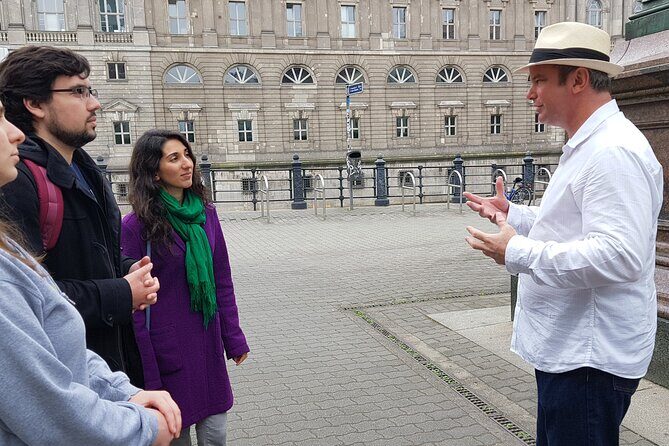
- Small group, big attention: Maximum of 8 people keeps the conversation human.
- Historian-led storytelling: You get context that links sites across centuries, from medieval times to the Berlin Wall.
- Easy walking pace: The route is designed so you can enjoy the sights without rushing.
- Iconic stops with clear purpose: You visit famous areas, but the guide explains what to look for and why it matters.
- Free admission at each listed stop: The stops are listed with free ticket entry.
- Starts and ends in prime areas: Alexanderplatz to Berlin Cathedral is a convenient, central route.
Why This Old Berlin Walk Feels Like Reading a City
Berlin is a city made of layers. One era sits next to the next, and the same street feeling can mean totally different things depending on which century you’re “reading” right now. That’s the magic of this tour: you don’t just see landmarks—you learn how they fit into a larger story.
I like that the guide’s style is practical. Sean Stewart tends to start by checking what you already saw and what you want next, which helps the walk feel tailored instead of cookie-cutter. He also frames Berlin as a place of changing pieces—like a chess game where moves keep reshaping the board—so the contradictions start to feel logical.
The other thing I liked is that the tour doesn’t treat history like a lecture. It’s more like walking with someone who knows the city’s “why,” so you can look at buildings and corners with a sharper eye. If you’ve ever stood in front of a sight and wondered how to connect it to everything else, you’ll get that connection here.
You can also read our reviews of more tours and experiences in Berlin.



Price and Timing: What $23 Buys You in About Two Hours
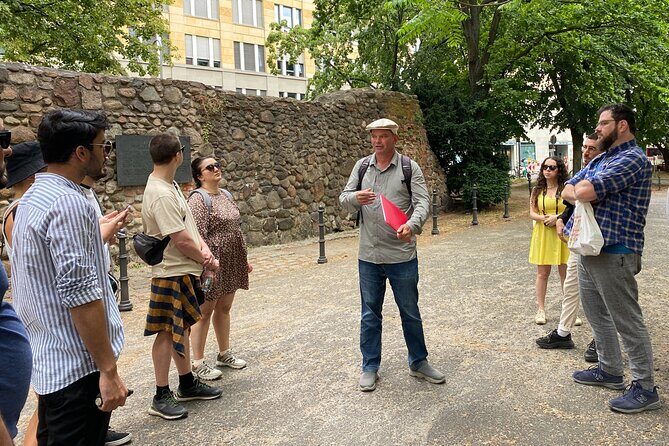
At $23 for a 2-hour walking experience, this is strong value—especially because what you’re paying for isn’t just a route. You’re paying for the services of a professional historian (and a highly rated guide) to help you interpret what you’re seeing.
Here’s what to keep in mind so you don’t feel rushed: the time is split into short segments (about 15 minutes per stop). That’s great for variety, but it also means you’ll skim the surface at each location. If you want deep time spent inside buildings or a long museum-style pace, you may want a different format for part of your day.
Also, food and drinks are not included. You won’t want to arrive hungry, especially if your day includes more walking afterward. If you’re the kind of person who likes to linger in cafes, plan a snack before you meet or grab one right after you finish near Berlin Cathedral.
Finding the Group: Alexanderplatz Area Convenience, Clear Meeting Point
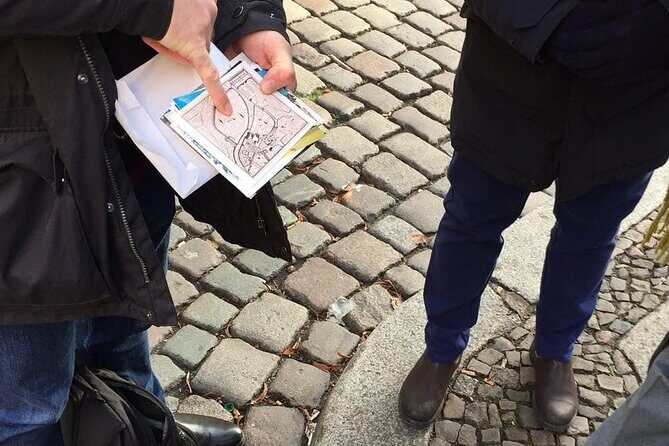
The meeting point is Espresso House, Alea 101, Rathausstraße 6, 10178 Berlin. Starting at a place like this is helpful because it’s easy to locate and it puts you close to central lines for public transport.
The end point is Berlin Cathedral at Am Lustgarten (10178 Berlin). That’s a smart finish because it drops you near another major sight zone, so you can keep exploring without backtracking.
One more detail that matters in real life: you’ll get a mobile ticket and confirmation at booking time. That keeps the process light, especially if you’re juggling museum tickets and transit.
Stop 1: Alexanderplatz and the Idea of Vanished Streets
The first stop is Alexanderplatz, focused on the site of vanished streets and buildings. This is where the tour’s timeline approach really takes shape. Instead of pretending a place exists in one fixed moment, you’re encouraged to think about how Berlin keeps rewriting itself.
In practice, this stop is a good “warm-up” because it prepares your brain for the rest of the walk. You’ll start noticing that the city doesn’t just change—it replaces, and that replacement leaves traces in how the area feels today.
Possible consideration: Alexanderplatz is a busy, modern area (even if you’re only spending around 15 minutes there). If you prefer very quiet sights, you might want to keep your attention anchored to what the guide points out, rather than trying to absorb everything at once.
Stop 2: Franziskaner Klosterkirche, Berlin’s Medieval Romantic Ruin
Next up is Franziskaner Klosterkirche, described as Berlin’s only medieval “romantic” ruin. Even if you’re not a ruin person, I think this stop works because the tour frames it as a window into how medieval Berlin survived into later centuries.
This is also one of the best stops for learning how to “read” atmosphere. Ruins can feel like just scenery unless someone gives you the lens. Here, the guide helps you understand why this kind of site matters to the bigger story of the city.
Time is short at about 15 minutes, so the value is in the explanation you get while you’re standing there. If you’re the type who likes to take photos, go for it—but pay attention to what the guide is telling you first, then take pictures with purpose.



Stop 3: St. Mary’s Church and the Weight of Medieval Importance
Stop three is St. Mary’s Church, an important church from medieval times. This is a different mood from a ruin, and that contrast is part of why the itinerary works.
You’ll get a sense of continuity—how medieval significance isn’t just about what’s broken or reconstructed, but also about what endures as a recognizable center for community and identity. Even with only 15 minutes, the stop helps you avoid the common mistake of treating history as only objects and dates.
If you’re planning your day around indoor viewing, note that this tour is structured as a walking experience with brief stops. The goal isn’t a long visit inside; it’s an informed glance that connects the medieval theme to what comes next.
Stop 4: Nikolaiviertel and Reconstructed Medieval Streets
The final stop before the finish is Nikolaiviertel, described as Berlin’s reconstructed medieval Disneyland. That wording may sound playful, but it points to something useful: reconstruction can help you visualize the past, while also reminding you that what you’re seeing has been shaped by later decisions.
I like this stop because it gives you permission to think critically. When a place is rebuilt, you should treat it as interpretation—an attempt to bring medieval street life into the present—rather than assuming it’s an untouched time capsule.
At around 15 minutes, you’ll likely focus on how the area’s look and layout support the tour’s medieval-to-modern narrative. If you enjoy learning how “history for the public” works, this is one of the more interesting stops.
Walking Pace, Group Size, and How Sean Stewart Teaches
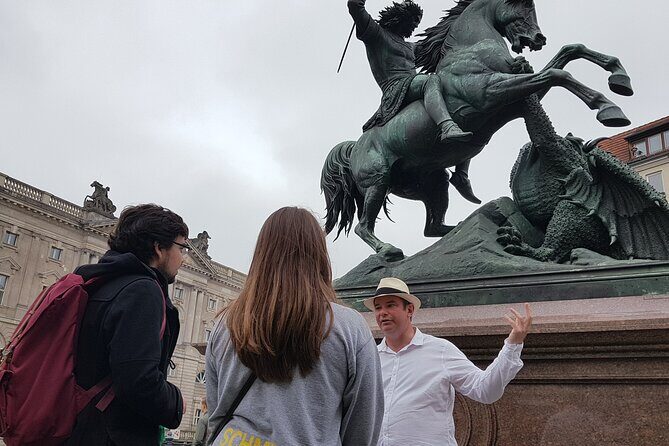
This tour is designed for an easy walking pace and a small group (maximum of 8 travelers). That small size changes the whole feel. Instead of shouting questions to the guide, you can actually ask something specific, and the guide can react to your interests.
Sean Stewart’s approach—at least in how he runs the walk—leans toward teaching you how to read Berlin. One reason this stands out is that the guidance isn’t about snapping photos of everything. It’s about understanding what you’re seeing and why it’s relevant today.
That’s where the tour’s theme of contradiction and irony comes in. Berlin has many layers that don’t always agree with each other, and the guide turns that friction into a teaching tool. You end up with a clearer mental model of how the city changes without losing all its meaning.
What to Expect When You Finish at Berlin Cathedral
The tour ends at Berlin Cathedral near Am Lustgarten. Finishing here is practical because you’re close to another major focal point for your sightseeing day.
By this point, the walk has moved you from medieval themes into the larger modern story that includes the Berlin Wall. The goal isn’t to make you a historian in two hours. It’s to help you look at Berlin and recognize how the past explains the present.
Who This Tour Fits Best (And Who Might Prefer Something Else)
This is a great fit if you want:
- A historian-led overview of Berlin that runs from medieval times to the Berlin Wall
- An English-speaking guide who teaches you how to interpret what you see
- A short, efficient walk that covers major areas without requiring museum tickets
- A small-group format where questions are possible
It may be less ideal if you’re looking for a long, stop-and-stay experience. With 15 minutes per stop, you’re getting an informed highlight, not a deep dive inside every building or exhibit.
Weather, Comfort, and Practical Tips That Actually Help
This experience requires good weather, so check conditions the day of. If weather is poor, you’ll be offered a different date or a full refund.
For comfort, wear shoes you’re happy to walk in for about two hours. You’ll be moving between central locations, so your comfort level matters more than you’d think.
Finally, since food and drinks aren’t included, decide how you’ll handle timing. If you like to eat during breaks, plan a snack either before you start at Espresso House or after you wrap up near Berlin Cathedral.
Should You Book the Old Berlin Tour?
I’d book this if you want Berlin history you can use while you’re walking—especially if you like stories that connect old sites to newer realities. The price is reasonable for what you get: historian storytelling, English guidance, and a tight route that ends in a major sightseeing hub.
Skip it if your ideal day is hours of indoor exploring or if you need a tour that slows down significantly at each stop. But if you want a smart first pass—one that helps you look at Berlin like a historian—this is an efficient, enjoyable choice.
FAQ
How long is the Old Berlin Tour?
It’s about 2 hours.
What does the $23 price include?
You get the services of a professional historian and an English-speaking tour guide. Food and drinks are not included.
Where do I meet for the tour?
Meet at Espresso House, Alea 101, Rathausstraße 6, 10178 Berlin, Germany.
Where does the tour end?
The tour ends at Berlin Cathedral, Am Lustgarten, 10178 Berlin, Germany.
Are tickets required for the stops?
The stops are listed as admission ticket free.
Do I need to plan for food or drinks?
No—food and drinks aren’t included, so you should plan your own.
What’s the group size?
The tour has a maximum of 8 travelers.
What happens if weather is bad?
If the tour is canceled due to poor weather, you’ll be offered a different date or a full refund.
What’s the cancellation policy?
You can cancel for a full refund up to 24 hours before the experience starts. If you cancel less than 24 hours before, the amount paid isn’t refunded.