REVIEW · QUEDLINBURG
Quedlinburg: Guided City Walk – Highlights tour (private)
Book on GetYourGuide →Operated by Quedlinburg-Information · Bookable on GetYourGuide
Quedlinburg feels like a time machine you can walk. On this 2-hour private highlights tour, I love how the guide turns medieval streets into a clear story, starting from Henry I and stretching all the way to today. You’ll see top landmarks like the Town Hall and major churches, plus the half-timbered streets that make Quedlinburg a UNESCO World Heritage Site. The main drawback to plan for: you’ll be on cobblestones and there’s a rather steep pull up to Castle Hill.
What really makes this tour work is the focus. I like the way the route connects buildings to people—famous names like Klopstock and GutsMuths come up in context, not as random name-drops. And you get the comfort of a private group format (up to 12 people), with a German-speaking guide who can respond to questions during the walk. It’s a smart way to get your bearings fast without trying to stitch everything together yourself.
In This Review
- Key highlights at a glance
- Quedlinburg in 2 hours: what the highlights walk really covers
- Starting at the Market Square: Town Hall and the old-town core
- St. Benedikti to Hölle Blasii: churches that explain the town’s logic
- Half-timbered Quedlinburg: the timber-framed houses stop you’ll remember
- The Klopstock connection and the Lyonel-Feininger museum area
- Castle Hill finish: St. Servatii area and the Castle Garden payoff
- Price and value: $141 per group (and what you actually get)
- Logistics that matter: weather, walking surfaces, dogs, and language
- Who should book this tour (and who might want a different option)
- Should you book this Quedlinburg Highlights tour?
- FAQ
- How long is the guided Quedlinburg highlights tour?
- What is the meeting point for the tour?
- Where does the tour end?
- What sights are included along the walk?
- Is entry to St. Servatii included?
- What language is the tour guide?
- Is the tour wheelchair accessible, and are dogs allowed?
Key highlights at a glance
- UNESCO World Heritage old town: See why Quedlinburg’s timber architecture matters
- 1100 years in one walk: Henry I to the present, explained along the streets
- Major landmarks, not just photos: Town Hall, St. Benedikti, and more
- Half-timbered-house focus: Including the half-timbered museum stop
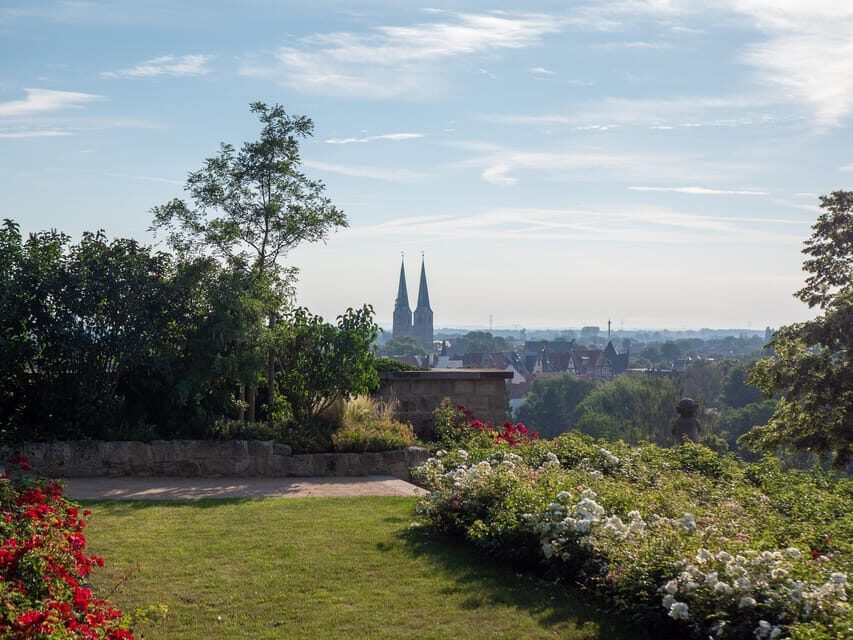
- Castle Hill ending: The climb pays off at Castle Garden and St. Servatii area
- Famous local figures: Klopstock, GutsMuths, and Erxleben woven into the story
Quedlinburg in 2 hours: what the highlights walk really covers
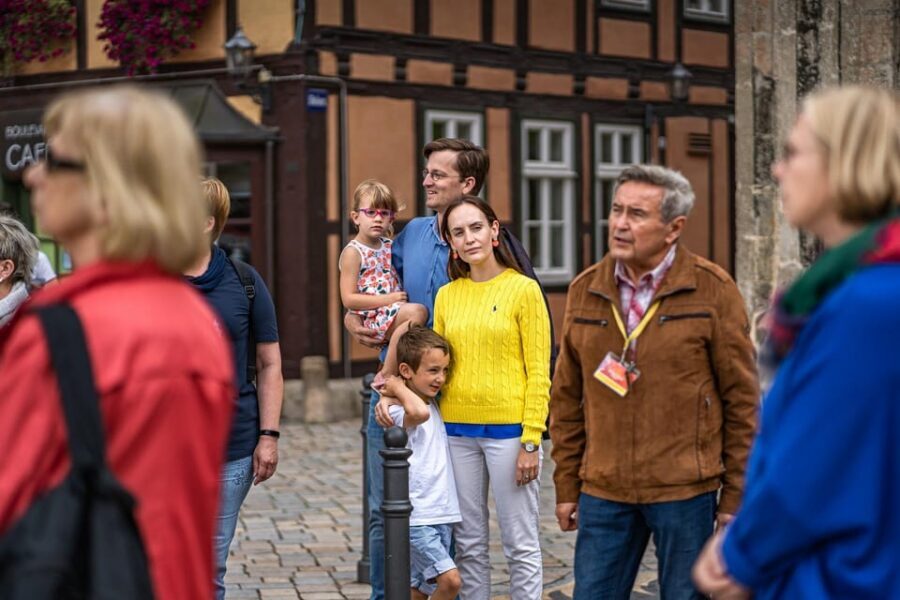
This is a guided city walk designed for an efficient but satisfying look at Quedlinburg’s historic core. The route is built around the town hall, important churches, medieval lanes, and clusters of half-timbered buildings—basically the places you’ll want to know even if you only have a short time.
The big promise is time, compressed: you’ll hear about around 1,100 years of history, linked to the town’s development from Henry I onward. That matters because Quedlinburg can feel visually overwhelming at first. With a guide, those sights stop being random postcard details and start becoming pieces of one bigger timeline.
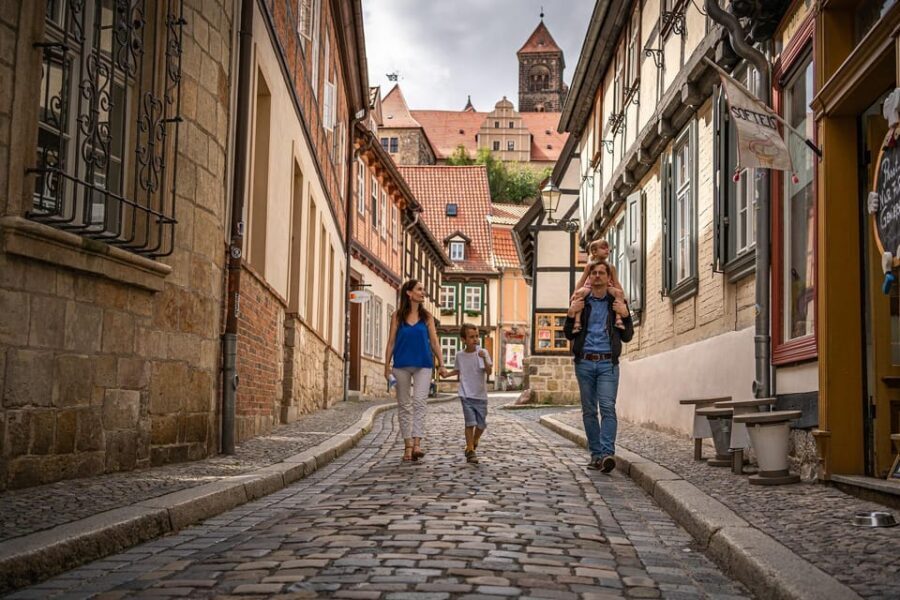
It’s also a “real walking tour” rather than a bus-style overview. Expect cobbled paving, and plan for a steeper uphill segment toward the Castle Hill area. This is the kind of tour where good shoes matter more than good haircuts.
You can also read our reviews of more walking tours in Quedlinburg

Starting at the Market Square: Town Hall and the old-town core
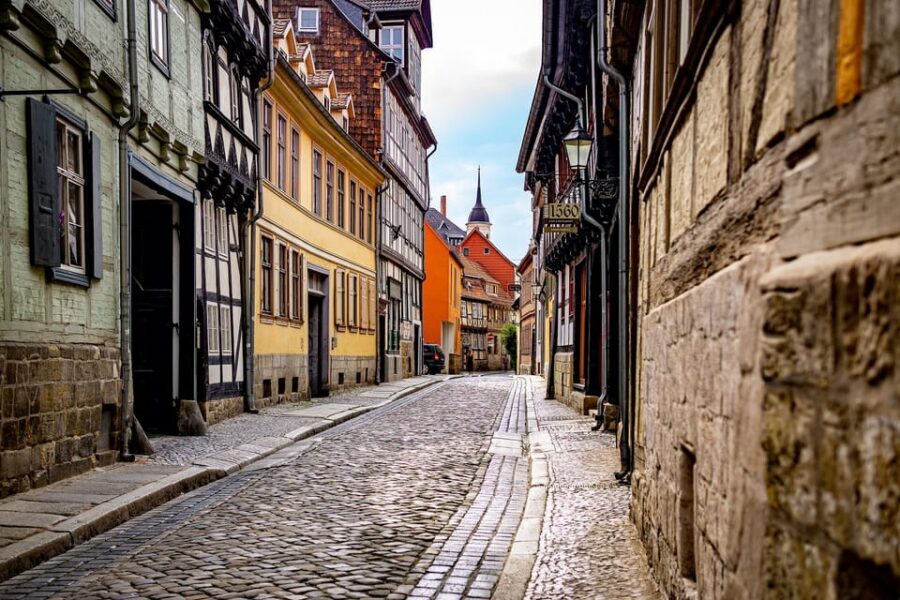
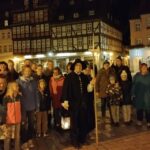
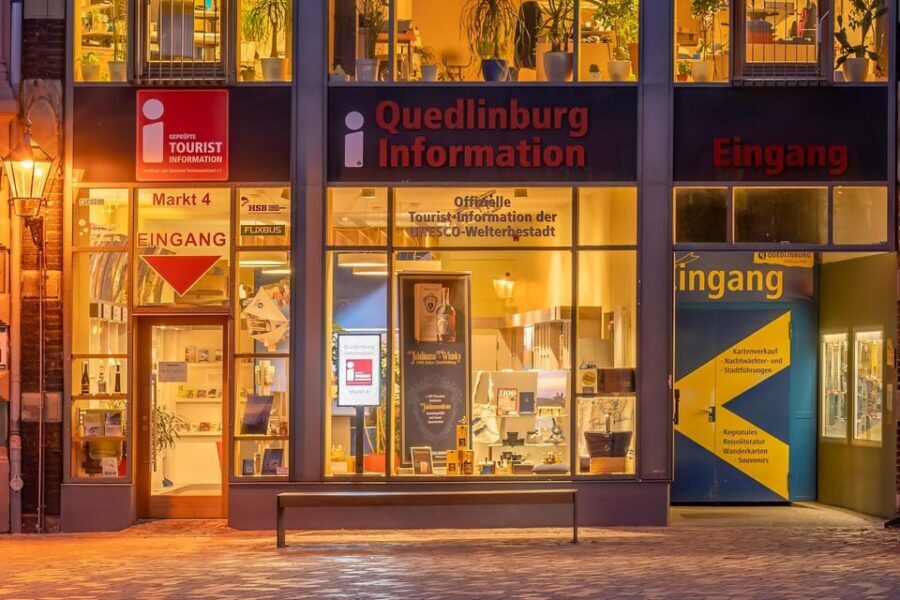
Your tour begins at Quedlinburg-Information on the Market Square. That’s convenient because it puts you right in the action from the first step, when you’re still fresh and your bearings are easiest to set. The guide wears a name tag on a (usually) yellow loop, so you can quickly spot them and get going.
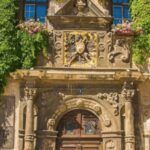
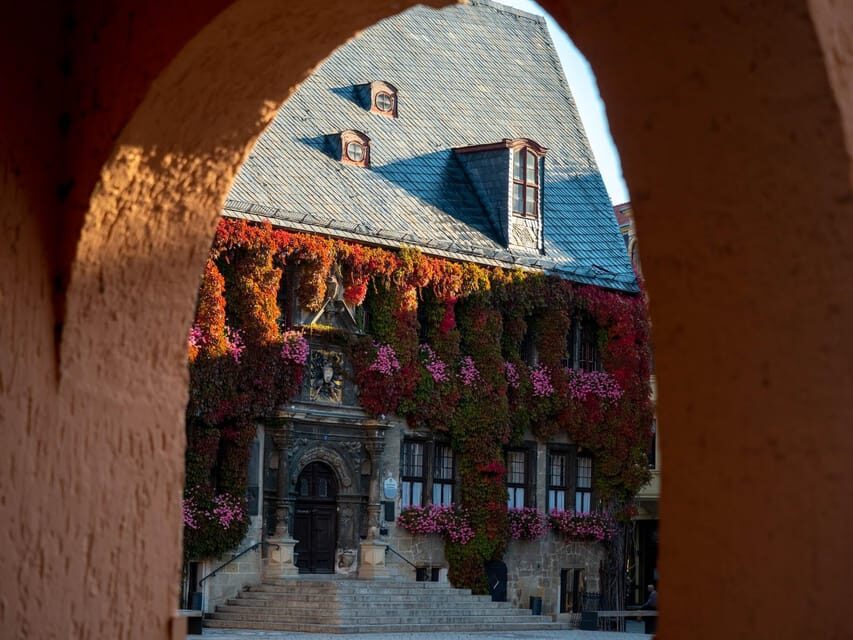
From there, the highlights route focuses on Quedlinburg’s civic and spiritual center. You’ll walk along the historic old town around the Town Hall area—this is where the town’s identity as a real working community shows up, not just as a museum piece. If you’ve ever wandered medieval streets thinking, I get the vibe, but I don’t get the why—this first stretch helps.
The stop sequence also includes Schuhhof and the Market church St. Benedikti, giving you two different ways to read the town. Schuhhof helps you understand everyday historical urban life (markets, commerce, the rhythm of buildings), while St. Benedikti grounds the walk in religious architecture and the town’s long-lasting importance.
St. Benedikti to Hölle Blasii: churches that explain the town’s logic
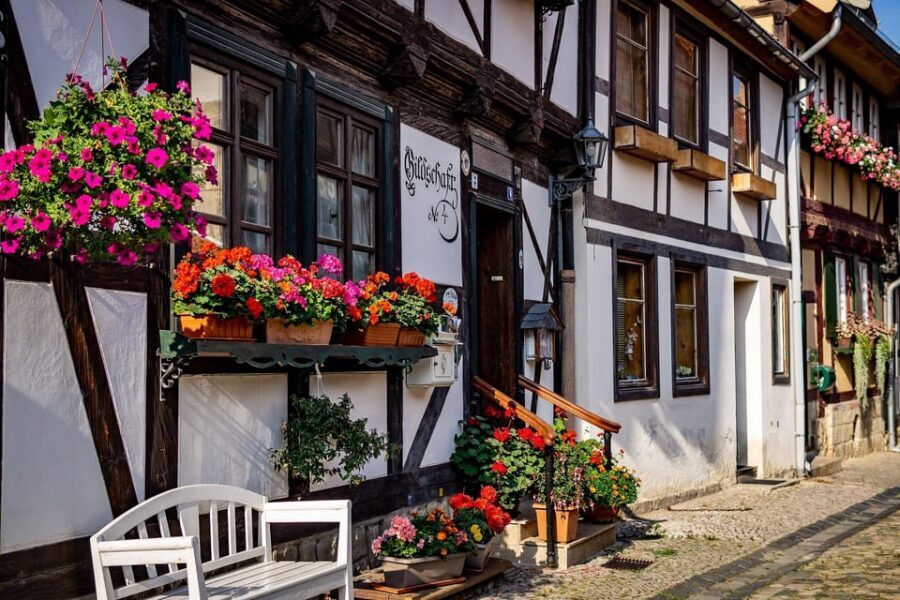
Churches can be tricky on a short tour: sometimes they become “look up, then next.” Here, the church stops feel like part of the same conversation. You’ll visit St. Benedikti and also the Hölle Blasii-Church, plus you’ll end near the collegiate Church of St. Servatii.
Why does that matter? Because Quedlinburg’s power and continuity are tied to its institutions. When you hear the history while standing in front of these buildings, you start noticing patterns: how the town’s layout and architecture serve community life. A guided pace helps you see the structure, not just the surface.
There’s also a practical detail to keep in mind: entry to St. Servatii is not included. So you’re mainly there for the exterior/area and the classic Castle Hill setting, with you having the option to visit as a separate choice.
Half-timbered Quedlinburg: the timber-framed houses stop you’ll remember
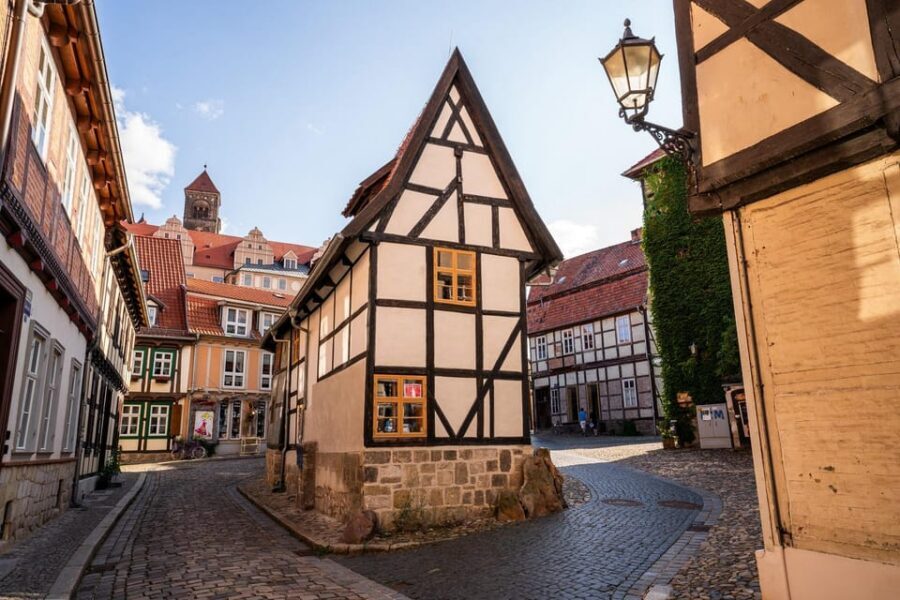
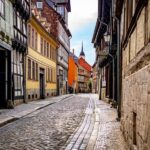
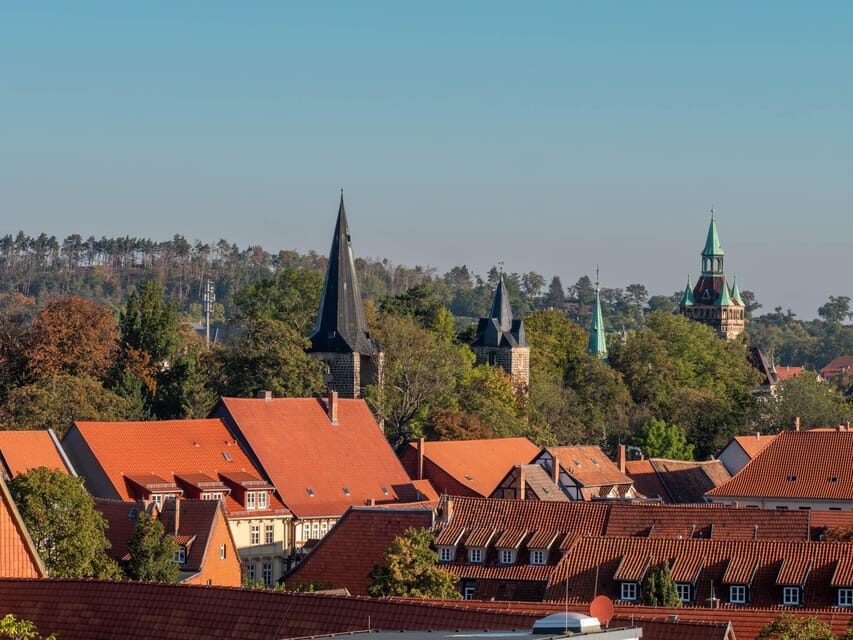
Quedlinburg’s signature is its half-timbered architecture, and the tour doesn’t treat it like scenery—it treats it like evidence. The highlights walk includes time along the historic old town with a special emphasis on the selection of more than 2,000 timber framed houses that make the UNESCO designation make sense.
One of the most useful stops is the half-timbered museum. Even if you’ve seen medieval buildings before, this kind of museum stop helps you move from “pretty wood beams” to understanding how these houses were built and why they survived. It’s the difference between admiring a style and recognizing a cultural system.
As you keep moving, you’ll pass key streets and house-area highlights that keep the architectural theme consistent. This is also where having a guide matters most: the buildings can start to blur if you’re doing it alone, but the guide helps you connect what you’re seeing to what it represented in different centuries.
The Klopstock connection and the Lyonel-Feininger museum area
The route doesn’t only focus on the medieval era. You’ll also connect Quedlinburg to famous people from later periods. The tour includes the Klopstock-house and the museum Lyonel-Feininger as part of the highlights.
This blend is smart. If you only focus on the Middle Ages, you can miss the fact that Quedlinburg is not frozen in time. The guide’s thread—over 1,100 years—helps you understand how the town kept producing or attracting people whose names you can still recognize today. Names like Klopstock and GutsMuths are brought into the story, which makes your walk feel less like a checklist and more like a living town.
Lyonel-Feininger’s connection through the museum area gives you a different lens than the churches and timber houses. It’s a chance to see how art and cultural identity sit alongside the architecture that people often come to photograph.
Castle Hill finish: St. Servatii area and the Castle Garden payoff
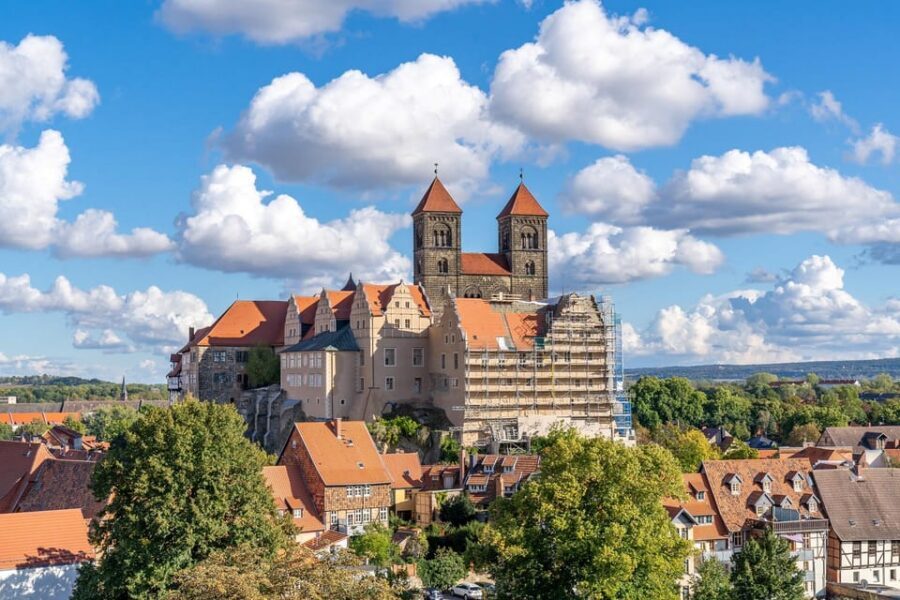
The tour ends at Castle Garden, right near the collegiate Church of St. Servatii. This is the part of the walk where you’ll feel the “why bother?” moment turn into a “got it” moment.
The climb is described as rather steep, so be ready for that. On a day with rain or low light, it can feel more dramatic on cobblestones, so I’d take your time and keep your footing. If you’re with someone who’s less steady on their feet, this is also where you’ll want to slow the pace or ask the guide to match your group’s comfort level.
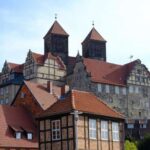
The upside is that the Castle Hill area gives you the classic Quedlinburg viewpoint energy—historic buildings stacked against the terrain, with the town’s core around you. Even though entry to St. Servatii isn’t included, you’ll still be placed exactly where most visitors want to be, and you can decide afterward whether to add an interior visit.
Price and value: $141 per group (and what you actually get)
This private highlights tour costs $141 per group, up to 12 people, and lasts 2 hours. That pricing model can be a bargain or not-so-bargain depending on how you’re traveling.
If you’re a solo traveler, you’ll likely pay the full group price, so the value comes from comfort and efficiency: a guided route that covers the major landmarks without wasting time figuring out what’s most important. If you’re a small group, it can become excellent value fast, because you’re splitting the group fee.
Also, you’re not just getting a route—you’re getting a guided explanation tied to specific places: the Town Hall area, St. Benedikti, Schuhhof, Hölle Blasii-Church, the half-timbered museum, Klopstock-house, Lyonel-Feininger museum area, and the Castle Hill finish. For many visitors, that’s the core “travel win”: someone else does the ordering of the information so you can spend your limited time actually absorbing the sights.
One more value note: the tour is private, and the guide can adapt to your group. In feedback, guides are often praised for being personable and answering questions, which is exactly what you want when you’re trying to understand how a UNESCO town got its status.
Logistics that matter: weather, walking surfaces, dogs, and language
This tour runs rain or shine. That’s helpful because Quedlinburg doesn’t always cooperate, and being able to keep your plans intact matters.
You’ll be on cobblestoned paths, and there’s that steep Castle Hill approach at the end. Even though the tour is listed as wheelchair accessible, you should still take seriously that cobbles and elevation are part of the experience. If you or someone in your group uses a wheelchair, it’s worth planning extra time and going slower on the uphill section.
Dogs are welcome, which is great if your itinerary usually has to bend around pets.
Language-wise, the guide is German, so this is best if you’re comfortable in German or okay with a German-led explanation. If your German is limited, you may still enjoy the architecture and the pace, but you’ll get more out of it with at least basic comprehension.
Who should book this tour (and who might want a different option)
This is a strong fit if you want an organized way to see Quedlinburg’s highlights without turning your trip into a self-made scavenger hunt. You should book it if you like historical context tied to specific buildings—Town Hall, churches, and timber houses—rather than just wandering.
It’s also a good match for small groups that want a human guide and a route that works. In past feedback, people repeatedly praised the guides for competence, friendliness, and being willing to respond to questions.
That said, there’s one consideration. Some groups may prefer less detail at each stop. Because the guide connects landmarks to long timelines and notable individuals, the narration can become heavy on specific points. If your group mainly wants quick photo stops, you might want to ask for a pace that emphasizes the most visually important parts.
Should you book this Quedlinburg Highlights tour?
Yes, if you want a guided walk that connects UNESCO Quedlinburg to clear history you can actually remember, in just 2 hours. The combination of Town Hall and major churches, the half-timbered museum stop, and a Castle Hill finish at the St. Servatii area makes it a smart “greatest hits” route.
You might skip this one if you strongly dislike uphill walks, cobblestones, or you want a stop-by-stop schedule with minimal talking. Otherwise, this private highlights format is one of the most practical ways to understand why Quedlinburg looks the way it does—and why it has lasted.
FAQ
How long is the guided Quedlinburg highlights tour?
The tour lasts 2 hours.
What is the meeting point for the tour?
Meet the guide at Quedlinburg-Information on the Market Square. The guide has a name tag on a (usually) yellow loop.
Where does the tour end?
The tour finishes at Castle Garden.
What sights are included along the walk?
Included sights cover the historic old town area around the Town Hall, Market church St. Benedikti, Schuhhof, Hölle Blasii-Church, the half-timbered museum, Klopstock-house, museum Lyonel-Feininger, and the Castle Garden and St. Servatii area.
Is entry to St. Servatii included?
No, entry to the collegiate church St. Servatii is not included.
What language is the tour guide?
The live tour guide speaks German.
Is the tour wheelchair accessible, and are dogs allowed?
The tour is listed as wheelchair accessible, and dogs are welcome on the tour.