REVIEW · KARLSRUHE
Karlsruhe: Guided City History & Culture Walking Tour
Book on GetYourGuide →Operated by Karlsruhe Tourismus GmbH · Bookable on GetYourGuide
Karlsruhe’s story is made for walking. You get Baroque city-planning explained in plain language, plus Karl III Wilhelm’s founding decision brought to life with funny anecdotes and practical insider tips. The only real catch: it’s a live outdoor tour in German, so if the weather’s bad or you’re not comfortable in German, the experience may feel more limited.
What I like next is how the guide connects the past to what you can still sense today, even though Karlsruhe is about 300 years old. In around 1.5 hours, you’ll also hear why classical city architect Weinbrenner matters, and you’ll finish right back at the starting point near the market square on Kaiserstraße.
In This Review
- Quick highlights you’ll remember
- Starting at Tourist-Information Karlsruhe on Kaiserstraße
- Karlsruhe’s 300-year timeline—how a “new” city built credibility fast
- Karl III Wilhelm and the 1715 founding that changed everything
- Weinbrenner’s classical influence—why the city looks the way it does
- The guide’s style: clear explanations, laughs, and insider tips
- Outdoors in all weather: what to wear and how to plan your day
- Price and timing: why $12 for 1.5 hours can be good value
- Who this walking tour suits best
- Should you book this Karlsruhe history and culture walking tour?
- FAQ
- How long is the Karlsruhe guided walking tour?
- Where is the meeting point in Karlsruhe?
- What language is the live guide?
- Is the tour wheelchair accessible?
- Is the tour indoors or outdoors, and does it run in bad weather?
- Are food, drinks, or admission tickets included?
Quick highlights you’ll remember
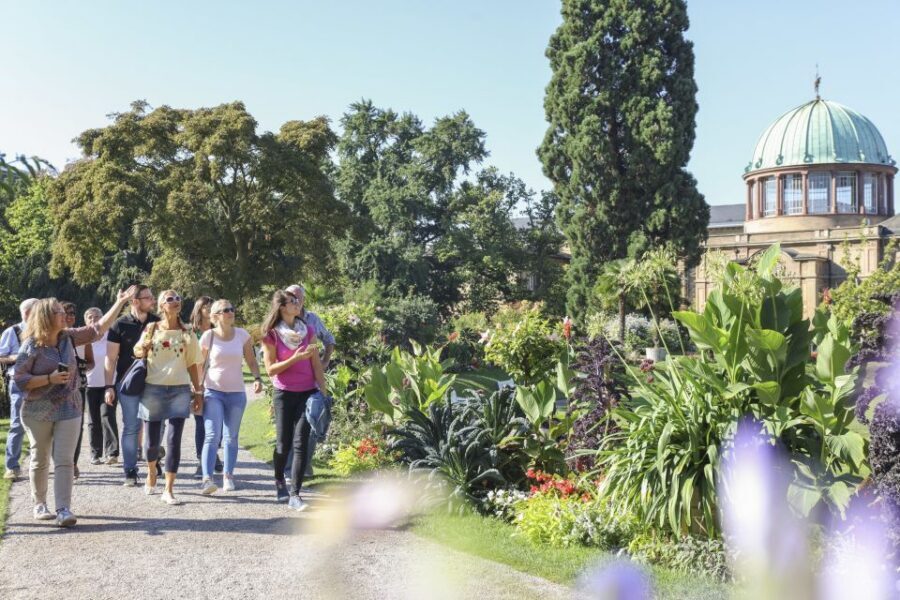
- Karl III Wilhelm’s 1715 move: Why a new city replaced his older capital of Durlach
- Baroque planning, in real life: You’ll learn how the design shaped the feel of Karlsruhe
- Weinbrenner and the classical layer: How later ideas changed the city’s look and logic
- Funny anecdotes + personal insider tips: The guide’s tone turns facts into street-level stories
- A Tuesday theme for law-focused locals: Hometown Karlsruhe – Residence of Law on Tuesdays
Starting at Tourist-Information Karlsruhe on Kaiserstraße
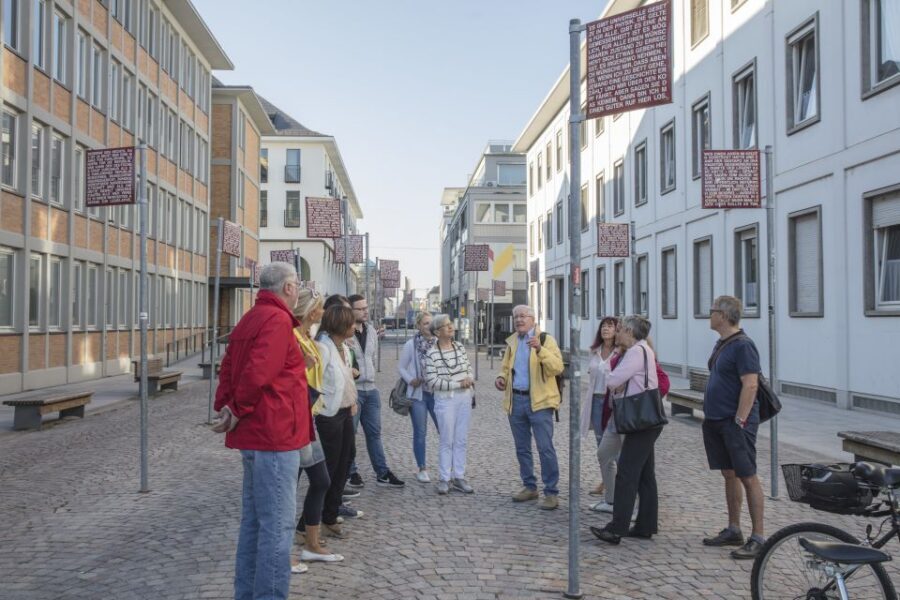
This is a straightforward, easy-to-find walking tour: you meet at the Tourist-Information Karlsruhe by the market square, Kaiserstraße 72-74 (76133 Karlsruhe), and you end back there. That matters more than you might think. For a short 1.5-hour tour, a simple start and finish saves time and avoids that last-minute scramble.
Right from the first minutes, the guide sets the “how to look at Karlsruhe” mindset. This isn’t just dates and names. The city’s built form is part of the lesson. You’re essentially learning a way to read the streets: how a planned layout can reflect political thinking, practical goals, and even personality—Karl III Wilhelm’s personality.
Also, the pace fits people who don’t want a full-day commitment. The tour is listed for 1.5 hours, so it works well if you’re doing Karlsruhe as a stop on a bigger trip to Baden-Württemberg, or if you want an efficient first orientation.
And one more thing: this is a live tour with a German-speaking guide. If you don’t speak German comfortably, you’ll want to plan for that reality before you go in.
You can also read our reviews of more walking tours in Karlsruhe

Karlsruhe’s 300-year timeline—how a “new” city built credibility fast
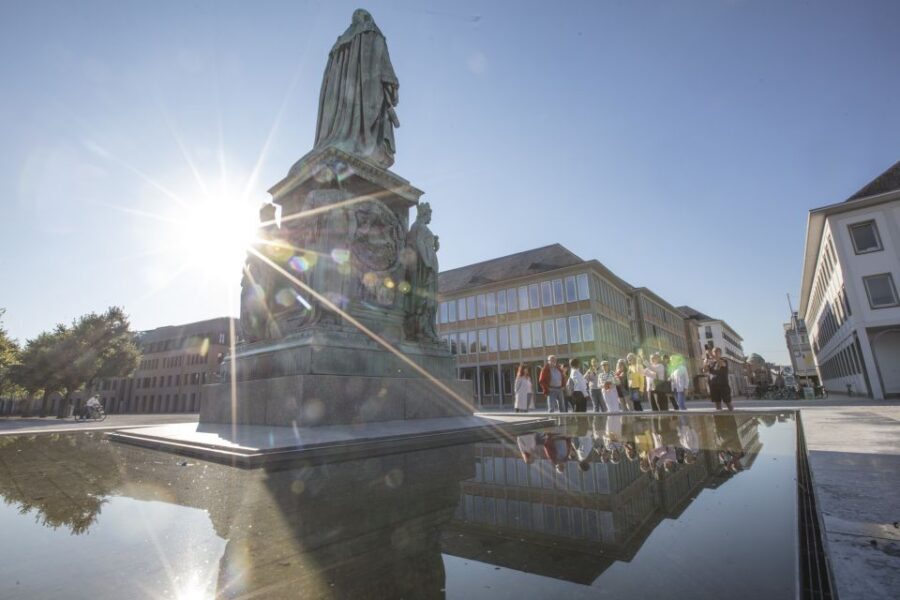
Karlsruhe’s age is part of the story. It’s only about 300 years old, and that’s unusual in Germany, where many cities have stretched back much further. The tour leans into what that “newness” meant. Karlsruhe wasn’t just grown over centuries—it was conceived, laid out, and launched with intention.
You’ll hear how Karlsruhe was a Baroque planned city, described as a novelty of its time. That phrase is key. In other words, the city wasn’t just adapting to history. It was trying to make history by deciding what kind of city it wanted to be.
I like that the tour frames this as a preserved spirit rather than a museum display. You’re not only learning what happened in the early 1700s; you’re getting a sense of how that early plan still affects the way Karlsruhe feels now. That’s a good goal for a walking tour. If you leave thinking the city is “just buildings,” you didn’t get much out of it. Here, the aim is to understand why the city looks and works the way it does.
There’s also a time-travel angle built in—history, the present, and even imagining the future. The walking format helps with that. When you’re moving through the city, “present and future” stays grounded in what you can actually see and question, not just what a guide says from a bench.
Karl III Wilhelm and the 1715 founding that changed everything
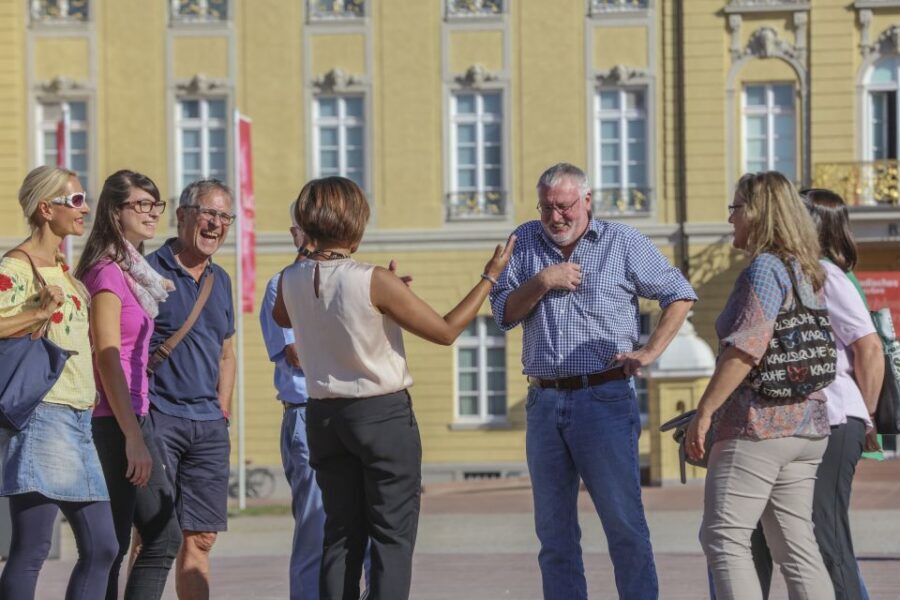
The main character is Karl III Wilhelm, Margrave of Baden-Durlach. The tour uses his story to explain why Karlsruhe exists at all.
In 1715, he founded the city and made a major decision: leaving behind his old capital of Durlach to build something new. That sounds simple when written down. It’s not simple when you connect it to power, identity, and practicality. A ruler doesn’t relocate a capital without a reason, and the tour is designed to show the logic behind the move.
What I find useful here is that the guide doesn’t treat Karl’s decision like trivia. Instead, it becomes a lens for understanding the city plan and the tone of the place. You’ll learn what made him decide to build a completely new city rather than just expand an existing one.
And because this tour is short, you get the essential arc without losing the thread. You’re walking as the story builds: who he was, what he chose, what he left behind, and what he created.
One bonus is the way the guide uses funny anecdotes. For a founding story, that can be surprisingly effective. It keeps the information from feeling heavy, and it helps you remember the key points—like the Durlach-to-Karlsruhe switch—without needing to take a hundred notes.
Weinbrenner’s classical influence—why the city looks the way it does
After you get the founding story, the tour shifts into the architecture ideas associated with classical city architect Weinbrenner. Even without turning into an art-history seminar, this part matters because it helps explain the city’s visual personality.
Karlsruhe is described as having a Baroque planned origin, but the city didn’t stop there. Later architectural thinking shaped how the city matured. Weinbrenner represents that classical layer, and the tour uses him to connect past planning with later design directions.
If you’re the type who likes to look at a building and ask, Why is this here? then you’ll appreciate this segment. You’ll learn what made the classical architect important and how his influence fits into the bigger story of Karlsruhe as it evolves.
Also, this is exactly where a good guide changes the experience. Without explanation, a city can blur together. With a guide, you start noticing patterns and choices—what seems intentional, what seems adjusted, and what seems like it belongs to an era.
So even if you can’t name every architectural element on the spot, you can still leave with a stronger sense of how the city was planned and how it was reshaped. That’s the real value of this part of the tour: not memorizing details, but building an eye for them.
The guide’s style: clear explanations, laughs, and insider tips
The most consistently praised aspect here is the way the information is explained. The tour has a 4.5/5 rating based on 79 reviews, and the feedback you’ll likely care about is consistent: the content is highly interesting and explained very well.
That usually translates to two things on the ground. First, you don’t have to work to understand the story. Second, you get more than textbook facts. You get funny anecdotes and personal insider tips, which helps the city feel like a lived place instead of a backdrop.
The tour also emphasizes atmosphere. It’s not just “what happened.” It’s what you can sense now—the “unique atmosphere of the city,” as described in the experience. That’s a smart approach for a walking tour in a planned city. Planning affects how neighborhoods connect, how movement feels, and how spaces interact. When a guide points that out, you start noticing the city’s logic as you walk.
One practical note: the guide theme changes on Tuesdays to Hometown Karlsruhe – Residence of Law. If you’re in town on a Tuesday, that’s an extra reason to choose this tour. It adds a focused angle and gives you more context than a single generic overview.
And keep in mind the tour is in German. If you understand German at least moderately, you’ll get more of the jokes and the storytelling. If your German is basic, you can still follow the main story points, but you’ll have less room to catch the nuance and humor.




Outdoors in all weather: what to wear and how to plan your day
This is an outdoor walking tour, and it runs in all weather. That’s great for consistency, but it does mean you should dress like the outdoors will win.
I recommend planning in layers: bring a rain jacket or umbrella if rain is possible, and wear shoes you’re comfortable walking in for 1.5 hours. Karlsruhe is a city you’ll experience through movement, so footwear matters more than you might expect.
If you’re sensitive to cold or wind, check the forecast for the time you book and adjust your clothing. The tour duration is short, so you won’t freeze for a whole afternoon, but you will still spend real time outside.
The tour is also listed as wheelchair accessible. That’s helpful if you need mobility support. The pace and route can still include city walking surfaces, but the listing does indicate accessibility accommodations.
Finally, children under 3 can participate free of charge. If you’re traveling as a family, this can be a manageable way to get context without committing to a long day.
Price and timing: why $12 for 1.5 hours can be good value
At $12 per person for 1.5 hours, this is priced like an orientation tour, not a premium long-haul excursion. And that’s a positive if you want value.
Here’s how I think about it: you’re paying for a human guide and storytelling, not for expensive admissions. Admission tickets aren’t included, and food and drinks aren’t part of the tour. So you’re mainly buying explanation, direction, and local context.
Given the strong rating and the emphasis on good, clear explanations plus insider tips, $12 feels reasonable. You’re getting a compact introduction to why Karlsruhe exists (Karl III Wilhelm and the 1715 founding), plus how the city’s design and architecture ideas developed (Baroque planning and Weinbrenner’s classical influence).
Time-wise, 1.5 hours is ideal for people who want to do Karlsruhe without turning it into a major time sink. You also get a built-in reset: you finish back where you started at the tourist information area. That makes it easier to continue exploring afterward—grab coffee nearby, visit another sight, or just wander with better context.
If you only have a morning or an early afternoon window, this tour fits well. If you’re a total architecture fanatic, you might still want extra reading afterward, because there isn’t time to go deep on every style detail. But for most travelers, this should hit the sweet spot.
Who this walking tour suits best
This tour is a strong match if you like structured city stories. You get a clear narrative thread: Karlsruhe’s planned-city origin, the founder Karl III Wilhelm and the move from Durlach in 1715, and the later architectural importance linked to Weinbrenner.
It’s also a good choice if you enjoy guides who use humor and personal tips. The funny anecdotes aren’t an afterthought. They’re part of what makes the facts stick.
You’ll probably enjoy it most if:
- You want a quick orientation to Karlsruhe’s layout and origins
- You’re curious about how political decisions become city design
- You like short guided experiences that don’t eat your whole day
- You can follow a tour in German (or you’re okay with partial understanding)
If you’re traveling in a group and half the people don’t speak German well, you may need a plan—like positioning yourselves closer to the guide or accepting that the humor will be harder to catch. The core historical storyline is still likely to come through, but the detail level could vary.
Should you book this Karlsruhe history and culture walking tour?
I’d book it if you want a practical, storytelling-first way to understand Karlsruhe fast. The tour’s focus on Baroque planning, the founding choice by Karl III Wilhelm in 1715, and the classical architect Weinbrenner gives you multiple angles without dragging on. At $12 for 1.5 hours, it’s the kind of add-on that usually pays off later when you start noticing patterns on your own.
Skip it if you need English-language guiding, or if you’re likely to have trouble with an all-weather outdoor walk. Also, if you’re looking for a long, site-by-site sightseeing day with lots of stops and admissions included, this one is more compact and explanation-focused.
One last nudge: if your trip includes a Tuesday, check whether you want the Hometown Karlsruhe – Residence of Law theme. That’s a built-in reason to choose a specific day rather than treating all tour times as identical.
FAQ
How long is the Karlsruhe guided walking tour?
The tour lasts 1.5 hours.
Where is the meeting point in Karlsruhe?
Meet at Tourist-Information Karlsruhe by the market square, Kaiserstraße 72-74, 76133 Karlsruhe. The tour ends back at the same meeting point.
What language is the live guide?
The live guide speaks German.
Is the tour wheelchair accessible?
Yes, the tour is listed as wheelchair accessible.
Is the tour indoors or outdoors, and does it run in bad weather?
It is an outdoor tour and it takes place in all weather. Dress for the weather.
Are food, drinks, or admission tickets included?
Food and drinks are not included. Admission tickets and optional activities are also not included.