REVIEW · DRESDEN
Public guided tour of the old town including a tour of the Frauenkirche
Book on Viator →Operated by Stadtführung Dresden und mehr von Erlebnistouren Dresden Renger · Bookable on Viator
Dresden has a way of pulling you in. What makes this tour special is the Frauenkirche stop plus a storytelling style guided by Frau Renger that turns the city into something you can picture, not just read about. You’ll get context for what you’re seeing, especially around Dresden’s rebuilding.
I love that the tour moves at a human pace for a 2-hour overview. It’s built for real-life walking, with photo moments and “roof hopping” help if the weather turns.
One thing to consider: this is a German public tour, so if you don’t follow spoken German, you may want a private option in English or another language.
In This Review
- Key highlights you’ll care about
- A 10:30 a.m. route that connects Dresden’s best-known places
- Neumarkt and Stallhof: starting in the Dresden sweet spot
- Frauenkirche inside access: altar, paintings, and the lower church
- Procession of Princes: the 25,000-tile Meissen moment
- Dresden Castle area: the Saxon Louvre feel
- Zwinger in 15 minutes: enough time to spot what matters
- Semperoper and Brühlsche Terrasse: culture outside and a proper view
- Price and logistics: what you get for $16.59
- Who should book this Dresden old town and Frauenkirche tour
- Should you book it?
- FAQ
- What days does the Dresden old town and Frauenkirche guided tour run?
- What time does the tour start and how long is it?
- Where do I meet the tour, and where does it end?
- Is the tour in German only?
- Do you visit the Frauenkirche inside?
- Do I need a printed ticket?
- How many people are in the group?
- Can I cancel and get a full refund?
- Bottom line
Key highlights you’ll care about
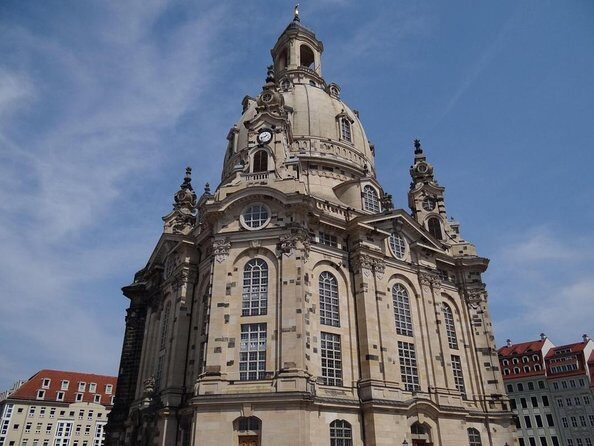
- Frauenkirche from the outside and inside, with explanations of the altar, paintings, and the lower church
- A guided story about Dresden after World War II, including how the city moved toward reunification
- The Procession of Princes shown as a made-in-Meissen spectacle of 25,000 porcelain tiles
- Real time-saving route coverage through the old town, Zwinger area, and major viewpoints in about two hours
- A small maximum group size (25 people) for questions and a less chaotic feel
- Easy extensions: you can combine the city walk with a Semper Opera guided visit, and there’s also a castle tour at 13:30 on Mon/Wed/Fri/Sat
A 10:30 a.m. route that connects Dresden’s best-known places
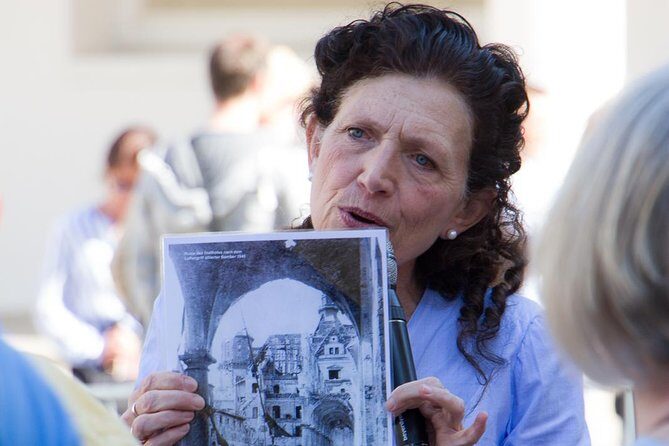
This tour is designed as an efficient introduction to Dresden’s core. You start in the Neumarkt area at 10:30 a.m., and you finish in the city center, often around the Residenzschloss area. In roughly two hours, you’ll cover a chain of landmarks that most first-timers want to see, without pretending you can do them all alone.
What I like most is the “you’re walking, so understand while you walk” approach. The guide doesn’t just point. The commentary is spoken live with an almost visual, time-travel vibe, including background and details that you’d miss if you were only scanning plaques. That matters in Dresden, where reconstruction plays a huge role in what you see today.
There’s also a practical rhythm to the walk. You’re not sprinting from one corner to another. The format is comfortable for small groups, and it’s mindful about weather. If umbrellas or parasols are needed, the guide helps you keep moving and still get the photos.
You can also read our reviews of more guided tours in Dresden


Neumarkt and Stallhof: starting in the Dresden sweet spot
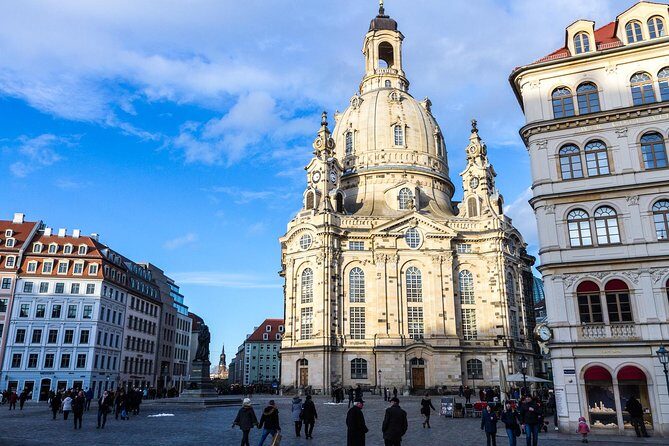
You begin near Neumarkt 2 and build your bearings right away. The Neumarkt stop focuses on the rebuilt historic center and the patrician palaces that frame the square. Even if you’ve only just arrived, this is where you get the idea of what Dresden’s old-town layout feels like when it’s put back together.
Then you head to Stallhof, which is more than an attractive courtyard. It’s described as Dresden’s oldest fairground, and you hear about its past as a tournament setting for knight games. I like this kind of start because it stops the tour from becoming only “big monument shopping.” You get a sense of how the spaces functioned, not just how they look now.
These early stops are short, but that’s the point. They’re there to set the mental stage before the tour goes into the more emotional, detailed stops.
Frauenkirche inside access: altar, paintings, and the lower church
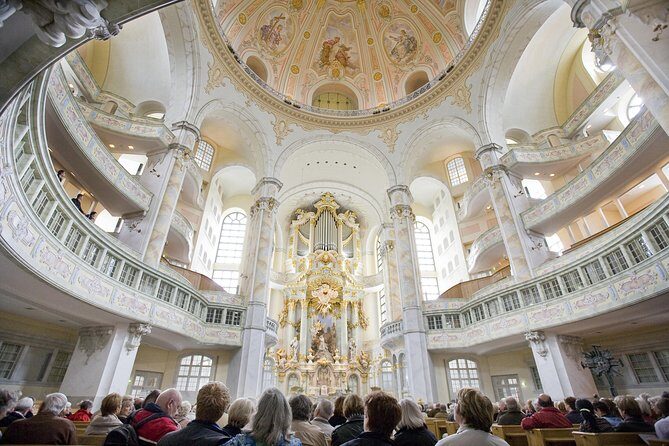
The Frauenkirche is the heart of this experience. You get exterior explanations first, which helps you read the building before you step in. Then you move into the church for an inside inspection that focuses on the details people often rush past.
What you’ll want to listen for is how the guide connects the interior design to the church’s story, including its historical reconstruction. Inside, you’re guided through key features like the altar, paintings, and the lower church. Those three elements are an excellent way to understand the whole building rather than treating it as one big photo spot.
A nice bonus here is that the tour’s style makes the church feel less like a static monument. The narration leans into the meaning behind the design and the rebuilding theme. One of the most praised parts of the tour is exactly this: the guide’s ability to turn the post-war chapter into something clear, not vague.
The tradeoff? You’re only in the church for about 20 minutes. That’s plenty for an orientation and a guided checklist, but if you want long, quiet time for sketching or slow reading, you may want to return on your own later.
Procession of Princes: the 25,000-tile Meissen moment
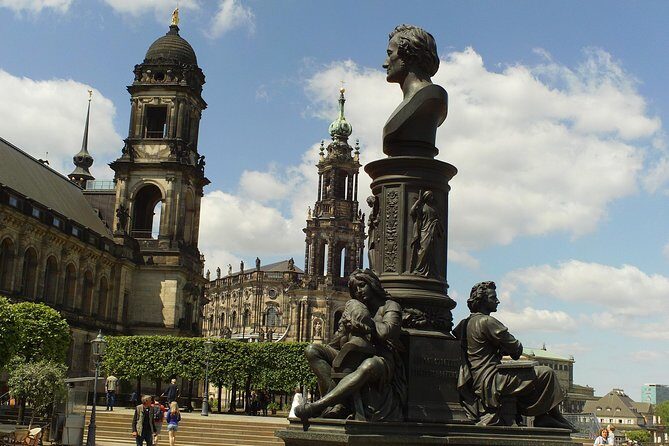
After the church focus, the tour swings into pure visual spectacle at the Procession of Princes. This is explained as a unique image of the Saxon princely family made from 25,000 Meissen porcelain tiles.
This stop works well because it breaks the pattern. Instead of another large building, you get a single crafted “scene” you can really look at. The guide’s job here is to help you see it in layers: what it depicts and why the porcelain medium matters. If you enjoy art details—materials, craftsmanship, and symbolism—this is the kind of stop that makes the whole tour feel more than sightseeing.
It’s also short (about 10 minutes), so treat it like a guided viewing session. After your guided look, you can decide whether you want to linger longer on your own.
Dresden Castle area: the Saxon Louvre feel
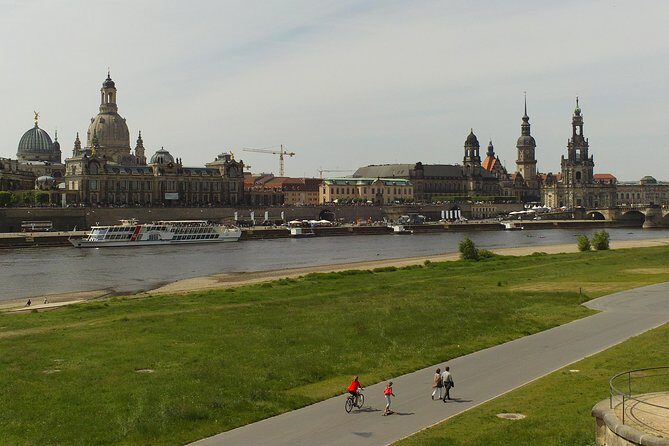
Next comes the Dresden Castle area, tied to the reconstruction of the Residenzschloss and its description as the Saxon Louvre. Even in a short 10-minute stop, you get enough framing to understand why people associate this area with major cultural institutions.
What’s useful for you here is timing awareness. On Mon/Wed/Fri/Sat, the provider also offers a castle tour in the exhibitions at 13:30. That isn’t part of the short city walk at the same time, but the tour ending often in the center (near the Residenzschloss area) can make it easier to connect if you’re staying around midday and want to go deeper.
So think of this castle stop as both context and a breadcrumb trail. You’ll walk away knowing what to aim for if you want more than a quick exterior look.





Zwinger in 15 minutes: enough time to spot what matters
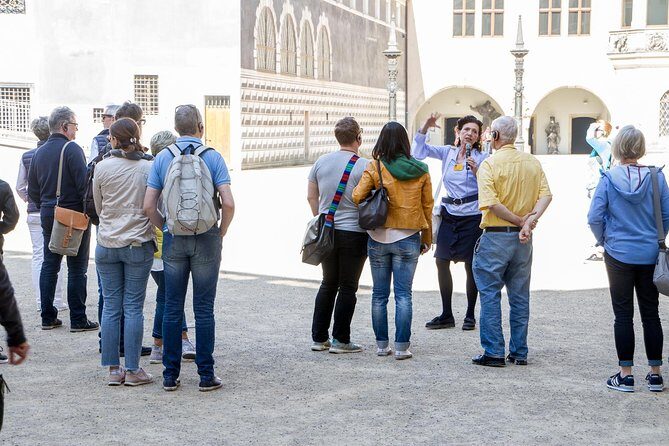
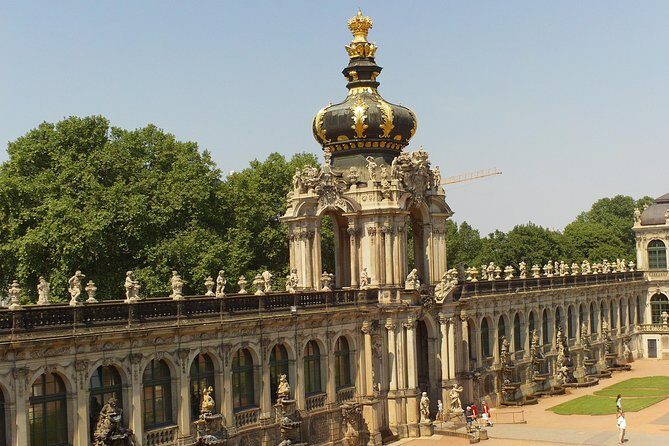
The Dresden Zwinger stop is about getting oriented fast. It’s described as the city’s most famous fairground, and the tour gives you a short guided pass (about 15 minutes) so you can understand why it’s such a magnet for visitors.
In this amount of time, you won’t absorb every corner. But you will learn what to look for so your photos and your future self-guided walking aren’t random. That’s where this tour’s guided structure pays off: you’re not just passing by. You’re learning the “what” and the “why,” so the Zwinger becomes readable.
If you’re the type who usually skips or skims decorative buildings because you don’t know what they mean, this stop is a good fix. You’ll walk away with enough clarity to enjoy the architecture later at your own pace.
Semperoper and Brühlsche Terrasse: culture outside and a proper view
The tour includes the Semper Opera House (Semperoper) as a major landmark. It’s framed as one of the most beautiful opera houses in Germany, and you’ll also get an opportunity to combine the city tour with a guided visit there. That’s great if you care about performances and stage architecture, but it’s also valuable if you just want the building’s details explained.
Then you head to Brühlsche Terrasse, a promenade built on the former fortress wall. This stop is all about the viewpoint. You’ll look over the Elbe, the flood plains, and the new town area. This is the kind of stop that helps you understand Dresden’s geography rather than only its monuments.
I like ending with a view because it changes your mental gear. After a couple of architectural and artistic stops, your eyes reset on the river and the wider setting.
Price and logistics: what you get for $16.59

At $16.59 per person for about two hours, the value here is the guided interpretation. You’re not paying for a single “entry ticket” moment. You’re paying for a route that strings together the city’s key old-town highlights: Neumarkt and Stallhof, Frauenkirche (including interior), the porcelain Procession of Princes, the Zwinger area, Semperoper, and Brühlsche Terrasse.
And the structure is practical. The tour uses a mobile ticket, and the group size is capped at 25. That limit matters because it keeps the walk from turning into a slow-motion school of adults. You’re also near public transportation, which helps if you’re building Dresden days around other plans.
One more value point: the tour is scheduled multiple days a week (Mon/Wed/Fri/Sat) across the months Feb to Dec. For many travelers, that consistency is what lets you fit Dresden into a tight itinerary.
Who should book this Dresden old town and Frauenkirche tour
You’ll love this tour if you want an organized first pass that gives meaning fast. It’s ideal for:
- First-time Dresden visitors who want a guided overview of the old town core
- People who care about how reconstruction shaped what they see today
- Travelers who prefer live narration with details, not just audio guides and quick photos
- Anyone who enjoys art and design explanations, especially at the Frauenkirche and the Meissen porcelain scene
It may not be your best choice if you only speak English and you’re hoping for an English-speaking public guide. The tour is offered in German, and the information you get depends on following spoken commentary. In that case, a private tour in English or another language is the better route.
A second consideration: this is a walk-and-look format. If your goal is deep museum time or long quiet contemplation, you’ll need extra independent time after the two-hour loop.
Should you book it?
Yes, if you want Dresden to make sense quickly. The biggest reason is the Frauenkirche interior stop paired with clear explanations of the altar, paintings, and lower church. Add in the Procession of Princes and the Zwinger orientation, and you get a tour that covers the city’s visual “musts” while also giving context.
Book it sooner rather than later if your dates are fixed, since it’s typically taken in advance. If weather matters to your photos, keep in mind the tour is built for real walking and handles umbrellas with a “keep moving” mindset.
If you speak German well enough to follow live commentary, this is a strong fit. If not, consider a private language option so you don’t lose the point of the narration.
FAQ
What days does the Dresden old town and Frauenkirche guided tour run?
It runs from February to December on Monday, Wednesday, Friday, and Saturday.
What time does the tour start and how long is it?
The start time is 10:30 a.m., and the duration is about 2 hours.
Where do I meet the tour, and where does it end?
You meet at Neumarkt 2, 01067 Dresden, Germany and end at Taschenberg 2, 01067 Dresden, Germany. It often ends near the Residenzschloss area.
Is the tour in German only?
The public tour is in German. If you want a private tour in English or another language, you need to contact the provider directly.
Do you visit the Frauenkirche inside?
Yes. You get exterior explanations and then an inside inspection with details about the altar, paintings, and the lower church.
Do I need a printed ticket?
No. The tour uses a mobile ticket.
How many people are in the group?
The tour has a maximum of 25 travelers.
Can I cancel and get a full refund?
Yes. You can cancel up to 24 hours in advance for a full refund.
Bottom line
This is a tight, well-structured Dresden intro where the storytelling is the main event, and the Frauenkirche interior is the payoff. If you’re in town for a short time and you want your first day in Dresden to feel coherent, it’s a smart choice.