REVIEW · MANNHEIM
Mannheim: Public Night Watchman Tour with Night Watchwoman Marie
Book on GetYourGuide →Operated by Erlebnisführungen Mannheim · Bookable on GetYourGuide
Lantern light turns Mannheim into a stage. This 1.5-hour public night watchman tour, guided by night watchwoman Marie, uses costume storytelling and lantern-lit pacing to bring the city’s past to life. You’ll hear gruesome, funny tales as she patrols you through old streets and landmark squares.
What I really liked is how Marie blends entertainment with clear city context. Two things stand out: first, the way she frames Mannheim’s “Golden Age” and the influence of Elector Carl Theodor as part of everyday life, not just names on plaques. Second, the tour’s humor and grit are grounded in the day-to-day world of a night watchman, including the threats she claims to handle for her companions.
One consideration: the tour is German, and a few bits may stay in original wording, so plan your expectations if you don’t follow spoken German well. Also, it’s a night walk, so dress for the cold.
In This Review
- Key Highlights You’ll Actually Feel
- Lantern-Led Stories and the Role of Night Watchwoman Marie
- Meeting at the Mannheim Baroque Palace Court of Honor
- Mannheim Baroque Palace: Power in the Background, Stories in the Front
- Palais Bretzenheim: A Palace Stop That Feels Like Part of the Plot
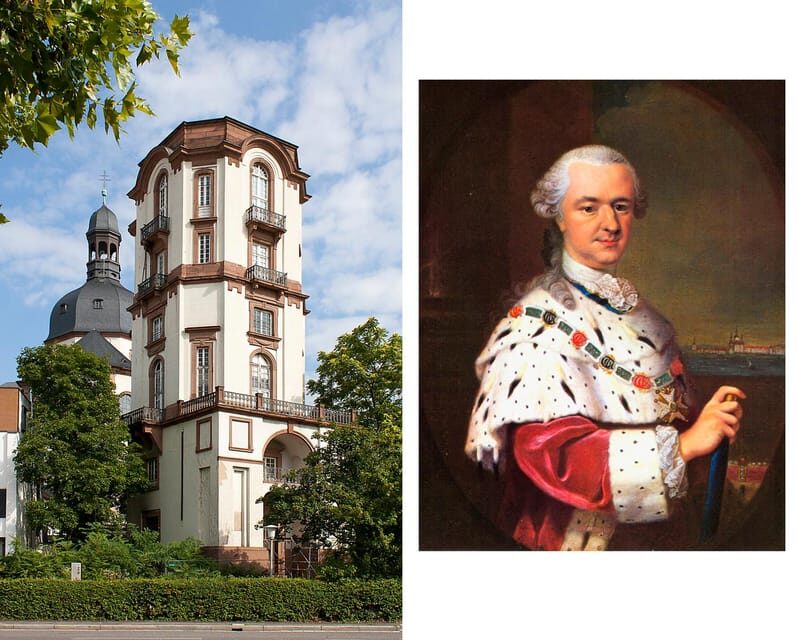
- Alte Sternwarte: When Science and Night Patrolling Share the Same Route
- Schillerhaus and Schillerplatz: The Literature Beat in the Middle of the Night
- Jesuit Church and Paradeplatz: Dark Humor Meets Big-Place Identity
- Dalberghaus: Ending the Route Where Stories Land
- Price and Value for 1.5 Hours of Costume History
- Who This Tour Fits Best (and Who Should Rethink It)
- How to Prepare: Clothing, Expectations, and Pace
- Should You Book the Night Watchwoman Marie Tour?
- FAQ
- How long is the Mannhe in night watchman tour?
- Where does the tour start?
- Who leads the tour?
- What language is the tour in?
- What sites are included during the walk?
- What is the theme of the tour?
- How much does it cost?
- Is the tour wheelchair accessible?
- Is free cancellation available?
- Is it possible to reserve without paying right away?
Key Highlights You’ll Actually Feel
- Costume-led night watchman storytelling with a hands-on, halberd-carrying character vibe
- Elector Carl Theodor and Mannheim’s Golden Age worked into the narrative
- Dark-funny episodes about dishonest professions, stinking air, and street-level problems
- A real route through major landmarks rather than just one long street
- Marie’s energetic performance that keeps the pace moving even in chilly weather
- A viewpoint-driven history that makes old Mannheim feel personal
Lantern-Led Stories and the Role of Night Watchwoman Marie
This is not a quiet museum-style walk. You’re treated to the kind of street theater that night watchers might have sparked: a person with authority, a lantern, and a script full of odd details meant to be heard at night.
Marie’s version of history has two gears. One is the eerie comedy angle: she’ll talk about dishonest jobs, thieves, drunken rabble, and the uncomfortable realities of guarding a city after dark. The other gear is perspective. Instead of presenting events as distant facts, she frames them as part of how people survived, feared, and coped while the night did what the night does.
If you’re the type who likes your history with personality, you’ll enjoy the tone. One review notes how Marie brought Mannheim around 1875 to life specifically through the night watchwoman’s eyes. Even if that exact focus varies, the overall method stays the same: a story-first route where the guide is the engine.
You’ll also hear modern-seeming items folded into older talk, including the idea of a horseless carriage (automobile). It can feel like a wink from the past toward the future, and it’s one reason the tour doesn’t drag.
You can also read our reviews of more evening experiences in Mannheim

Meeting at the Mannheim Baroque Palace Court of Honor
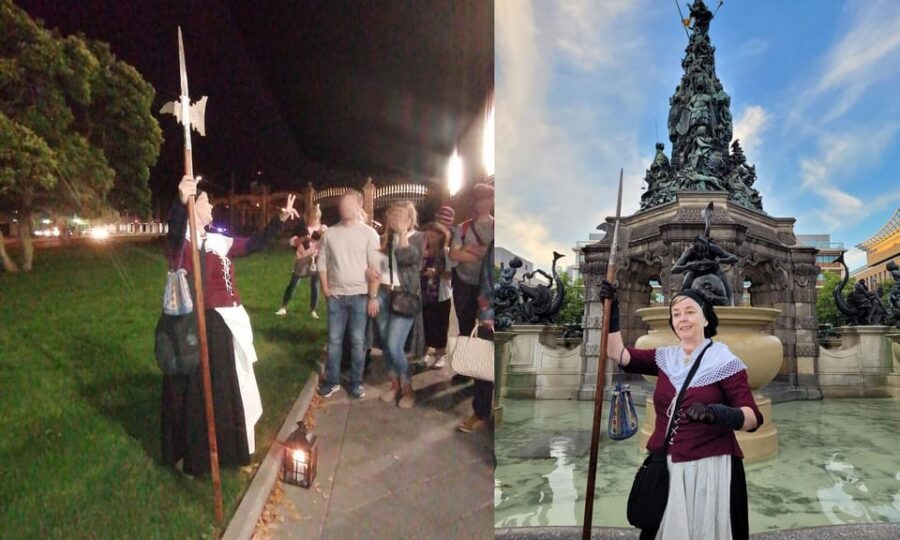
You start at Mannheim Baroque Palace, in the Court of Honor. This matters more than it sounds. Starting at a major civic site sets the tone: you’re going from the kind of power and display that palaces represent into the rougher, more human stories that follow at street level.
Before you even move, you’re in the right mood. The tour begins as a performance, not a lecture. Marie leads you with the lantern vibe and costume presence that makes the rest of the evening feel like a guided patrol rather than a standard sightseeing circuit.
This first stretch is also where you’ll get oriented fast. If you want to understand what style of storytelling this is—moral warnings, jokes, spooky details—you’ll see it immediately.
Mannheim Baroque Palace: Power in the Background, Stories in the Front
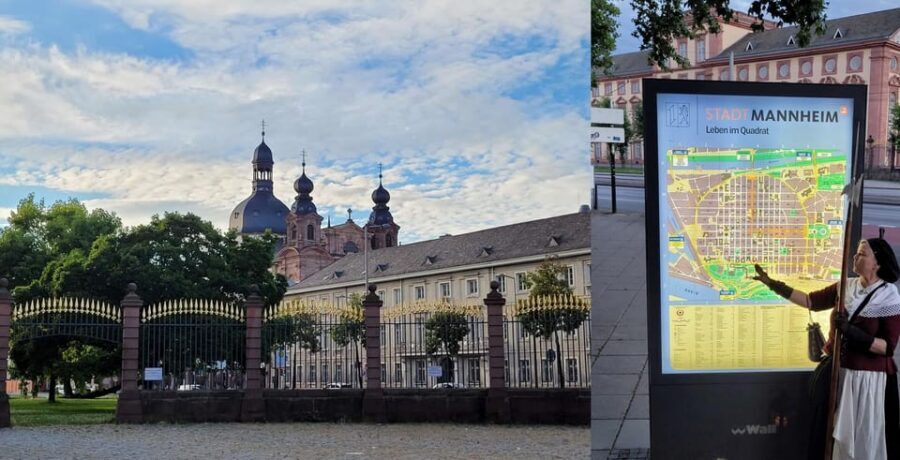
Your first stop after meeting is a guided look at Mannheim Baroque Palace. Even when you’re mainly there for the character-driven narrative, the setting helps. Palaces are where decisions get made, where political influence lives, and where the “big” story of a city connects to the “small” story of everyday guards and streets.
Marie weaves the “Golden Age” and Elector Carl Theodor into the flow here. The value for you is simple: you’re not just learning that a ruler existed. You’re hearing how power could filter down into city life and identity, as a background that makes the rest of the night’s tales make more sense.
Potential drawback: because the tour is short, you won’t get a deep, stop-by-stop architectural education. This is about comprehension through story, not a building-by-building masterclass. If you’re craving heavy details, pair this with a daytime museum visit later.
Palais Bretzenheim: A Palace Stop That Feels Like Part of the Plot
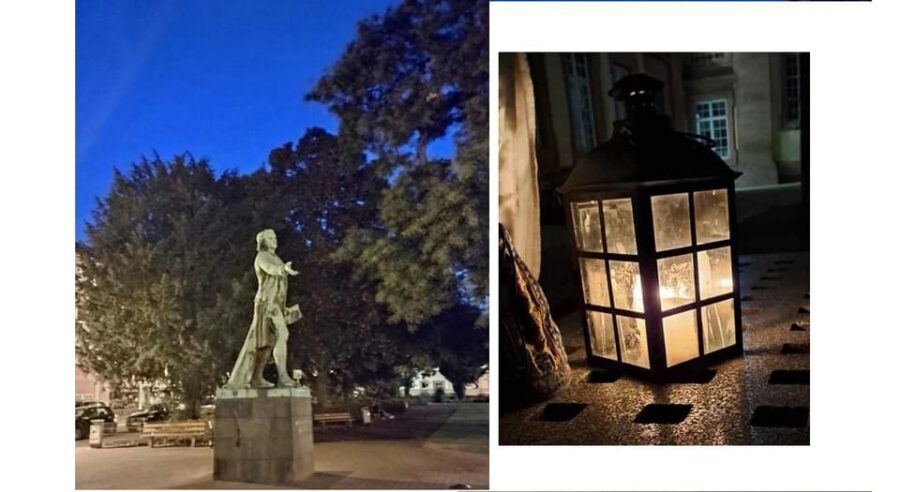
Next comes Palais Bretzenheim, with another guided stop. This is one of those moments where the costume storytelling and the route itself do the heavy lifting. You’re not stuck in one place; you’re moving, and that momentum keeps the evening lively.
Marie’s anecdotes—especially the ones about questionable trades and street survival—fit surprisingly well around grand buildings. It’s the contrast that works. You start to feel how the city could look impressive from above while still producing all the problems a watchman has to manage at night.
What you might like most here is the way the guide makes you picture the atmosphere: the tension, the fear of theft, the chaos of drunken disorder. Those are the kinds of details that turn a historical setting from a postcard into something you can imagine walking through.
Alte Sternwarte: When Science and Night Patrolling Share the Same Route
At the Alte Sternwarte (old observatory), the tone can shift slightly toward the idea of progress and knowledge—still through Marie’s narrative lens. Since the tour doesn’t slow down for long explanations, you’re not getting an educational lecture on astronomy; you’re getting a sense that cities like Mannheim had layers: rulers and institutions, and also the people who studied the world around them.
This stop also supports one of the tour’s themes: the night watchman’s role isn’t only about threats. It’s also about what a city does when darkness changes how people behave—and how it changes what you notice.
One small caution: if you go into this expecting a calm, reflective evening, you might find Marie’s pace and performance style more energetic than that. It’s geared for entertainment with history attached.





Schillerhaus and Schillerplatz: The Literature Beat in the Middle of the Night
Then you move to Schillerhaus Mannheim and Schillerplatz. A literary stop in a night watchman tour sounds random until you realize what it does. It gives the story a cultural anchor, so the evening doesn’t feel only about street danger.
If you like your history with a few human touches, this is where the tour can feel more balanced. The guide’s humor and “gritty” content still matters, but now you’re also in an environment tied to ideas and reputation—exactly the kind of contrast that makes a guided route more interesting than a simple walk down one street.
A practical point for you: because this tour is only about 1.5 hours, each stop needs to work quickly. Don’t expect long museum-style pauses. Instead, think of it as a sequence of story chapters.
Jesuit Church and Paradeplatz: Dark Humor Meets Big-Place Identity
Next is the Jesuit Church, Mannheim, followed by Paradeplatz. These are the kind of stops where the city’s identity shows up in architecture and space—even if the guide never turns it into an architectural lecture.
Marie’s storytelling about dishonest professions and the “unpleasant” reality of night life fits well in places like this. It reminds you that history isn’t only royal pageantry or famous art. It’s also the messier side: human behavior, fear, and the constant negotiation of order.
If you’re sensitive to gruesome details, this tour stays within the storytelling tone rather than becoming graphic. Still, it leans into the night watchman’s grim worldview. You’ll hear about stinking air and the tormented life of a night guard, framed as part of what made night patrolling necessary.
Dalberghaus: Ending the Route Where Stories Land
The final stop on the route is the Dalberghaus, before returning to Barockschloss Mannheim. This is a good ending point because the tour has built momentum: power and culture at the palace and squares, then street-level problems, and finally a landing back near the starting world of authority and civic space.
It also supports the tour’s final effect. By the time you reach the end, you’re not only remembering names and places. You’re remembering what night felt like in the stories—what a watchman supposedly protected you from, how disorder threatened the peace, and how a “Golden Age” identity could exist alongside uncomfortable realities.
Price and Value for 1.5 Hours of Costume History
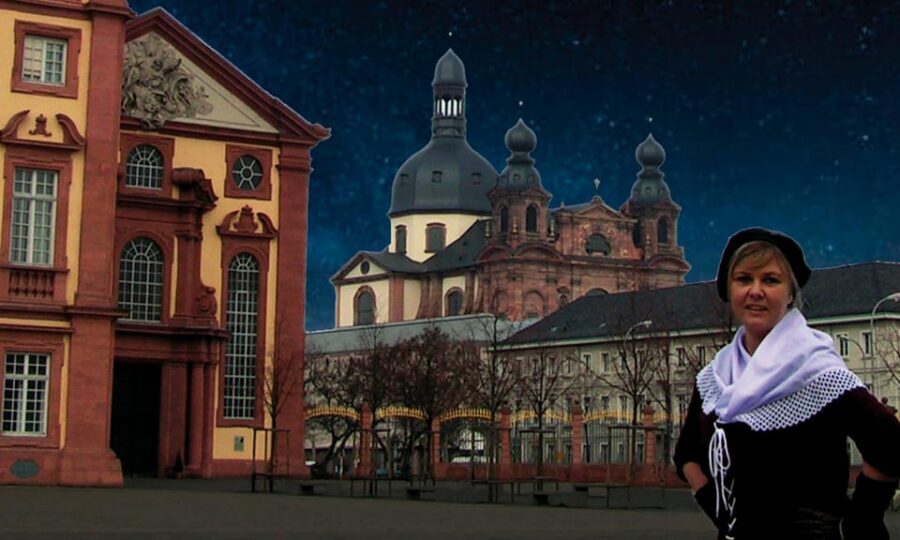
At about $17 per person for a 1.5-hour night tour, this sits in the “good value” category, mainly because you’re paying for more than a walk. You’re paying for:
- A live guide (German-speaking) with a full costume character
- A route that includes multiple named landmarks, not just one viewpoint
- A story format that mixes humor with grit, so it doesn’t feel like a single-note lecture
If you’ve spent money before on long tours that somehow feel like they go nowhere, this one is structured to keep moving. The price is also easier to justify when you can fit it into an evening plan without committing to a half-day.
My practical take: for the cost, you’re getting exactly what you came for—an entertaining historical circuit with a distinct point of view.
Who This Tour Fits Best (and Who Should Rethink It)
This is a great match if you like:
- Costume-based guides who tell stories with clear energy
- Night walks where history is explained through character and anecdotes
- A route that connects major Mannheim landmarks with real-world themes like order, crime fears, and daily survival
You might rethink it if:
- You don’t follow spoken German well and want minimal original-language content
- You prefer quiet, self-paced sightseeing over performance
- You expect deep, technical history about each building rather than fast story chapters
It also works well for people who want a fresh angle on Mannheim. You’re not only looking at what’s impressive. You’re learning how the city might have felt when a watchman’s job mattered.
How to Prepare: Clothing, Expectations, and Pace
This tour is outdoors at night, and the vibe is performance-driven. Go prepared for cold conditions; one review specifically calls out Marie handling even strong winter cold with enthusiasm.
For your expectations, set them like this:
- You’ll get a sequence of guided stops, each used as a stage for part of the story
- The content includes themes like dishonest professions, theft fears, drunken disorder, lightning rod mentions, and the idea of a horseless carriage
- The guide uses costume presence with a halberd to keep the character alive through the whole walk
Finally, bring a mindset that history can be a little theatrical. If you’re willing to enjoy the role-playing tone, you’ll get more out of the evening.
Should You Book the Night Watchwoman Marie Tour?
Yes—if you want a short, entertaining way to understand Mannheim through narrative history. I think the best reason to book is Marie’s approach: she links the city’s “Golden Age” and Elector Carl Theodor to the street-level realities of a night watchman. That mix is rare, and it’s what makes the tour feel like more than a checklist.
If you’re strict about language comfort, go in knowing it’s German and includes content in original language. If you can follow along enough to enjoy the atmosphere, you’ll be fine. If you can’t, you may find the experience less fun than it could be.
In short: for $17 and 1.5 hours, you’re buying a lively evening walk with distinct storytelling, multiple landmark stops, and a guide who turns a city into a nighttime tale.
FAQ
How long is the Mannhe in night watchman tour?
The tour lasts 1.5 hours.
Where does the tour start?
The meeting point is at Mannheim Baroque Palace, Court of Honor.
Who leads the tour?
The tour is led by night watchwoman Marie.
What language is the tour in?
The live guide speaks German, and some content is shown in its original language.
What sites are included during the walk?
The route includes guided stops at Mannheim Baroque Palace, Palais Bretzenheim, Alte Sternwarte, Schillerhaus Mannheim, Schillerplatz, the Jesuit Church, Paradeplatz, and Dalberghaus, then returns to Mannheim Baroque Palace.
What is the theme of the tour?
It is a night watchman tour with costume storytelling, including stories about Mannheim’s Golden Age and Elector Carl Theodor, plus anecdotes tied to night watch life.
How much does it cost?
The price is listed as $17 per person.
Is the tour wheelchair accessible?
Yes, the tour is wheelchair accessible.
Is free cancellation available?
Free cancellation is available up to 24 hours in advance for a full refund.
Is it possible to reserve without paying right away?
Yes, you can reserve now and pay later.