REVIEW · KIEL
Lubeck Private Walking Tour With A Professional Guide
Book on Viator →Operated by Global Guide Services · Bookable on Viator
Lübeck hits fast when you walk it. This private, English-language walking tour strings together the city’s signature Hanseatic sights in about 2 hours, so you get orientation and real context instead of just photos. I like that you start right at the imposing Holstentor area, then move through port-era brick buildings and big-gothic church space.
Two things I really like: you get a local professional guide who can point out story behind the stone, and the route is focused on places that explain Lübeck’s power as a trading port. One possible drawback: since this is only around 2 hours, you’ll want extra time afterward if you plan to go inside buildings or slow down for shops and side streets.
In This Review
- Key highlights you can count on
- Lübeck’s Hanseatic core, paced for a satisfying 2 hours
- Starting at Museum Holstentor: a gate you’ll recognize even after you leave
- Salt storehouses and the port of Lübeck: brick buildings that explain wealth
- Lübeck Town Hall: dark brick civic power in the middle of the market square
- St. Mary’s Church: the third-largest in Germany, and it has mood
- Buddenbrook House streets: literature meets real Lübeck addresses
- What the guide really adds: local stories, not just facts
- Price and value: $303.73 per group can make sense fast
- Logistics that matter (and what doesn’t)
- Stop-by-stop timing: how to get the best photos and still feel unhurried
- Who should book this tour
- Should you book this private walking tour of Lübeck?
Key highlights you can count on
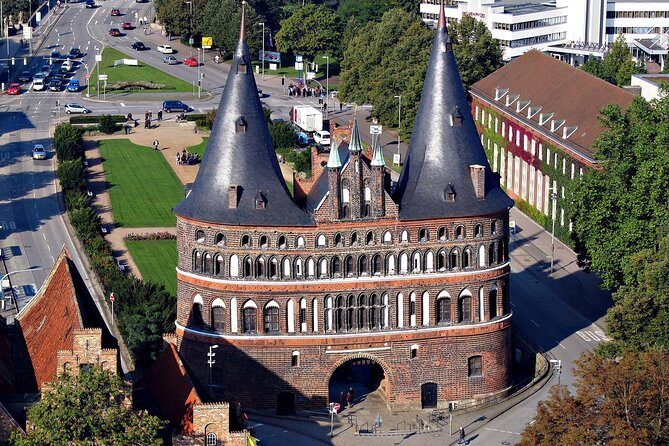
- Holstentor and the Hanseatic story in one stop, with the gate’s symbol role you can actually picture
- Salt storehouses and Lübeck’s port logic, where brick architecture explains trade-era wealth
- Town Hall + St. Mary’s Church as a two-part contrast between civic power and church grandeur
- The Chapel of Memory within St. Mary’s, plus a classic photo moment outside the church
- Buddenbrook House connection to Heinrich and Thomas Mann and the Buddenbrooks
- Private pacing: your group’s questions and interests guide the flow
Lübeck’s Hanseatic core, paced for a satisfying 2 hours
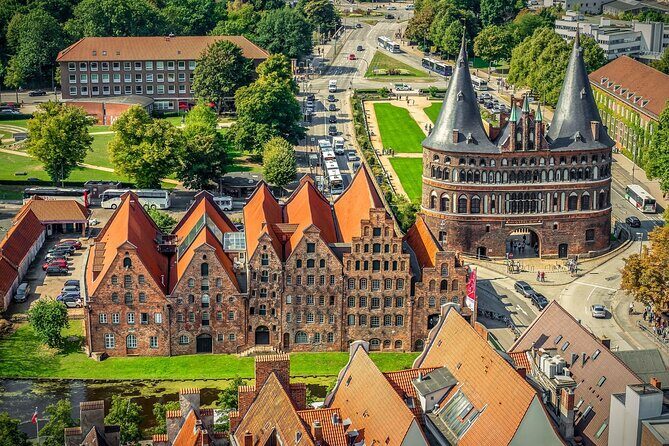
Lübeck is the kind of place where the buildings do the talking. This tour works because it chooses landmarks that form a clean narrative: trade, civic authority, faith, then literature tied to real streets and homes.
You’re walking a manageable route with no “bus-and-museum marathon.” The group stays together with your guide, so it feels like a guided stroll through the city’s center rather than a checklist that hurries you along. And because it’s private, the guide can tailor explanations to what you care about—architecture, local legends, or what made Lübeck a major port city.
If you’re visiting with kids, older relatives, or anyone who doesn’t want long travel legs, this duration is a good fit. Just plan comfy shoes anyway. Even a “simple” walking tour can involve cobbles, uneven sidewalks, and a bit of standing around for photos.
You can also read our reviews of more walking tours in Kiel

Starting at Museum Holstentor: a gate you’ll recognize even after you leave
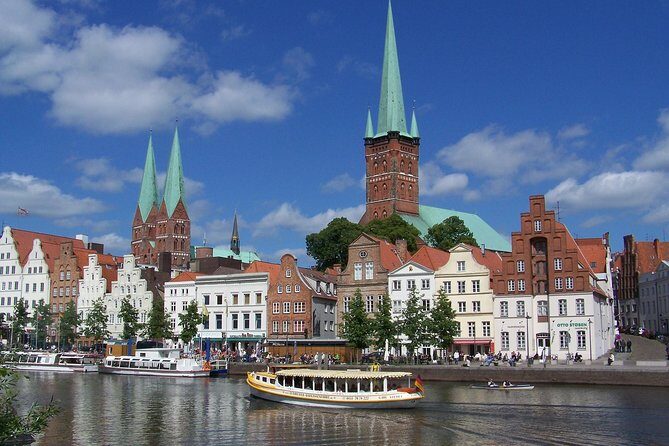
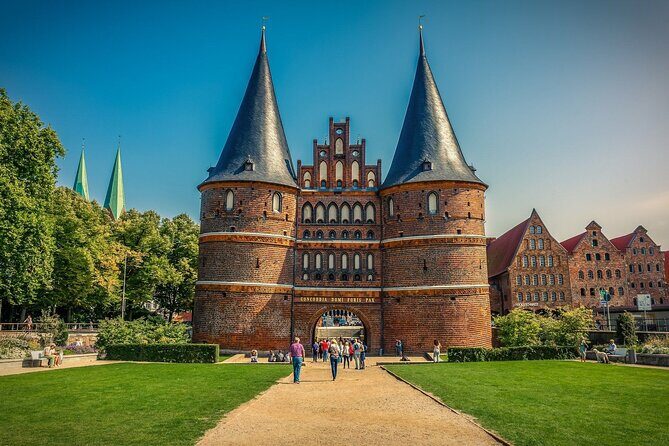
The tour kicks off at Museum Holstentor (Holstentorplatz). This is not just a dramatic entrance; it’s Lübeck’s Hanseatic self-confidence made stone. Your guide frames the gate as a major symbol of the city’s trading identity, and you’ll hear how it appeared as the motif on the German banknote of 50 Marks until the redesign following reunification in 1990.
That banknote fact matters because it gives you a mental “grab point.” When you recognize the image you’ve seen before in a wallet, the rest of the city makes more sense. You’re no longer looking at random old buildings; you’re seeing why Lübeck mattered.
Practical angle: arrive a few minutes early if you can. Even with a private group, you’ll likely want a clear photo spot before the walking starts, and this is a natural place to do it.
Salt storehouses and the port of Lübeck: brick buildings that explain wealth
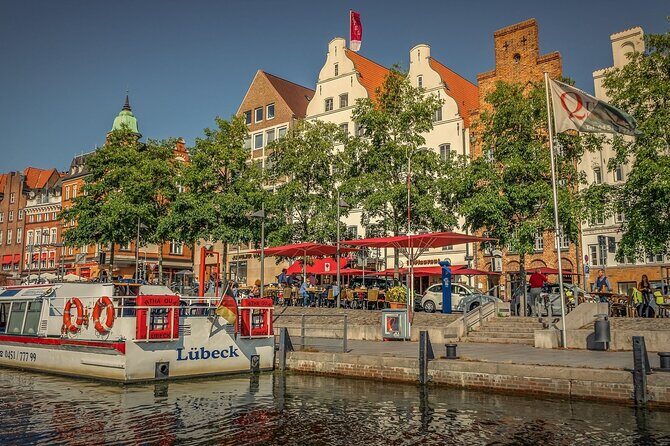
From Holstentor, you move toward the Salt storehouses—six historic brick buildings dating to the 16th–18th centuries. These are the kind of structures people often rush past on their own. With a guide, they become an explanation of how Lübeck worked: how goods moved, how storage and trade scaled, and why brick construction was such a defining look for Hanseatic cities.
Your route also passes the former industrial heart of the city and the Port of Lübeck. Even if you don’t stop right at the water, you’ll understand the relationship between “where ships came in” and “where power showed up.” That’s the big value of including this section: it turns a pretty city into a city with a cause-and-effect story.
One small consideration: if you’re hoping for lots of inside time, this part stays mostly outside. Still, that’s part of the efficiency. You’re using the city itself as your “museum,” and the architecture is doing the heavy lifting.
Lübeck Town Hall: dark brick civic power in the middle of the market square
Next up is the traditional Hanseatic Town Hall, built in the 13th century in the market square of the old town. The contrast your guide highlights is a big deal: the town hall’s dark brick construction creates a stark look against the surrounding red-brick buildings.
This is where your understanding shifts from “pretty old buildings” to “why they were designed that way.” Civic architecture in Hanseatic cities wasn’t shy. It communicated authority—who ran commerce, who handled disputes, and how the city branded itself as a serious player.
If you like photographing details, keep your eyes up. Architectural contrast often lives in small shifts—color, texture, window rhythm, and the way buildings frame the square.
St. Mary’s Church: the third-largest in Germany, and it has mood
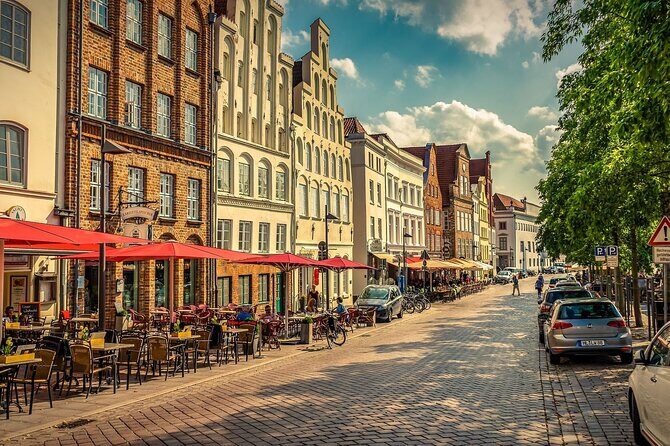
Then you reach St. Mary’s Church, a fine brick gothic building described as the third largest church in Germany. You’ll learn that it’s a Lutheran church with strong art-and-atmosphere energy, and the tour points you toward the Chapel of Memory, constructed between 1250 and 1350.
Why this stop is so effective: it’s not only big. It’s specific. Gothic brick churches can look similar from a distance, but the guide’s focus on the Chapel of Memory helps you know what to pay attention to when you’re actually standing there.
Also, if you’re a fan of classic photo moments, there’s a fun detail outside the church: you can take a picture with the little devil. Your guide tells the story behind it, and that kind of small legend makes the whole church stop feel more human.
If you tend to get church-fatigue on short trips, don’t worry. The route doesn’t linger forever. It’s timed to keep the tour moving while still giving you enough context to feel like you saw something meaningful.
You can also read our reviews of more guided tours in Kiel
Buddenbrook House streets: literature meets real Lübeck addresses
The tour ends with a stroll through the famous streets and decorated houses at Buddenbrook House, dedicated to the writers Heinrich and Thomas Mann and the novel family name from the Buddenbrooks.
This last stretch is clever because it shifts the theme from commerce and religion to how Lübeck became a backdrop for stories. You’re seeing a different kind of “heritage”—not just what happened here, but how writers shaped the city’s cultural image.
If you’re doing a Germany road trip, this is a strong closer. You leave with a sense of place that’s broader than one building type. And if you’re the kind of traveler who wants to wander afterward, this is the part that makes you want to come back. In the same spirit, one guide was praised for leading people into small backyards, which suggests you may see more local texture if the timing works.
What the guide really adds: local stories, not just facts
This experience is private, with your guide staying with your group only. That matters because Lübeck rewards curiosity. A good guide turns questions into mini-lessons and connects the dots between stops.
Some guides have stood out in particular ways. For example, Karin has been described as local and having grown up in Lübeck, with detailed explanations and even detours into small beautiful backyards. Brigitte was praised for sharing interesting historical facts plus hidden gems. And Christel received strong notes for helping people feel like they were seeing the city through a local lens, not just ticking off sights.
Even if your guide doesn’t do the exact same side streets, the pattern is consistent: you get interpretation. The tour’s design already does the legwork by choosing iconic landmarks, but the guide makes it stick.
Price and value: $303.73 per group can make sense fast
The price is $303.73 per group (up to 15), and the tour runs about 2 hours. That sounds high if you’re thinking like a solo traveler buying a public walking tour. But in private-tour land, the math changes.
Here’s the value logic I’d use:
- You’re paying for a professional guide and private pacing, not just walking alongside strangers.
- If you’re traveling as a small group, the per-person cost drops quickly.
- You’re getting a well-sequenced route that covers multiple major landmarks in one go, which can save time on a tight schedule.
Also, the tour includes the guide and private guiding, and it uses a mobile ticket. The tour doesn’t include admission tickets for stops, so if you plan to enter museums or specific interiors, you should budget for that separately.
Finally, the tour is often booked about 39 days in advance on average, which suggests it’s popular in the planning windows that matter.
Logistics that matter (and what doesn’t)
Meeting point starts at Museum Holstentor at Holstentorplatz, 23552 Lübeck. The tour ends at 23 Lübeck, Germany (as listed by the operator). That end location is useful because it puts you near more of the central-area walking loop, so you can keep exploring without needing extra transport.
You won’t need transportation for the tour itself. It’s a walk-through experience, and it’s near public transportation, which makes it easier to connect with the rest of your day if you’re arriving by train or planning to hop onward.
Confirmation is received at booking, and the tour is offered in English. The tour is also described as suitable for any age, which aligns with the moderate time commitment and the fact that it’s a city-center walking route.
One more practical note: because this is private for your group only, you’re not stuck listening to a one-size-fits-all script. You can ask what you want and adjust photo stops on the fly.
Stop-by-stop timing: how to get the best photos and still feel unhurried
Even without exact minutes for each place, the route flows logically. You start with the most iconic symbol (Holstentor), then you go into port-era brick buildings (salt storehouses and port context), then civic authority (town hall), then spiritual and artistic space (St. Mary’s and the Chapel of Memory), and finally literary street atmosphere (Buddenbrook House area).
If you want the best photos:
- In the Holstentor area, plan to take a couple quick shots before you start walking. That location is your anchor.
- At Town Hall and St. Mary’s, look for angles that show contrast—especially the dark brick against red brick.
- At St. Mary’s, expect the little devil photo moment to be a quick, fun pause.
- Near Buddenbrook House, slow down just enough to capture decorated facades.
For the most relaxed experience, keep your phone charged, bring water, and don’t plan a big second activity immediately after. Two hours gives you a strong start, but it also tends to make people want to keep exploring on their own.
Who should book this tour
I’d book this private Lübeck walk if you:
- want a local, story-first guide rather than a self-guided map tour
- have limited time and need a fast orientation across major Lübeck sights
- care about how Lübeck’s port and Hanseatic identity connect to architecture and church life
- like a mix of landmarks plus a cultural thread tied to the Mann family and the Buddenbrooks
I might skip it (or look for a longer option) if you:
- want heavy museum time and lots of interior visits during the tour window
- dislike structured stops and prefer total wandering with no sequence
Should you book this private walking tour of Lübeck?
Yes, if your goal is to understand Lübeck quickly and correctly. This route hits the city’s best-known anchors—Holstentor, Town Hall, St. Mary’s, and Buddenbrook House—in a way that links them into one story. The private guide angle is the real driver of value: facts land better when someone local gives them shape, and the route is tight enough to work even if you only have a short visit.
If you can, plan a little extra time after the tour. Two hours is a great start, but Lübeck’s streets reward follow-up wandering.