REVIEW · KIEL
Kiel: City Highlights Express Walking Tour with a Local
Book on GetYourGuide →Operated by LocalBini AG (EU) · Bookable on GetYourGuide
Kiel feels best on foot. This 90-minute Kiel highlights walk pairs big landmarks with local stories, and I like that you’ll see the Opera House architecture plus Kiel’s oldest building, the Protestant St. Nikolai Church. The only real drawback: it’s a steady walking tour, so you need comfortable shoes and a willingness to keep moving.
You start at the Otto Bismarck Statue, then follow your local guide through the Old Market area and toward the harbour for that classic northern-Germany waterfront feel. Expect a small group, offered in English and German, and a pace that can adjust based on what people want to focus on.
One more thing to know: it is not suited for mobility impairments, so plan accordingly if walking distances or uneven sidewalks are an issue for you.
In This Review
- Quick hits before you go
- Kiel in 90 minutes with a local guide
- Meeting at the Otto Bismarck Statue: start easy, not stressful
- Opera House architecture: a strong first impression
- St. Nikolai Church: Kiel’s oldest building up close
- Kiel Town Hall and the Old Market feeling
- Harbour stroll: where the stories turn practical
- Bismarck-Denkmal memorial: the “why is that there?” stop
- Price of $116: value for a short, guided walk
- What to bring and how to stay comfortable
- Who this Kiel highlights walk suits best
- Should you book this Kiel highlights express walk?
- FAQ
- How long is the Kiel highlights express walking tour?
- Where do I meet the guide?
- What group size is it?
- What languages are available?
- What should I bring?
- Is free cancellation available?
Quick hits before you go
- Otto Bismarck Statue meeting point: an easy landmark to find before you head into the center.
- Opera House first stop: you begin by admiring Kiel’s major art-venue architecture.
- St. Nikolai Church as the oldest building: a clear, meaningful anchor for the walking route.
- Old Market atmosphere: you’ll spend time in the city’s older core, not just pass by it.
- Harbour stroll: a scenic break from streets and squares.
- Bismarck-Denkmal memorial: one of the lesser-known stops your guide can point out.
Kiel in 90 minutes with a local guide
This is a highlights tour designed for people who want the main sights without spending half the day on a checklist. The time is short enough that you can still enjoy the rest of your day in Kiel afterward—shopping, coffee, or a longer harbour walk on your own. And because it’s small (up to a handful of people), you’re not stuck listening to a loud narration that sounds the same at every stop.
What makes it interesting is the mix: you get both architecture and atmosphere. Kiel’s big public buildings and churches tell you where the city’s identity formed, while the Old Market and harbour remind you what life looks like on the ground. This guide format also means you can ask questions and get answers that fit your interests, whether you’re more into buildings, local characters, or just finding good photo angles.
The tour also leans practical. Bring what you need for a comfortable stroll—comfortable shoes and water—because you’ll be walking through multiple parts of town with no quick bus breaks. If you like city walks that feel like a conversation rather than a lecture, you’ll probably enjoy this one.
You can also read our reviews of more walking tours in Kiel
Meeting at the Otto Bismarck Statue: start easy, not stressful
Your meeting point is clearly stated: in front of the Otto Bismark Statue. That matters more than you’d think. In a place like Kiel, where key spots cluster in the central area, starting at a recognizable statue helps you avoid that frustrating first step—circling around trying to figure out which corner is correct.
Once you meet up, you’ll get your bearings fast. From there, the route is set up to make logical sense: you begin at a major cultural venue, move into older historic architecture, and finish with harbour views that feel like a reward for walking the route.
A smart tip here: plan to arrive a bit early, then take a quick look around the meeting area. Even without going anywhere yet, you’ll pick up visual cues about where you are in town. That way, the walking tour feels guided rather than like you’re just tagging along to the next stop.
Opera House architecture: a strong first impression
The tour starts with a major art venue—your first stop is geared toward architecture lovers. You’ll admire the Opera House area early on, and that’s a good move. When you begin with a prominent building, you immediately get a sense of the city’s public identity: Kiel isn’t only about the harbour; it has a culture scene and formal civic spaces too.
What to watch for at this stage is how the building fits its surroundings. The guide’s job is to connect the visual details to meaning—what the architecture signals and why it matters locally. You’ll also get the kind of context that helps later stops land better. If you’ve ever visited a city and felt like every building was just another facade, this is the opposite approach: you’re given enough background to start “reading” the streets.
This is also where the tour’s tone becomes clear. Your guide shares history and secrets, but it’s meant to be conversational. You’re not just standing around waiting for the next photo; you’re learning how to notice.
St. Nikolai Church: Kiel’s oldest building up close
Next comes the highlight most people remember for a long time: St. Nikolai Church. It’s described as the city’s oldest building, and that label gives the stop weight right away. You’re not seeing an “old-looking” church—you’re seeing a landmark that anchors Kiel’s timeline.
As you approach and take in the building, focus on two things:
- Protestant architecture cues (because the church is identified as Protestant in the tour description)
- The sense of age you feel in proportions and structure
Even if churches aren’t your main travel interest, this stop tends to work because it’s concrete. An older building isn’t abstract history. It’s something you can stand in front of, with details you can actually examine for yourself.
The guide also helps you connect the church to the surrounding old-town fabric. That connection—how the church relates to nearby streets and civic life—is often what turns a quick sight into a real understanding of how Kiel grew.
Kiel Town Hall and the Old Market feeling
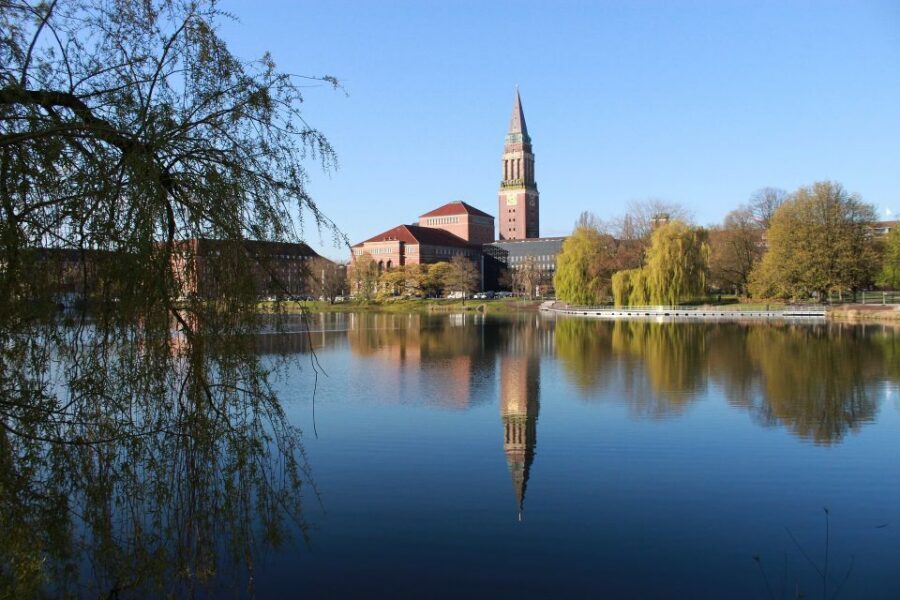
After the church, the walk moves through the city core, including the Old Market area and views connected to the Kiel Town Hall. This is where the tour becomes more than architecture appreciation.
The Old Market is where you can feel everyday Kiel energy. Even if you’re visiting as an outsider, you’ll notice the contrast between the formal dignity of big buildings and the human scale of squares and streets. Your guide helps you make sense of that difference by tying locations to local stories—where people historically gathered and why certain spaces became important.
Town Hall sightings matter for a simple reason: city governments and civic buildings usually sit at the center of how a place organizes itself. Seeing it while your guide is actively explaining adds context that you might miss if you visited on your own.
If you’re the type who likes to understand what you’re looking at, this section is for you. It doesn’t require deep historical knowledge. You just need attention and curiosity, and your guide is there to connect the dots.
You can also read our reviews of more city tours in Kiel
Harbour stroll: where the stories turn practical
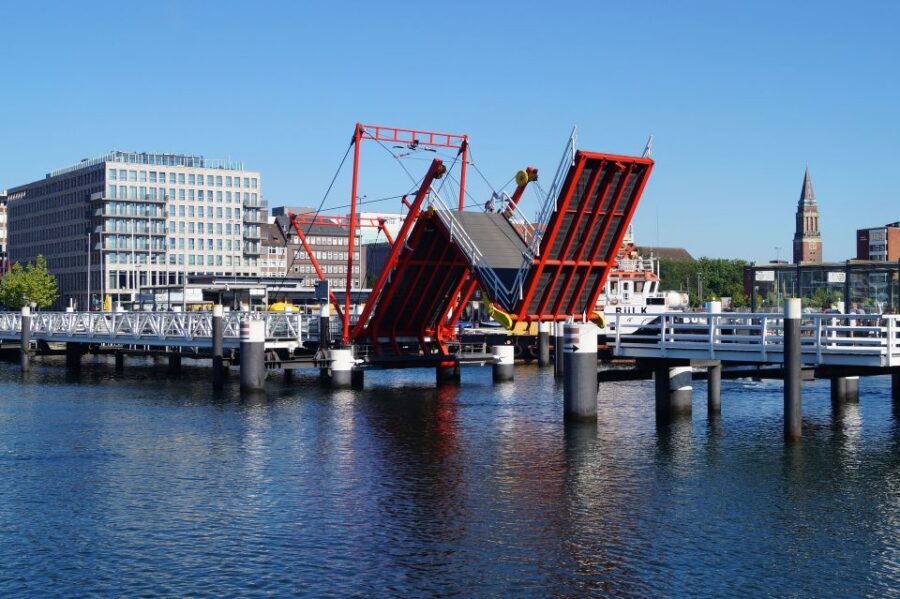
A key promise of this walk is a picturesque stroll along the city’s harbour. That’s a big deal because it changes the scenery and the mood. You go from historic streets and landmark facades to open waterfront space, and the city suddenly feels broader.
Harbour areas can also be visually forgiving for photos. Even if weather isn’t perfect, you can still get strong images—lines of buildings, water reflections, and that northern light feel. And walking here tends to remind you why harbour cities develop the way they do: trade, movement, and everyday commerce shape the layout over time.
Your guide’s role at this point is to keep the connection between the architecture you saw earlier and the waterfront you’re seeing now. You’re not just taking a scenic break. You’re learning how Kiel’s identity connects across the city.
Bismarck-Denkmal memorial: the “why is that there?” stop
One of the lesser-known pieces mentioned is the Bismarck-Denkmal memorial. I like this kind of stop because it answers a common travel question: why does this specific monument exist in this specific spot?
Memorials can be easy to ignore if you only pass by quickly. With a guide, you get the story behind the placement and significance. Even if you don’t become a sudden expert in 19th-century memorial culture (no one needs to), you’ll leave understanding the logic of the city’s landmarks.
This is also a good reminder that the best city walks aren’t only the “big postcard” stops. The small, targeted details are what make the city feel lived-in, not just photographed.
Price of $116: value for a short, guided walk
At $116 per person for 90 minutes, this is not the cheapest walking tour in Europe. But it’s also not trying to be. The value comes from three things you can actually feel during the experience:
- Small group size (2 to 6 people), which keeps the guide’s attention less diluted.
- Live English or German guide, so you’re getting real-time explanations and the chance to adjust pace or focus.
- A focused set of high-interest stops, including the Opera House, St. Nikolai Church, Old Market, and harbour scenery.
For you, the main question is opportunity cost. If you’re spending a limited amount of time in Kiel, a 90-minute structured walk can be the best way to get oriented fast—especially if you want both history and practical “where is what” navigation.
If you’re in Kiel for days and you love wandering without a plan, you might skip a paid tour. But if you’re only here briefly and you want someone to point out what matters, the price starts to make sense. Think of it as buying clarity, not just footsteps.
What to bring and how to stay comfortable
This is a walking experience, so pack like you’re going for a light city hike. The essentials listed are:
- Comfortable shoes
- Water
- Weather-appropriate clothing
- A charged smartphone
That last one is practical for the obvious reasons, but also because you’ll likely want to save directions, use a map for re-orienting later, and snap a few photos as the scenery shifts from streets to harbour.
Also keep your expectations aligned with what the tour can do. It adapts to your interests and walking pace, and stops may vary due to weather. That means it’s not a rigid march where every second is the same for every group. If you’re okay with a bit of real-life flexibility, this kind of tour style is a good fit.
Who this Kiel highlights walk suits best
This tour is a strong match if you:
- Want a quick, structured introduction to Kiel’s main sights
- Like learning through a guide’s explanations, not just reading plaques
- Prefer small groups over big buses or large crowds
- Appreciate a mix of landmarks and neighbourhood atmosphere
It’s less ideal if you want a fully relaxed, long-stay strolling pace with lots of sitting. It’s also explicitly not suitable for people with mobility impairments, so if that’s a concern, look for an alternative format that reduces walking demands.
If you speak English or German, you’re in good shape. The guide is listed in both languages, which also helps if you want to follow easily without straining through translations.
Should you book this Kiel highlights express walk?
I’d book it if you want a smart, short way to understand Kiel. You get the big architecture hits (Opera House, St. Nikolai Church, Town Hall), the human-scale Old Market feel, and a harbour walk that gives the city a broader sense of place. For many visitors, that combination is exactly what makes Kiel click.
Skip it if you’re already comfortable wandering Kiel on your own and you don’t care about guided context. In that case, you might get more satisfaction from time spent freely exploring the harbour and old streets without a fixed 90-minute structure.
If you’re on the fence, think about this: this walk is built for orientation. It helps you see what’s worth returning to later—and it gives you a handful of stories and “notice this” cues so Kiel doesn’t feel like a random set of landmarks.
FAQ
How long is the Kiel highlights express walking tour?
The tour lasts 90 minutes.
Where do I meet the guide?
Meet in front of the Otto Bismark Statue.
What group size is it?
It’s small, with 2 to 6 people. The activity also notes a maximum of up to 8 travellers.
What languages are available?
The live guide is available in English and German.
What should I bring?
Bring comfortable shoes, water, weather-appropriate clothing, and a charged smartphone.
Is free cancellation available?
Yes. You can cancel up to 24 hours in advance for a full refund.