REVIEW · KARLSRUHE
Karlsruhe Genesis – underground art by Markus Lüpertz
Book on GetYourGuide →Operated by Karlsruhe Tourismus GmbH · Bookable on GetYourGuide
Karlsruhe’s underground art has serious scale. I love the sheer ambition of Markus Lüpertz’s GENESIS ceramics as the largest continuous ceramic artwork in Germany, and I love that you experience it as a guided journey through the real light-rail tunnel. It’s not just a wall of art; it’s a moving, staged “darkness into light” feeling.
The tour is also clearly built around interpretation, with 14 individual highlights at seven stations and a guide who explains how the work was made and installed. The main thing to consider is simple: you’ll need a valid train ticket for every person, since the art is tied to the Karlsruhe rail system.
In This Review
- Key things to know before you go
- Why Karlsruhe’s underground GENESIS ceramics hit so hard
- Price and logistics: what $23 really covers
- Markus Lüpertz’s GENESIS: scale, materials, and the “darkness to light” idea
- The tour rhythm: 14 highlights across seven stations
- You’ll move station to station on the Karlsruhe rail system
- Each station highlight is one part of the larger cycle
- You’ll get facts about production and installation
- You’ll have time to interpret, not just observe
- A minor drawback: you’ll be following a route, not roaming freely
- The real story: a 365-day underground gallery without public funding
- How the guide experience improves what you see
- What kind of visitor should book Karlsruhe Genesis?
- Practical tips so you don’t waste time on details
- Should you book this underground art tour?
- FAQ
- FAQ
- How much does Karlsruhe Genesis cost?
- How long is the guided tour?
- Do I need a train ticket?
- Where does the tour start?
- Where does the tour end?
- How many highlights and stations are included?
- Is the tour guided?
- What language is the tour in?
- Is the tour wheelchair accessible?
- Can I get a refund if my plans change?
Key things to know before you go
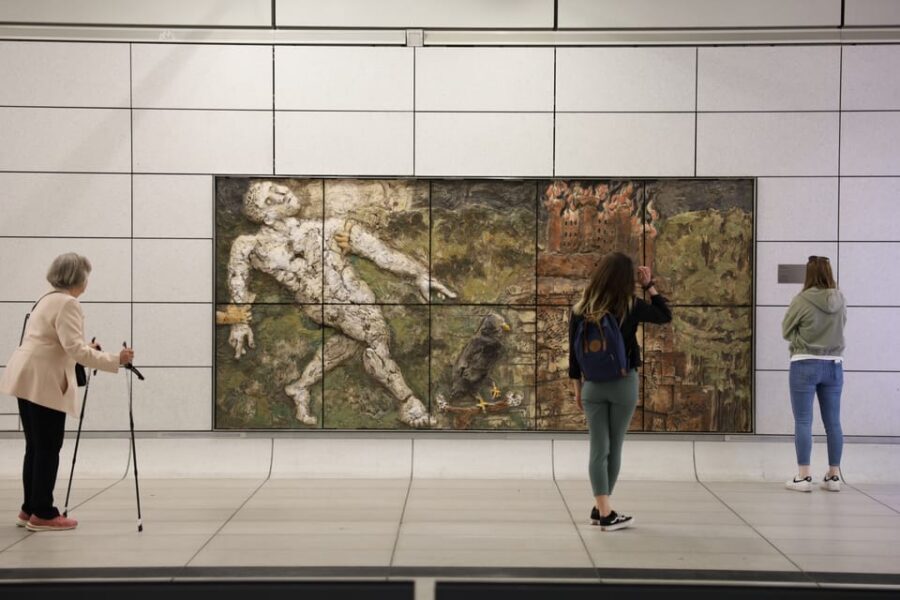
- Germany’s largest continuous ceramic artwork: the GENESIS cycle is truly the star attraction.
- 14 highlights across seven stations: you won’t see it all in one glance; you’ll step-by-step through the tunnel.
- A 365-day underground gallery: it’s meant to be seen year-round, not just during short festivals.
- No public funding for the project: the lighthouse project was supported through donations and company/private sponsorship.
- A guided tour in German: the tour format centers on clear, detailed explanation so you get more out of what you see.
Why Karlsruhe’s underground GENESIS ceramics hit so hard
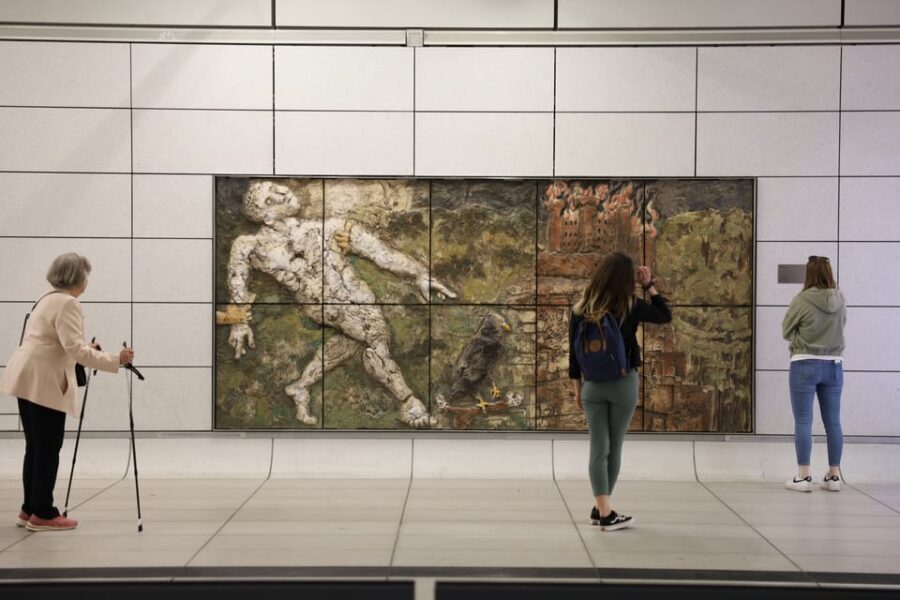
This experience works because the art is doing something most museum exhibits can’t: it uses the light rail tunnel itself as the stage. You’re not standing in front of a single piece. You’re moving through a setting where the artwork runs continuously, so the scale feels physical.
Markus Lüpertz’s GENESIS cycle is described as a total work of art, and the tunnel helps sell that idea. Instead of “look, then leave,” the setting turns the visit into a slow sequence. The concept is framed as a creative journey from darkness into light, and you feel that pacing as you progress station to station.
Also, the idea of the artwork being literally put on the rails is more than a clever line. Since the carrier is the Karlsruhe “subway,” the project belongs to everyday movement. That makes it feel less like a one-time attraction and more like a permanent layer of culture built into the city.
You can also read our reviews of more tours and experiences in Karlsruhe.
Price and logistics: what $23 really covers
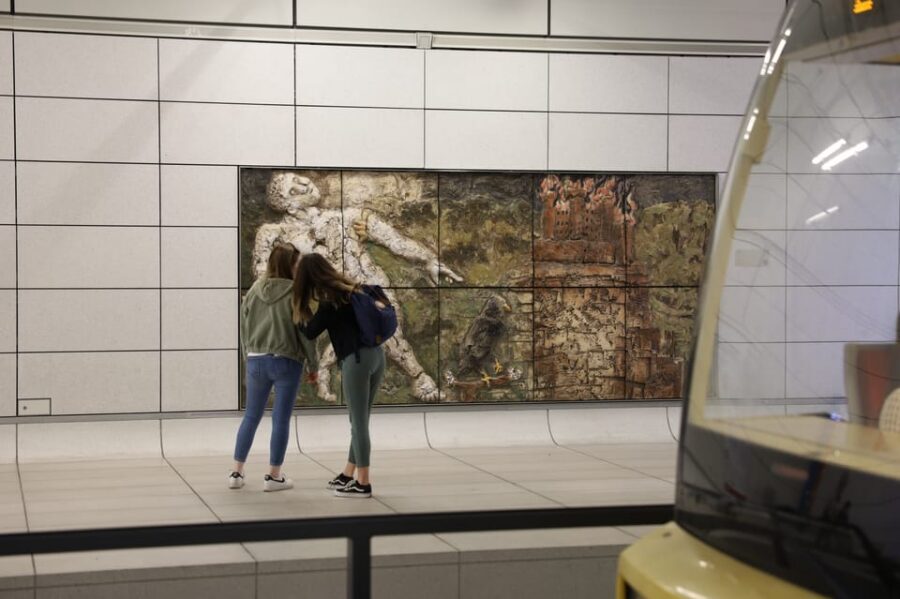
At about $23 per person for a 2-hour guided tour, you’re paying for more than entry to a pretty spot. You’re paying for a structured, explained route through the tunnel artwork—plus the tour organization by Karlsruhe Tourismus GmbH.
Two practical points matter here:
- Your train ticket is not included. The tour requires that every person has a valid train ticket, and that’s your responsibility. If you arrive without it, you’ll be stuck with an avoidable headache.
- Language is German. The live guide is German, so the experience will be easiest if you’re comfortable understanding guided commentary in German (or at least following art explanations).
Meeting point is at the big brown cube at Durlacher Tor. The tour ends back at the meeting point, though the provided info also notes that the tour ends at a different location before returning—so just plan to follow the guide’s instructions on the day.
The duration is listed as 2 hours, but starting times depend on availability. I’d treat that as your main scheduling constraint.
Markus Lüpertz’s GENESIS: scale, materials, and the “darkness to light” idea
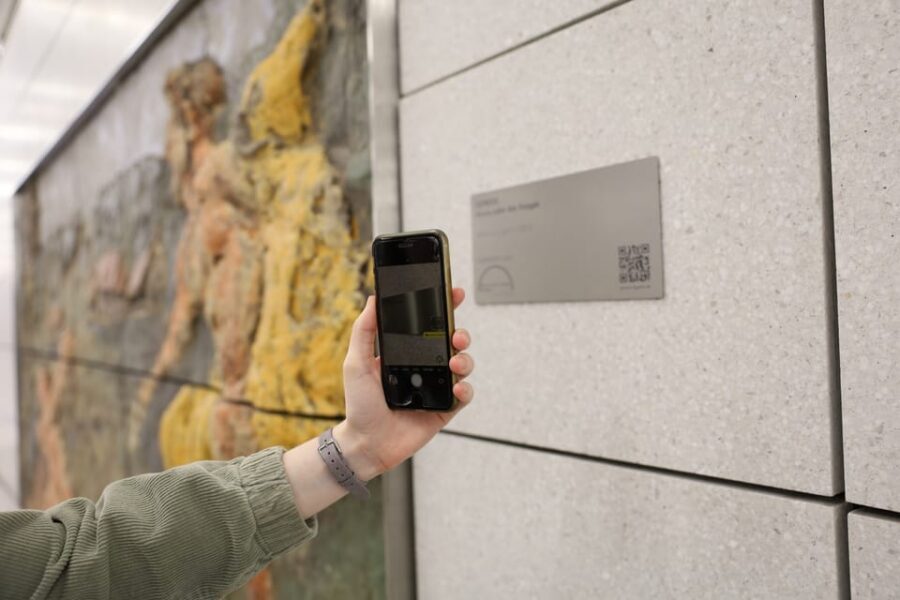
This is about ceramics, and not in the small, decorative sense. The artwork is promoted as the largest coherent ceramic artwork in Germany—and that word coherent matters. You’re meant to see the cycle as one connected whole, not as scattered fragments.
Lüpertz’s role is central. The project is presented as the history of the creation of the GENESIS cycle by Markus Lüpertz, called the prince of painting in the tour description. That framing tells you the guide will likely connect what you see to how the cycle came to life, and why it was conceived this way for an underground public space.
The tour also makes an interpretive promise: you’ll learn interesting facts about the masterful work of those involved in production and installation, and you’ll get a guided interpretation of Lüpertz’s artistic intent. But it’s equally clear that there’s room for your own reading of the artwork. In other words, you’re not being forced into one single meaning.
What you can expect visually is difficult to fully predict from text alone, but the structure gives you clues:
- The artwork is arranged as a sequence across multiple stops.
- It’s designed to be experienced from moving through the tunnel.
- The narrative arc is explicitly described as DARKNESS into LIGHT, so the route pacing is part of the design.
The tour rhythm: 14 highlights across seven stations
The heart of the experience is the “how” of seeing it. The tour is set up with 14 individual highlights at seven stations, so you’re not just passing through. Each station is treated like a chapter.
Here’s how that typically plays out in practice, and what you should look for:
You’ll move station to station on the Karlsruhe rail system
Because train tickets are required and the art lives in the light-rail tunnel, you’re doing this as an on-rails experience. That matters. You’ll get a different view angle and a different “read” of the ceramics as you approach, pause, and continue. The project is sized for that kind of viewing.


Each station highlight is one part of the larger cycle
The highlights are spread across seven stations, with 14 moments in total. That strongly suggests the guide will point out specific artistic details and explain how those details relate to the GENESIS cycle.
Even if you’re not fluent in German, I’d bet the tour leans on concrete, on-site explanations: what you’re seeing at that exact moment, and what it connects to in the broader creation story.
You’ll get facts about production and installation
The tour description explicitly says you’ll discover interesting facts about the production and installation—so the viewing isn’t limited to “what it means.” You should expect to hear how the work was made and installed in a way that survives and functions as part of a working transport tunnel.
You’ll have time to interpret, not just observe
The tour says your guided visit gives insight into Lüpertz’s interpretation, but that there’s still plenty of scope for viewer interpretation. That’s a good sign for people who hate feeling lectured. You’re guided, not trapped in a single official explanation.
A minor drawback: you’ll be following a route, not roaming freely
Because it’s a guided tour with a set structure, you don’t get full free-form time at every point. If you like to linger and photograph for long stretches, you might find the pacing a bit structured. Still, for most people, the route design is exactly what unlocks the artwork’s impact.
The real story: a 365-day underground gallery without public funding
One of the most interesting parts of this project has less to do with ceramics and more to do with how public art happens.
The tour highlights that Karlsruhe’s underground 365-day gallery is special because the lighthouse project was realized entirely without public funding. Instead, it was financed through the enthusiasm of companies and private sponsors, organized by the initiator Anton Goll, who had the idea and supervised the unique art project for seven years up to opening.
Why this matters for you as a visitor:
- It helps explain why the project is built as a permanent gallery, not a temporary display.
- It signals that this is a privately supported cultural initiative—so the result is a little different in spirit than something created through standard public arts channels.
- It adds another layer to how you understand the artwork: it’s not only an artistic commission, it’s a long-running collaboration involving institutions, donors, and sponsors.
And the metaphor of putting the work on the rails fits both story and design. The city’s transport system becomes the distribution system for art, day after day, all year.
How the guide experience improves what you see
The reviews score is a strong 5 out of 5, and the comments line up with what you’d hope for in an underground art tour: people liked that the tour was very interesting, and they praised the guide as nice and able to explain things in a detailed, engaging way.
For you, that points to a simple practical advantage: you’re not left guessing.
Underground installations can be hard to “read” on your own. When the artwork is as large and continuous as this, it’s easy to miss what connects the parts. A good guide does two things:
- They point you to the specific details worth noticing at each station.
- They connect those details back to the larger story of the GENESIS cycle and the work behind its creation and installation.
This tour is also explicitly guided and offered in German. If you’re comfortable with German (or you’re at least interested enough to follow even partial commentary), you’ll likely get more out of the route. If German is a weak spot, you might still enjoy the visuals, but your payoff from the guided interpretation may be limited.
What kind of visitor should book Karlsruhe Genesis?
This is a strong fit if you like any of the following:
- Modern art with a strong concept: GENESIS isn’t presented as decorative ceramics; it’s a cycle with a narrative arc.
- Public art you experience in motion: if you enjoy “city as museum,” this uses a transport tunnel as the gallery.
- Hands-on interpretation: the tour doesn’t just show the finished artwork; it also explains production and installation details, plus Lüpertz’s creative context.
It’s less ideal if you want a casual, unguided stop where you can wander slowly without structure. This is a tour, with a defined route through stations.
Practical tips so you don’t waste time on details
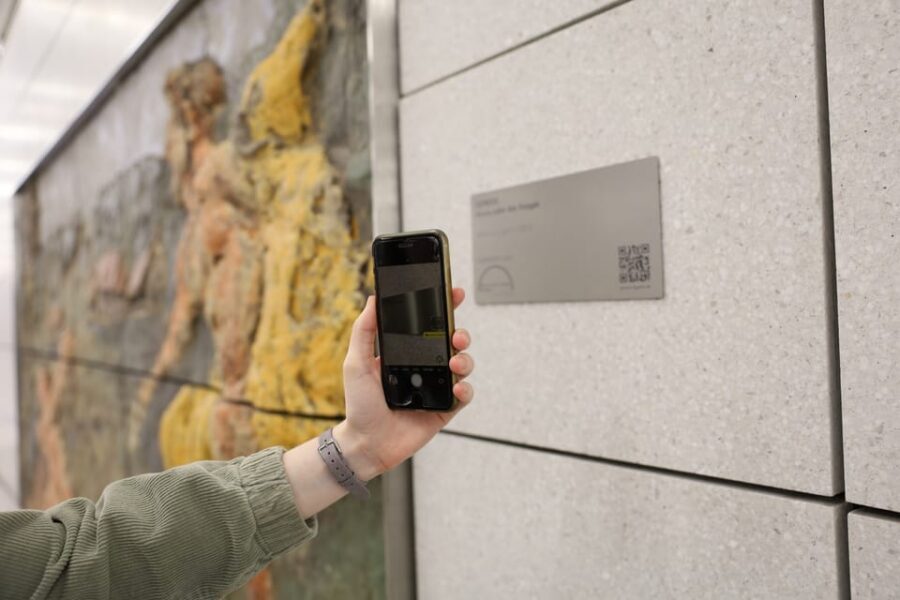
A few practical ideas based directly on what matters for this tour:
- Bring your valid train ticket. Every person needs one, and it isn’t included with the tour price.
- Start at Durlacher Tor and use the big brown cube as your anchor point. That’s where the tour begins.
- Give yourself enough buffer time before the start. Starting times depend on availability, and it’s easier to enjoy the art when you’re not rushing.
- Wear comfortable shoes and plan for station-to-station movement. It’s an underground rail experience, so expect walking and changing views rather than a single static viewpoint.
- If German is your challenge, decide in advance if you’re okay enjoying the art even when you might not catch every word. The artwork’s scale should carry the experience even on a partial language day.
Should you book this underground art tour?
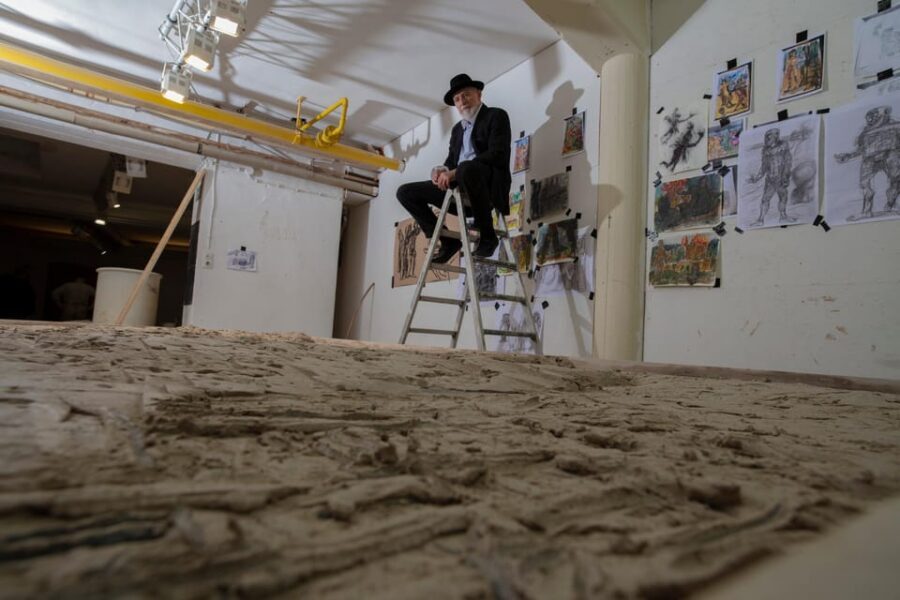
I’d book it if you want a guided, concept-driven experience in a real public space, and especially if you enjoy art that’s tied to the way a city functions. For the money, you get two hours with a guide, a structured route through 14 highlights at seven stations, and a chance to see a permanent underground ceramic cycle presented as a journey from darkness into light.
Skip it only if you know you won’t handle German-guided commentary well, or if you’re unwilling to buy and use train tickets for each person. Those are the two main deal-breakers tied to how the tour actually works.
FAQ
FAQ
How much does Karlsruhe Genesis cost?
The price is listed at about $23 per person.
How long is the guided tour?
The duration is 2 hours.
Do I need a train ticket?
Yes. Every person needs a valid train ticket, and the train ticket is not included in the tour price.
Where does the tour start?
The start meeting point is at the big brown cube at Durlacher Tor.
Where does the tour end?
The activity ends back at the meeting point.
How many highlights and stations are included?
The tour includes 14 individual highlights at seven stations.
Is the tour guided?
Yes. A live tour guide leads the experience.
What language is the tour in?
The tour guide is listed as German.
Is the tour wheelchair accessible?
Yes, it is wheelchair accessible.
Can I get a refund if my plans change?
Yes. Free cancellation is offered up to 24 hours in advance for a full refund.
If you’d like, tell me your German level and the day you’re visiting, and I’ll help you plan how to fit the 2-hour slot around the rest of your Karlsruhe time.