REVIEW · HAMBURG
Hamburg St. Pauli and Red Light District Private Walking Tour
Book on Viator →Operated by Schoenes Hamburg · Bookable on Viator
St. Pauli tells its story in streetlights. This private, guided walk through Hamburg’s red-light district turns what can feel chaotic into a clear route with real context—starting right at Millerntorplatz.
I especially like the way the tour mixes pop culture and local history. You’ll hit the Beatles trail in a meaningful way, and you’ll also learn why places like the Flakbunker and the area around Michel mattered during older city rules.
One thing to think about: this is not a kid-friendly walk. It’s an adult area, and while the guide keeps things respectful, you’re still moving through streets connected to sex work and nightlife.
In This Review
- Key highlights worth planning for
- St. Pauli is the fastest way to understand Hamburg at night
- Price and time: what $43.65 buys you in real walking minutes
- Meeting point to finale: how the route is structured
- Millerntorplatz: the football view and the tour’s opening tone
- Heiligengeistfeld and the Flakbunker: war history made visitable
- Dancing Towers and the Clouds Restaurant outlook
- Reeperbahn: a straight shot through the main drag
- Panoptikum: wax figures on the edge of the story
- Spielbudenplatz and the Kasperle connection
- Davidwache (Polizeikommissariat 15): why this police station is famous
- Davidstraße, Hans-Albers-Platz, and Herbertstraße rules
- The oldest Kneipe stop and the Beatles finish
- What guides do right here: names you might hear, and why it matters
- Weather, shoes, and how to avoid an awkward night
- Who should book this private St. Pauli walk
- Should you book Hamburg’s St. Pauli red-light district private tour?
- FAQ
- How long is the Hamburg St. Pauli and red-light district private walking tour?
- What does it cost?
- Is the tour offered in English?
- Is this tour private or shared?
- Do I need to pay for attractions during the tour?
- Where does the tour start and end?
- Does the price include a guide?
- Is food or transportation included?
- What’s the meeting point address?
- Is the tour suitable for children?
- FAQ
- Will the tour run in bad weather?
- Is the tour near public transportation?
- Can service animals join the tour?
Key highlights worth planning for
- Millerntorplatz start with a football-stadium view and an easy-to-follow route theme
- Beatles stops including the Beatles-Platz with life-size sculptures
- Dancing Towers and Clouds Restaurant viewpoint with explanations of the unusual tower angles
- Davidwache police station: why this is Germany’s most famous station
- Herbertstraße rules: you’ll learn what’s restricted and how your guide manages the group
- Panoptikum teaser at the black curtain, with wax-figure time explained but admission not included
St. Pauli is the fastest way to understand Hamburg at night
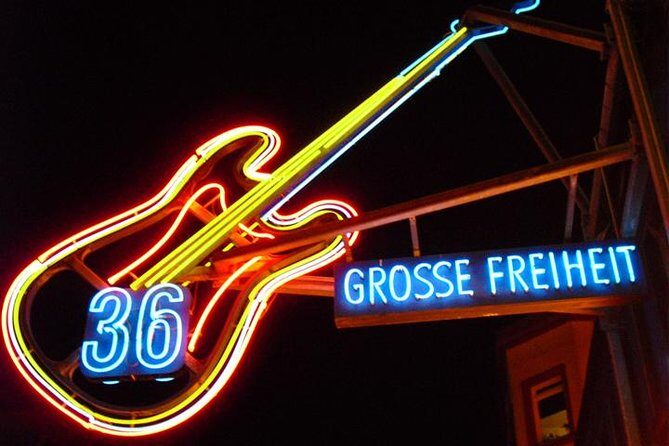
If you only have a short time in Hamburg and want to see what makes it feel like Hamburg, St. Pauli is one of the quickest plays. It’s where locals go for shows, bars, and late-night energy—plus where the city’s older habits still echo in the layout of the streets.
The tour’s big strength is that it doesn’t treat the red-light district like a novelty. Instead, you get a guided walk that links the neighborhood’s nightlife image with the city’s deeper past. That approach helps you read the area faster, so you’re not just looking at signs—you’re understanding why the streets evolved the way they did.
And yes, it’s lively. But with a guide in your corner, it becomes practical: you learn where you are, what you’re looking at, and what to do next if you want to keep exploring after the walk ends.
You can also read our reviews of more walking tours in Hamburg



Price and time: what $43.65 buys you in real walking minutes

At about 2 hours and $43.65 per person, this tour is priced like a focused evening activity—not a long all-day commitment. That matters because St. Pauli is best experienced at night, when you can actually see the neighborhood’s vibe instead of reading it from daytime photos.
You also get something that often costs more on other tours: a local guide built for a walking route. The tour is private, meaning only your group participates, which usually makes questions easier and turns the time into more of a conversation than a lecture.
You’ll still spend your own money if you want extra things beyond what’s included. For example, Panoptikum is part of the stops but its admission is not included, while at least one other stop does include admission time. The price feels fair when you treat it as a guided route plus context, not a bundled attraction pass.
Meeting point to finale: how the route is structured
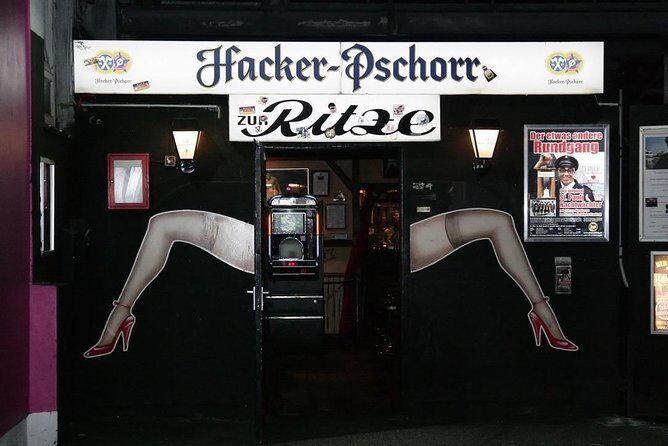
The tour starts at St. Pauli 20359 Hamburg and ends at Große Freiheit 36, 22767 Hamburg. That end point is smart because it drops you right back into the area where you’d likely want to continue anyway.
The walking route is organized as a kind of “red thread” through the sinful mile story. Even if you’re not a German speaker, the guide’s job is to connect the dots quickly, and the stop-by-stop pacing keeps it moving without feeling rushed.
You’ll cover a lot in two hours—football sightlines, wartime architecture, nightlife entrances, and two Beatles-related stops—while still getting enough time at each stop to understand what you’re seeing.
Millerntorplatz: the football view and the tour’s opening tone
Millerntorplatz is where you begin, and it’s an instantly useful landmark. From there, you get a good look toward the football stadium—so you’re not just stepping into nightlife. You’re stepping into a neighborhood with a broader identity.
The guide then sets the rhythm with that red-thread approach. Expect the tone to be entertaining, informative, and a little cheeky, because St. Pauli is the kind of place where people remember history without making it heavy.
If you’re the type who gets lost easily in a new city, this first stop helps. You get a reference point, then you start following the story rather than guessing where to go next.
Heiligengeistfeld and the Flakbunker: war history made visitable
As you move along, one of the more striking stops is a Flakbunker near the Heiligengeistfeld. The key detail here is not just that it exists—it’s that it’s been repurposed in a way that makes the building part of the living city rather than a distant monument.
This is one of those “you wouldn’t notice it like this” moments. A bunker can feel like a dead relic, but the guide’s explanation helps you see why it matters where it sits and what kinds of uses it has now. It also helps you understand why St. Pauli’s story is tied to larger Hamburg history, not just nightlife.
The tour also points out that you won’t be visiting churches on this walk. Instead, you’ll learn why Michel—what Hamburgers call their old city landmark—had special significance during the time of Torsperre, when city gates and curfews shaped daily life. It’s a period detail, but it gives you a lens for how rules used to work.
You can also read our reviews of more private tours in Hamburg





Dancing Towers and the Clouds Restaurant outlook
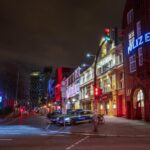
Then comes one of the entrances into the night: the Dancing Towers. The guide explains why the towers are designed with an unusual angle, and how that ties into the feel of the area.
There’s also an outlook connected to the Clouds Restaurant. Even if you’re not ordering anything, it’s worth paying attention to viewpoints like this because they make the neighborhood feel mapped. You can see where the streets lead and how the nightlife area spreads out.
This stop is short, but it’s memorable, especially if you like architecture mixed with city atmosphere. It also helps you transition mentally: you’re no longer in the daylight version of the story. You’re in the evening one.
Reeperbahn: a straight shot through the main drag
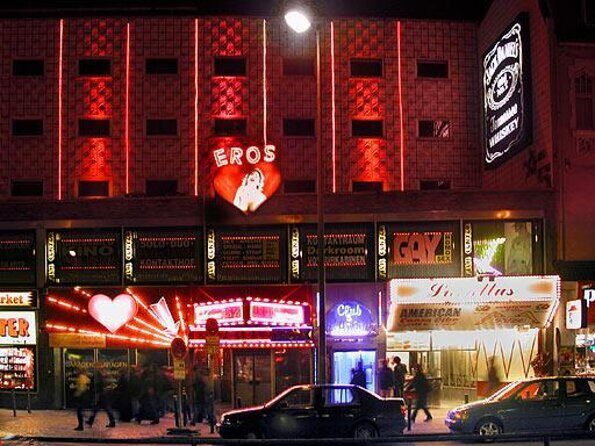
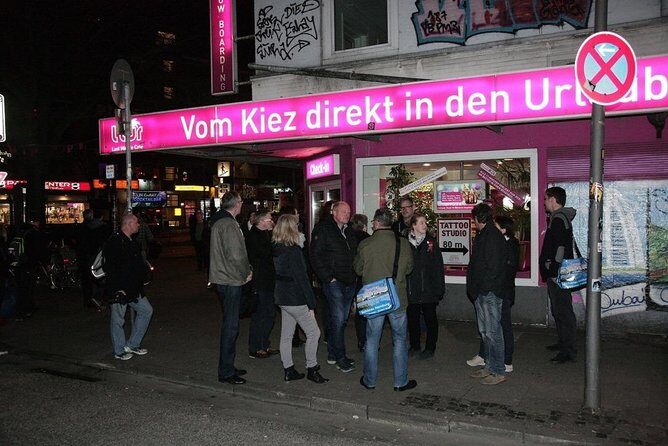
When you reach the Reeperbahn, you’re right in the middle of the activity. The guide takes you walking along a stretch rather than cutting randomly through side streets.
Two useful things happen here. First, you learn where the good clubs and restaurants tend to cluster, which helps your planning later. Second, you get an explanation of where the name comes from, so you’re not just memorizing a famous street name—you’re understanding it.
This is a strong segment for first-timers because it gives you a “no-stress” orientation. You get to look around, not just follow directions.
Panoptikum: wax figures on the edge of the story
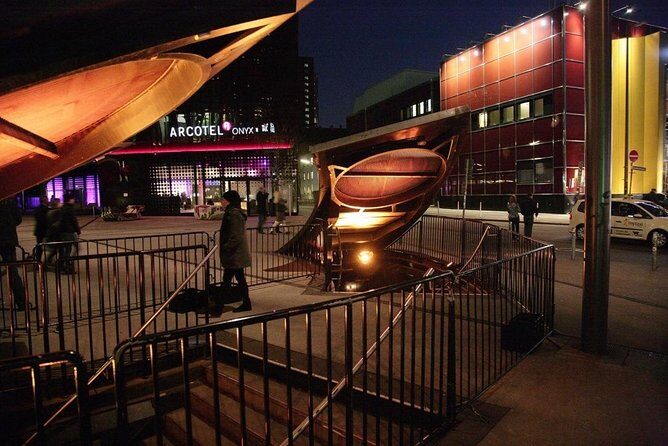
The tour includes a stop at Panoptikum, the wax figure house. The key detail is that you’ll be shown what’s behind the black curtain in the basement area—but admission is not included.
That makes this stop flexible. If you want wax figures, you can decide on the spot whether it’s worth paying extra. If you’re not in the mood, you’re still getting the context of why this place fits the neighborhood’s entertainment identity.
It’s a good example of how the tour balances curiosity with choice. You’re not being forced into every paid attraction.
Spielbudenplatz and the Kasperle connection
At Spielbudenplatz, you’ll learn how the square got its name and what the Kasperle theater has to do with it. That kind of local word-history is surprisingly helpful in St. Pauli, where entertainment and street life have been intertwined for a long time.
There’s also a mention of the Santa Pauli Christmas market that takes place here each year. Even though you’re walking at night (or at least in the evening schedule), it’s helpful to know that the place isn’t only about nightlife. It also hosts seasonal crowds.
So you leave this stop with a more complete mental model: entertainment across different times of year, not just one kind of scene.
Davidwache (Polizeikommissariat 15): why this police station is famous
Next is Polizeikommissariat 15 Davidwache. This is one of the “only in Germany” moments for fame: the guide shares why this police station is often treated as the most famous in the country.
The value here is the human scale. Police buildings can feel cold on a tourist map. On this walk, they feel like part of the neighborhood’s social history, because the guide adds facts and anecdotes tied to the location.
If you like small details that make a city feel real, this is a good stop. It turns a functional building into a story anchor.
Davidstraße, Hans-Albers-Platz, and Herbertstraße rules
Davidstraße is where the tour gets more pointed and a bit more rules-based. You’ll see the Beatles hair salon area, pass by the St. Pauli Museum, and learn enough about the streets to know why these names keep coming up.
There’s also a stop at Hans-Albers-Platz. If Hans Albers rings a bell, you’ll learn why his statue appears here—and also why you might find one in Düsseldorf too. It’s a neat way to connect Hamburg identity with the wider German cultural map.
Then comes Herbertstraße, and this is important for your expectations. The tour includes a segment where access rules apply: entry is prohibited for women and children. The guide handles group separation so men go through and women are routed around, with the guide sharing “secrets” associated with Erichstraße.
This isn’t just practical. It’s also a lesson in how the neighborhood’s past rules affected who could be present in specific spaces. It’s the kind of detail you only get with a guide who knows the area.
The oldest Kneipe stop and the Beatles finish
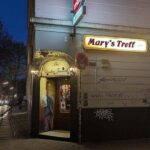
Along the way, you’ll pass one of the oldest pubs on the Kiez. Even though the walk moves on, the guide sets you up with an easy plan: you can come back after the tour if you want a low-key place to keep the evening going.
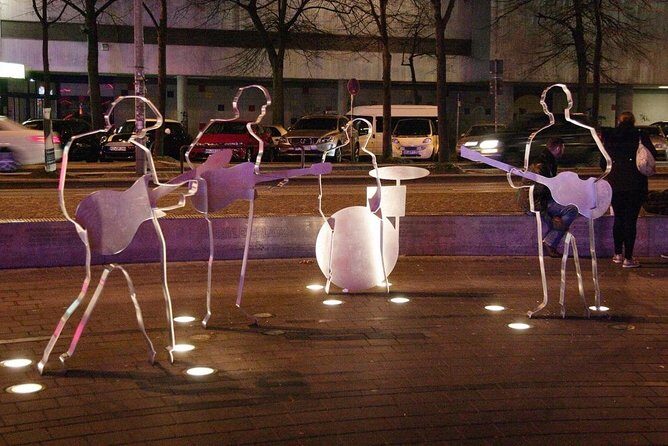
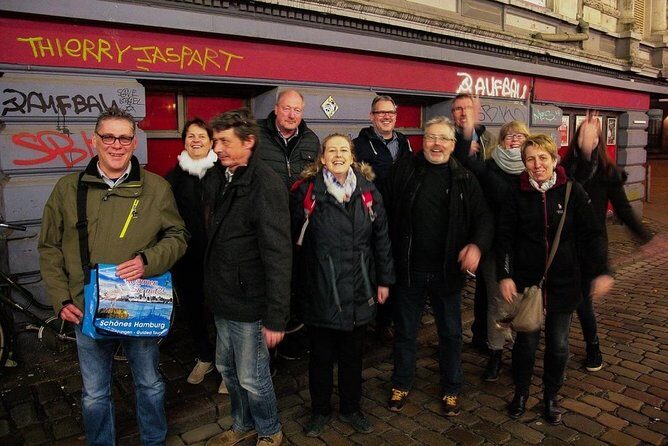
Then it’s time for the Beatles finale. At Beatles-Platz, you’ll see life-size sculptures honoring the Fab Four. The Beatles connection is central here, including the fact that they started their career in Hamburg. The tour gives you a chance to take a group photo right where the neighborhood puts them front and center.
Finally, the tour ends at Große Freiheit 36, which is a smart place to finish because it’s already in the nightlife zone. When your guide says you’re ready to head out with good mood and better context, you can actually use that. You’re dropped into the area without feeling stranded.
What guides do right here: names you might hear, and why it matters
The biggest difference between a generic walk and a good one is how the guide handles tone. Here, multiple guides have been praised for being clear and friendly, and that matters because St. Pauli can feel intimidating if you don’t know what to expect.
One guide name that’s been highlighted is Lock, praised for delivering strong history and a good, informative flow through the area. Another name that comes up is Joe—praised for helpfulness and for being originally born in the USA, which can make English explanations feel extra smooth when you’re trying to understand the details quickly.
Even if you don’t get either of those exact guides, the pattern is what counts: the best version of this tour is the one where the guide makes the neighborhood legible without making it awkward. That’s the goal of a private walk like this.
Weather, shoes, and how to avoid an awkward night
This tour runs in all weather conditions. That means you should dress for rain or cold if the evening is raw, and you should plan on being outside for two hours.
Wear comfortable shoes. St. Pauli streets are active, and you’ll be moving between stops rather than lingering on one corner. If you walk well, the whole thing feels easy.
Also, since the tour heads into adult-oriented streets, keep your expectations adult-friendly. It’s not a prissy museum experience, but it’s guided and structured. The point is understanding the area’s story, not treating it like a dare.
Who should book this private St. Pauli walk
Book this if you want:
- A guided orientation to St. Pauli without wandering
- A Beatles-focused evening with more context than a photo stop
- City history that connects to what you’re seeing on the street
- An English tour that keeps the pace steady over about 2 hours
Skip it (or swap to something else) if:
- You want a purely family-friendly sightseeing route (it’s not recommended for children)
- You don’t want any exposure to adult nightlife areas at all
- You dislike walking in the evening crowds, even with a guide
Should you book Hamburg’s St. Pauli red-light district private tour?
I’d book it if your goal is to understand Hamburg’s nightlife zone with structure. The best value here isn’t a bargain price—it’s that the guide helps you connect landmarks, names, and older city rules so the red-light district doesn’t feel like random streets.
I’d think twice if you’re traveling with kids or you’re looking for a quiet, daytime history tour only. This is an evening walk with adult context built into the route.
If you’re a Beatles fan, the payoff is immediate: you’ll see Hamburg’s Beatles tributes and you’ll also get the broader St. Pauli story around them. And even if you’re not, the mix of architecture, police history, and local explanations makes the walk more than a theme-night.
FAQ
How long is the Hamburg St. Pauli and red-light district private walking tour?
It runs for about 2 hours.
What does it cost?
The price is $43.65 per person.
Is the tour offered in English?
Yes, it is offered in English.
Is this tour private or shared?
It’s private. Only your group participates.
Do I need to pay for attractions during the tour?
Some stops include admission, but not all. Panoptikum admission is not included, while Dancing Towers includes admission as part of the stop.
Where does the tour start and end?
It starts at St.Pauli (20359 Hamburg, Germany) and ends at Große Freiheit 36 (22767 Hamburg, Germany).
Does the price include a guide?
Yes. A local guide is included.
Is food or transportation included?
No. Food and drinks are not included, and transportation to or from attractions is not included.
What’s the meeting point address?
The meeting point is listed as St.Pauli 20359 Hamburg, Germany (near the start location shown on the Google Maps link).
Is the tour suitable for children?
It is not recommended for children.
FAQ
Will the tour run in bad weather?
It operates in all weather conditions, so you should dress appropriately.
Is the tour near public transportation?
Yes, it’s near public transportation.
Can service animals join the tour?
Yes, service animals are allowed.