REVIEW · HAMBURG
Hamburg: Private Tour – Schanzenviertel & Karolinenviertel
Book on GetYourGuide →Operated by Schoenes Hamburg · Bookable on GetYourGuide
Hamburg’s cool streets have a past. This private 2-hour walk through Schanzenviertel and Karolinenviertel turns everyday streets into a story about defense posts, forelands, and how the city’s edge has changed over time. I especially like how the route connects old places to what you see now, from independent shops to modern hangouts around Rote Flora.
I also love the human touch: guides such as Basti and Frau Evers are praised for clear, well-explained context, sometimes with humor and even emotion when the neighborhood’s controversies come up. One consideration: the tour runs in German, and parts of the story involve why these areas have been in the spotlight for demonstrations.
In This Review
- Key things you’ll notice on this tour
- Why Schanzenviertel and Karolinenviertel Feel Like Hamburg’s Real Side
- Starting at Sternschanze: A smart way to begin this kind of neighborhood tour
- Schanzenviertel (about 30 minutes): From the Schanze defense idea to today’s streets
- Karolinenviertel (about 20 minutes): Back courtyards and the neighborhood’s working memory
- Rote Flora (about 10 minutes): A landmark you’ll keep noticing afterward
- The Bullerei detour (timing folded into the walk): Food culture with local gravity
- Feldstrasse bunker (about 10 minutes): Wartime Hamburg, close enough to feel real
- The former cattle abattoir: How two districts are literally connected
- Finishing at Messehallen: Ending point that shapes your last hour
- Timing and pace: How a 2-hour route stays meaningful
- Price and value: $294 for a private group up to 15
- Who this tour is best for (and who might skip it)
- What to do right after the tour
- Should you book this private Hamburg neighborhood tour?
- FAQ
- Where is the meeting point?
- How long is the tour?
- How much does it cost?
- Is this a private tour?
- What neighborhoods and stops are included?
- What language is the live guide?
- Can I cancel?
- Are other tour times available?
Key things you’ll notice on this tour
- A short route with big contrasts between working-class roots and today’s trendy streets
- Rote Flora as a visible landmark for how the neighborhood thinks and lives
- A Bullerei detour that links food culture to the same streets with history
- Feldstrasse bunker giving you a real sense of wartime Hamburg’s footprint
- The former cattle abattoir connection tying Schanzenviertel and Karolinenviertel together
- Back courtyards and factory sites that explain why this isn’t just another main-street walk
Why Schanzenviertel and Karolinenviertel Feel Like Hamburg’s Real Side
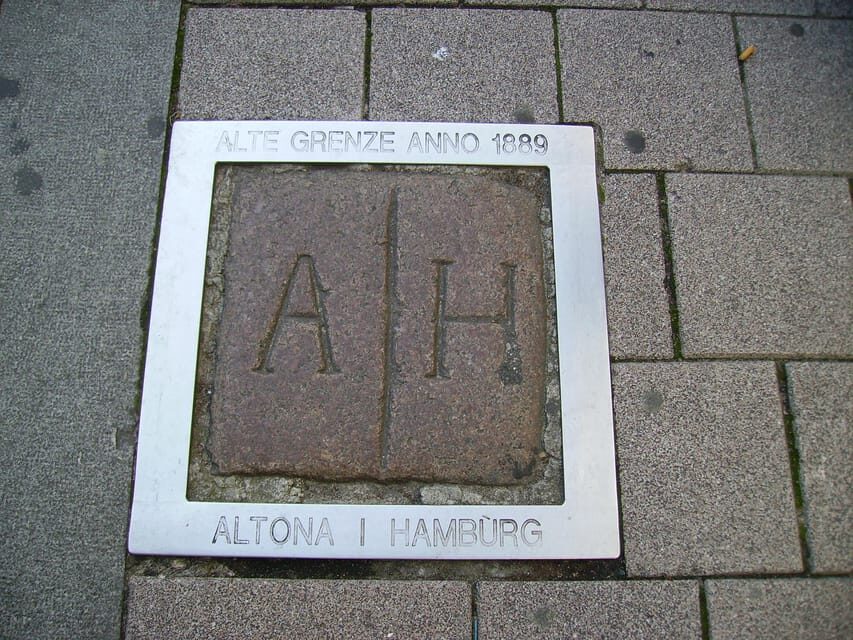
Hamburg is famous for canals and grand buildings, but this is the other Hamburg. Schanzenviertel and Karolinenviertel sit in the city’s younger urban layer—the “foreland” that used to be outside the old embankments. That matters because the neighborhood layout makes more sense once you know it was once the city’s edge, not its center.
I like that the tour doesn’t treat the area like a single mood or a single headline. The story here includes how the Schanze area was tied to an early defense post (the city’s people still call it the Schanze), and how the district later grew from working-class life into one of the city’s most sought-after spots for food, bars, clubs, and independent shopping.
And yes, you’ll hear about why the area has been repeatedly linked to public demonstrations. You don’t need to love politics to find that context useful. It helps you read the neighborhood like a local—why some buildings and public spaces carry meaning beyond their walls.
You can also read our reviews of more private tours in Hamburg


Starting at Sternschanze: A smart way to begin this kind of neighborhood tour
You begin at Sternschanze Ubahn station, exiting toward Sternschanzenpark. This is practical: it gets you oriented near the action, without starting in the middle of tourist bottlenecks. From here, the guide can steer you quickly into the Schanzenviertel lanes where you’ll start spotting the “old meets new” pattern.
The tour is set up as a guided walk, not a sit-down lecture. That’s a big plus in Hamburg, where neighborhoods are made to be read by foot. In two hours, you won’t have time to wander on your own anyway, so having a plan keeps the experience from turning into guesswork.
Also, because it’s private (your group only), you can expect the guide to pace the route to your group’s questions—one reason this style of tour can feel more personal than a big bus-style sightseeing loop.
Schanzenviertel (about 30 minutes): From the Schanze defense idea to today’s streets
The first walking block is all about setting the foundation in the Schanzenviertel. You’ll hear how the Schanze began as an early defense post for Hamburg. It’s a small detail, but it changes how you view the neighborhood. Instead of thinking of these streets as randomly grown, you start to see them as part of the city’s former edge system.
Then the tour brings you forward into more recent times, when the district shifted from working-class life into a place people choose for nightlife and dining. That transition is one of the reasons Schanzenviertel feels layered. You’ll pass the kind of storefronts and side streets that make you think, I can see why people hang out here.
What I’d tell you to do: slow down when the guide points out a building or small street turn. In this neighborhood, the meaning is often in the details. A doorway, a yard entrance, a surviving building line—those small things help connect past and present.
Karolinenviertel (about 20 minutes): Back courtyards and the neighborhood’s working memory
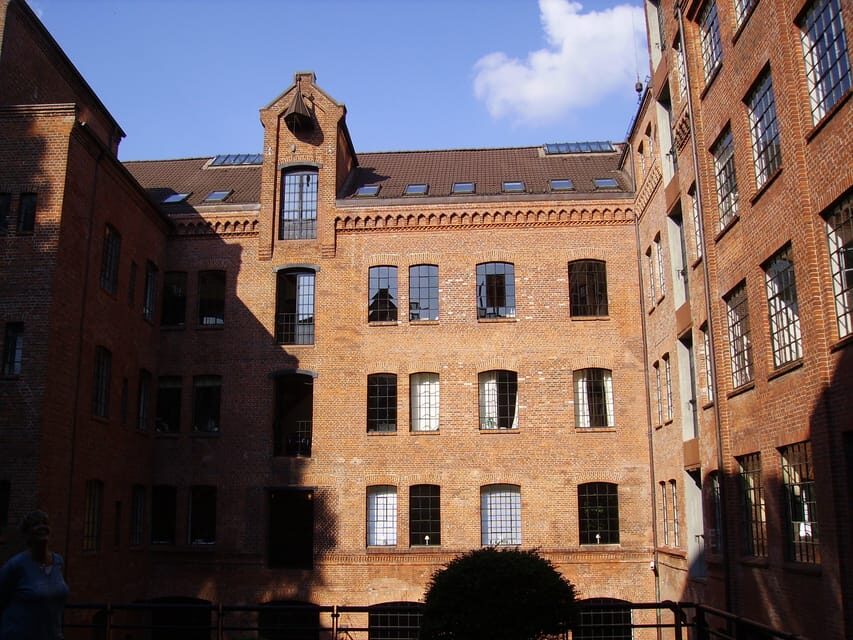
Next comes Karolinenviertel, and this part is where the tour really earns its “go beyond the main streets” promise. You’ll walk through a different feel of the same urban area—one that’s strongly shaped by the back routes, courtyards, and older industrial traces.
This is also where the tour leans into the foreland theme: the idea that this was once on the outside edge, and that over time, it became a lived-in district. The guide’s goal here is to help you understand why the neighborhood has its current rhythm, including the mix of independent shops and everyday street life.
If you like photography, this section is built for you. Side streets, courtyards, and building corners often photograph better than big vistas. You also get a sense of the scale—how people use these areas on foot, not just from a tram window.
Rote Flora (about 10 minutes): A landmark you’ll keep noticing afterward
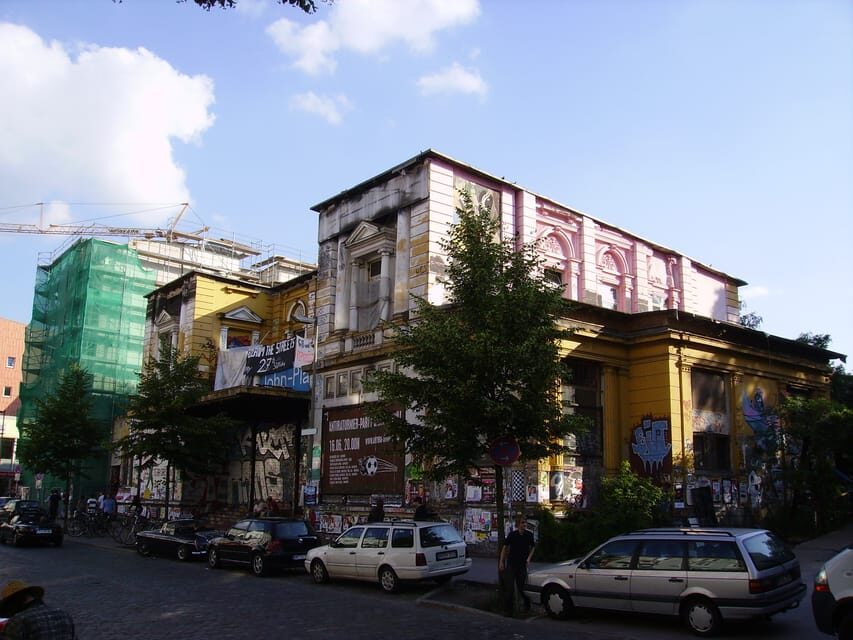
The tour stops at Rote Flora, and it’s short on paper (about 10 minutes), but long on impact. Rote Flora is one of those places that helps you understand the neighborhood’s identity, not just its architecture.
The value of this stop isn’t only the building itself. It’s how the guide connects it to the broader story of Schanzenviertel and Karolinenviertel—why this area draws attention, why community space and public life matter here, and how the neighborhood’s identity has been shaped over time.
You’ll probably find yourself watching how locals move around it afterward. That’s the point: the landmark gives you a reference point, so you can read the surrounding blocks with more meaning.





The Bullerei detour (timing folded into the walk): Food culture with local gravity
There’s a detour to the Bullerei, Tim Mälzer’s restaurant. This stop works because it shows how “trendy” here isn’t just a marketing label—it’s part of a real neighborhood ecosystem.
Even if you don’t plan to eat during the tour, the value is in the contrast. You’re seeing the district not as a themed museum, but as a place where culinary culture sits beside older structures and historical layers. That’s one of the best ways to understand contemporary Hamburg.
Practical tip: if you’re the type who likes planning meals, keep this stop in mind for later. You’ll finish with enough context to decide whether you want a reservation, a quick bite, or to skip it and eat elsewhere on your own.
Feldstrasse bunker (about 10 minutes): Wartime Hamburg, close enough to feel real
Then you get to Feldstrasse bunker in Heiligengeistfeld. This is the kind of stop that can shift your mood quickly, in the best way. The district story turns from everyday life to something more physical and hard-edged.
A bunker stop matters because it grounds the earlier “foreland” context. When you understand how the area sat at the city’s edge and how history shaped the space, the bunker doesn’t feel random. It becomes part of the same physical map of Hamburg’s past.
This isn’t presented as a scary jump-scare moment. It’s a historical anchor. You’ll likely come away thinking about how many cities have wartime structures that people pass without noticing—and how a guided walk makes those structures readable.
The former cattle abattoir: How two districts are literally connected
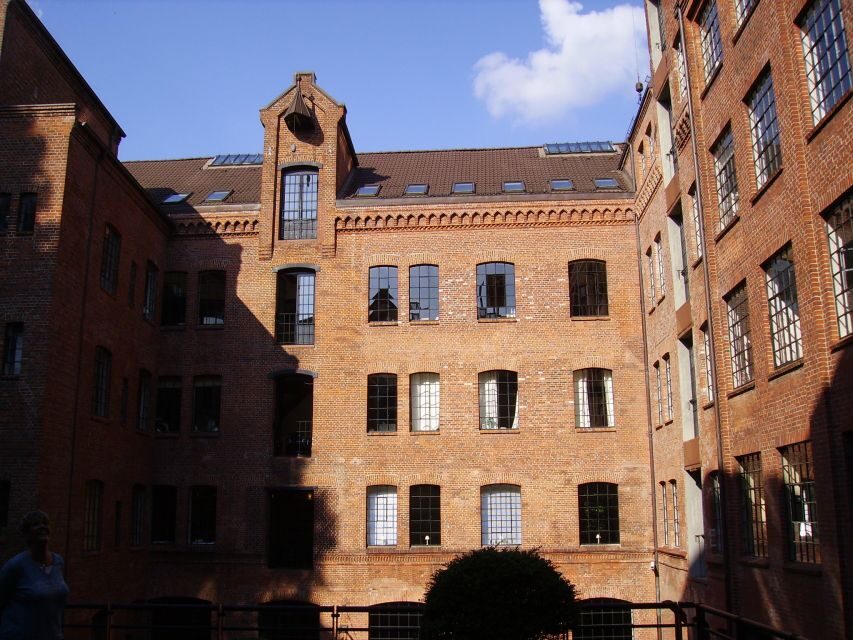
One of the highlights is the former cattle abattoir that connects Karolinenviertel and Schanzenviertel. This is a great example of why you want a guide here. Industrial remnants aren’t always obvious to you as you pass them.
The tour uses the abattoir as a bridge between the two neighborhoods. That’s not just “history for history’s sake.” It helps you understand why these districts feel connected even when they have different vibes.
If you’re the kind of traveler who likes to connect dots, this stop will click. It gives you a structural reason for the layout you’re walking through, instead of leaving you with a vague sense that the streets look interesting.
Finishing at Messehallen: Ending point that shapes your last hour
You finish at Messehallen. This matters for planning. You’ll likely want to schedule dinner or your next activity with that endpoint in mind, because the tour ends in a different zone than where you started.
The pacing also matters. With stops like Rote Flora and the bunker running short, the guide has to keep the walk moving. That’s usually a good thing: it keeps you from burning time and missing key points.
If you’re trying to squeeze in a restaurant reservation, I’d treat the tour like it has a real ending-time expectation. One small delay can make the difference between arriving chilled or arriving rushed.
Timing and pace: How a 2-hour route stays meaningful
The tour runs for 2 hours, with a schedule that breaks the walk into focused segments: about 30 minutes in Schanzenviertel, 20 minutes in Karolinenviertel, and shorter guided stops around Rote Flora and the Feldstrasse bunker, plus additional guided time for the other key landmarks.
That mix is a practical choice. Neighborhood walking needs movement, but you also need time for context at the “why does this matter?” spots. This tour seems designed to keep you moving while still explaining what you’re looking at.
What you’ll get photo-wise depends on what you notice and how quickly you pause. But since the route includes corners, yards, and landmark stops, you should expect plenty of chances to frame the district like a local, not a postcard.
Price and value: $294 for a private group up to 15
The price is $294 per group (up to 15 people) for a 2-hour tour. On paper, it sounds like a flat fee, but value changes based on how many people you bring.
If you fill the group size close to 15, you’re looking at roughly $19–20 per person for a private guide with a tightly planned route. Even with a smaller group, the real value is in the format: you’re not competing with a large crowd for the guide’s attention, and the pace stays personal.
This is especially good if:
- you want a guided walkthrough focused on a specific neighborhood pair
- you’re traveling with friends or family who prefer walking to hopping between stops
- you want insider context without needing full-day touring time
Who this tour is best for (and who might skip it)
This tour is ideal if you want Hamburg beyond the postcard. You’ll get the history of the foreland edge, plus the everyday reality of a district known for independent shops, bars, and nightlife.
It’s also a smart choice if you like guided storytelling that connects buildings to lived change. The route includes a theater landmark, a food-culture stop, a wartime bunker, and an industrial site connection. That range makes it feel like you’re learning a district, not memorizing facts.
Skip it if:
- you only want sweeping views and major monuments
- you strongly prefer tours in a language you’re fully fluent in, since this one is German
- you want a strictly neutral version of the neighborhood’s public-life story, because the guide’s explanation can include issues tied to demonstrations
What to do right after the tour
Since you end at Messehallen, plan your next step nearby. If you’re hungry, check what’s convenient for you rather than trying to recreate a full itinerary. You’ll already know which streets you liked most, because you’ll have walked them.
If you want to build on the history, use the landmarks you saw as your “anchor points.” When you return later on your own, you’ll recognize the district’s structural logic faster—where the foreland feel shows up, where the industrial remnants connect, and where the neighborhood’s identity becomes visible in public space.
Should you book this private Hamburg neighborhood tour?
I’d book it if you want a short, focused Hamburg experience that tells you what you’re looking at as you walk—especially if you care about the connection between history and today’s street life. It’s also a solid pick for small groups because the per-person value improves fast once you share the private-group cost.
I’d hesitate only if you need a tour in English, or if the idea of hearing context about demonstrations makes you uncomfortable. If you’re okay with a more real, place-based story, this one gives you a lot of meaning in just two hours.
FAQ
Where is the meeting point?
Meet at Sternschanze Ubahn station, exit Sternschanzenpark.
How long is the tour?
The tour lasts 2 hours.
How much does it cost?
It costs $294 per group (up to 15 people).
Is this a private tour?
Yes, it’s a private group tour.
What neighborhoods and stops are included?
You’ll cover Schanzenviertel and Karolinenviertel, with visits that include Rote Flora, a detour to Bullerei, Feldstrasse bunker, and the former cattle abattoir connection.
What language is the live guide?
The live tour guide speaks German.
Can I cancel?
Yes. You can cancel up to 24 hours in advance for a full refund.
Are other tour times available?
Yes. Alternative tour times are available and can be requested.