REVIEW · HAMBURG
Hamburg: Guided Walking Tour
Book on GetYourGuide →Operated by Stattreisen Hamburg e.V. · Bookable on GetYourGuide
Hamburg can feel like a lot at first. This 2-hour guided walking tour stitches together the city’s big landmarks and port story from the center to the waterfront. You’ll move from the Town Hall area to the Elbphilharmonie and end near the harbor quarters, with plenty to look at along the way.
I especially like the way this walk explains Hamburg’s role as a merchants’ town and a sovereign city state, not just as a list of sights. And I really enjoy the mix of old and new: historic Speicherstadt and bridge-and-church stops, plus modern HafenCity planning along the Elbe.
One thing to keep in mind: the tour guide is German only. Also, in busy spots you’ll want to stay aware of where your group is, since some people find it hard to spot guides clearly when crowds thicken.
In This Review
- Key highlights worth knowing
- Entering Hamburg’s story at the Town Hall
- Alsterarkaden and Jungfernstieg: lake views that feel like a city living room
- Trostbrücke to St Nikolai Memorial: bridges and memory along the route
- Deichstrasse and the historic port line: where trade once ruled the edge
- Speicherstadt: the warehouse district outside, with major attractions nearby
- HafenCity and Elbphilharmonie: modern design with real harbor views
- Price and value for a 2-hour Hamburg essentials walk
- Who this tour suits best
- Should you book this Hamburg guided walking tour?
- FAQ
- How long is the Hamburg guided walking tour?
- Where is the meeting point?
- What language is the live guide?
- What is included in the price?
- Are entrance fees included?
- Where does the tour finish?
- Can I get a full refund if I cancel?
Key highlights worth knowing
- Town Hall start gives you the political and commercial context fast
- Inner Alster waterfront promenades that show Hamburg’s city-center rhythm
- Bridge-and-memorial moments that connect everyday streets to big events in the city’s past
- Speicherstadt warehouse quarter right where major attractions sit (even if you don’t go inside)
- Port-to-urban transformation views as Kaiser-era facilities become city neighborhoods
- HafenCity + Elbphilharmonie for modern design and classic harbor views in the same walk
Entering Hamburg’s story at the Town Hall
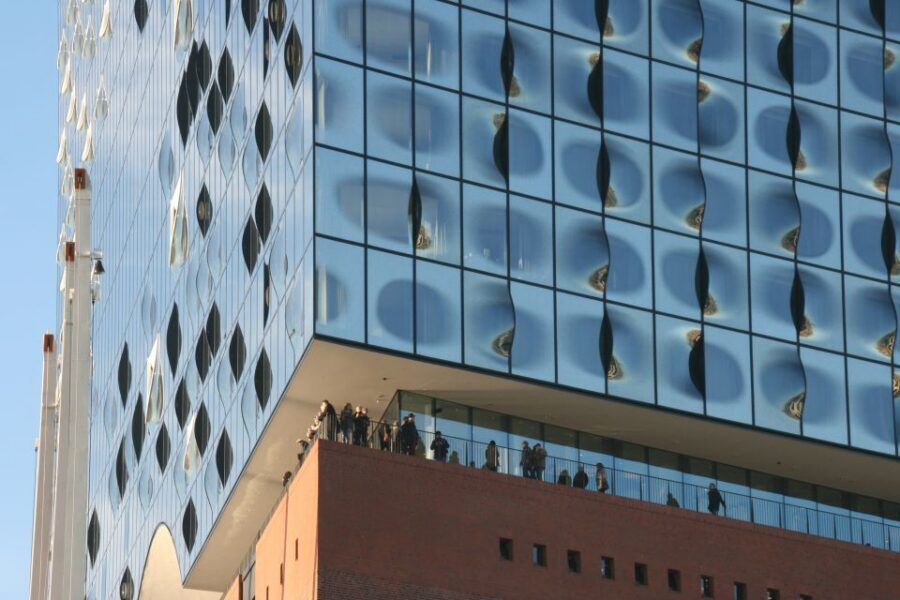
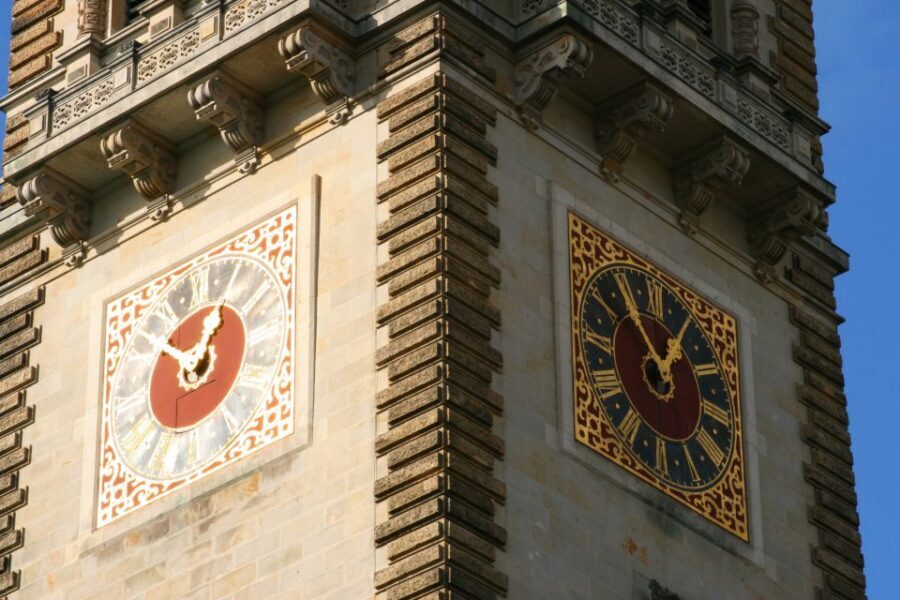
Your tour begins in front of the main entrance of Hamburg’s Town Hall, right where the city’s civic power is on full display. This is a smart starting point because the walk isn’t only about buildings—it’s about why Hamburg grew the way it did, first as a trading powerhouse and as a city-state with its own identity.
A good guide style matters here, because the opening is where you’ll learn the key threads. The tour focuses on Hamburg’s evolution: how commerce shaped daily life, and how the waterfront economy later pushed new development. In the best tours, you get that overview clearly and quickly, without it feeling like a lecture you can’t use.
If you’re the type who likes to connect the dots while you walk, you’ll appreciate this setup. You’ll know what you’re looking at before you’re halfway across town.
You can also read our reviews of more walking tours in Hamburg



Alsterarkaden and Jungfernstieg: lake views that feel like a city living room
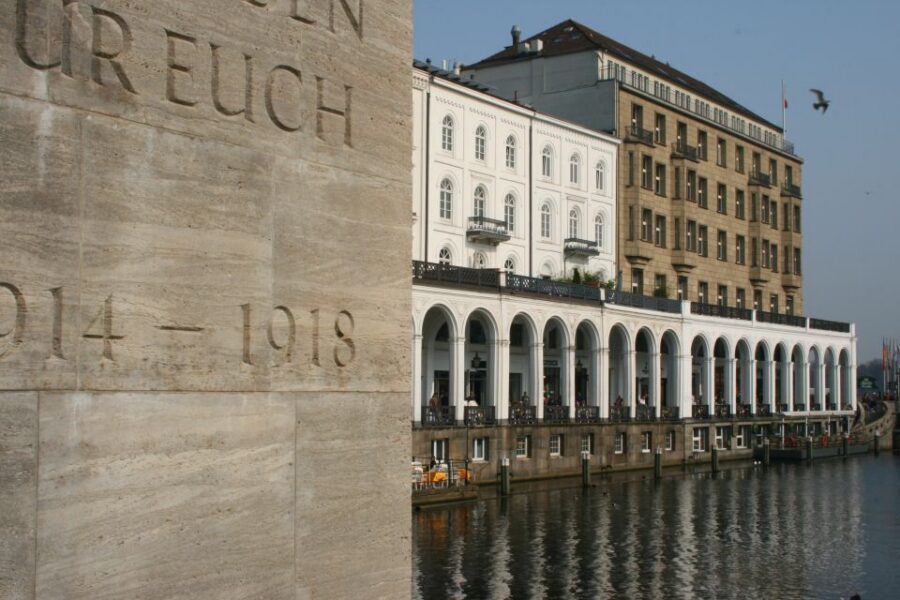
Next you’ll stroll through the Alsterarkaden and along Jungfernstieg, both tied to the inner Alster lake. Even if you’ve never been to Hamburg, this section helps you get the city’s tempo: promenades for people-watching, waterside perspectives, and a center that feels human-scale rather than just monumental.
What I like about this part is how it balances calm with energy. You’re not far from the “big city” feeling, but you get the sensation that Hamburg organizes itself around water. That becomes important later when you shift from lake edges to harbor edges, because the geography is doing half the storytelling for you.
At Jungfernstieg, keep your camera ready. The views aren’t only pretty; they’re practical for understanding how the city “faces” its water. Even on a short 2-hour walk, this is the moment that helps your brain map the city.
Trostbrücke to St Nikolai Memorial: bridges and memory along the route
From the lake area, the walk continues through classic central streets and viewpoints, including Trostbrücke and the St Nikolai Memorial. Bridges can feel like “just a photo spot,” but here they help you understand movement—how people and goods historically crossed between the inner city and the waterfront world.
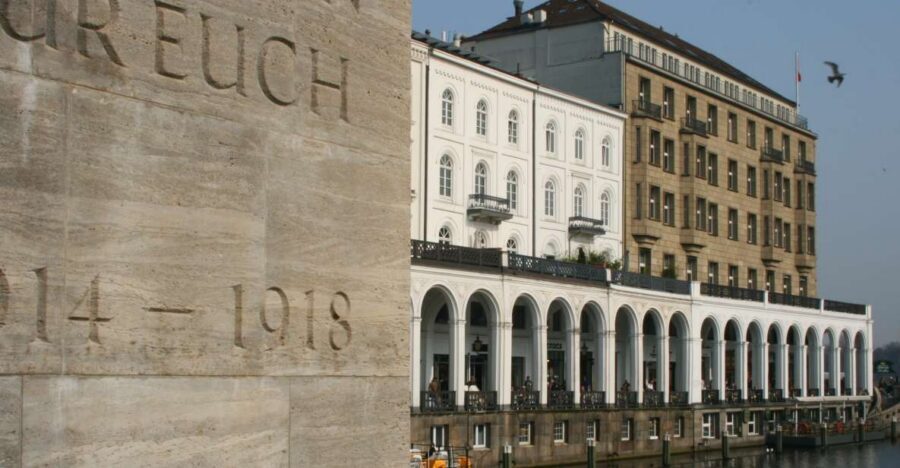
Then you reach the St Nikolai Memorial, a stop that adds weight to the day. This is where the tour shifts from commerce to the city’s lived experience: what Hamburg remembers, what it lost, and what it chose to rebuild. Even if you don’t know the details beforehand, the memorial stop gives you something to anchor to while the tour keeps turning forward.
If you like historical stops that don’t drag on, this pairing works well. You get variety: scenery and architecture on one hand, and a moment of reflection on the other.
Deichstrasse and the historic port line: where trade once ruled the edge
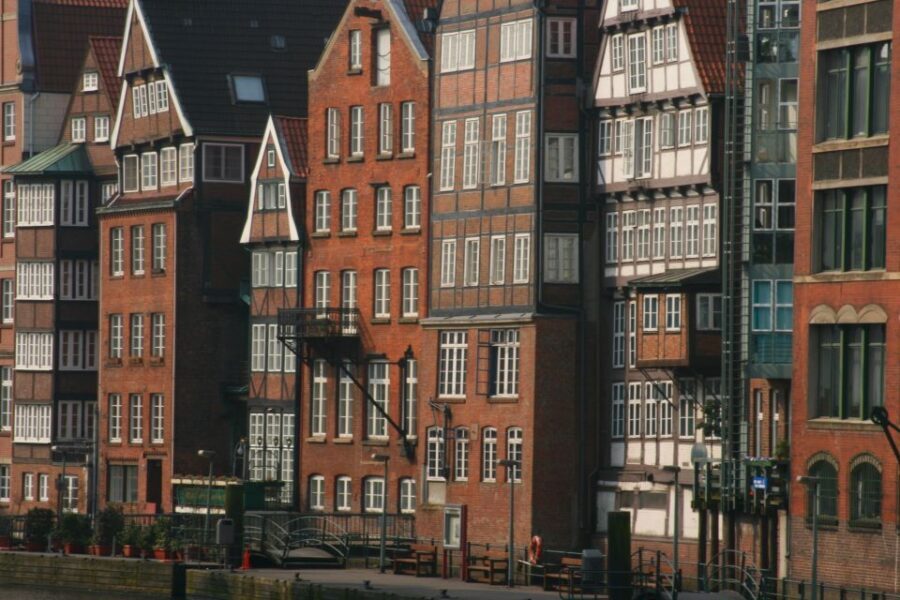
After the memorial and nearby sights, the tour moves toward the waterfront through Deichstrasse. This stretch matters because it’s not just “walking to the next landmark.” It’s part of learning how Hamburg’s waterfront functioned as a working edge, tied to ships, warehouses, and the daily rhythm of the port.
The tour specifically frames the port’s story through time—dating facilities back to the reign of the Kaiser and then explaining how those older port structures have been turned into urban quarters. That’s a theme I love for practical travel: it shows you why the waterfront looks the way it does today, instead of treating it like a generic sightseeing zone.
As you walk, watch for the clues of reuse and repurposing. When older infrastructure becomes part of a modern city plan, you can often feel it in the way streets open up, how people move through spaces, and how public areas take over what used to be purely industrial.
Speicherstadt: the warehouse district outside, with major attractions nearby
One of the best parts of this route is the entry into Speicherstadt, the famous historic warehouse district. This is where Hamburg’s trading wealth shows up in brickwork and design, built for storage and logistics. And it’s not just “cool old buildings,” either—you’re in the zone where the city’s visitor attractions cluster too.
The tour points out that the area is now home to the Spice Museum, the biggest model railway in the world, the Hamburg Dungeon, and more. Even though entrance fees aren’t included, you can still get value from seeing where these attractions live. It helps you decide what fits your interests for later—especially if you want a deeper stop without committing to it during the walking tour.
A quick practical note: Speicherstadt can be photogenic but also busy depending on the time of day. If you want crisp photos, give yourself a minute to step to the side before raising your camera, rather than stopping in the middle of foot traffic.
This is a strong segment for anyone who likes architecture and city planning. You’ll come away understanding why warehouses weren’t just storage—they were part of a whole economic system, and today that system has a second life as culture and entertainment.
You can also read our reviews of more guided tours in Hamburg






HafenCity and Elbphilharmonie: modern design with real harbor views
The walk then transitions into HafenCity, Hamburg’s growing district built on the Elbe. HafenCity is the “what’s next” chapter of the day, and it connects directly to the port transformation theme: older harbor areas repackaged into neighborhoods and public spaces.
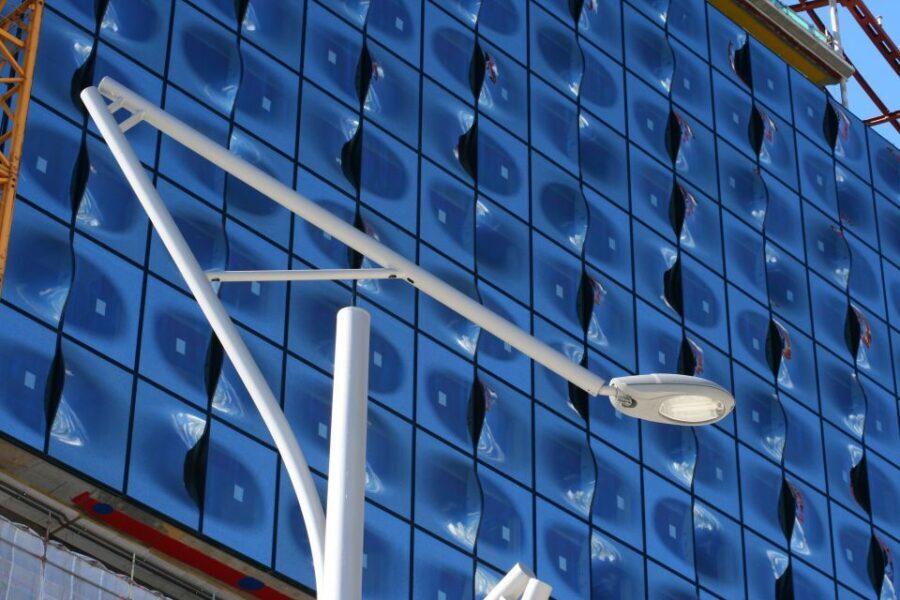
The highlight here is Elbphilharmonie. You’ll see the building during the guided portion, and the harbor vistas give you the context for why it’s such a symbol. This isn’t only an architectural stop—it’s a viewing point that ties together the city’s past and its present ambition.
I like HafenCity because it feels designed for walking and public life, not only for cars or industry. It gives you a sense of how cities evolve when they stop treating the waterfront as an edge and start treating it like an address. If you enjoy architecture, public spaces, or “future city” thinking, you’ll get a lot out of this final stretch.
Price and value for a 2-hour Hamburg essentials walk
At $21 per person for about 2 hours, this is priced like a practical city orientation rather than a deep, multi-ticket day. And that’s exactly what it delivers: a guided path through a high-density area where you can see big contrasts—civic Hamburg, lake Hamburg, warehouse Hamburg, and harbor Hamburg.
What you get is a walking tour with a qualified guide. What you don’t get is anything that costs extra inside museums or attractions. That’s a good model for you if you prefer flexibility. You can enjoy the guided context now, then choose later whether you want the Spice Museum, the Dungeon, or the model railway.
Also, because the route ends at Am Sandtorkai 66 (20457 Hamburg), you can often keep moving on foot afterward toward the harbor neighborhoods. It’s a finish point that helps you continue your own exploration without feeling stranded back at the start.
Who this tour suits best
This is a great fit if you want a guided “big picture” day in limited time. You’ll likely enjoy it if you:
- like walking routes that connect landmarks to meaning (not just photos)
- want a fast primer on Hamburg as a trading city-state
- are curious about the port’s shift from Kaiser-era industry to today’s urban quarters
- appreciate both classic architecture and modern city planning
If you’re only interested in one specific attraction—say, only the Dungeon or only a museum—this may feel broad. But for most first-timers who want orientation plus a strong mix of sights, it’s a solid way to spend two hours.
Should you book this Hamburg guided walking tour?
Yes, with a clear expectation: this is a 2-hour guided overview from the Town Hall to the harbor districts. If you’re comfortable with a German-language guide, you’ll likely appreciate the storytelling pace and the way the walk builds an understanding of Hamburg’s evolution—lake to port, warehouses to modern HafenCity.
Skip it only if you need English instruction or if you know you won’t enjoy guided history explanations at all. Otherwise, it’s good value, well-paced, and focused on the parts of Hamburg that help you make sense of the rest of the city.
FAQ
How long is the Hamburg guided walking tour?
It lasts about 2 hours.
Where is the meeting point?
Meet in front of the main entrance of Hamburg Town Hall.
What language is the live guide?
The tour is guided in German.
What is included in the price?
You get the walking tour and a qualified guide.
Are entrance fees included?
No, entrance fees are not included.
Where does the tour finish?
It finishes at Am Sandtorkai 66, 20457 Hamburg.
Can I get a full refund if I cancel?
Yes. You can cancel up to 24 hours in advance for a full refund.