REVIEW · HAMBURG
Hamburg: Guided Walking Tour in Danish
Book on GetYourGuide →Operated by Hamborg-Guide.com · Bookable on GetYourGuide
Hamburg’s history feels close up. This Danish-language guided walking tour strings together Old Town government, the St. Nikolai Memorial, and the ship-and-warehouse heart of the city, ending at the Elbphilharmonie area. I like the way the route covers both “why Hamburg matters” and “what you’re actually looking at,” with a licensed guide and historical visual aids. I also like that it’s short—just 2 hours—so you’re not stuck walking all day to get the core story.
One heads-up: the walk is outdoors rain or shine, and it’s not a good fit if you have mobility, hearing, or vision limitations, since it’s a standard walking tour pace.
In This Review
- Key things you’ll notice on this Danish walking tour
- Why Danish guidance works so well in Hamburg
- Setting off from Swatch Jungfernstieg to Townhall Hamburg
- Deichstraße and civic landmarks: the “how Hamburg grew” part
- St. Nikolai Memorial: ruins, memory, and a WWII museum
- Laeiszhof and the shift toward Speicherstadt
- Speicherstadt: the world’s largest warehouse district in context
- HafenCity and Elbphilharmonie: modern Hamburg with a finish point that helps
- How the 2-hour pace keeps the story readable
- Price and value: $280 per group up to 30
- Practical tips so you enjoy every stop
- Who should book this Hamburg Danish walking tour
- Should you book this tour?
- FAQ
- How long is the Hamburg Guided Walking Tour in Danish?
- What does it cost?
- Where do I meet the guide?
- Where does the tour end?
- What language is the tour offered in?
- Is the tour rain or shine?
- Is food or drinks included?
- What major sights will I see?
- Is it suitable for children?
- Is there a cancellation policy?
Key things you’ll notice on this Danish walking tour
- Meeting at Jungfernstieg right where Hamburg feels most “city-center”
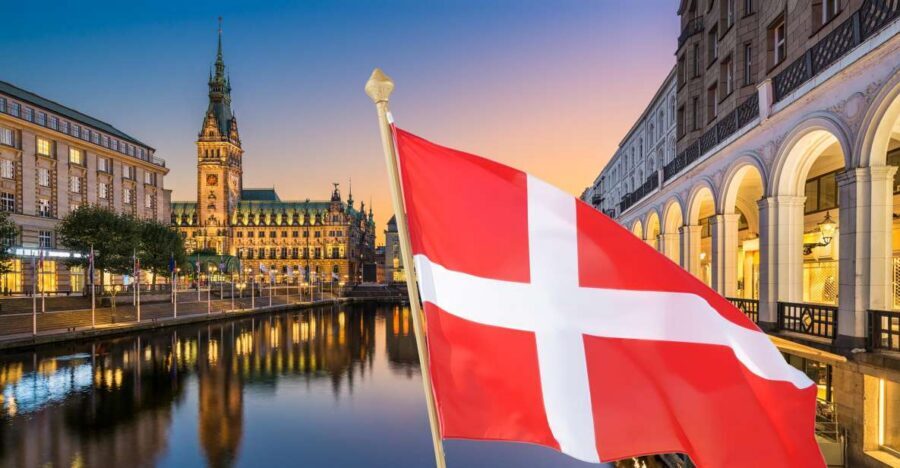
- Hamburg Townhall explained with the city’s big-picture development in mind
- St. Nikolai Memorial tied to the 1943 Operation Gomorrah bombing and its WWII museum
- Speicherstadt introduced as the world’s largest warehouse district
- HafenCity and Elbphilharmonie shown as modern Hamburg, not just sightseeing
- Tight timing across 9 stops that keeps the story moving
Why Danish guidance works so well in Hamburg
Hamburg is one of those cities where the buildings are only half the point. The other half is context: why this port became powerful, why certain neighborhoods look the way they do, and why the city keeps rebuilding itself.
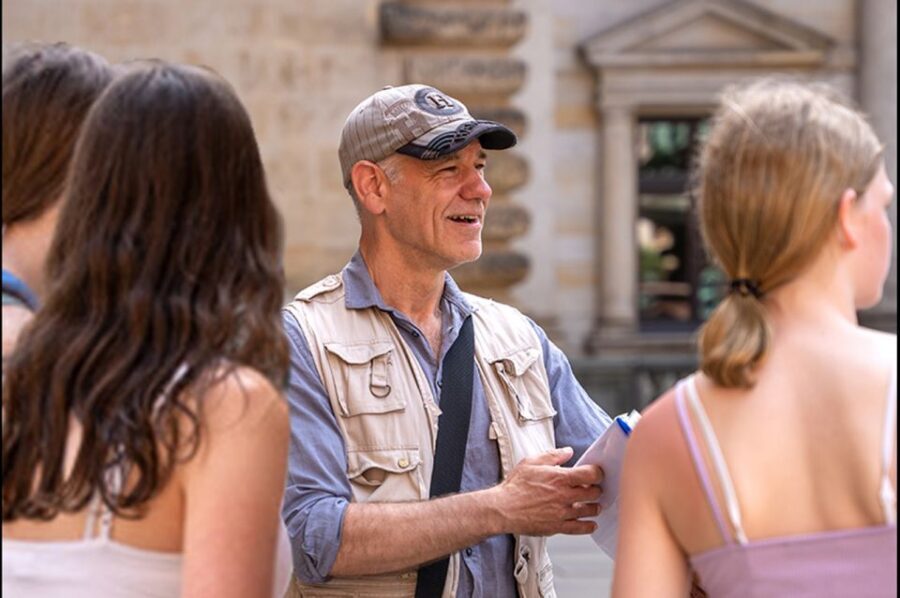
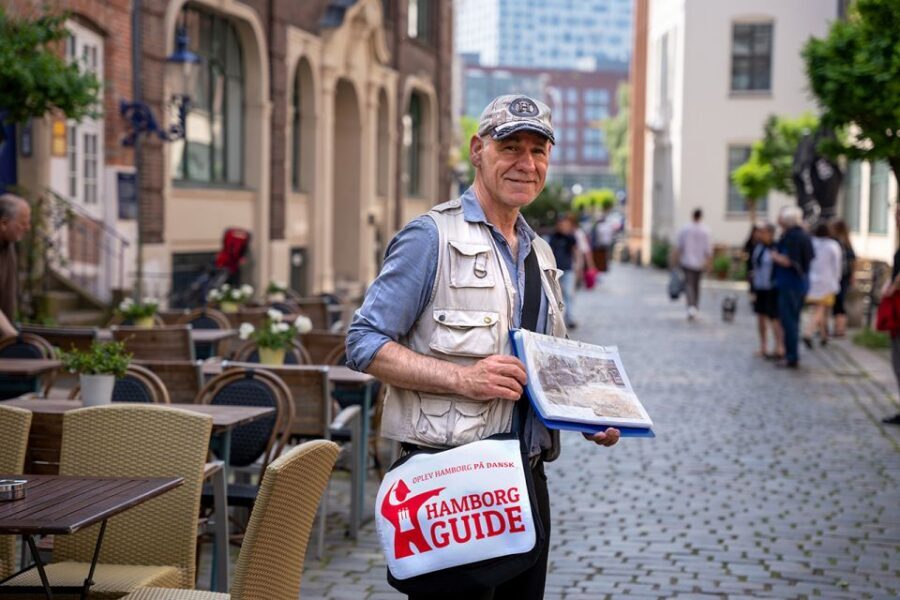
That’s where a Danish guide makes a real difference. When I see guides like Christian Meyer-Pedersen bringing history and culture to life with clear structure, it turns a walk into something you can actually remember. Reviews highlight that kind of confidence and organization, and it shows in the way the tour jumps from medieval roots to modern landmarks without losing the plot.
You’ll also get a learning style that’s practical. You’re not just standing around for photos. You’re walking through the places that explain Hamburg’s identity: market origins, the Hanseatic League era, and today’s role as one of the world’s largest ports.
You can also read our reviews of more walking tours in Hamburg


Setting off from Swatch Jungfernstieg to Townhall Hamburg
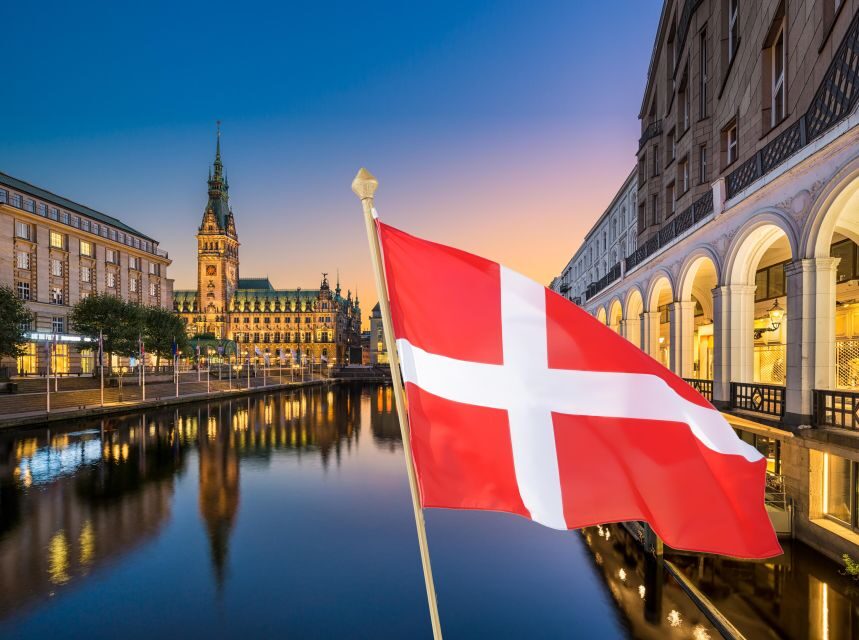
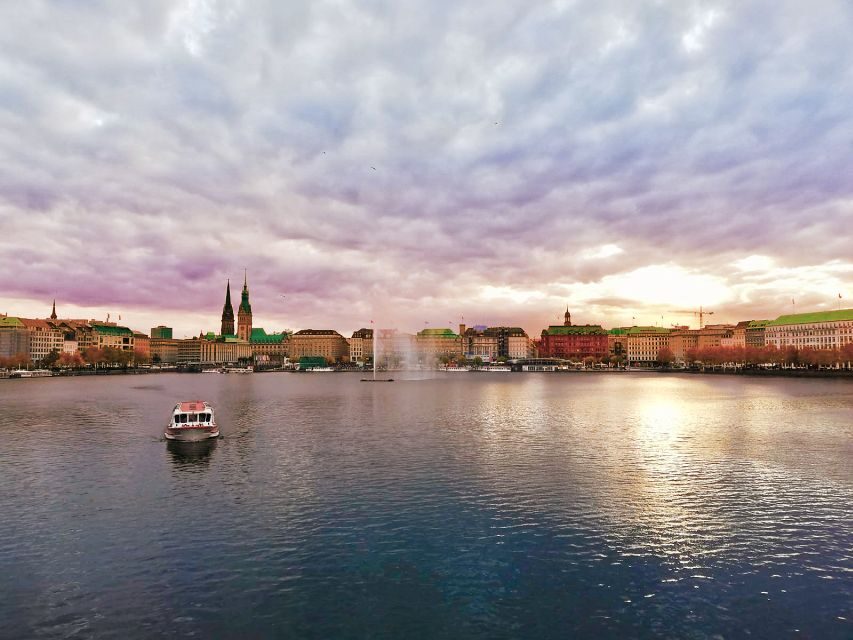
You start at the Swatch shop at the corner of Jungfernstieg and Alsterarkaden. It’s a clean, easy-to-find meeting spot in the city center, and it helps you get oriented fast before the guide starts the historical timeline.
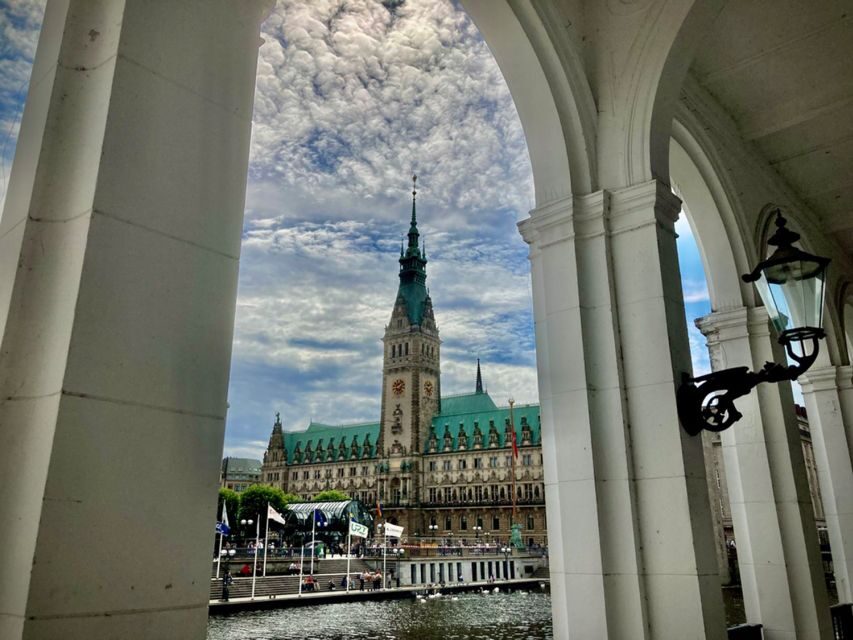
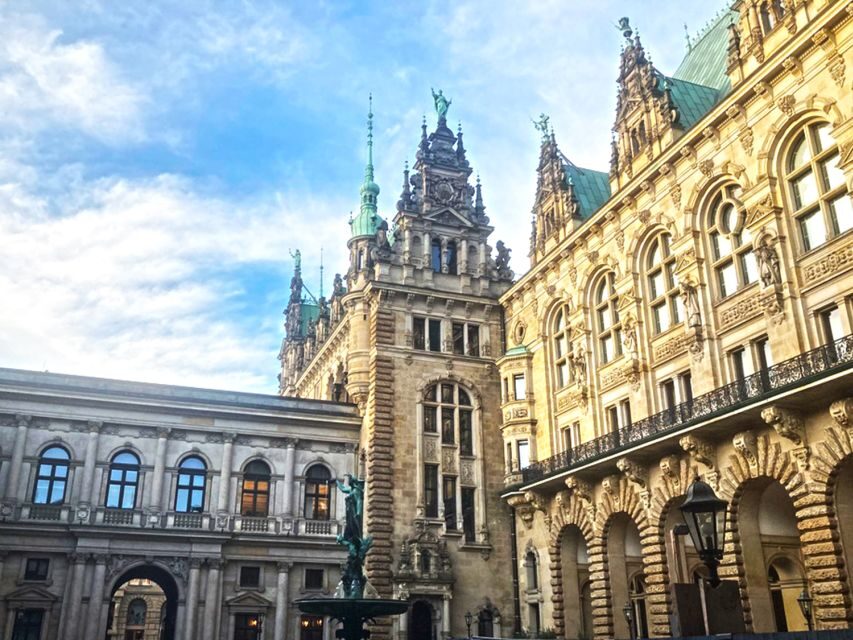
The first real landmark is Hamburg’s Townhall, with about 20 minutes here. This is a smart early choice. The Townhall is where you can feel the city’s civic pride—then your guide can connect that to centuries of trade, governance, and rebuilding after major events. If you like stories that explain how cities make decisions (not just what they look like), you’ll appreciate this stop.
From there, you keep moving through nearby streets with short guided segments—roughly 15 minutes at Deichstraße and about 10 minutes at the Patriotic Society of 1765. These shorter stops are useful because they keep your momentum. You don’t get stuck listening forever in one spot, and you still learn why these places matter in the bigger Hamburg picture.
Deichstraße and civic landmarks: the “how Hamburg grew” part
The tour’s middle phase is where Hamburg starts to feel like a living system, not a collection of sights. After the Townhall segment, you’ll walk through areas tied to the city’s development from its early days onward.
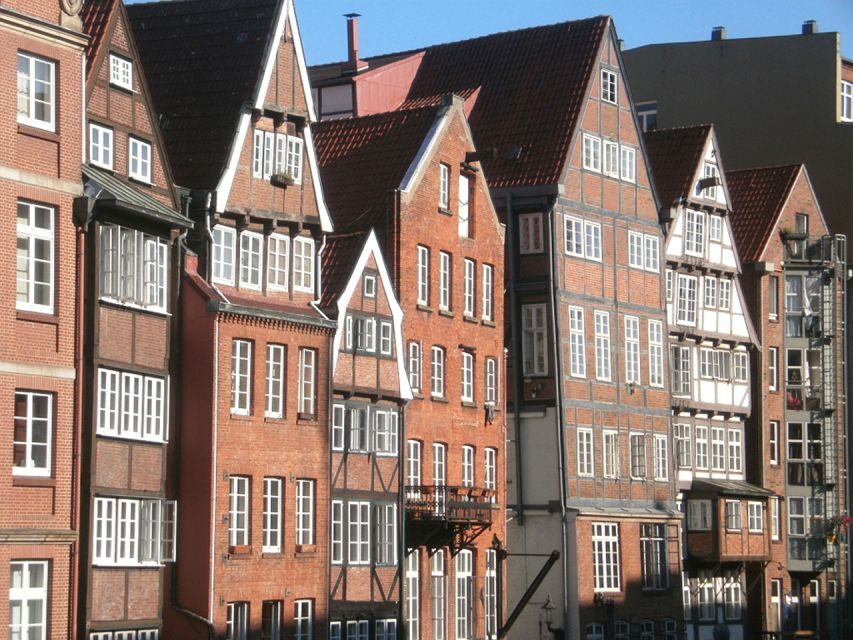
At Deichstraße (around 15 minutes), the key value is how your guide uses street-level specifics to explain growth over time. Hamburg’s story includes how it adapted and rebuilt—especially after serious fires—and you’ll hear why fire played such an important role in the city’s development. That changes how you interpret the Old Town. Even when the streets feel old, you’ll learn the city’s “old” is partly shaped by repeated rebuilding.
Then comes Patriotic Society of 1765 (about 10 minutes). Civic buildings can be hard to “read” if you don’t know what to look for. The guide helps you connect a date on a facade to the wider idea of citizens organizing, supporting shared goals, and shaping Hamburg’s role in the region. You’ll likely leave with a sense of how Hamburg’s identity formed not just through merchants, but through structured public life.
If you’re the type who likes to understand a city’s “operating system,” these segments are a good use of your time. If you’re hoping for long photo stops, this tour’s structure is less about lingering and more about learning.
St. Nikolai Memorial: ruins, memory, and a WWII museum
One of the strongest stops is the St. Nikolai Memorial segment (about 15 minutes). This is where the tour gets serious in a way that still feels grounded.
You’ll see the ruins of the St. Nikolai Church, bombed in 1943 during Operation Gomorrah. The memorial today includes a WWII memorial and museum, so it’s not just a tragic sight—it’s a place built to explain what happened and why it still matters.
This part of the tour is valuable because it gives the modern city a human anchor. Hamburg isn’t only ports and architecture. It’s also memory: what war did to the city, what was rebuilt afterward, and how the city chose to commemorate the past.
Practical note: this stop works best if you’re willing to slow down for a moment. It’s not a place for quick sightseeing. If you want emotional context with factual clarity, you’ll probably find this the most meaningful segment of the route.
Laeiszhof and the shift toward Speicherstadt
After St. Nikolai, you continue to Laeiszhof (around 15 minutes). The tour uses this stretch as a bridge between the memorial and the commercial heart of Hamburg.
This is where the guide’s job is subtle but important: getting you from “Hamburg as a city that remembers” to “Hamburg as a city that trades.” You’ll learn how Hamburg’s development connects to where goods moved, how wealth grew, and how certain districts became specialized.
Laeiszhof also helps break up the walking rhythm. You’re not thrown from one major stop to another with no breathing space. The tour design gives you just enough guided time to keep learning while you physically reset.
Then you’re on to the part many people come for: Speicherstadt.
You can also read our reviews of more guided tours in Hamburg





Speicherstadt: the world’s largest warehouse district in context
You get about 15 minutes at Speicherstadt, and that time is well spent if your goal is to understand what you’re seeing.
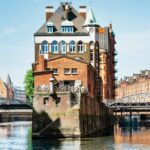
Speicherstadt is described as the world’s largest warehouse district, and it’s not hard to see why. This is the city’s trade architecture made visible—warehouse by warehouse, function by function. What makes the tour useful here is that your guide frames these buildings as infrastructure, not just scenery.
You’ll likely come away with a clearer idea of why ports build so many specialized structures. Hamburg’s position as a leading port—today as well as historically—means storage, logistics, and speed of movement aren’t side notes. They’re the whole game.
Also, the shift to Speicherstadt helps explain the city’s timeline. Earlier Hamburg stories often sound abstract until you connect them to physical places where commerce actually happened. Speicherstadt is where that connection clicks.
If you’re the kind of visitor who likes architecture but gets bored by facts alone, you’ll still benefit. The guide doesn’t treat buildings like museum glass. They’re presented as outcomes of trade, risk, and rebuilding.
HafenCity and Elbphilharmonie: modern Hamburg with a finish point that helps
The tour then moves to HafenCity (about 15 minutes). HafenCity is where Hamburg looks outward—newer planning, modern structures, and a city reinventing itself for the present.
This is also where you start thinking less about what Hamburg used to be and more about where it’s going. Your guide frames the move forward as part of the broader city development: from Saxon marketplace origins and Hanseatic League influence to today’s global-port economy and cultural center.
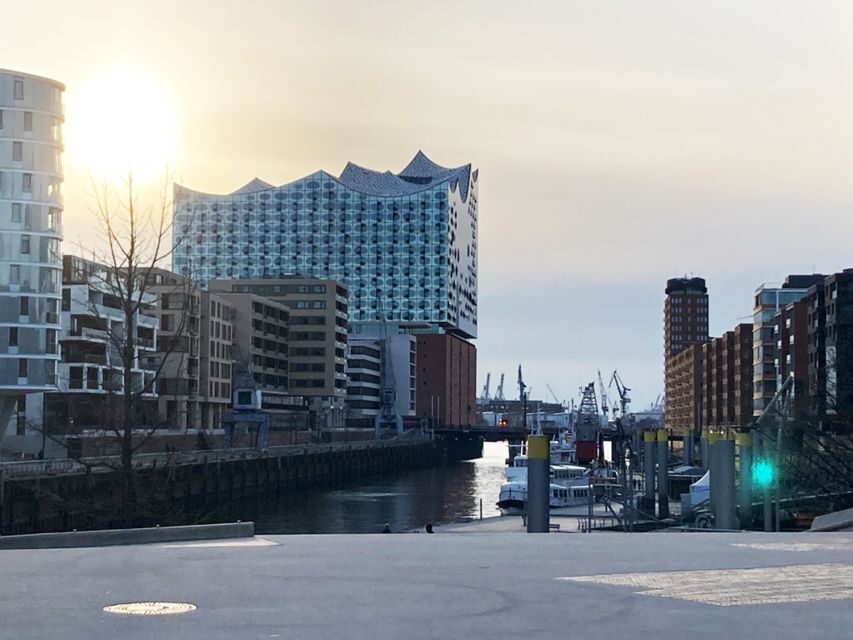
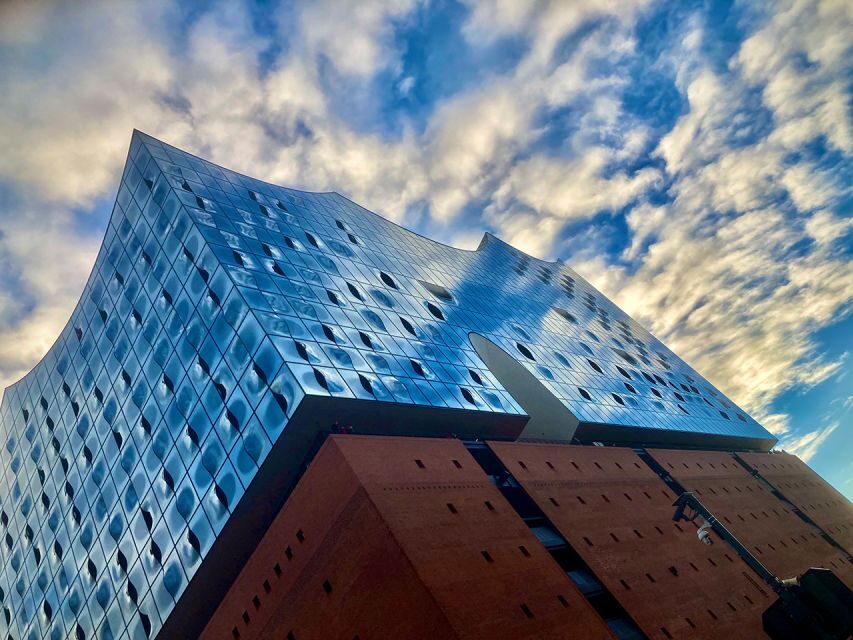
Finally, you reach the Elbphilharmonie area (around 15 minutes guided). The Elbphilharmonie is presented as Hamburg’s grand concert hall located in HafenCity, and the tour gives you a look while keeping it practical.
Here’s the best part for your independent time: the tour ends at Platz d. Deutschen Einheit (20457 Hamburg) and this is a convenient moment to explore on your own. You get the ideal setup to check out the Elbphilharmonie Plaza and the public viewing platform without feeling rushed by a guide.
This ending works well for two types of travelers:
- You want a structured tour that doesn’t trap you after the guided portion.
- You like ending with a modern anchor so your last photos aren’t all centuries-old.
How the 2-hour pace keeps the story readable
At its core, this tour is built to be efficient. Nine guided segments, roughly 15–20 minutes each, with a few shorter blocks. You spend enough time at key places to learn what matters, but you’re always moving toward the next stop.
That pacing matters because Hamburg can overwhelm you visually. Between Old Town landmarks and port districts, it’s easy to feel like you’re collecting sights instead of understanding the city. This tour fights that with a timed rhythm.
Still, it’s a real walking tour. It’s not designed as a slow stroll where you stop for cafés every five minutes. You’ll want comfortable shoes and a weather-ready outfit.
Price and value: $280 per group up to 30
The price is $280 per group for up to 30 people, and that changes how you should think about value.
If you’re traveling with a group (or you’re part of a fuller group), the cost can feel more reasonable because you’re paying for a professional, licensed guide and organized historical storytelling—not just information you could skim from a sign. The “per group” structure means you’re not paying per person in a way that always spikes for a small party.
If you’re solo or just two people and the group doesn’t fill up quickly, your effective cost per person might feel steep compared with free self-guided walking. In that case, I’d treat this as a “buy learning clarity” expense. You’re paying for structure, Danish-language interpretation, and a route that hits major turning points: government, memory, trade, and modern identity.
Also, the tour includes historical visual aids, which is a small detail that can be a big upgrade. It signals the guide isn’t only relying on spoken descriptions. They’re likely using visuals to help you place events in time and space.
Practical tips so you enjoy every stop
A few things will make your experience smoother:
- Wear comfortable shoes. This is a walking tour with multiple stops across different areas.
- Dress for rain or shine. The tour runs outdoors regardless of weather.
- Bring cash. You’ll want it on hand even if the tour doesn’t include food and drinks.
- Skip expecting lunch. Food and drinks are not included, so plan that separately.
Language matters too. The tour runs in Danish, so it’s ideal if you’re comfortable hearing Danish. If you’re not, this tour may not deliver the value you want, since the guide’s stories are the product.
Who should book this Hamburg Danish walking tour
You’ll probably love it if you:
- Want a quick, high-impact way to learn Hamburg’s story in Danish
- Like guided context for major sites like the Townhall, St. Nikolai Memorial, Speicherstadt, and Elbphilharmonie
- Prefer a short tour that ends near a great place to continue on your own
You might want a different option if you:
- Need extensive accessibility support (the tour isn’t suitable for wheelchair users and certain sensory or mobility needs)
- Want a tour focused on food and stopping frequently for cafés (this one doesn’t include food)
- Are looking for very long photo breaks at each site (this is timed for learning)
Should you book this tour?
I’d book it if you want the fastest way to connect Hamburg’s medieval roots to its modern port power, with a Danish guide who can explain the logic behind the landmarks. The St. Nikolai Memorial stop gives the tour emotional weight, and the switch into Speicherstadt and HafenCity keeps it from becoming only solemn.
If Danish language is a deal-breaker for you, then it probably won’t be worth the spend. But if you can listen in Danish, this is a strong value for a structured 2-hour walkthrough of Hamburg’s biggest themes—especially with a licensed guide like Christian Meyer-Pedersen, known for clear, well-organized storytelling.
FAQ
How long is the Hamburg Guided Walking Tour in Danish?
The tour lasts 2 hours.
What does it cost?
It costs $280 per group, up to 30 people.
Where do I meet the guide?
Meet your guide in front of the Swatch Shop at the corner of Jungfernstieg and Alsterarkaden.
Where does the tour end?
The tour ends at Platz d. Deutschen Einheit, 20457 Hamburg, Germany.
What language is the tour offered in?
The tour is guided in Danish.
Is the tour rain or shine?
Yes, it takes place rain or shine.
Is food or drinks included?
No. Food and drinks are not included.
What major sights will I see?
You’ll see Hamburg Townhall, the St. Nikolai Memorial, Speicherstadt, HafenCity, and the Elbphilharmonie.
Is it suitable for children?
It is not suitable for children under 6 years.
Is there a cancellation policy?
Yes. You can cancel up to 24 hours in advance for a full refund.