REVIEW · GORLITZ
Görlitz: Hallenhausführung
Book on GetYourGuide →Operated by Europastadt GörlitzZgorzelec GmbH · Bookable on GetYourGuide
Görlitz hides trade history in plain sight. This 2-hour Hallenhausführung is one of the better ways to understand the city’s medieval merchant houses, because you get inside the Tuchmacher-Hallenhäuser instead of just looking at facades. I especially love how the guide connects each stop to the practical life of the building, using Wohnen – Präsentieren – Handeln – Lagern – Brauen as a kind of roadmap.
The second thing I like is the way the tour feels built for normal visitors: you learn the house type, you see multiple buildings in different states of use or restoration, and questions are welcome. The main drawback to plan around is that the tour is not suitable for wheelchair users.
In This Review
- Key things to know before you go
- What Görlitz’s Hallenhäuser are, and why you’ll care
- The 2-hour rhythm: how the tour usually unfolds
- Meeting point at Görlitz-Information: start strong, not confused
- Inside the Tuchmacher-Hallenhäuser: what you’ll see in each building
- How a 15th-century house type shaped everyday work
- Weekday bonus: Rathaus courtyard and the painted wooden ceiling (Mon–Fri)
- What the guide actually does well (and why you should ask questions)
- Price and value: about $11 for two hours of real access
- Who should book the Görlitz Hallenhausführung
- Should you book this tour?
- FAQ
- How long is the Görlitz Hallenhausführung?
- What is the price per person?
- Where is the meeting point?
- What language is the guide?
- How many hall houses will we visit?
- Are the houses the same every day?
- Can I visit the Rathaus during the tour?
- What is special about the Rathaus stop?
- Is the tour suitable for wheelchair users?
- Is alcohol allowed during the tour?
- Is free cancellation available?
Key things to know before you go
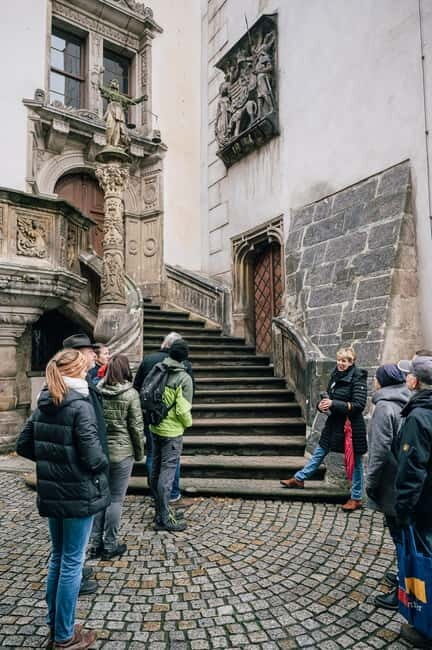
- Real interior access in Görlitz’s famous hall houses, not just street-level viewing
- 15th-century house type: a Görlitz specialty that developed in the 1400s
- Four to five stops on the tour, with houses that can vary by weekday
- Five practical functions you’ll see explained: living, presenting, trading, storing, brewing
- Weekday Rathaus option (Mon–Fri) with a Renaissance courtyard and the city’s largest painted wooden ceiling
- Good value for about $11 for a full 2 hours with a live German guide
What Görlitz’s Hallenhäuser are, and why you’ll care
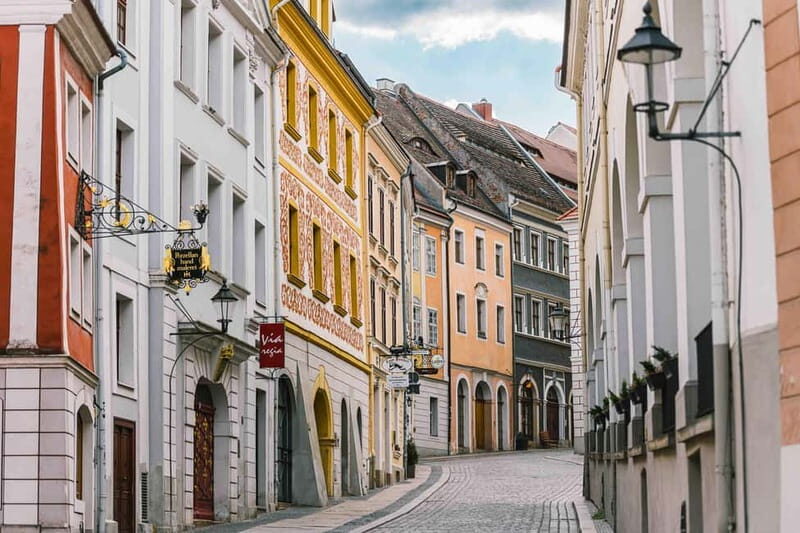
If you like cities where the everyday economy is still visible in the buildings, Görlitz will grab you. The Hallenhausführung focuses on a very specific local form: the Tuchmacher-Hallenhäuser, merchant trade houses associated with cloth making. These weren’t generic houses. They were built to do business and run a household, all in one place.
What makes this tour feel worth your time is the logic behind it. You’re not just receiving dates and names. You’re seeing how one building type supported different daily jobs, from living to trade to storage and even brewing. The tour organizes the experience around Wohnen, Präsentieren, Handeln, Lagern, Brauen, so the inside views connect to real function.
Also, you get the benefit of contrast. The buildings on your route can be empty, in use, or mid-restoration depending on what’s available that day. That means you’re not only learning how these houses were designed; you’re also seeing what “keeping” historic buildings looks like in the real world.
You can also read our reviews of more tours and experiences in Gorlitz.



The 2-hour rhythm: how the tour usually unfolds
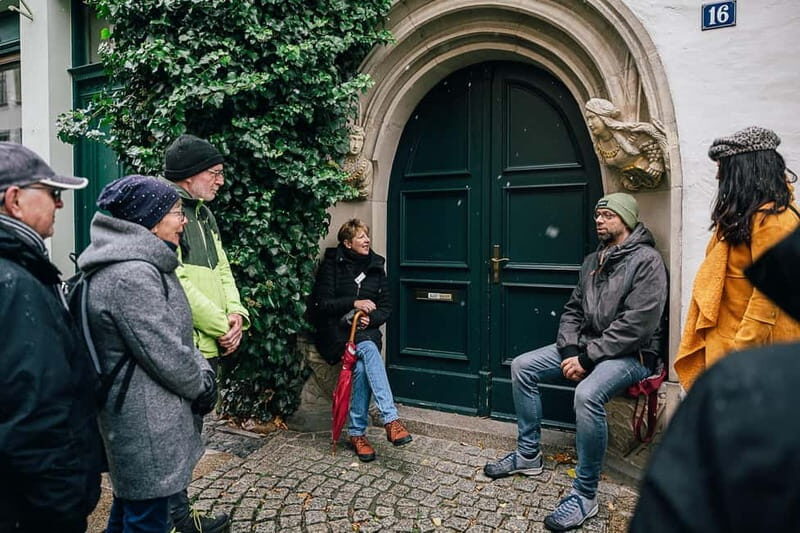
This is a 2-hour public guided tour in German, with a live guide leading the group from stop to stop. Expect 4–5 hall houses as part of the walk-through-and-look-in pattern. The exact mix of buildings can change by weekday, so one day might show you one set of interiors, while another day shows different examples.
That timing matters. In two hours, you won’t get a long lecture and you won’t get lost in filler. Instead, you’ll get a sequence of interiors, each explained clearly enough that you can connect the dots fast. You’ll also have multiple chances to ask questions while the guide is standing in the place where the answer makes sense.
The most practical tip: if you can handle a German explanation, this becomes a smoother experience. If your German is limited, it still helps to have a basic idea of what you’re looking at. In a tour like this, the guide’s job is to translate architectural space into daily work.
Meeting point at Görlitz-Information: start strong, not confused
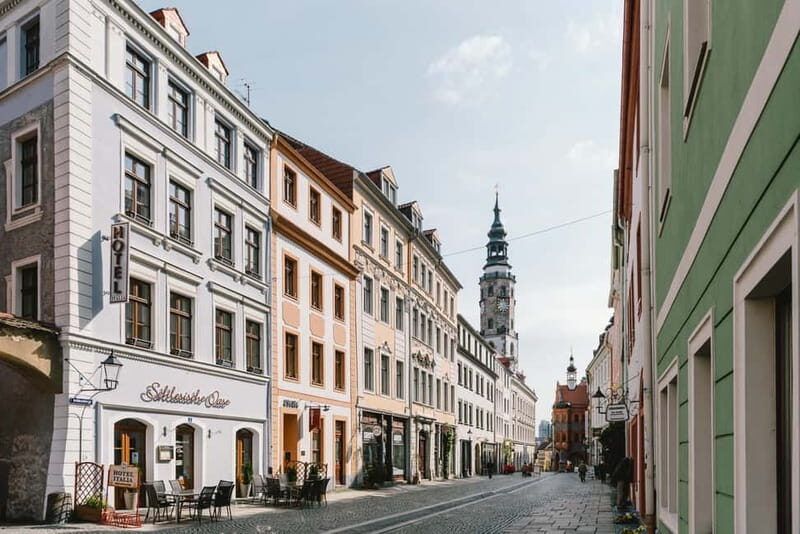
You meet at Görlitz-Information. It’s a good start because you’re beginning at a place meant for visitors, not guessing your way into the old town maze. From there, the tour quickly switches from street views to the house interiors, which is the whole point.
I like the way this setup reduces friction. You’re not trying to time your own self-guided route while also hoping the right doors are open. Instead, you show up, join the group, and the guide handles the order and the access to the buildings you’ll see.
If you’re the type who hates rushing, this is also a comfort. Two hours feels manageable, and the meeting structure means you can plan the rest of your day around something concrete.
Inside the Tuchmacher-Hallenhäuser: what you’ll see in each building
The heart of the Hallenhausführung is the interior look into Görlitz’s hall houses. More than 30 of these houses still exist in the city, and the tour chooses 4–5 of them for your visit. So you’re not trying to “see everything.” You’re getting a representative slice of what makes the house type special.
Inside, the tour experience is organized around how these buildings functioned. The guide will point out the five roles—Wohnen (living), Präsentieren (presenting goods), Handeln (trading), Lagern (storing), and Brauen (brewing). Even if you don’t have architectural vocabulary, that framework keeps everything understandable.
Here’s what I find valuable about this format: it turns the buildings into a story you can picture. You start thinking less like a tourist and more like a merchant who needs space for daily life and daily commerce. That’s why the interiors are so satisfying. You can see how a single structure could support different parts of a household economy.
A nice bonus is variety in condition. Some buildings may be empty, some may be in use, and some may show signs of restoration. That variety matters because it changes how you read the spaces. You’ll see not only what was built, but also what preservation effort looks like when a building still has to live on.
How a 15th-century house type shaped everyday work
This Görlitz building style developed in the 15th century, and it’s tied to a specific kind of commercial life in town. The tour doesn’t require you to be a specialist. It gives you a clear understanding of what this “house type” meant in practice: a structure built to combine living space and working space.
I like tours that make the past feel functional. This one does. The guide’s explanation tends to focus on how people used the space for different tasks, which helps you understand why certain rooms and areas mattered. When the tour talks through the sequence of Handeln and Lagern, you start paying attention to how a business needs both presentation and practicality—showing goods and keeping supplies ready.
Another reason this section works: you’re learning while moving between examples. Seeing one hall house inside is interesting. Seeing multiple examples in a short span makes the patterns stand out. You start to recognize the house logic, then verify it across the next stop.
Weekday bonus: Rathaus courtyard and the painted wooden ceiling (Mon–Fri)
On Monday to Friday, the route can include an extra highlight: a look into the Rathaus. The big draw here is the Renaissancehof and the fact that the Rathaus has the largest painted wooden ceiling in Görlitz.
This addition changes the flavor of the tour. The hall houses show private commercial life; the Rathaus shows civic power and public artistry. It’s also a useful contrast in craftsmanship. In one place, you’re looking at the built environment that supported trade. In the other, you’re seeing how paint and design signal importance in public architecture.
If you’re choosing your day based on the tour, this is the decision point. Weekend schedules may not include the Rathaus stop, so if that painted ceiling is a must-see for you, consider timing your visit for Mon–Fri.
What the guide actually does well (and why you should ask questions)
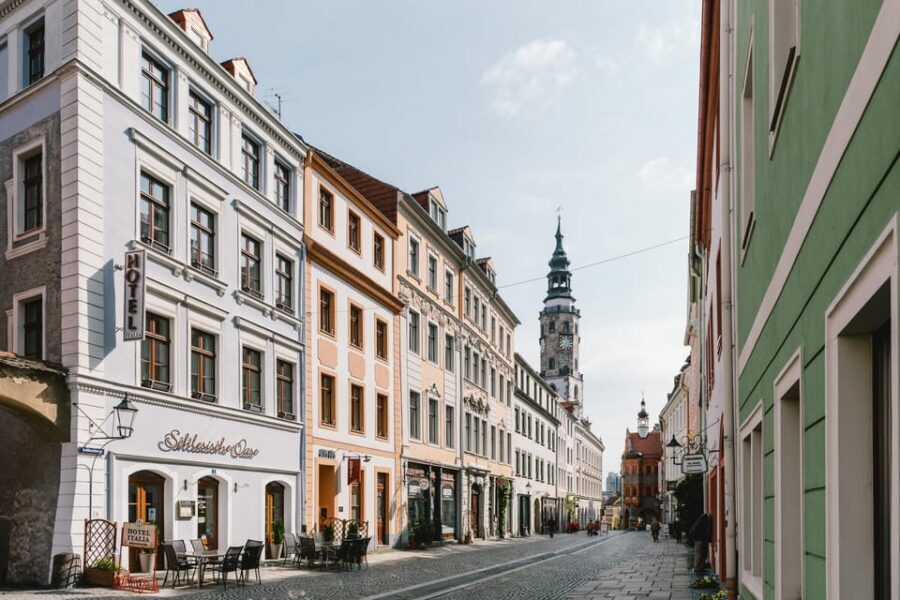
A Hallenhausführung can go two ways: either it becomes a rushed list of facts, or it becomes a guided reading of space. This one leans toward the second.
From the way the tour is described, the guide tends to explain with structure and humor, and they’re open to questions. That’s not a small detail. When you’re inside historic buildings, you’ll naturally wonder how people used the space, what changed over time, or why restoration looks the way it does. A guide who can answer without turning it into a lecture makes the whole experience feel easier.
One practical approach: go in with one or two questions you’d like answered. For example, ask how the different functions—living, presenting goods, trading, storing, brewing—fit together in these houses. If you don’t ask, the guide’s explanations will still give you a good “map,” but questions can turn the tour from informative into memorable.
Also, expect the tour to be in German. If you’re comfortable with spoken German, you’ll likely follow everything smoothly. If you’re not, don’t panic. Focus on the five-function framework and watch the guide’s pointing. Visual cues do a lot of work in an interior tour.
Price and value: about $11 for two hours of real access
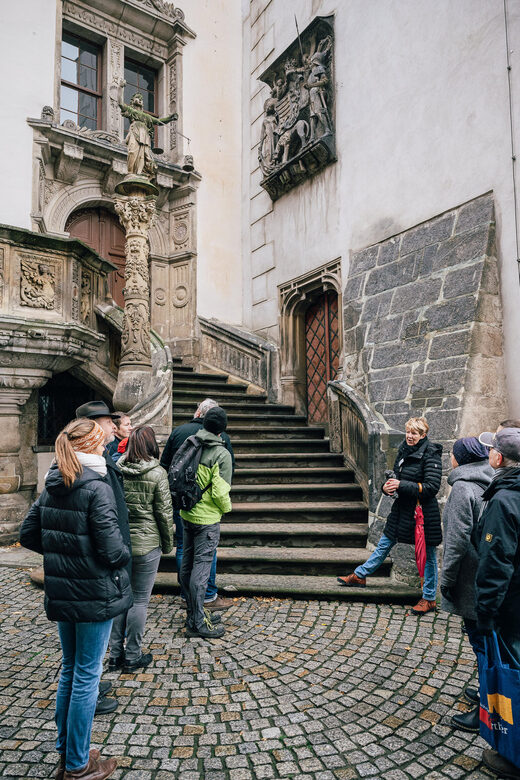
At $11 per person for two hours, the value is strong because the tour delivers access you can’t easily replicate. You’re not just walking by buildings. You’re getting interior views into a specific Görlitz house type, plus commentary that ties the architecture to how people actually lived and worked.
That value gets even better if you’re the kind of traveler who likes architecture but doesn’t want to spend an entire day doing research. This tour gives you a concentrated lesson in a very local topic: the 15th-century hall house and how it served commercial life. You also get multiple examples—4–5 buildings—so your takeaway isn’t based on one random interior.
In other words, you’re paying for guided access and interpretation, not just for a stroll through the old town. And that’s the best use of a short visit.
Who should book the Görlitz Hallenhausführung
This tour is a strong match if you like:
- historic buildings you can understand through daily function, not just style
- architecture tours where the guide explains in plain terms
- learning local building culture in a compact timeframe
- seeing preservation in action, including houses that may be empty, in use, or mid-restoration
It may be less suitable if you need wheelchair accessibility, since it is not designed for wheelchair users. It’s also a German-language tour, so if spoken German is a barrier, you’ll want to plan around that (for instance, by going with someone who can help translate the big ideas).
If you’re visiting Görlitz for a day or two and want something more specific than a general city walk, this is a smart pick. It gives you one of the city’s most distinctive architectural stories in a format that’s easy to follow.
Should you book this tour?
I’d book it if you want to experience Görlitz beyond the postcard facades. The Hallenhausführung gives you inside access to the city’s Tuchmacher hall houses, explains how they worked using the five-part lens of Wohnen, Präsentieren, Handeln, Lagern, Brauen, and (on Mon–Fri) can add the Rathaus with its Renaissancehof and the largest painted wooden ceiling in town.
Skip it only if you’re constrained by accessibility needs or you know you won’t do well with a German-led tour. If not, it’s one of those practical, value-heavy activities that turns a short visit into a real understanding of how Görlitz built its economy.
FAQ
How long is the Görlitz Hallenhausführung?
The tour lasts 2 hours.
What is the price per person?
The price is $11 per person.
Where is the meeting point?
You meet at Görlitz-Information.
What language is the guide?
The live tour guide speaks German.
How many hall houses will we visit?
The tour includes 4–5 hall houses.
Are the houses the same every day?
No. The specific buildings can vary depending on the weekday.
Can I visit the Rathaus during the tour?
On Monday to Friday, the tour can include a look into the Görlitz Rathaus with its Renaissance courtyard.
What is special about the Rathaus stop?
It features the Renaissancehof and the largest painted wooden ceiling in the city.
Is the tour suitable for wheelchair users?
No, it is not suitable for wheelchair users.
Is alcohol allowed during the tour?
No. Alcohol and drugs are not allowed.
Is free cancellation available?
Yes. You can cancel up to 24 hours in advance for a full refund.