Stuttgart in 60 minutes can still feel personal. This walk is all about Old Town, led by a local, and it hits Schlossplatz plus the Neues Schloss area with history you can actually use. I liked the tight focus and the hands-on recommendations, but a couple of things are worth considering: one guide experience included a late pushback and poor engagement with teens.
I also like that the pacing is built for real people, not tour robots. You’ll move on foot for about an hour with a small-group limit, and the route can shift with weather and what you care about most.
Guides matter, and names like Franziska and Viktor have shown up in the best feedback for their questions-and-focus style, while Barbara was mentioned in a less-perfect experience. If you’re traveling with teens and you want them involved, it’s smart to set the tone early and ask the guide to include them.
Key things to know before you go
- 60 minutes, Old Town-only focus: you get a fast, sight-based orientation rather than a long slog.
- Stops are big “photo and story” landmarks: Schlossplatz, Old Castle, Stuttgart Opera area, and Neues Schloss.
- Small group limit: max 8 people, with the experience aimed at a smaller feel.
- You get local food and drink ideas: bars, cafes, and restaurants—plus personal recommendations.
- Museum entry isn’t included: you’ll learn from the outside views and context, not pay-your-way-inside.
In This Review
- Why a 60-minute Stuttgart walk is the smartest way to start
- Schlossplatz: where public life and history meet
- Old Castle and the Württemberg State Museum: medieval structure, modern meaning
- Stuttgart Opera in Oberer Schloßgarten: architecture with a soundtrack
- Neues Schloss: baroque palace vibes without needing a ticket
- The best part isn’t just sights: it’s the food and local tips
- Group size, walking pace, and comfort (the real deal)
- Price value: what $79.94 buys you in Stuttgart
- What guide style you might get—and how to make it work
- Should you book this 60-minute Stuttgart walk?
- FAQ
- How long is the Stuttgart walk with a local?
- What are the main places you visit?
- How big is the group?
- Is the ticket delivered digitally?
- Are museum or monument entry tickets included?
- Where does the tour start and end?
- Is free cancellation available?
Why a 60-minute Stuttgart walk is the smartest way to start
If your time in Stuttgart is tight, a short guided walk can be a gift. You’re not trying to “do everything.” You’re getting the lay of the land fast, so when you wander later on your own, the streets and buildings make sense.
This experience is built around a simple idea: key landmarks grouped close enough to walk in an hour, with a local guiding the story. That means you’re spending your limited energy looking at real places (and hearing what to notice) instead of guessing what matters.
It also helps that the guide adapts. The route can flex based on weather, and the focus can adjust to your interests and walking pace. That’s how you get value instead of just collecting stamps.
Schlossplatz: where public life and history meet
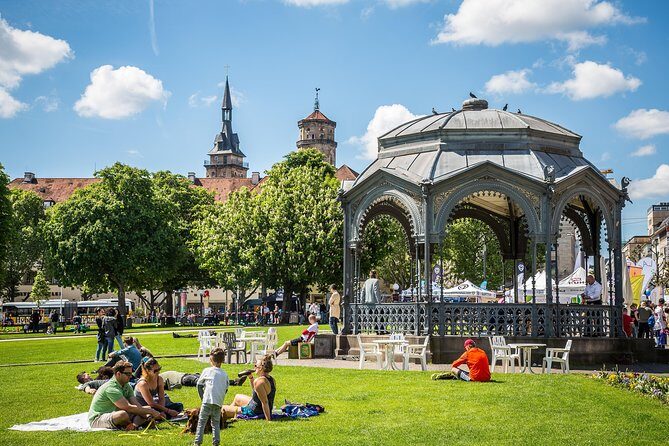
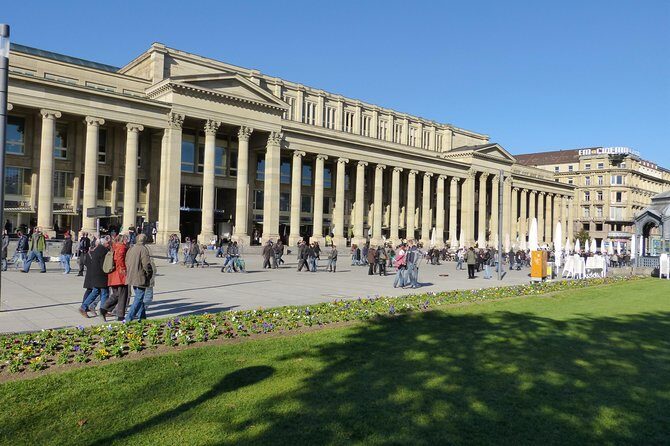
Your first big stop is Schlossplatz, Stuttgart’s largest square. This is where the city’s everyday energy and major monuments overlap, so it’s a great starting point. You’ll be able to orient yourself right away because squares like this act like visual hubs.
Here’s what I’d pay attention to while you’re there:
- The scale and layout: it helps you understand how Stuttgart organizes central space.
- The monument feel: even if you don’t enter anything, you’ll get context for what you’re seeing.
- How the city flows from here: after the walk, this is the kind of place you can use as a mental map anchor.
If you like tours that get right to the point, Schlossplatz is exactly that: a strong “start here” location.
You can also read our reviews of more tours and experiences in Stuttgart.



Old Castle and the Württemberg State Museum: medieval structure, modern meaning

Next up is the Old Castle, a medieval fortress that now houses the Württemberg State Museum. Even if you don’t plan to pay for museum time, the building still does something useful: it shows you how deep the local story goes, long before the baroque palaces and opera gardens.
This stop is valuable for two reasons:
- You see Stuttgart’s older backbone: fortress architecture gives you a sense of power and protection, not just decoration.
- You connect past to region: the museum is about Württemberg’s heritage, so the guide’s explanation helps you understand what the region considers important.
One practical note: entry tickets for museums and monuments aren’t included. So if you want to go inside, plan on adding that on your own time. The tour gives you the meaning and the orientation; you decide how deep to go.
Stuttgart Opera in Oberer Schloßgarten: architecture with a soundtrack
You’ll also head to the area around Stuttgart Opera, positioned in the Oberer Schloßgarten. This stop stands out because it blends performance culture with a park setting. In other words, it’s not just a building you look at from the sidewalk—it’s a scene.
The guide will point out why the setting matters, including the opera’s reputation for world-class performances and acoustic excellence. Even if you’re not attending a show, you’ll get a clearer sense of why people treat this place as more than a pretty facade.
What to do at this stop:
- Take a slow look from different angles. In garden-and-building settings, viewpoints can change what you notice.
- Listen to the “why” behind the design. The tour framing here tends to focus on atmosphere, not just dates.
If you’re the type of traveler who likes culture even on a limited schedule, this is one of the strongest stops for that.
Neues Schloss: baroque palace vibes without needing a ticket
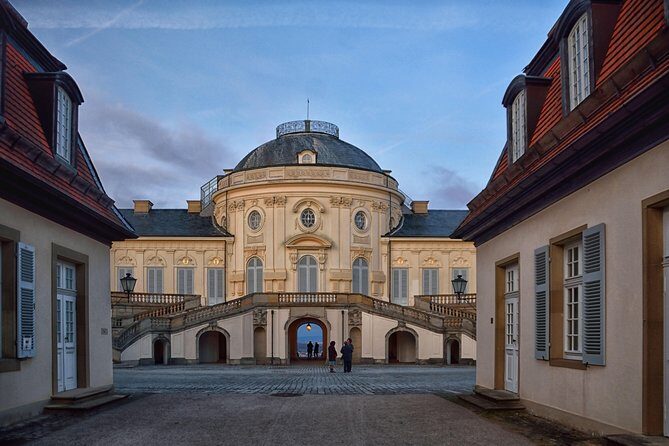
Finally, you’ll reach Neues Schloss, the baroque palace that reflects the opulent lifestyle of former ducal residents. This is the kind of place that can make you stop mid-walk just to stare. Baroque architecture tends to do that: it’s dramatic, detailed, and built to impress.
Why I think this stop is worth your hour:
- It balances the earlier medieval feel of the Old Castle. You’re seeing Stuttgart’s story shift across centuries.
- You get a palace context without committing to a museum visit.
- You’ll leave with clearer “what is this building and why should I care” energy.
Like the other museum-linked stop, entry tickets aren’t included. So you’ll get the experience of seeing and learning, and you can decide later if you want to add interior time.
The best part isn’t just sights: it’s the food and local tips
One of the most useful parts of this kind of walk is what happens after you finish. This experience is designed to give you personalised recommendations, including top tips for bars, cafes, and restaurants.
That matters more than you might think. In a city center like Stuttgart, it’s easy to fall into tourist patterns—places that look good but don’t match what you actually want that night. A local guide can steer you toward options that fit your pace and preferences.
Based on the strongest feedback about guides like Franziska and Viktor, the tours tend to work best when you engage. If you tell the guide what you’re craving—quick and casual versus sit-down, coffee versus beer, something traditional versus modern—you’ll get recommendations that feel relevant, not generic.
My suggestion: come with two or three questions ready. Even simple ones like where locals go after a walk or what’s worth trying first can turn the last 20 minutes into the most actionable part of your day.






Group size, walking pace, and comfort (the real deal)
This is set up as a small-group tour with a maximum of 8 travelers, and it’s described as a small-group experience that can be even tighter in practice. That size matters because it keeps the walk conversational. You’re less likely to get lost in a crowd, and you can ask questions without shouting.
The whole thing lasts about 1 hour. The route can adapt to walking pace, and stops may vary with weather. If you’re hoping to cram in multiple museums afterward, this length can be a smart match. It’s long enough to orient you, short enough to keep the rest of your day intact.
Comfort note: it’s not recommended for guests with impaired mobility. If mobility is a concern, treat this as a walk-first experience rather than a “sit and hear stories” tour.
On the positive side, it’s near public transportation, and service animals are allowed. That makes it easier to fit into an arrival day or a day when your feet are already busy.
Price value: what $79.94 buys you in Stuttgart
At $79.94 per person, this isn’t a “free stroll.” You’re paying for a local guide, a small-group format, and tailored recommendations.
So the value question comes down to this: are you using the guide’s expertise? If you show up asking for where to go next—what to try, what to skip, how the neighborhoods connect—then the cost starts to make sense. You’re essentially buying time-saving clarity.
Also, because museum and monument entry tickets aren’t included, you’re not paying for access you might not even want. You’re paying for context. If you plan to go inside later, that’s on your schedule.
Booking timing can also matter. This one averages being booked about 8 days in advance, which suggests demand. If your dates are fixed, don’t wait too long.
What guide style you might get—and how to make it work
Guides can change everything in a short tour like this. The best feedback mentions Franziska for being enjoyable and for asking what people wanted to focus on, then mixing historical info with current context. Viktor is also praised for being able to answer questions and for being friendly and responsive.
There’s also a caution from a less-positive experience involving a delayed start and a guide who didn’t connect well with teens during introductions. That doesn’t mean every tour will go that way, but it’s a good reminder: in any small group, energy and participation matter.
To get the most out of it, do this:
- Arrive ready with a focus (even just one topic: architecture, history, food, or culture).
- Tell the guide how you want the group to move (quick pace versus slower stops for photos).
- If you have teens, ask directly how they can participate so nobody feels ignored.
A strong guide will match your pace and interests, and the tour is built to be adaptable. You just have to help the process along.
Should you book this 60-minute Stuttgart walk?
Book it if:
- You want a fast orientation to Stuttgart’s Old Town without planning museum time.
- You like short walking tours that include practical recommendations for where to eat and drink.
- You’re fine spending about an hour on foot and letting the guide shape the route around your interests.
Skip or choose something else if:
- You need lots of indoor time at museums or monuments, since entry tickets aren’t included.
- Mobility is an issue, since it’s not recommended for impaired mobility.
- You’re expecting a long, slow, in-depth session. This is a focused sampler, not a deep research project.
If you’re trying to make the most of a single day, this is one of the easier ways to turn “I’m here for a bit” into “I actually understand where I’m standing.”
FAQ
How long is the Stuttgart walk with a local?
It runs for about 1 hour.
What are the main places you visit?
You’ll see Schlossplatz, the Old Castle (with the Württemberg State Museum), Stuttgart Opera in the Oberer Schloßgarten area, and Neues Schloss.
How big is the group?
The tour has a maximum of 8 people, and it’s described as a small-group experience (part of the group may be up to 6).
Is the ticket delivered digitally?
Yes, it’s listed as a mobile ticket.
Are museum or monument entry tickets included?
No. Entry tickets for public transportation, museums, and monuments are not included.
Where does the tour start and end?
Start: Büchsenstraße 10, 70173 Stuttgart, Germany.
End: EugenstaffelEugenstraße 12, 70182 Stuttgart, Germany.
Is free cancellation available?
Yes. You can cancel up to 24 hours in advance for a full refund.