REVIEW · ERFURT
Erfurt: On the road with the bridge builder. Walking tour with anniversary tasting.
Book on GetYourGuide →Operated by Reinhard Schwalbe · Bookable on GetYourGuide
Erfurt’s bridge tells stories. This walking tour through the medieval lanes of Erfurt follows a bridge keeper on and under the Krämerbrücke for a 700th-anniversary celebration, with humor and food timed to the route. I really like the way it mixes funny tales with real places, so you’re not just watching buildings—you’re learning how people lived around them.
Two things I particularly enjoy: first, the stop in the Brückenkeller under the junk shop in a small group (under 10 people), where you get a close look at the working side of shop life; second, the tasting at the right pace, including Krämerbrückentrüffel made with Peruvian jungle chocolate and a clear local herbal liqueur, Erfurt Classic 40%. One possible drawback: it’s a rule-based tour—no intoxication, and alcohol use is controlled—so if you’re looking for a party atmosphere, this is not that.
You’ll meet the guide in costume at the Middle of the town hall steps, then end right back where you started. The tour runs about 2 hours, moves with a customized pace, and stays focused on the bridge and the surrounding sights.
In This Review
- Key highlights to look for (before you book)
- A 700-year-old bridge walk with Master Schwalbe
- Where the route makes sense: from fish market to cathedral square
- Inside the Brückenkeller under the junk shop
- The story trail: Martin L., Bonifatius, Dr. Faust, Tetzel
- Walking over and under the Krämerbrücke arches
- Anniversary tastings that fit the theme
- Optional extras: violin and craft beer
- Value and time management for your 2-hour plan
- Who should book this Erfurt bridge-builder tasting tour
- Should you book this Erfurt bridge tour?
- FAQ
- FAQ
- What’s the duration of the Erfurt bridge-builder walking tour?
- Where do I meet the guide?
- What language is the live guide?
- Is the tour wheelchair accessible?
- What’s included in the tasting?
- Are there optional extras?
- Are there any rules about alcohol?
- How do I know what time to choose?
Key highlights to look for (before you book)
- Brückenkeller under the junk shop with a small group size (under 10), giving you a rare, hands-on feel for shop life.
- A guided walk over and under the Krämerbrücke arches, so you see the bridge as a living space, not just a postcard.
- Bohlenstube insight, a window into a typical bridge-shop room style.
- Stories tied to real Erfurt legends and figures, from Martin L. to Dr. Faust to Tetzel.
- Tastings that match the theme: bridge truffles plus Erfurt Classic 40% herbal liqueur.
- A tight route in two hours that still covers key Erfurt landmarks around the bridge.
A 700-year-old bridge walk with Master Schwalbe
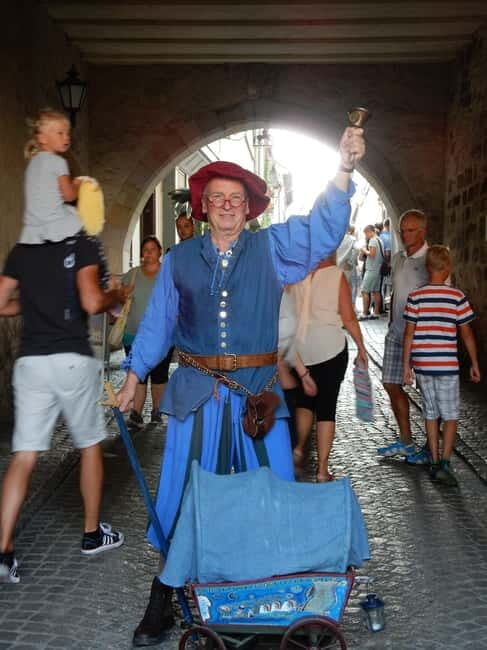
This tour works because it treats the Krämerbrücke like the main character. You’ll follow Master Schwalbe as he walks you across the bridge and down into spaces beneath the arches, where the bridge stops being stone and starts feeling like daily infrastructure.
Your guide is Reinhard Schwalbe, and you’ll recognize him by his bridge builder costume at the meeting point on the town hall steps. The humor is part of the package—old Erfurt stories are delivered with timing, so even if you’re not a history super-fan, you still get the point.
There’s also a practical side here: the guide sets a customized pace, which matters when you’re moving through narrow alleys and around several distinct stops within about two hours. It’s not rushed, but it is structured—this isn’t a free-form wander.
You can also read our reviews of more walking tours in Erfurt
Where the route makes sense: from fish market to cathedral square
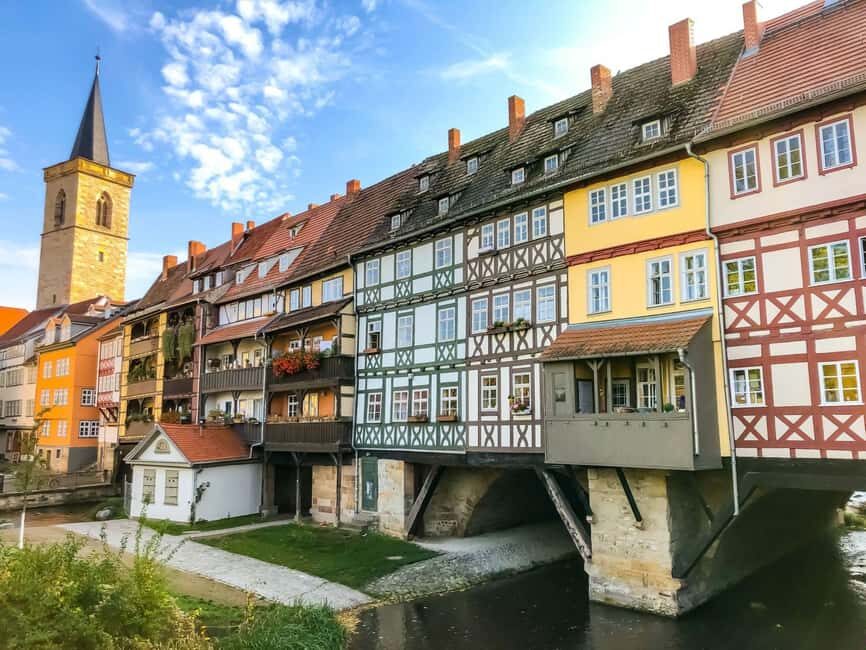
I like that the route is built around how Erfurt “layers” itself. You start near the town center and move outward in a way that helps you orient quickly: market-front importance, then bridge life, then university and religious landmarks, ending with the big cathedral-area views.
Here are the main sights you’ll pass or visit during the walk, with what to watch for:
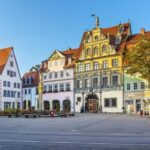
- Fish market area with patrician houses and the town hall: look at how the civic center and merchant power feel close together. It sets the tone for why trade mattered here.
- Krämerbrücke bridge itself: the bridge is the visual anchor, but the guide pushes you to notice how the arches and spaces beneath connect to daily commerce.
- University quarter: you’ll get the sense that learning and local life weren’t separate worlds.
- Old synagogue: this stop adds a needed historical depth to the neighborhood, not just scenery.
- Waidspeicher warehouses at the Arche: these give you the trade-and-industry angle. Even without technical detail, the “warehouse feel” tells you what moved through the town economy.
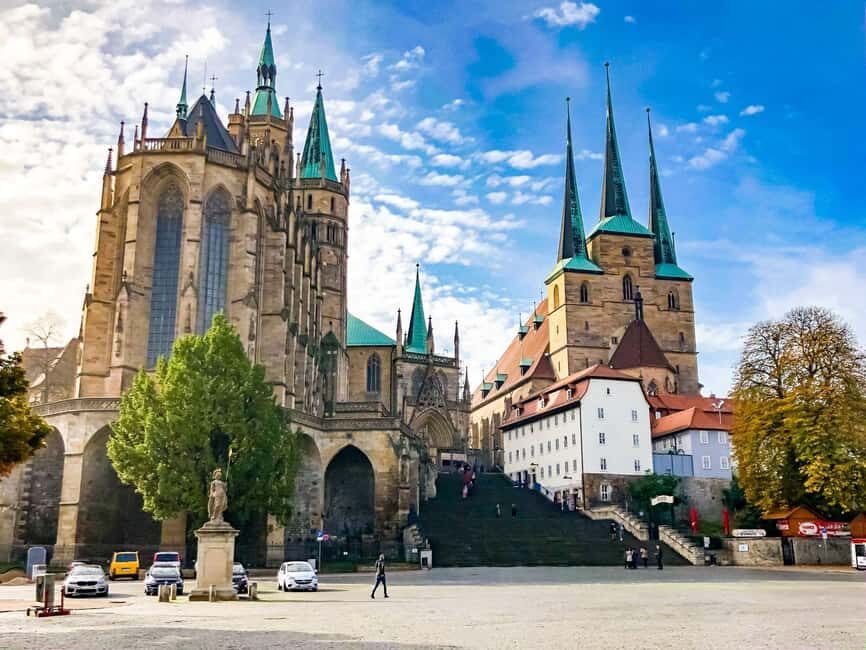
- Cathedral square, cathedral, Severikirche church, and citadel: this is where the walk widens. If you’ve been focused on the bridge so far, this segment helps you understand the city scale and status.
One note on pacing: because there are multiple stops plus a tasting, you’ll spend less time lingering at each location than you would on a self-guided day. The trade-off is that the guide connects the dots, so you’ll know what you’re seeing as you see it.
Inside the Brückenkeller under the junk shop
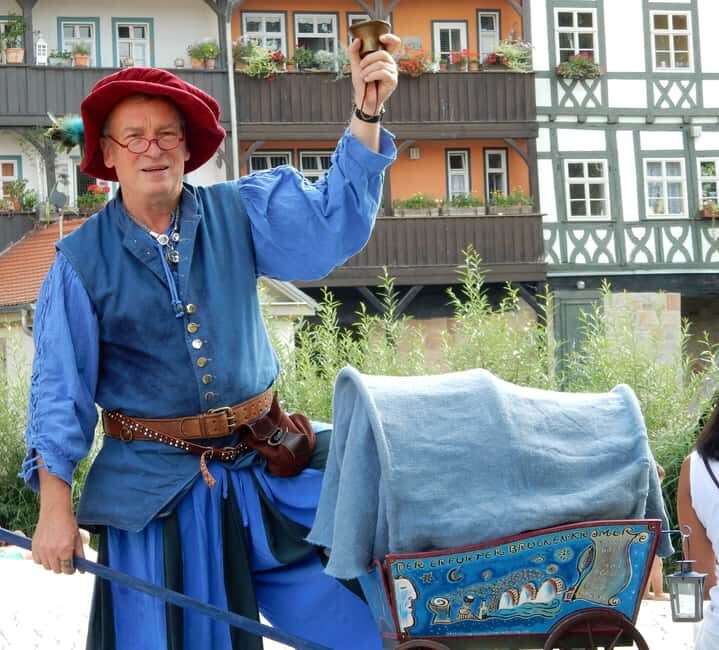
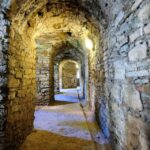
This is the moment that makes the tour feel different from a typical city walk. You’ll go into the Brückenkeller located under the junk shop, and the group size is kept small—under 10 people—which makes the atmosphere calmer and the explanations easier to follow.
What I love about this stop is that it shifts you from “viewing medieval architecture” to “understanding how space was used.” A cellar under a shop isn’t just an interesting room; it hints at storage, daily work, and how business and home life overlap.
You’ll also get an insight into a typical Bohlenstube (a characteristic room style associated with bridge-side shop life). Even if you don’t know the term ahead of time, the guide explains what it means in practical terms—how people lived and operated in constrained urban space.
The drawback to keep in mind: underground spaces can feel cooler and a bit tighter. If you get uncomfortable in narrow areas or dim light, just mentally plan for a short indoor segment.
The story trail: Martin L., Bonifatius, Dr. Faust, Tetzel
Reinhard Schwalbe’s storytelling is the glue that holds everything together. Instead of name-dropping history, the tales are playful and specific—built around characters that fit the bridge-and-town theme.
You’ll hear humorous accounts tied to:
- Martin L., the rebellious student who never missed a chance to put his foot in it
- Apostle Bonifatius, including the image of him wielding an axe
- Dr. Faust, described with the medieval word weytbeschreyten (and the idea of a magician spreading his name and influence)
- Tetzel, portrayed as an indulgence peddler
- The mayor of Erfurt, mentioned as gluttonous
- Learned donkeys of the Old University, with jokes that connect education to everyday life
- References to broad beans and beer holes, the kind of details that make the past feel less abstract
Here’s why this works for you: jokes are memorable. And when you’re in a real place like the Krämerbrücke, those stories turn the stones into a timeline you can hold onto.
If you prefer factual lectures over humor, you might still enjoy it because the stories are paired to stops around you. You’re not hearing legends in a vacuum.
Walking over and under the Krämerbrücke arches
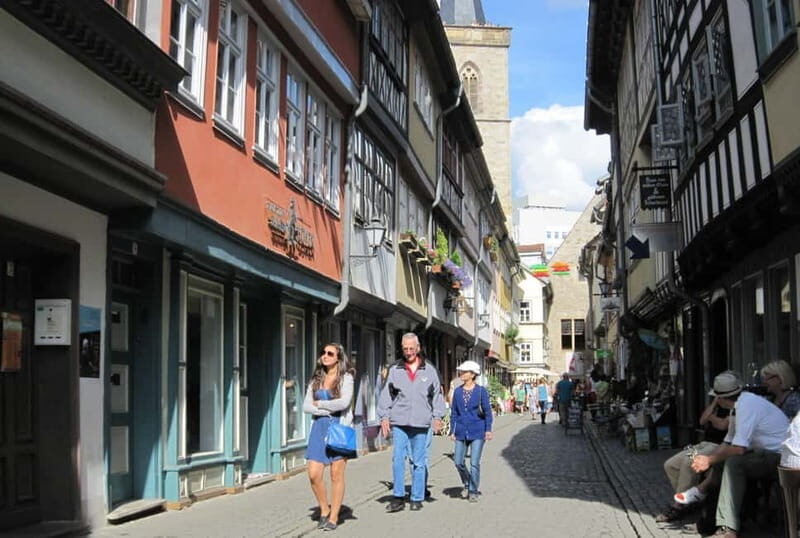
A big part of the value is the physical rhythm of the tour. You’re not just looking from street level. You walk over and under the bridge arches, so you experience the bridge as a structure with multiple layers of space.
That also changes your sightlines. From above, the bridge connects neighborhoods visually and gives you the classic perspective. From beneath, you notice how arches create a kind of in-between world—part walkway, part commercial space, part shelter.
This matters because it teaches you how medieval towns solved everyday problems: moving people and goods while carving out usable space in dense urban cores. It’s not only scenic; it’s functional.
Practical tip: wear shoes you’re comfortable with for steady walking and a short indoor segment. Even though it’s only about two hours, you’ll cover several areas and you’ll want your footing for stair-like or tight transitions near entrances.
You can also read our reviews of more food & drink experiences in Erfurt
Anniversary tastings that fit the theme
Let’s talk food, because it’s not random here. The tour includes tasting samples tied to the bridge tradition:
- Krämerbrückentrüffel from the Goldhelm chocolate factory on the Krämerbrücke, made with Peruvian jungle chocolate
- A clear herbal liqueur called Erfurt Classic 40%
I like that the guide includes tastings in the flow rather than treating them as an extra stop that breaks momentum. You get a sweet hit that connects to the bridge itself, then a local herbal liqueur that feels unmistakably regional.
One consideration: the herbal liqueur is 40%, so it’s potent. The tour also has clear rules against intoxication. If you don’t want alcohol, keep that in mind ahead of time and plan to focus on the chocolate portion.
If you’re the kind of person who enjoys small food moments in historic settings, this tasting package is a good match. It’s also a nice way to remember the tour after you leave the bridge area.
Optional extras: violin and craft beer
If you want to add more sensory content, there are extras you can choose:
- Musical accompaniment (violin) at €6 per person
- Beer tasting with craft beer (3 varieties) and snacks at €8 per person
I see these as value-adds only if they match your travel style. The base tour already includes a guided route plus tastings tied to the bridge theme. If you’d rather keep things lighter and focused, you may skip the extras. If you enjoy music with stories—or beer culture in a town with a beer-and-snack vibe—these options can make the experience feel longer and more festive without turning it into a party.
Value and time management for your 2-hour plan
This is one of those tours that respects your time. In about two hours, you get:
- A guided loop through major sights around the bridge area
- A distinctive indoor stop (Brückenkeller) in a small group size
- Storytelling tied to specific local figures
- A themed tasting package
When you compare that to spending the same two hours wandering on your own, the difference is context. You’ll see the same streets and landmarks, but the guide gives you the “why” in a way that’s easy to recall.
Also, the tour is wheelchair accessible, which is a useful practical detail. (If you have mobility needs, you’ll still want to plan for walking time and the short indoor segment, but accessibility is explicitly stated.)
Who should book this Erfurt bridge-builder tasting tour
This tour is a strong fit if you:
- Like story-driven city exploring
- Want a short outing that covers several key Erfurt landmarks without a full-day commitment
- Enjoy food tastings that feel locally sourced
- Prefer small-group time for at least part of the experience (the Brückenkeller visit is under 10)
You might skip it if you:
- Want long stays at individual monuments without any structure
- Dislike guided storytelling and prefer strictly quiet sightseeing
- Are planning a late-night, high-energy drinking session (the tour rules focus on avoiding intoxication)
Should you book this Erfurt bridge tour?
Yes—if you want a smart way to see Erfurt with meaning. The combination of walking over and under the Krämerbrücke, the small indoor visit in the Brückenkeller, and the themed tastings makes it more than a generic “see the sights” outing.
Book it when you want a guided hour-and-a-bit that helps you understand the bridge area as a working part of the city, not just a photo stop.
FAQ
FAQ
What’s the duration of the Erfurt bridge-builder walking tour?
The tour lasts about 2 hours.
Where do I meet the guide?
You meet at the middle of the town hall steps. The guide appears in a bridge builder costume. The tour ends back at the same meeting point.
What language is the live guide?
The live tour guide speaks German.
Is the tour wheelchair accessible?
Yes, the tour is wheelchair accessible.
What’s included in the tasting?
You’ll taste Krämerbrückentrüffel made with Peruvian jungle chocolate and the clear herbal liqueur Erfurt Classic 40%.
Are there optional extras?
Yes. You can add musical accompaniment (violin) for €6 per person, and/or a craft beer tasting with snacks for €8 per person.
Are there any rules about alcohol?
Intoxication is not allowed, and the tour has rules against alcohol and drugs. The standard tasting includes a 40% herbal liqueur, so you should be mindful if you don’t want alcohol.
How do I know what time to choose?
Check availability to see starting times. You’ll reserve a spot for the specific date and time you pick. The guide also asks you to provide date, time, meeting point, number of people, and which tour with any extras when placing an order.