REVIEW · ERFURT
Erfurt: Private Guided Classic Old Town E-Rickshaw Tour
Book on GetYourGuide →Operated by biketaxi Erfurt · Bookable on GetYourGuide
Erfurt by e-rickshaw is the slow way to see it. This private 75-minute classic Old Town circuit lets centuries of sights roll past you while your guide explains what you’re looking at, from the Fish Market area to the cathedral square and the famous bridge.
What I like most is the comfort angle: you stay protected from sun and rain, and the pace stays friendly instead of sprint-and-stumble. The second big win is the mix of places you hit in a short time—St. Mary’s Cathedral Square, the Old Synagogue area on Waagegasse, and the half-timbered drama of Krämerbrücke.
The only real consideration: you won’t cover every alley and side street in depth. Think of this as a best-of overview with photo stops, not a slow wandering day where you get to linger for hours at one stop.
In This Review
- Key highlights you’ll feel on this tour
- Why an e-rickshaw works so well for Erfurt’s Old Town
- Meeting at the Fish Market: where the route makes sense
- House of Sonneborn and the Waidspeicher: early stops with big meaning
- St. Mary’s Cathedral Square: high-Gothic drama in open air
- Waagegasse to the Old Synagogue: medieval streets with a quieter edge
- Michaelisviertel and Collegium Maius: learning and local rhythm
- Krämerbrücke: the tour’s crowning stop with half-timbered flair
- Photo stops and Thuringian Rostbratwurst breaks that you control
- Price and timing: is it good value for your group?
- Who this e-rickshaw tour fits best
- Quick FAQ
- FAQ
- How long is the Erfurt private e-rickshaw tour?
- Where do we meet the guide?
- What’s included in the price?
- Are there food stops included?
- What languages are available?
- Is the tour wheelchair accessible?
- Should you book this Erfurt e-rickshaw tour?
Key highlights you’ll feel on this tour
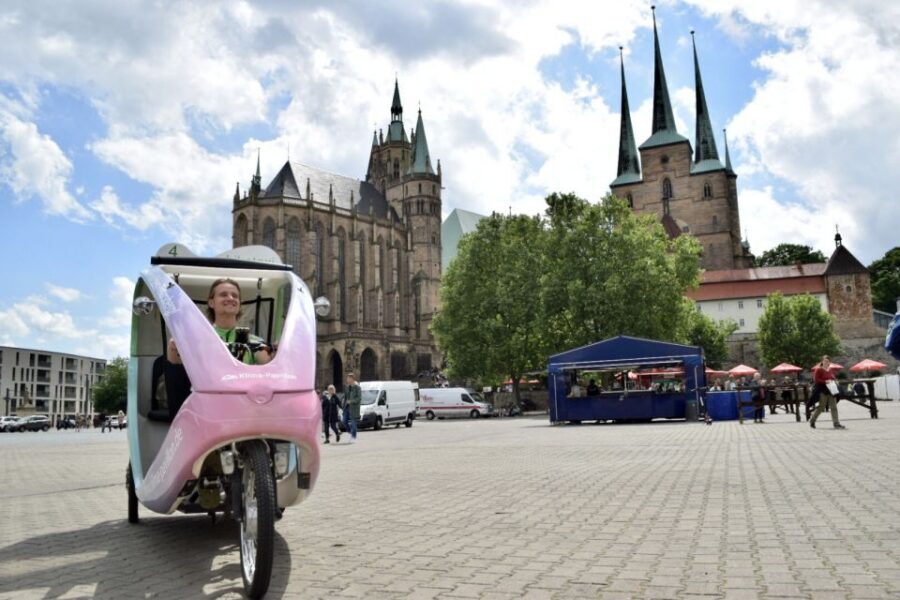
- Private, roofed e-rickshaw comfort keeps the ride easy in any season
- Fish Market meeting point puts you right where the Old Town story starts
- St. Mary’s Cathedral Square gives you the big-imposing architecture moment
- Waagegasse and the Old Synagogue add a quieter, older medieval feel
- Collegium Maius and Krämerbrücke combine learning history with half-timbered charm
- Photo breaks and optional food stops are built into the flow
Why an e-rickshaw works so well for Erfurt’s Old Town

Erfurt’s Old Town is made for walking. The problem is that walking has a way of turning into “rushed steps” once you’ve got limited time. The e-rickshaw format solves that by keeping you seated while your guide steers the route through the key streets and squares.
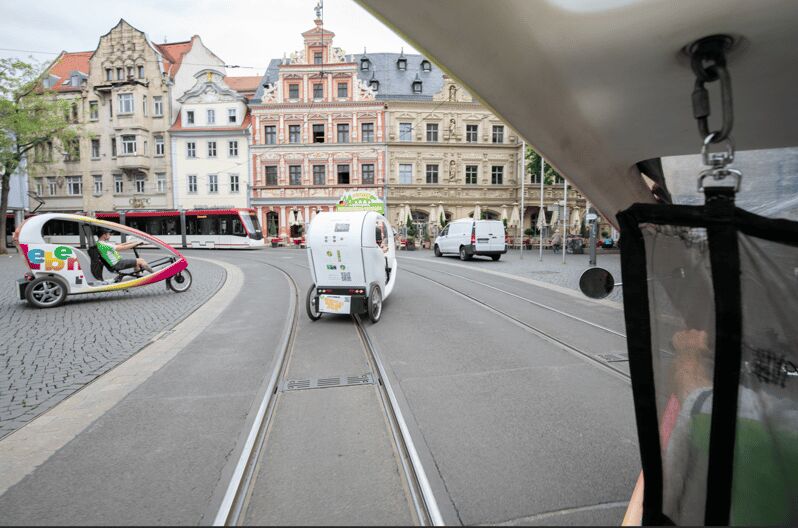
It also changes how you look. From the back seat, you notice facades, rooflines, and street angles in a different way than when you’re glued to the ground or dodging crowd flow. You still get the storytelling, but you’re not worn out before you reach the places you actually came to see.
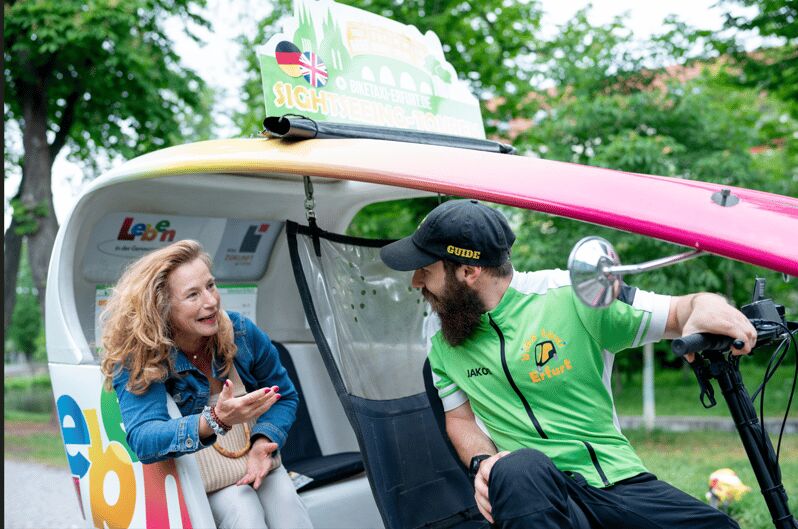
And because it’s a private group, your guide isn’t juggling a big roster. You can ask questions as you go, and you can request short breaks when something catches your eye.
You can also read our reviews of more guided tours in Erfurt

Meeting at the Fish Market: where the route makes sense
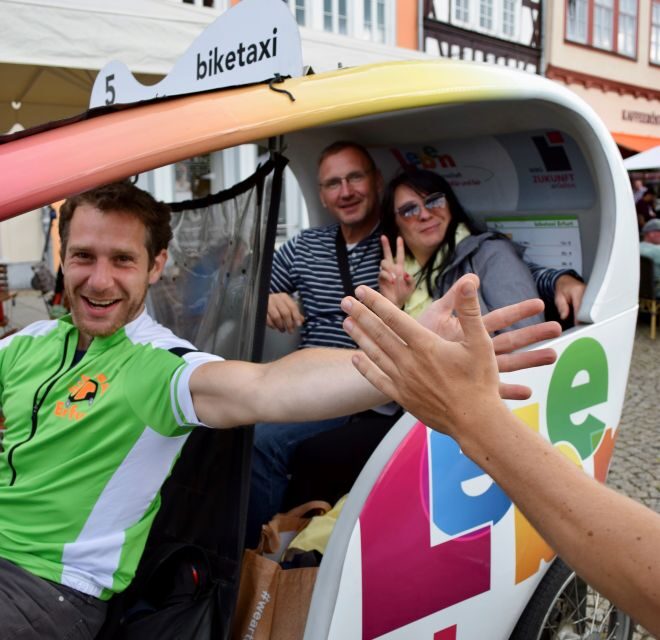
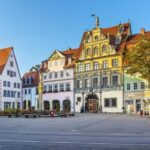
Your tour starts at the Fish Market area. That’s a smart choice because it’s a clear landmark and it sets the tone for an Old Town loop right from the beginning.
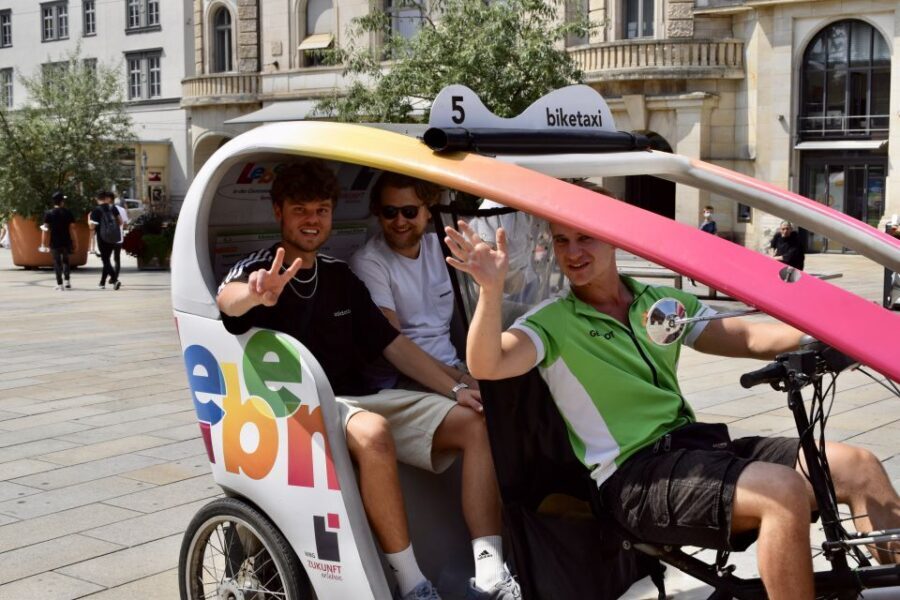
You’ll meet your guide—easy to spot in a green shirt—and then climb aboard the e-rickshaw. From there, you cruise past the sights while your driver times the ride so you can take in each location without feeling like you’re constantly waiting.
In real terms, this is how you get “oriented fast.” You’re not just being shown a list of places—you’re also seeing how Erfurt’s parts connect: market area to historic registry building, then to major squares and medieval streets, and finally to the iconic bridge finish.
House of Sonneborn and the Waidspeicher: early stops with big meaning
After you leave the Fish Market, the route heads to the historical registry office, known as the House of Sonneborn. This is exactly the kind of early stop that helps you read the city better later. A guide explanation right at the start gives you a baseline for the eras you’ll keep encountering.
Next comes the Waidspeicher area. Even without getting stuck in a long technical lesson, the Waidspeicher stop adds texture to the tour. You’re not only looking at the famous postcard spots; you’re also seeing architecture that feels more “local day-to-day” in scale and setting.
What makes these stops valuable is pacing. By the time the tour reaches the cathedral square, you’ve already started connecting names to buildings and streets, so the big moments hit harder instead of feeling like random scenery.
One practical note: because you’re on an e-rickshaw, you’ll want to keep your camera ready for quick photo windows. The tour builds in photo opportunities, but you’ll still want to be ready when the guide pauses for visuals.
St. Mary’s Cathedral Square: high-Gothic drama in open air
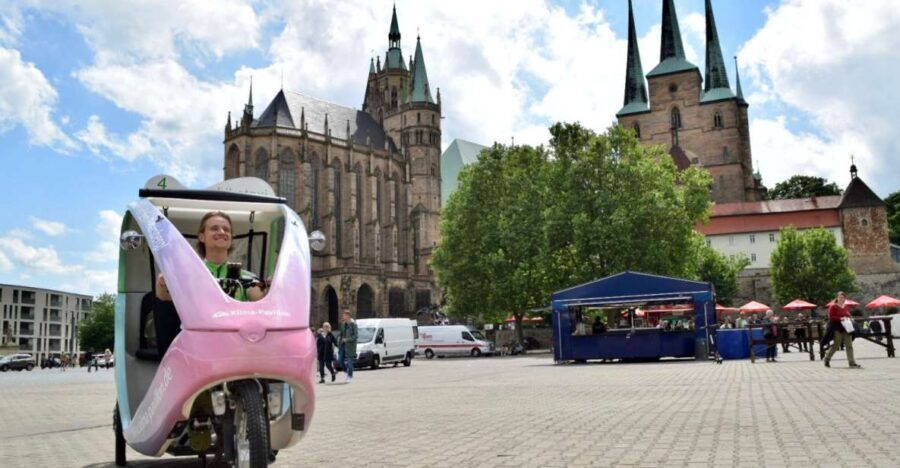
The cathedral square is the highlight stop you’ll feel immediately. Here, the architecture mix is part of the appeal: high-Gothic alongside Romanesque elements, with an imposing presence that dominates the space.
This is where your guide’s explanations matter most. When you hear what you’re looking at—how the style shifts and what makes the cathedral so prominent—you stop treating it like a “pretty building” and start treating it like a historical statement in stone.
Also, this is a place that rewards quick comparison. Because you’re on a ride that covers multiple eras, you can mentally contrast what you saw earlier (registry and historic storage area) with what you’re seeing now: a major religious landmark that anchors the city’s skyline.
If you like dramatic views, bring your best lens. Even short photo breaks here can make a difference because the cathedral’s scale fills the frame in a way that’s hard to reproduce from street level.
Waagegasse to the Old Synagogue: medieval streets with a quieter edge
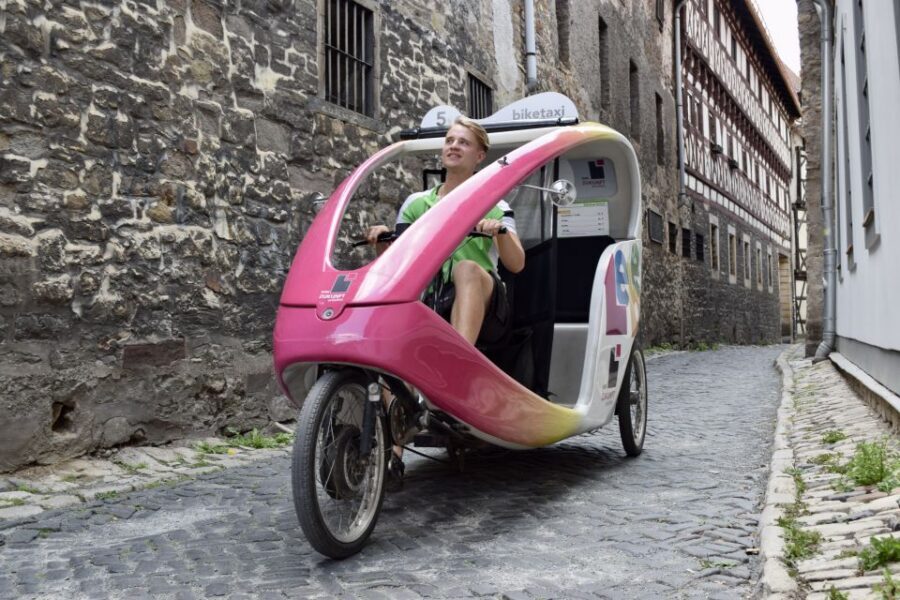
After the cathedral moment, the route shifts into narrower, medieval-feeling streets. You’ll head along Waagegasse and look out toward the Old Synagogue.
This part of the tour is less about “one huge wow” and more about atmosphere. Narrow streets and older surroundings make the story feel closer, and the guide’s anecdotes help you connect the street-level scene to the broader city timeline.
The value here is balance. Big monuments are great, but Old Town travel gets more interesting when the tour also slows down its emotional pitch. The Old Synagogue area gives that. It’s a chance to see Erfurt as more than a single highlight—and to feel how the city’s layers sit next to each other.
Tip for your photos: when the guide points out details along Waagegasse, don’t just snap from the first angle you get. If there’s time for a quick second look, shift your position so the street leading lines and building edges both show up.


Michaelisviertel and Collegium Maius: learning and local rhythm
Next you’ll cruise through the Michaelisviertel, then reach Collegium Maius, the old university.
The way this stop works on a 75-minute private route is smart. University buildings don’t always create the same instant “cathedral energy,” but explained well, they change your understanding of the city. Collegium Maius gives Erfurt a mind-and-ideas layer—history tied to students, scholarship, and the daily hum of learning.
And because you’re still seated, you get an efficient read on the street pattern. You can glance from one section to the next and notice how neighborhoods and institutions sit together instead of feeling like separate tourist zones.
If you enjoy architecture and street scenes, this is a great section to ask your guide a question. With a private group, it’s easy to steer toward what you care about most—buildings, eras, or how the route connects the city.
Krämerbrücke: the tour’s crowning stop with half-timbered flair
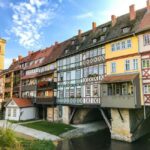
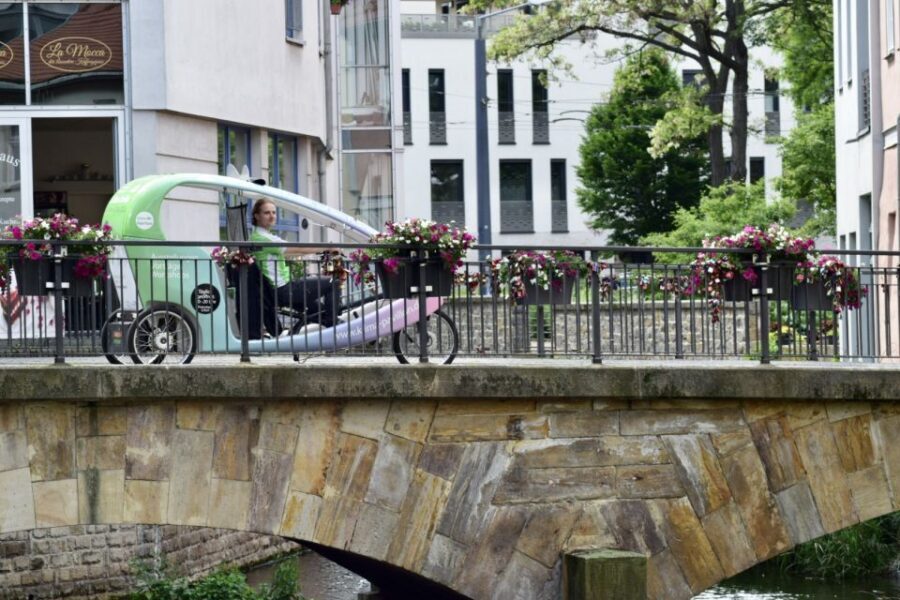
The final big moment is Krämerbrücke, often described as the crowning glory of this kind of Old Town circuit. You’ll see it with its impressive half-timbered houses, and it’s the kind of stop that instantly feels like a postcard—without needing to be artificially staged.
Why it works so well as a finish: it’s visually distinctive and it naturally wraps the tour’s themes together. You start with market-era context, move through eras of important public and religious buildings, and end with a bridge that shows everyday life and historic architecture fused in one place.
This is also where the tour’s flexibility shows up. You’ll have a chance for photos, and if you want to slow down, the guide can help you take a moment without forcing the next-person hurry.
Keep your expectations realistic: you won’t be spending an all-day study period here. But as a closing “wow,” Krämerbrücke delivers.
Photo stops and Thuringian Rostbratwurst breaks that you control
One underrated part of this tour is that the flow isn’t locked like a movie schedule. You get photo opportunities and the ability to make a stop if something pulls your attention.
There’s even room for a classic food break: you can stop to sample Thuringian Rostbratwurst whenever you want. The key detail is this: food and drinks are not included. So you’re in charge—grab it if you’re hungry, skip it if you’d rather keep walking energy for later.
In my view, this is a practical setup for real travel days. When you’re on a tight schedule, you want the tour to cover the highlights. When something moves you, you want the freedom to pause. This tour gives you both.
Price and timing: is it good value for your group?
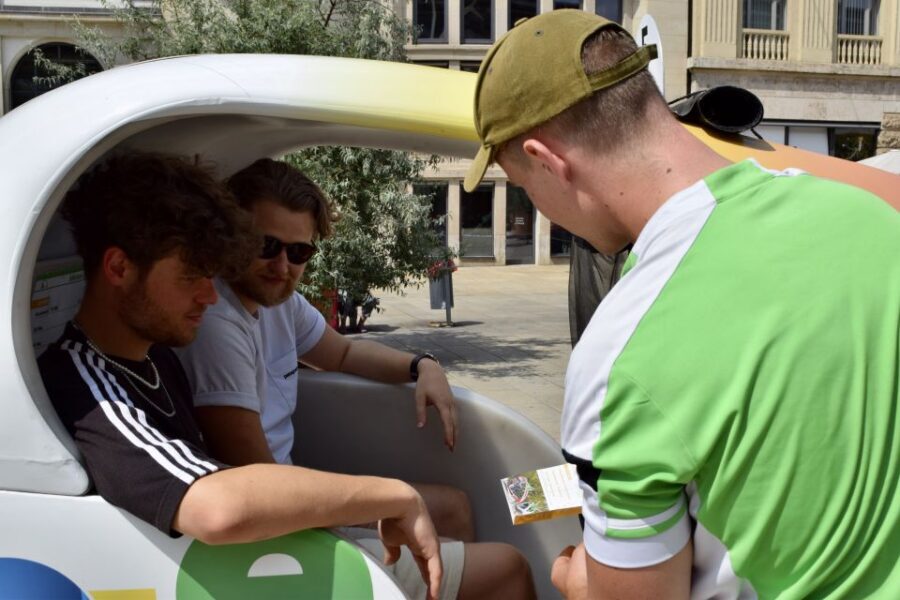
At $77 per group up to 2 people, this isn’t the cheapest “city ride” option. But it’s also not overpriced for what you’re getting: a private live guide plus an e-rickshaw ride for 75 minutes, covering a concentrated slice of Old Town.
Here’s how I’d measure value: you’re paying for convenience, time savings, and guided context. If you tried to recreate this loop on your own, you’d likely spend extra time figuring out routing and then backtracking to capture photos and major landmarks. With a private guide, you also get explanations timed to what you’re seeing right then.
For couples, it’s especially appealing. A group of two fits the “up to 2” pricing model perfectly, and you get a personalized pace without paying for a bigger party.
For solo travelers, it can still work if you want narration and comfort more than maximum roaming time. Just know you’re booking a structured 75-minute loop, not a flexible day of open-ended exploring.
Who this e-rickshaw tour fits best
This tour is a strong match if you:
- want a guided Old Town overview without managing stairs or long distances
- travel in a season with rain or harsh sun and want covered comfort
- like pairing major landmarks with “in-between” street scenes
- prefer private guidance and humor-friendly storytelling
It’s less ideal if you’re the type who wants to spend 2+ hours slowly wandering and hunting tiny side alleys. You’ll still get great stops, but you won’t have unlimited time at each location.
Quick FAQ
FAQ
How long is the Erfurt private e-rickshaw tour?
It lasts 75 minutes.
Where do we meet the guide?
You meet at the Fish Market. Your guide will be wearing a green shirt.
What’s included in the price?
The tour includes a local guide, the e-rickshaw ride, and souvenir photos.
Are there food stops included?
Food and drinks are not included. However, the tour allows time for you to sample Thuringian Rostbratwurst whenever you want.
What languages are available?
The live guide offers English and German.
Is the tour wheelchair accessible?
Yes, it is wheelchair accessible.
Should you book this Erfurt e-rickshaw tour?
If you want the fastest comfortable path to Erfurt’s main Old Town highlights, I’d book it. The private setup, roofed e-rickshaw comfort, and guided explanations at key points like St. Mary’s Cathedral Square, the Old Synagogue area, Collegium Maius, and Krämerbrücke make it a smart use of a short visit.
I’d especially recommend it if you enjoy learning as you go and you like having photo breaks without having to plan every stop yourself. Just remember: this is a focused 75-minute circuit, so if you’re craving deep, slow, hour-by-hour wandering, you may want to pair it with extra time on your own afterward.