REVIEW · HAMBURG
Elbe Philharmonic Hall, HafenCity and Speicherstadt tour
Book on Viator →Operated by Jolly Tours · Bookable on Viator
Hamburg’s waterfront tells its story fast. This 2-hour walk strings together HafenCity’s future vision and the UNESCO Speicherstadt warehouse maze, with smart stops and great photo angles toward the Elbphilharmonie. I like how the guide keeps it practical, pointing out what you’re seeing and why it matters, not just naming buildings.
Second, I really enjoy the small-group size. You’re capped at 15 travelers, so it’s easy to ask questions and get your bearings quickly while still moving at a good pace. One potential drawback: several of the famous places on the route are not included entry-wise (Miniatur Wunderland, museums, and the concert hall), so you’ll need to decide what’s worth adding.
In This Review
- Key Things I’d Focus On
- Why HafenCity, Speicherstadt, and the Elbphilharmonie Belong Together
- Start at Überseequartier: A Clean, Easy Meetup
- HafenCity: Where Hamburg Is Still Building Its Future
- Kibbelstegbrücke and the Port-Engineering Mindset
- HafenCity University and Grasbrookpark: Small Stops, Real Perspective
- Magdeburger Hafen: Modern Maritime Scenes with Museum Views
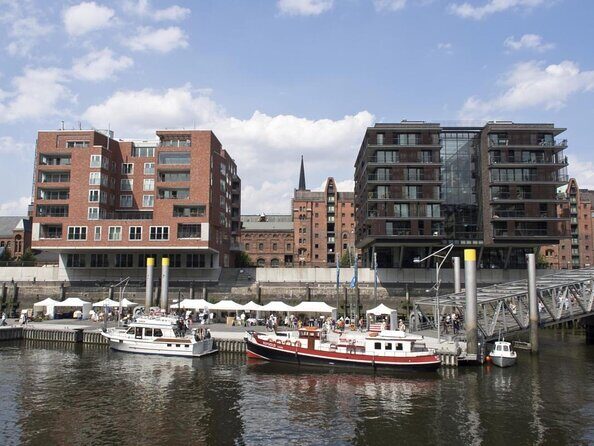
- Sandtorhafen and Traditionsschiffhafen: Feel the Old Port Up Close
- Speicherstadt: The UNESCO Warehouse Maze You’ll Want to Walk Slow
- Elbphilharmonie at Kaiserhöft: Seeing the Big Landmark Without Overplanning
- Kehrwieder and Überseebrücke: Flood-Ready City Logic
- Optional Add-Ons Near the Route: Miniatur Wunderland and Spice Museum
- The Guide Makes It Work: Florian’s Style and What to Expect
- Price and Value: Why $28.92 Can Be a Good Deal
- Should You Book This HafenCity and Speicherstadt Tour?
- FAQ
- Where do I meet for the tour?
- What time does the tour start?
- How long is the tour?
- How big is the group?
- Is this a mobile-ticket tour?
- Are the main attractions included, or do I pay separately?
- What happens if the weather is bad?
- Are service animals allowed?
Key Things I’d Focus On
- Small-group pacing (max 15) so you’re not lost in a crowd.
- HafenCity + Speicherstadt in one loop, so you see Hamburg’s past and planned future together.
- UNESCO warehouse district viewpoints plus HafenCity harborside angles.
- Lots of free stops for exterior viewing, with paid options nearby.
- Guide-led context that turns landmarks into real stories, especially around port life and architecture.
- 4:00 pm start that often gives you softer light for the water and brickwork.
Why HafenCity, Speicherstadt, and the Elbphilharmonie Belong Together
If you want Hamburg in a nutshell, this walk is a good way to get there. HafenCity is the big, living blueprint—an enormous inner-city redevelopment built where the port used to expand. Speicherstadt is the older engine: the world’s largest historic warehouse complex, preserved at UNESCO level. Then you add the Elbphilharmonie, and suddenly the story isn’t just cranes and brick. It’s how a working harbor turned into a cultural landmark without losing its waterfront spine.
I like that the tour doesn’t treat these as separate “checklist spots.” Your guide connects the dots between shipping history, flood protection planning, and today’s architecture. You’ll also notice how Hamburg’s water shapes everything: where you stand, how bridges work, and why certain corners feel dramatic. And the price is reasonable for what you get—half a day of expert guidance and multiple exterior highlights, without paying for a bunch of entry fees on top.
The watch-out is simple: the “big-name” sites on this route don’t all come with included admission. You’ll get close and learn a lot, but if you want to go inside Miniatur Wunderland or museums, you’ll likely pay separately.
You can also read our reviews of more tours and experiences in Hamburg.



Start at Überseequartier: A Clean, Easy Meetup
You meet at Überseequartier (Überseequartier, 20457 Hamburg) and the tour starts at 4:00 pm. That’s a nice time slot. Late afternoon usually means calmer crowds and better light along the water, especially for HafenCity’s modern facades and the brick textures of Speicherstadt.
The meetup point is practical. It’s near public transportation, and it’s easy to find compared with more “hidden” old-town meeting spots. You also get a mobile ticket, which keeps your planning simple—no hunting for printed passes on a busy day.
One more small detail that matters: the tour ends at Baumwall station (20459), near the top station of Bäumenall. That finish point is helpful if you want to keep walking afterward toward the harbor area and viewpoints without backtracking.
HafenCity: Where Hamburg Is Still Building Its Future
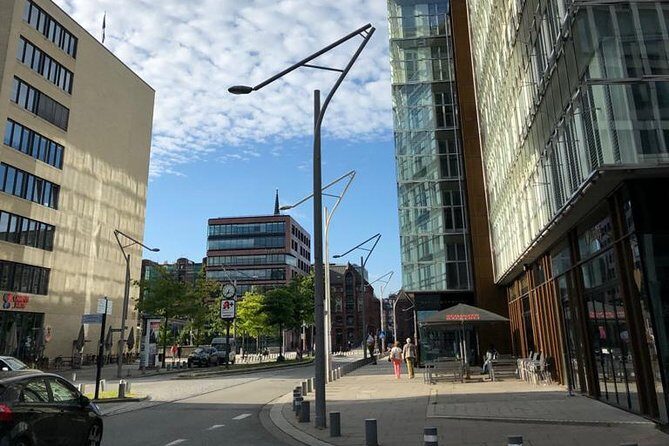
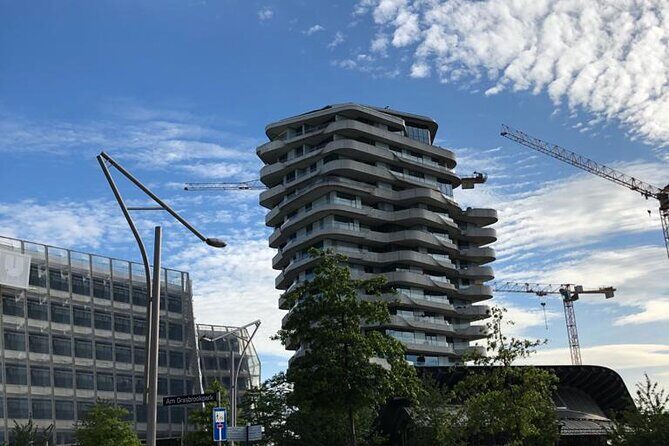
Your first stretch centers on HafenCity, the large redevelopment area on the Großer Grasbrook that used to be part of the free port. Even if you don’t read a single statistic, HafenCity makes sense in your eyes. You’ll see what new urban planning looks like when it’s built right against functioning waterways.
I love how this part feels like architecture with context. You’re not just seeing shiny buildings. Your guide talks about the scale of the project—housing, hotel capacity, workplaces, schools, and the daily mix of residents, students, and visitors expected once the district is fully complete. That kind of framing helps you understand why the streets feel both designed and in motion.
You’ll spend time around the area and cross key points that show how HafenCity connects internally and outwardly. Expect stops that give you wide views, then tighter moments where the buildings and quays create a “harbor canyon” feeling. It’s a very “walkable waterfront city,” not a drive-and-park development.
Value tip: HafenCity is also a great place to practice reading modern design. Notice how sightlines open and close, and how the water turns into a natural boundary that guides where public space happens.
Kibbelstegbrücke and the Port-Engineering Mindset
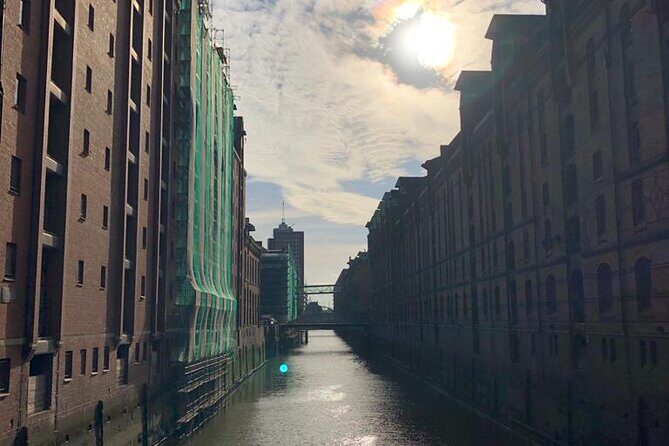
Next comes one of those stops that sounds technical, but pays off in understanding. The Kibbelstegbrücke is part of how Hamburg plans for storm surges and water emergencies—moving people and traffic safely even when conditions get rough. It’s the kind of infrastructure detail that most “just sightseeing” tours gloss over.
Standing near it, you’ll start to see Hamburg as a city that treats the harbor like a partner, not a backdrop. The guide’s explanation turns the bridge into a story about risk, planning, and how the city keeps moving even during big weather events.
This section is short, but it gives you a mindset shift. After this, you’ll notice flood protection lines, dike-related layout, and why certain routes and bridges exist where they do.
HafenCity University and Grasbrookpark: Small Stops, Real Perspective
You also get a stop by the HafenCity University (HCU)—the university focused on architecture and metropolitan development. Even if you’re not a design student, it’s a good reminder that HafenCity isn’t only buildings and offices. It’s also education and the systems that shape future planning.
From there, the route includes Grasbrookpark, a small neighborhood green space in the Grasbrook area near Am Sandtorpark and Grasbrook. I like this pause because it breaks up the “hard edge” feeling of harbors and docks. A park in this part of the city signals that the redevelopment isn’t purely commercial. It’s meant for daily life, not just visitors.
If you enjoy city planning, these stops are gold. You’ll see how Hamburg blends big redevelopment with small human-scale spaces.




Magdeburger Hafen: Modern Maritime Scenes with Museum Views
At Magdeburger Hafen, the tour steers you toward HafenCity’s fleet of newer buildings and gives you views that connect to the broader maritime setting—especially around the Maritime Museum and the Elbarkaden area.
This is one of the spots where the guide’s narration helps you avoid the common mistake of treating modern HafenCity as “just new.” The port story is still there. Even the design language feels tied to water and working docks, even when the surroundings are now more polished.
It’s also a good stop for photos, because the geometry of the harbor and the line of buildings tends to produce a strong horizon. If you like taking shots where modern architecture meets water, don’t rush through this part.
Sandtorhafen and Traditionsschiffhafen: Feel the Old Port Up Close
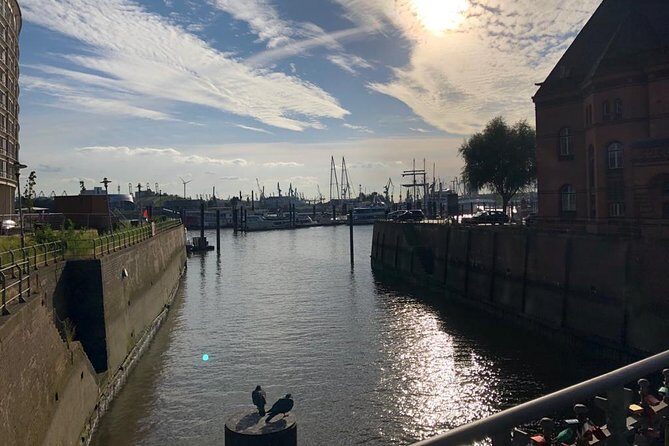
Then the tour moves into a more hands-on slice of maritime Hamburg: Sandtorhafen / Traditionsschiffhafen. Here you’ll learn how the Sandtorhafen connects to the Hamburg Maritim Foundation and the effort to preserve and make accessible historic ships and port infrastructure.
This segment matters because it shows you what “heritage” actually means here. Instead of only reading about the port, you see the kinds of working elements that made shipping possible—pontoon facilities, restored quay structures, and access bridges that open up the waterfront for public experience.
One detail worth noticing: the Sandtorkai, Hamburg’s oldest quay wall, has been restored in a monumental way. That tells you the city is willing to invest in keeping physical reminders of maritime work visible.
Practical note: This part stays mostly outdoors, so it’s a good section even if you’re short on energy. You can focus on the waterline stories and let the buildings do the rest.
Speicherstadt: The UNESCO Warehouse Maze You’ll Want to Walk Slow
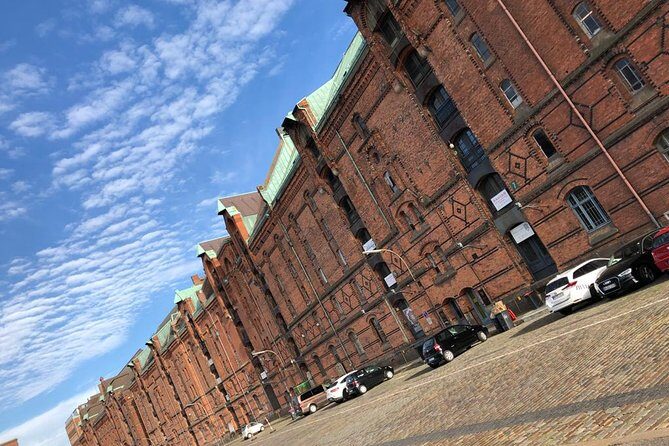
If HafenCity is about planning, Speicherstadt is about preservation. This UNESCO-listed warehouse district is the world’s largest historic warehouse complex, spanning the area between Bäumenall and Oberhafen. And it’s right next to the Kontorhaus district under UNESCO too.
You’ll spend about 45 minutes here, and that’s a smart amount of time. Speicherstadt isn’t just one viewpoint. It’s a network of canals, brick facades, and narrow passages where the atmosphere changes block by block. If you like wandering, this is the kind of place where the guide’s pacing helps you avoid both rushing and getting turned around.
Your guide points out why the area is famous—listed since 1991, UNESCO since July 5, 2015—and how the warehouse architecture shaped daily port life. Even from outside, the scale and uniform design of the warehouses gives you a strong sense of order. Then you start noticing details: the canal edges, the bridges, and how light hits brick and water.
Value tip: Use this time to slow down at least a few times. Don’t try to take one perfect photo at every corner. Speicherstadt rewards foot-level attention more than quick snapshots.
Elbphilharmonie at Kaiserhöft: Seeing the Big Landmark Without Overplanning
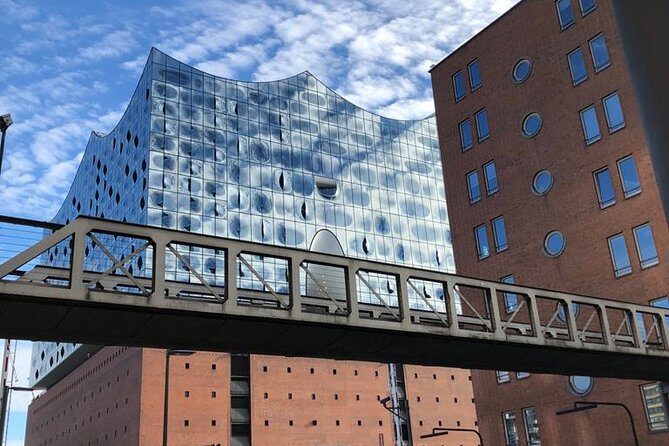
Finally, you get to Elbphilharmonie, the concert hall Hamburg completed in November 2016, known as the Elphi. It’s built at the HafenCity edge on the right bank of the Norderelbe, using the shell of the former Kaispeicher A (built in 1963). Then a modern glass facade sits on top, shaped to resemble sails, water waves, icebergs, or quartz.
This is a stop where your guide’s explanations help you see beyond the famous silhouette. You’ll understand the “why” behind the location at Kaiserhöft—because the area is defined by former industrial port use and neo-Gothic brick architecture in the Speicherstadt context.
One caution: admission to the Elbphilharmonie is not included in the tour. So think of this visit as a guided exterior/area experience unless you choose to add entry on your own later.
Still, even without going in, you’ll get what many people actually want from the Elphi: that moment of realizing how a port warehouse shell became a modern cultural icon, right on the water.
Kehrwieder and Überseebrücke: Flood-Ready City Logic
Two more waypoints make Hamburg feel like a living system rather than a museum. You’ll pass by Kehrwieder, one of the former islands in the Hamburg area (part of the historic warehouse region and now within HafenCity). The guide connects it to the Lower Elbe’s power-cut area and the older fortified city layout.
Then there’s Überseebrücke, a covered pedestrian bridge tied to the port’s flood protection system, connecting street Vorsetzen to a pontoon in Hamburg’s Niederhafen east of the St. Pauli Landungsbrücken area.
I like these stops because they explain why Hamburg’s waterfront looks the way it does. It’s not random. It’s designed for water height, movement, and survival. If you’ve ever wondered why bridges and flood structures feel so integrated here, this is where you get answers.
Optional Add-Ons Near the Route: Miniatur Wunderland and Spice Museum
Several stops on the route are famous but have separate ticket costs, so you’ll see them and learn about them, then decide if you want to add time inside.
- Miniatur Wunderland: the world’s largest model railway system, located in the historic warehouse district. It’s not included, so you’d need to buy entry if model railways are your thing.
- Fleetschlösschen: a historic Speicherstadt building used as a café and pub today.
- Spicy’s Gewuerzmuseum: a private spice museum founded in 1991.
- WASSERSCHLOSS Speicherstadt: a four-story landmark built between 1905 and 1907, often treated as one of the most famous older structures in the complex.
The smart way to handle this is to treat the tour as your “story map.” You’ll see where these places sit in the bigger Hamburg picture. If one appeals to you, plan to return later with more time.
The Guide Makes It Work: Florian’s Style and What to Expect
From the reviews and the tour structure, one theme shows up clearly: the guide experience matters. Florian is named as the guide in feedback, and multiple notes highlight his competence, positive attitude, and strong English. People also appreciated that he’s willing to adapt the walk to needs and keep it interesting without dumping facts.
That approach fits this specific route. HafenCity and Speicherstadt can turn into “look at this building” sightseeing if the commentary is weak. Here, you’re given enough context to make sense of what you’re seeing—especially around port function, architecture, and the logic of water-based infrastructure.
Also, the tour starts promptly, and the meeting point is described as well chosen. That may sound minor, but in a city where one wrong turn can cost you ten minutes, it’s a big deal.
Price and Value: Why $28.92 Can Be a Good Deal
At $28.92 per person (with an average booking window of about 25 days ahead), this tour sits in the “easy yes” category if you want guidance and structure. Two things make it good value:
- You’re paying for the guide time, not a pile of included museum tickets. Many major stops are free for entry (HafenCity segments and Speicherstadt viewing points), and the tour is built around exterior experiences that don’t require you to buy multiple tickets to get the point.
- You’re getting concentrated context in about 2 hours. That’s enough time to connect HafenCity and Speicherstadt themes, plus see the Elbphilharmonie area—without spending half a day on logistics.
The possible drawback is also tied to value: because some attractions are not included, you may end up paying extra if you decide to go in. If you’re trying to keep costs tight, pick one paid add-on max and let the rest stay for a future trip.
Should You Book This HafenCity and Speicherstadt Tour?
Book it if you want a guided walk that makes Hamburg’s architecture and harbor planning make sense. It’s ideal for first-timers who want big icons—Elbphilharmonie, Speicherstadt, HafenCity—without turning the day into ticket math. The small group (15 max) is also a real plus if you like asking questions and hearing details that fit what you’re standing in front of.
Skip it (or consider a different format) if you’re mainly looking for indoor time and museum ticket upgrades. Since several famous sites on the route are not included, you’ll still be outside for much of the experience and may feel like you’re “just passing by” if you hoped for lots of entry-based exploring.
My simple take: if your goal is understanding Hamburg’s shift from working port to world-famous design—and seeing the water logic behind it—this is a smart, affordable way to do it in one evening walk.
FAQ
Where do I meet for the tour?
You meet at Überseequartier, 20457 Hamburg.
What time does the tour start?
The tour starts at 4:00 pm.
How long is the tour?
It runs for about 2 hours.
How big is the group?
The experience is limited to a maximum of 15 travelers.
Is this a mobile-ticket tour?
Yes. The tour uses a mobile ticket.
Are the main attractions included, or do I pay separately?
Some are not included. Miniatur Wunderland, Fleetschlösschen (as a stop), Spicy’s Spice Museum, WASSERSCHLOSS Speicherstadt, and the Elbphilharmonie are listed as admission not included. Other stops are admission free for the outdoor viewing.
What happens if the weather is bad?
This tour requires good weather. If it’s canceled due to poor weather, you’ll be offered a different date or a full refund.
Are service animals allowed?
Yes. Service animals are allowed.