REVIEW · DUSSELDORF
Düsseldorf: E-Scooter City Tour
Book on GetYourGuide →Operated by ScuddyTours Rheinmetropolen by CityFreizeit · Bookable on GetYourGuide
Two wheels and a Rhine breeze in Düsseldorf. This Düsseldorf e-scooter loop turns major landmarks into something you can cover comfortably—sitting or standing—while you glide through old town streets and along the river.
I especially like the easy-to-handle Scuddy setup and how quickly you feel confident. The ride feels safe from the start, with early big-city backdrops like the state parliament area, Rheinknie bridge views, and that first stretch along the Rhine that helps you get your bearings fast.
One thing to consider: this is German-only, and it is intentionally not an art-historical lecture. If you need English facts and heavy museum-style context, you might prefer a different format.
In This Review
- Key highlights worth your time
- Getting Ready at Rheinturm: License, Scooter, Helmet
- First Glide Along the Rhine and Burgplatz Castle Tower
- Old Town and the Leaning Tower Mood: Oberkassel Bridge to St. Lambertus
- Andreas Quartier: Düsseldorf’s Living Room for Art, Life, and Food
- Kö-Bogen II and Hofgarten: Europe’s Largest Green Façade
- Schauspielhaus and Drei-Scheiben-Haus: Spot the 1960s Modern Style
- Schadowstraße Back to the Rhine Promenade at a Relaxed Pace
- Price and Value for a 2-Hour Scuddy Ride
- What Makes the Guide Style Matter
- Who Should Book This Düsseldorf E-Scooter Tour (and Who Should Skip)
- Should You Book This Düsseldorf on a Scuddy?
- FAQ
- Where does the tour start?
- How long is the Düsseldorf e-scooter city tour?
- What language is the tour guide?
- Do I need a driver’s license?
- How big is the group?
- What’s included in the price?
- What main areas will we see?
Key highlights worth your time
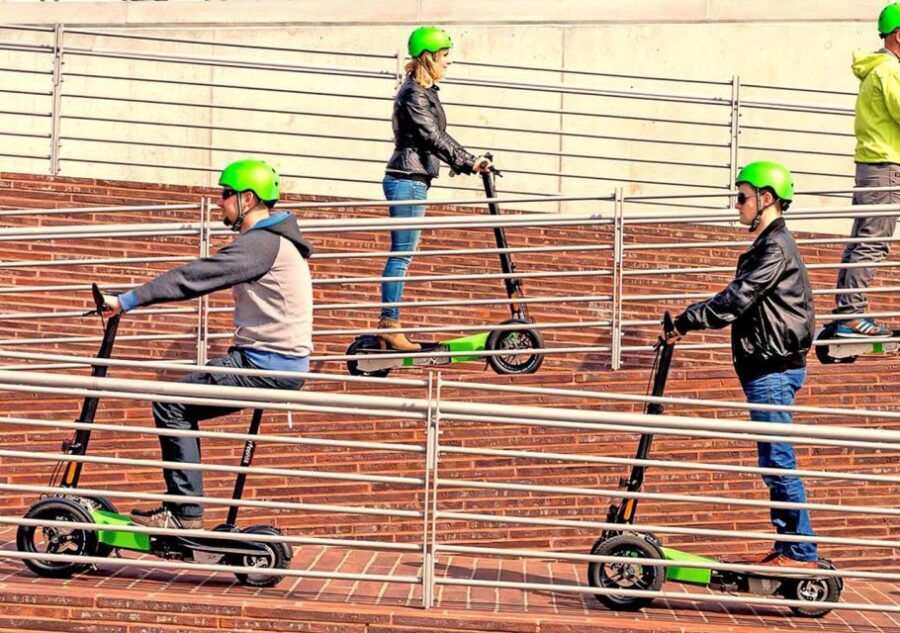
- Small group (2–7 people) keeps the pace relaxed and the stops feel personal
- Scuddy ride included plus a helmet, so you’re not juggling gear or logistics
- Rhine-focused route with easy scenic momentum from start to finish
- Landmarks you can actually see close up like St. Lambertus Church and Kö-Bogen II
- Local humor and local color from the guide, including extra explain-and-chill stops
- Modern architecture spotting at places like the Schauspielhaus and Drei-Scheiben-Haus
Getting Ready at Rheinturm: License, Scooter, Helmet
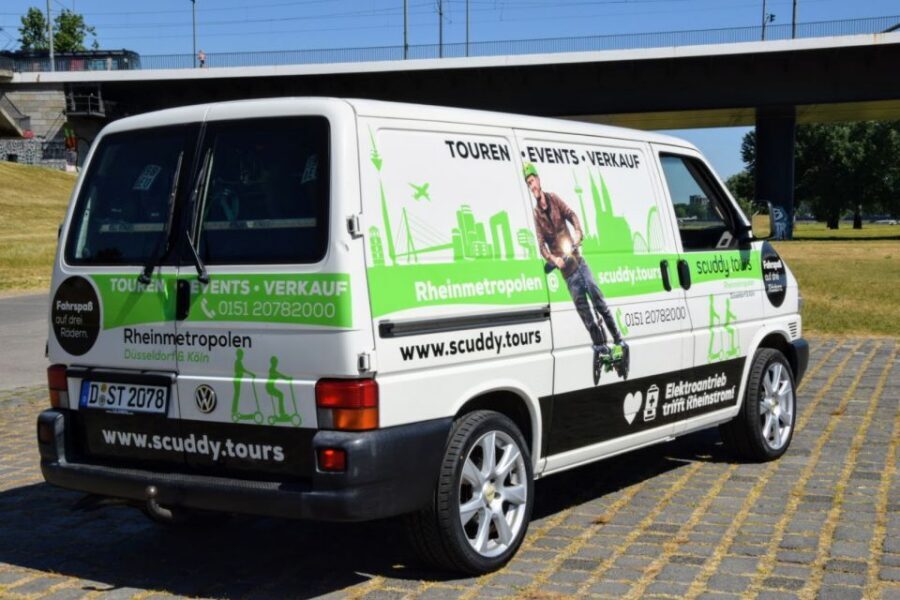
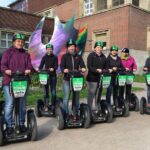
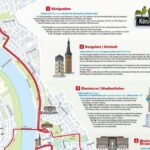
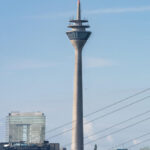
The tour starts right in the city’s river zone. Your guide meets you in the parking lot near the entrance barrier, in front of Rheinturm (the Rhine Tower). It’s a practical setup: you show up, you get your helmet, and you get the scooter instructions before you roll.
You will need a driver’s license. That is the big gatekeeper here. If you do not have one, this tour is not for you, because the Scuddy experience is tied to driving permission rather than walking-tour rules.
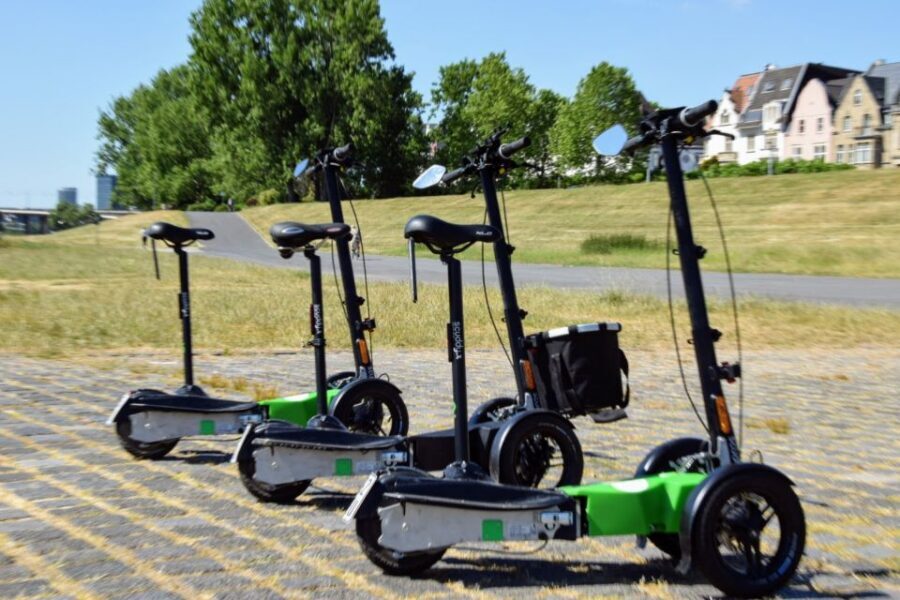
Once you’re on the scooter, the setup is meant to feel beginner-friendly. You can ride in a sitting or standing position, which matters because Düsseldorf’s route includes both scenic stretches and stops for looking. Helmet on, guide talking, and then you’re moving—no long waiting around.
You can also read our reviews of more city tours in Dusseldorf
First Glide Along the Rhine and Burgplatz Castle Tower
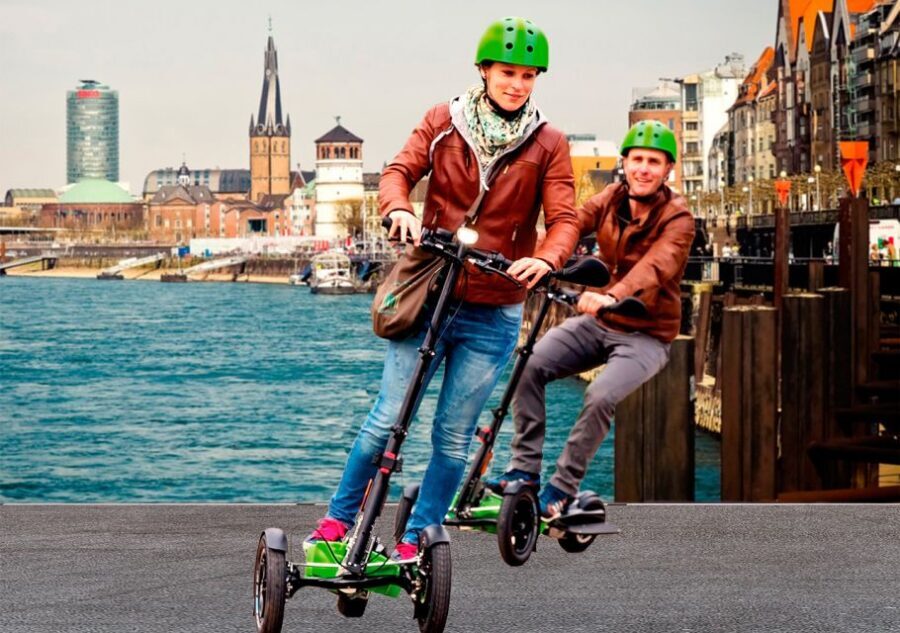
After the initial meeting, the tour gets you out with a ride along the Rhine. This is smart. Before you get into dense city streets, you start with open sightlines and a calm sense of direction, so the rest of the route feels less like navigation and more like sightseeing.
You then cross Burgplatz square and pass the castle tower area. Even if you’re not there for a deep dive into medieval detail, this stop helps you picture where the old core of Düsseldorf sits. The square is also a good place to pause, look around, and re-orient before you continue toward the bridge crossings.
The Rhine-first rhythm also means your first real photos are likely to be the easiest ones to frame—water, skyline, and that “we’re actually here” feeling you get from traveling by scooter.
Old Town and the Leaning Tower Mood: Oberkassel Bridge to St. Lambertus
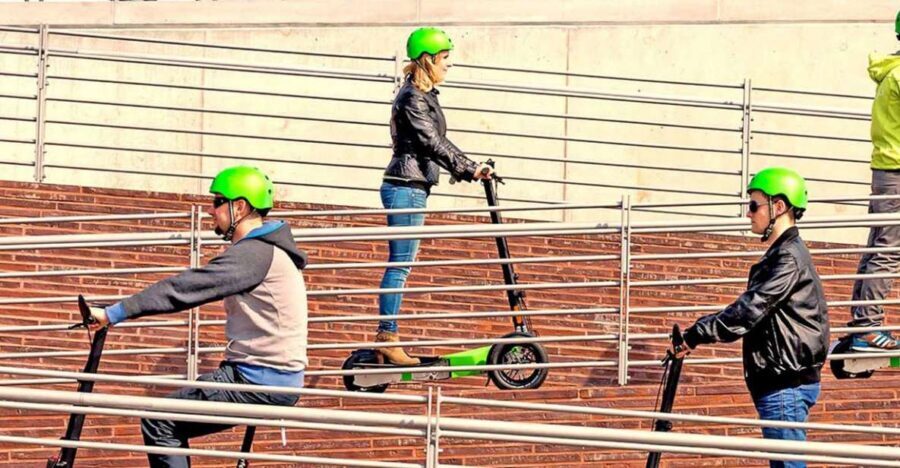
Next you head toward the Oberkassel Bridge and then into the old-town atmosphere around St. Lambertus Church. One of the most memorable details here is that leaning-tower element. It gives the church a sense of character right away, and it is the kind of landmark you can spot clearly while you move through the area.
This part of the tour works well because you’re not stuck in one spot. You get multiple short pauses, then you ride again. That matters in Düsseldorf, because the city is built for strolling but it can also be time-consuming if you’re doing it all on foot.
You’ll also likely appreciate the guide’s pacing. The tour is described as relaxed rather than formal. That means you’re getting context without feeling like you’re in a classroom—more local explanation, less lecture tone.
Andreas Quartier: Düsseldorf’s Living Room for Art, Life, and Food
After the church area, the route shifts into what the guide calls Düsseldorf’s living-room vibe: Andreas Quartier. This is where the city’s creative and everyday life mix. The point of this stop isn’t just the names—it’s the feeling of how Düsseldorf flows between culture and daily routine.
You’ll continue past the K20 art collection area as the route threads toward green spaces and modern sights. Even if you don’t plan to visit a museum, this kind of passing stop helps you understand what kind of city Düsseldorf is. It’s not only about one big attraction; it’s about neighborhoods that blend design, taste, and architecture.
From here, the tour keeps moving steadily. You get to see more than you would on a slow walk, but you still get stops where you can look up, take photos, and listen.
Kö-Bogen II and Hofgarten: Europe’s Largest Green Façade
One of the big scenery moments comes near Kö-Bogen II, a structure known for having Europe’s largest green façade. That detail is exactly why this stop matters. It’s easy to spot the idea of “green design” when you’re standing close, and it’s even easier to remember because you get there by rolling along the city’s main flow.
The route also passes through Hofgarten as you move toward Kö-Bogen II. This helps break the tour into sections: river views, old-town landmarks, then a greener pause. It’s a nice balance if you’re worried an e-scooter tour might feel like nonstop motion.
If you’re a photos person, you’ll likely like how this area lets you capture the scale of the façade while keeping your focus on people-and-place. You can also feel how Düsseldorf’s layout supports this kind of sightseeing: wide routes, clear sightlines, and a mix of architecture and open space.



Schauspielhaus and Drei-Scheiben-Haus: Spot the 1960s Modern Style
From Kö-Bogen II, you’ll take a detour to the Schauspielhaus area. Then the tour includes a look at the Drei-Scheiben-Haus, described as impressive contemporary architecture from the 1960s.
This is a strong section if you like modern design. A lot of cities teach you history through old buildings only; Düsseldorf also makes space for late-20th-century thinking and design language. And riding a scooter keeps you from turning this into a single photo stop. You see it from the right angles as you roll past, then you slow down when it’s time to take it in.
The guide’s tone here tends to be practical and human. Instead of trying to turn the tour into an art-history exam, you’re learning in a way that sticks: what you’re looking at, why it sits there, and what it means for the city’s character.
Schadowstraße Back to the Rhine Promenade at a Relaxed Pace
Near the end, the route returns through Schadowstraße, described as a new pedestrian shopping paradise. This is where the tour slows into a calmer closing rhythm.
The pedestrian area gives you a different kind of Düsseldorf perspective: less monument, more city life. It’s also a smooth transition back toward the river, so the ending doesn’t feel abrupt.
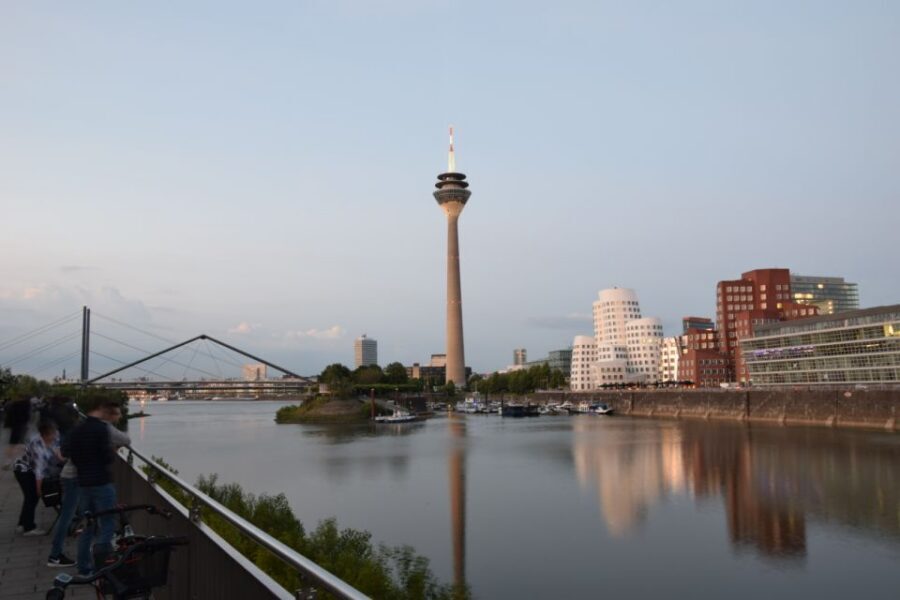
Finally, you reach the Rhine promenade back toward the starting point area. That’s the payoff for doing the route in a loop: you start at the Rhine Tower zone, you spend time with the Rhine and key landmarks, and you come back with the river as your final visual anchor.
If you like your sightseeing to end with something open and breezy (instead of ending in a cramped street), you’ll appreciate this last leg.
Price and Value for a 2-Hour Scuddy Ride
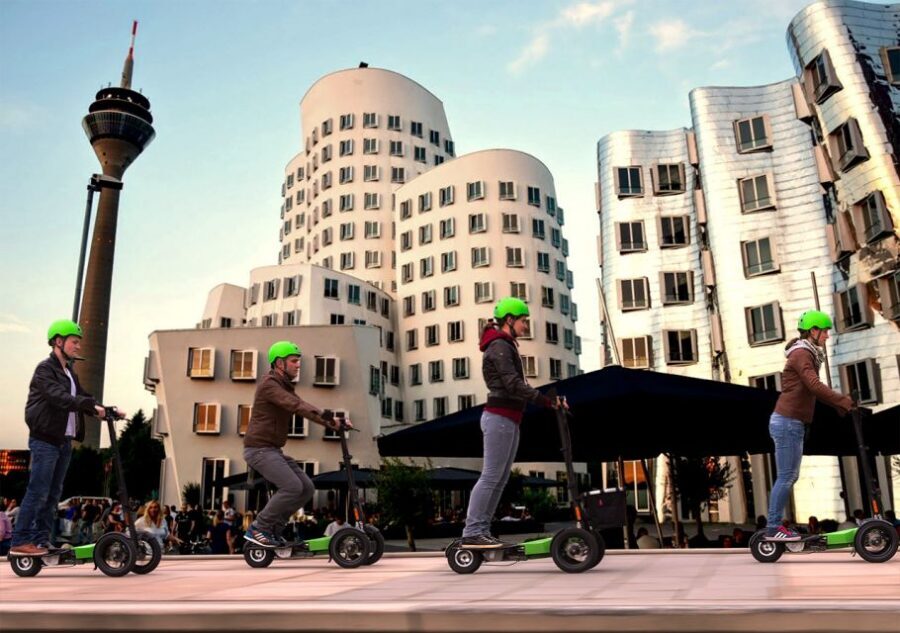
The tour costs $69 per person for 2 hours, and it includes the essential stuff: guide, e-scooter, and helmet. For this kind of experience, value is really about how much sightseeing you get per hour and how much effort you save.
You’re not just paying for motion—you’re paying for:
- access to a guided route with multiple landmark stops
- transportation that gets you across neighborhoods faster than walking
- built-in safety gear (helmet) and scooter support
For a short two-hour window, this is a practical way to cover both the Rhine area and the city core. You also avoid the common problem of DIY scooter days: figuring out a route that works, managing parking, and trying to guess where to stop for the best views.
My advice for value: treat this as a city orientation plus highlights tour. If you expect a full academic, art-focused curriculum, you might feel a mismatch. If you want movement, viewpoints, and local context, the price makes more sense.
What Makes the Guide Style Matter
This tour doesn’t position itself as a strict history class. It’s described as relaxed, led with heart and local color. That style shows up in how the explanations are delivered and how often the guide stops for context.
One name that came up in real experiences is Dieter. The standout pattern with Dieter-style guiding is that there are regular stops where you get building and city explanations, plus humor along the way. That matters because e-scooter tours can otherwise feel like you’re just riding through scenes without time to absorb them.
The humor element is light, not distracting. It helps keep the tour fun without removing the informational value.
That said, there is a caution: if you’re hoping for very detailed, carefully verified city facts at every stop, you may find some information lighter than expected. A relaxed vibe is part of the design.
Who Should Book This Düsseldorf E-Scooter Tour (and Who Should Skip)
This tour is a great fit if you:
- want a 2-hour highlights loop without doing a long walking day
- enjoy seeing architecture up close while still covering ground
- prefer a guide who mixes facts with humor rather than a formal lecture
- are comfortable riding a scooter and you have a driver’s license
You might skip it if you:
- need English (the tour is German only)
- require a deep, art-historical style tour rather than a relaxed one
- don’t have a driver’s license
Also consider how you like to travel. If sitting still on a bus tour bores you, scooters can be a perfect middle ground: more freedom than a guided walk, more structure than going solo.
Should You Book This Düsseldorf on a Scuddy?
If your goal is to get a strong feel for Düsseldorf—Rhine first, old town landmarks, modern architecture, then a return through the shopping streets—this is the kind of tour that delivers quickly. The combination of helmeted scooter riding, a small group, and a route built around the Rhine and key neighborhoods makes it a solid value for a short visit.
Book it if you’re happy with a relaxed, German-led experience and you want your landmarks connected by real ride-time, not just time spent standing still.
Skip or look for alternatives if you need English guidance or you’re specifically hunting for an art-history-heavy program. In that case, you’ll likely be happier with a more academic tour format.
FAQ
Where does the tour start?
The guide meets you in the parking lot near the entrance barrier, in front of Rheinturm (Rhine Tower).
How long is the Düsseldorf e-scooter city tour?
It lasts 2 hours.
What language is the tour guide?
The tour is only offered in German.
Do I need a driver’s license?
Yes. The tour is not suitable for people without a driver’s license.
How big is the group?
The group size ranges from 2 to 7 people.
What’s included in the price?
The guide, an e-scooter, and a helmet are included.
What main areas will we see?
You’ll ride along the Rhine and see highlights including Burgplatz square, St. Lambertus Church, Andreas Quartier, areas near K20, Hofgarten, Kö-Bogen II, the Schauspielhaus, Drei-Scheiben-Haus, and the route back via Schadowstraße to the Rhine promenade.