REVIEW · DRESDEN
Dresden: Sightseeing Walking Tour in English
Book on GetYourGuide →Operated by Dresden Information · Bookable on GetYourGuide
Dresden tells stories in stone. This 1.5-hour, English small-group walk threads together the Frauenkirche and the Baroque showpiece Zwinger Palace so you understand what you’re seeing, not just where to stand for a photo. I like that the guide is local and answers questions in a calm, patient way. I also like the range: medieval pressures, Reformation noise, Baroque swagger, and the events around 1989 all land within one tight route. One possible drawback: the tour is short, so if you want to linger at every building, you’ll feel a gentle time pinch.
The pace is built for moving between major sights, including places with steps and uneven ground. Good shoes matter, especially if you’re visiting in wetter months or at peak crowds when the walkways get busy. Still, the small size keeps it practical.
If you want Dresden in a single afternoon and you like your history spoken plainly, this is a smart pick. It also helps that the guide shares real-world tips for food, drinks, shopping, and night life, not just the headlines.
In This Review
- Key highlights worth waking up for
- Why Dresden’s old town works so well on foot
- Meeting at the Tourist Information (QF Passage, basement) and what that means for your day
- Newmarket Square: the old town’s gravity center
- Frauenkirche and the Church of Our Lady: what rebuilding teaches you
- Semper Opera House: Baroque ambition with a modern audience
- Royal Castle and the procession route: power you can walk through
- Brühl Terrace, the Catholic Cathedral, and Taschenbergpalais: the river’s story in buildings
- Zwinger Palace and the Nyphembad: the detail stop that pays off
- Augustus Bridge and the 1989 thread: ending with meaning, not just scenery
- Insider tips that make your next hours easier
- Price and value: why $15 can make sense here
- Who this walking tour fits best
- Should you book this Dresden old town walking tour?
- FAQ
- How long is the Dresden sightseeing walking tour in English?
- What language is the tour offered in?
- How much does the tour cost?
- Is the tour wheelchair accessible?
- Where do I meet the guide?
- What major sights are included?
- Is there free cancellation?
- Are there any child ticket limits?
- Can I reserve and pay later?
Key highlights worth waking up for
- Licensed local guide who keeps explanations clear and question-friendly
- Frauenkirche + Semper Opera + Royal Castle in one efficient old-town loop
- Zwinger Palace and the Nyphembad stop, with stories you won’t guess on your own
- From Middle Ages to 1989: one storyline across centuries
- Focused Baroque architecture plus lived-in details along Brühl Terrace and Augustus Bridge
- Insider pointers for restaurants, bars, events, and shopping habits in Dresden
Why Dresden’s old town works so well on foot
Dresden can feel like a city of big stages: cathedrals that dominate skylines, palaces that seem made for ceremonies, and riverfront views that pull you forward. This tour is designed to let you see those stages in order, without spending your whole day in transit.
In about 90 minutes, you get a compact timeline. You start in the old-town center, then move through major landmarks tied to faith and rule, and you end with a look at how the city’s identity was reshaped in the 20th century. The guide’s job is to connect the dots so you understand why each building matters, including the darker parts of Dresden’s story and the events around 1989, when the peaceful revolution changed the course of history.
That’s the real value here: not the list of stops, but the way the guide turns them into a coherent walk.
You can also read our reviews of more walking tours in Dresden
Meeting at the Tourist Information (QF Passage, basement) and what that means for your day
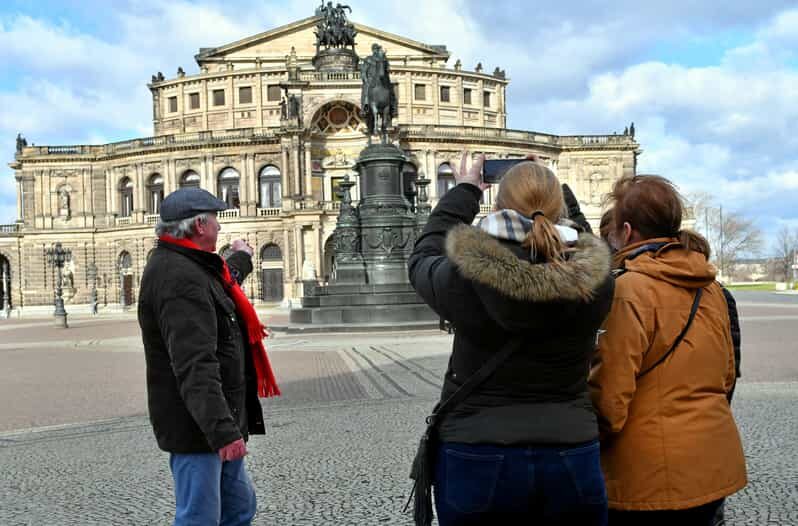
You meet your guide at the seating area of the Tourist Information in the QF Passage basement. That starting point is handy because it keeps the tour centered in the old-town area, so you don’t lose time hunting for the first landmark.
This is also a small-group experience, which you’ll feel immediately. With fewer people, it’s easier to ask where to look, what details matter on the façade, or how one era connects to the next. The reviews highlight that guides such as Franziska and Franceska get praised for being knowledgeable, polite, patient, and open to questions, which is exactly what you want on a short walking tour.
If you’re the type who likes to take a photo, then step aside and get the meaning right after, this setup fits.
Newmarket Square: the old town’s gravity center
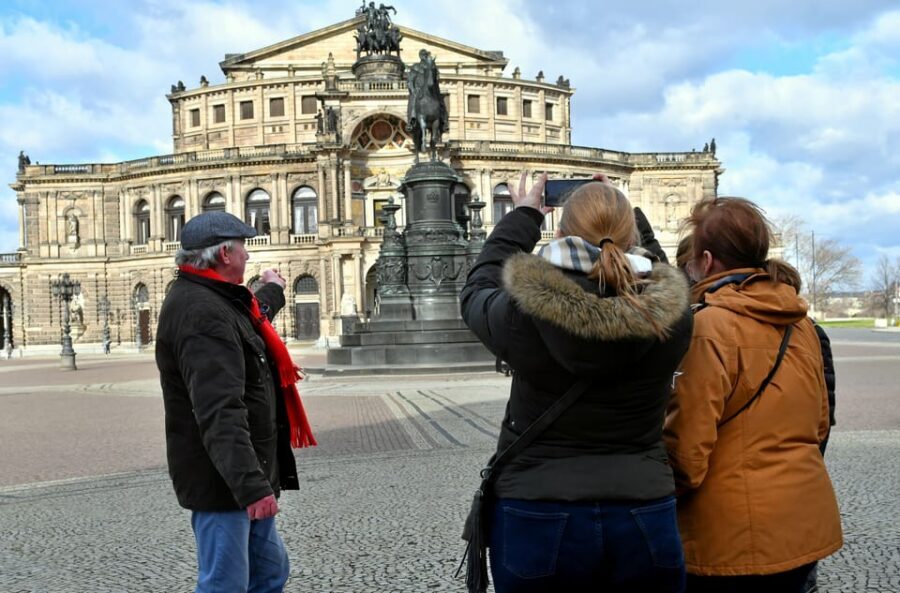
You’ll spend time in Newmarket Square, one of the spaces that helps Dresden feel like a living city rather than a museum set. Squares like this are where “history” stops being abstract. They’re where people gathered, traded, argued, prayed, and protested.
From here, the tour naturally feeds into the surrounding power and faith landmarks. The guide’s storytelling approach matters: you’re not just hearing dates. You’re hearing how the city’s direction changed over centuries, including the hard days of the Middle Ages and the shifts connected with the Reformation.
Even if you’ve seen plenty of European squares before, Dresden’s blend of Baroque grandeur with scars from later destruction makes this stop feel purposeful. It’s a good mental warm-up before the bigger showpieces.
Frauenkirche and the Church of Our Lady: what rebuilding teaches you
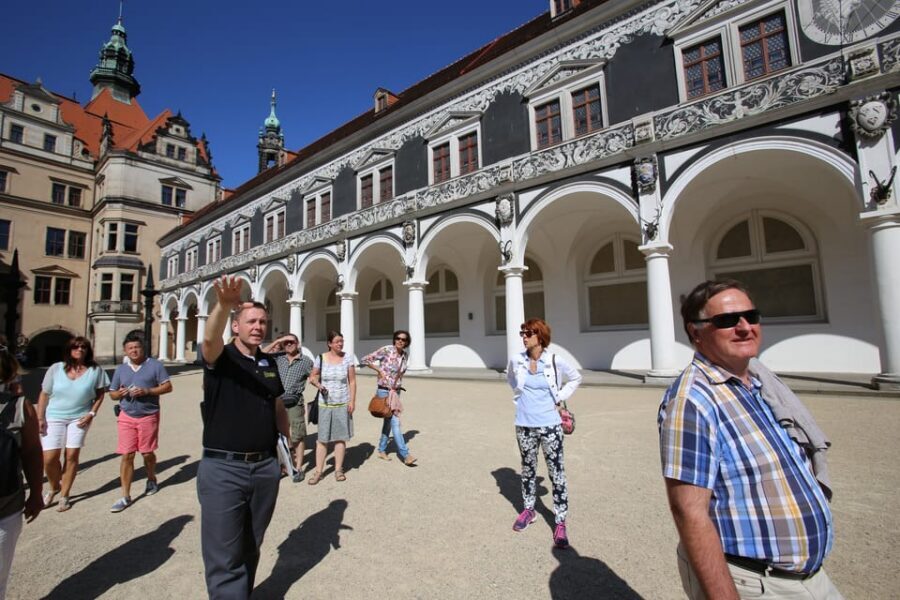
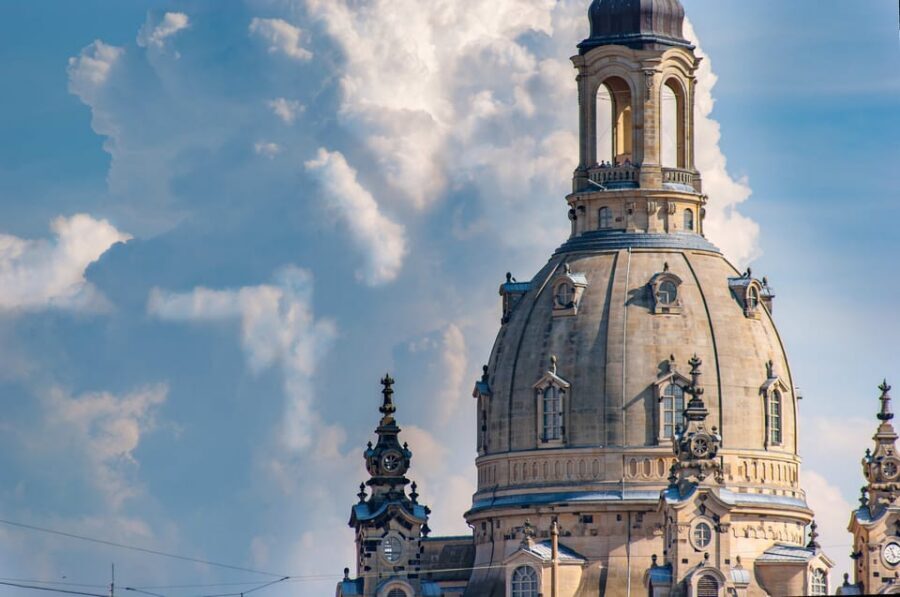
The Frauenkirche, also called the Church of Our Lady, is the kind of building you instinctively photograph. But on this tour, it’s more than a pretty silhouette. It’s a marker for faith, civic identity, and the way Dresden carried its losses forward.
You’ll also hear untold stories about the destruction of Dresden. That’s crucial, because without that context, a church can turn into just another landmark. With it, you start to see how the city’s survival and recovery became part of its identity.
A good sign: when your guide brings a local lens—how the city changed and what it felt like—you tend to remember details. In the feedback, the local-guide angle is a standout, with special praise for explanations about Dresden after World War II. That kind of context turns the Frauenkirche stop from “I saw it” into “I understand why it hits.”
Semper Opera House: Baroque ambition with a modern audience
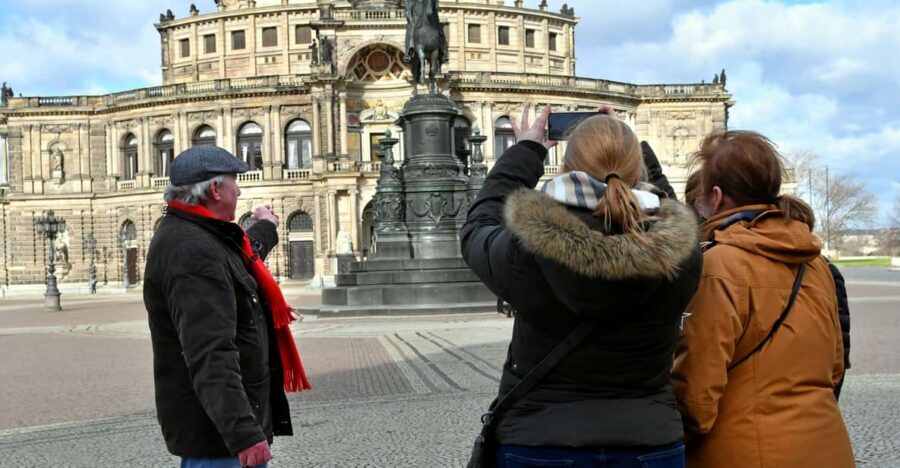
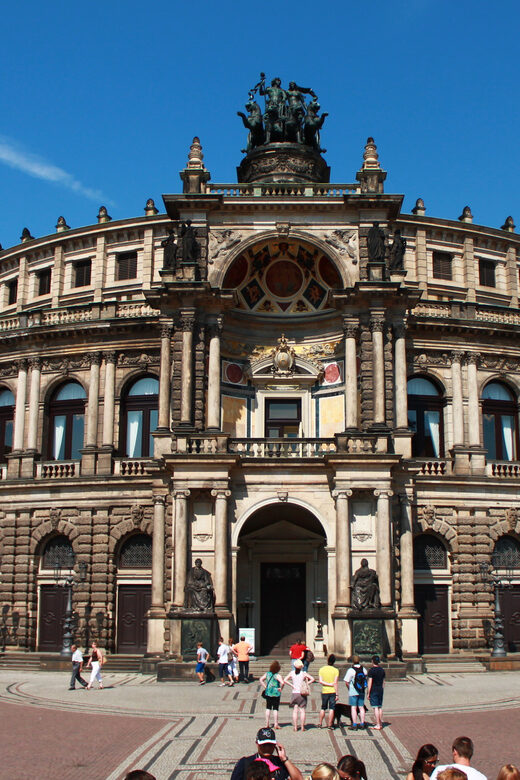
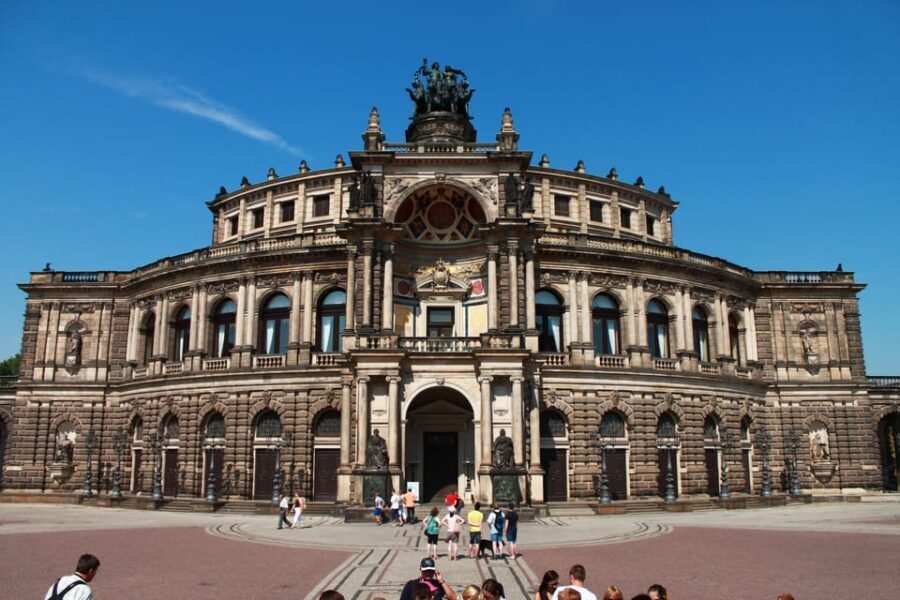
From the religious and civic core, the route moves into Dresden’s performance and power world with the Semper Opera House. This is where the city’s Baroque side shows its confidence. You’re looking at a place built to impress, to host, and to project authority—yet it still connects to everyday life because an opera house is meant for real people and real nights out.
The guide helps you notice why the building belongs in the larger storyline. Baroque architecture isn’t just decoration. It’s messaging: who had influence, what tastes were in fashion, and how rulers wanted to be remembered.
If you’re curious about architecture but don’t want a textbook lecture, this is a good “explainer” stop. You’ll get enough context to recognize the style cues before you move on.





Royal Castle and the procession route: power you can walk through
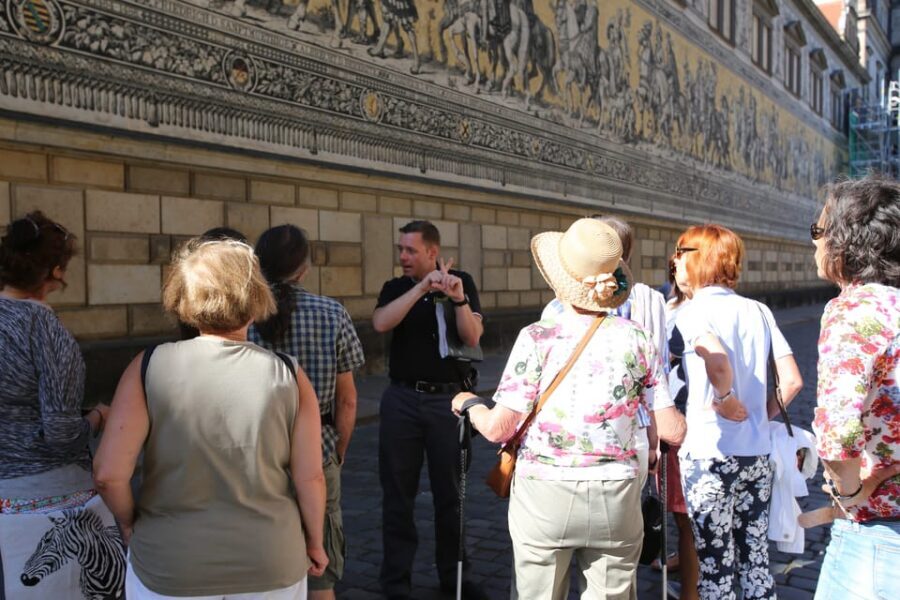
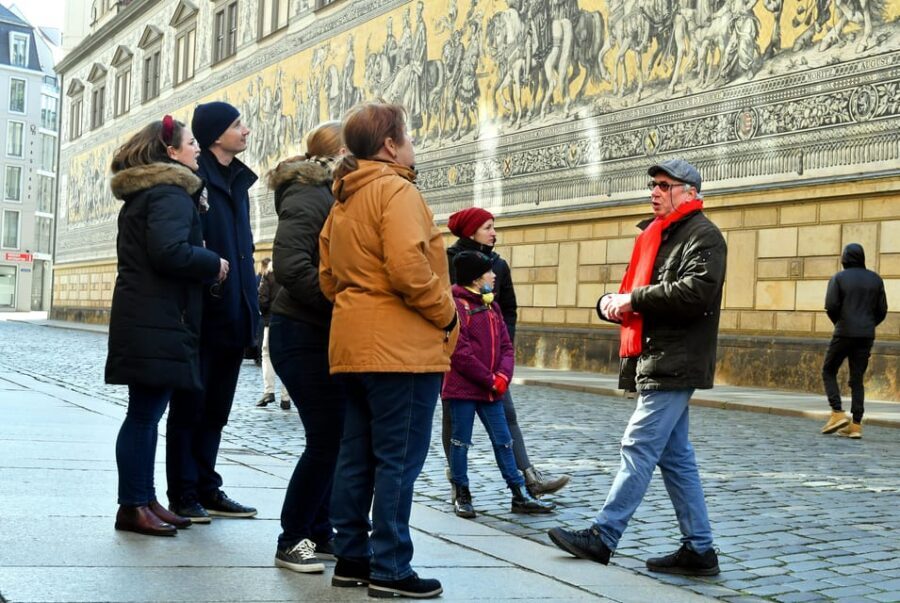
You’ll visit the Royal Castle (Royal Palace area) and see sites connected to grand ceremonial life, including the Procession of Princes and the Palace Stables. Even without getting super technical, you can feel the intention in the layout. This is a palace complex meant to stage status, with routes and spaces built for impressive movement and display.
The guide’s framing matters here. If you understand the relationship between rulers and architecture—how buildings were designed to communicate rule—you’ll enjoy these stops much more. Otherwise, you might just register “big castle, pretty stone” and move on.
Also, this is one of those segments where the walking order helps. You go from big civic/religious symbols to royal power, which makes the city’s shifts in meaning easier to track across centuries.
Brühl Terrace, the Catholic Cathedral, and Taschenbergpalais: the river’s story in buildings
Brühl Terrace is a standout kind of place: long views, impressive façades, and that river-edge sense that Dresden is anchored to its water. Along the way, you also pass the Catholic Cathedral and the Taschenbergpalais.
Why it works on a walking tour is simple. You don’t just look at each building in isolation. You see how the architecture forms a continuous atmosphere, with styles and messages layered side by side.
This section is also a good reminder that “history” isn’t one monolithic period. You’re seeing the city as a collage of faith, governance, and taste—shaped by eras that overlap rather than replace cleanly.
If you like to understand how cities actually feel, this is where Dresden becomes less like a checklist and more like a place.
Zwinger Palace and the Nyphembad: the detail stop that pays off
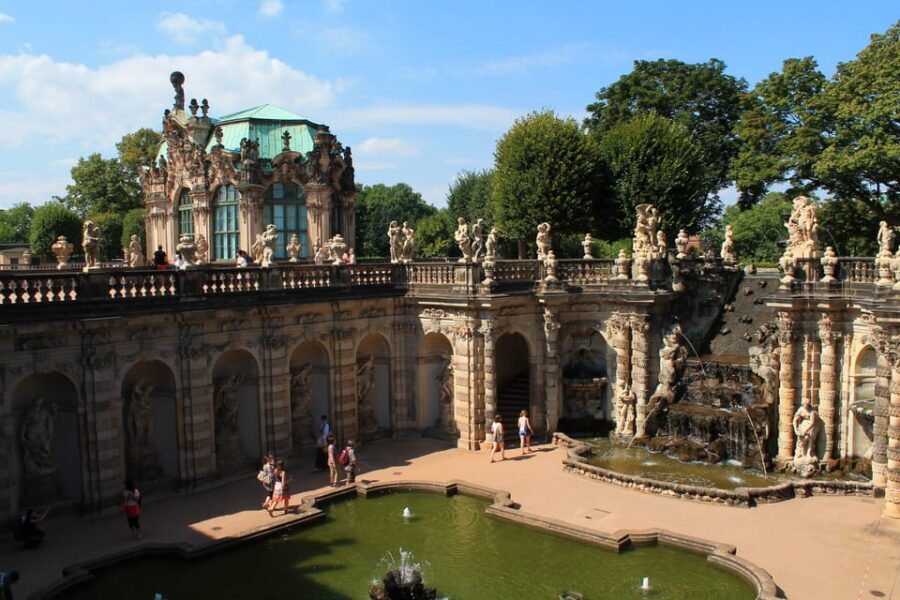
Zwinger Palace is a must, but the best part on this tour is the Nyphembad inside the complex. This is the kind of detail you might miss if you only skim the big exteriors. Hearing the explanation makes it more memorable.
Courtyards and interior features in places like Zwinger often hold the personality of the era: playfulness, precision, and the desire to create controlled beauty. When the guide points out what you’re looking at and how it fits Dresden’s timeline, you’ll understand why this stop matters beyond being famous.
This is also a good break in the rhythm of nonstop landmark staring. It’s a chance to focus on a specific feature and get a story that connects the visual to the human idea behind it.
Augustus Bridge and the 1989 thread: ending with meaning, not just scenery
The tour’s final major highlight is the majestic Augustus Bridge. Bridges are more than views. They’re connections—between old and new parts of the city, between sides of the Elbe, and between eras in how people think about Dresden.
This is also where the tour’s historical storyline tightens around more recent events. You’ll revisit what happened in 1989: the peaceful revolution, and what inspired the people who helped change history. Even if you already know the basics, hearing it placed alongside the city’s physical layout makes it feel more real.
The result is a walking tour that ends with context. You finish with the sense that Dresden isn’t only a display of architecture. It’s a city shaped by choices—some tragic, some hopeful.
Insider tips that make your next hours easier
One of the big practical perks is that you get local tips for restaurants, bars, shopping, and events. You’re not left with a stack of random suggestions. The guide is sharing what tends to work in Dresden day to day.
Use this right after the tour. For example:
- If you want a relaxed meal near your walking route, ask the guide what’s best for that mood.
- If you’re thinking about an evening out, ask where locals go that matches your pace.
- If you want shopping, ask what to look for in Dresden specifically, not just generic souvenirs.
Because the tour is short and focused, those tips can save you time later. You avoid the common trap of spending your evening deciding where to go, when you could have been enjoying the city.
Price and value: why $15 can make sense here
At about $15 per person for 1.5 hours, the value comes from concentration. You’re paying for:
- a local licensed guide,
- a tight old-town route with major landmarks,
- and guided context that turns buildings into a timeline.
If you tried to do this route yourself with only a map, you’d still see plenty. But you’d miss the connective tissue: the destruction stories, the way Middle Ages and Reformation themes show up in what you see, and the 1989 thread that makes the ending feel purposeful.
Also, small-group format changes the math. You’re not paying extra just for access; you’re paying for a conversation. And the feedback emphasizes how easy it is to ask questions, which is exactly what you want at this price point.
Who this walking tour fits best
This tour works especially well if you:
- want a curated Dresden overview in a short time,
- like history explained in plain language rather than a lecture,
- care about how cities change after war and political shifts,
- and enjoy architecture but want the meaning attached.
It’s also a solid choice for couples or solo travelers who don’t want to plan a self-guided route down to each turn. And the wheelchair accessible detail matters for planning, since you can ask staff how they handle the route on the day.
If you’re the type who needs hours inside each landmark (with long museum-style stays), you might find the time limit frustrating. This is best for seeing, learning, and moving on to the rest of your day with smarter choices.
Should you book this Dresden old town walking tour?
I think it’s a good booking for most first-timers or anyone with a limited afternoon. You get major Dresden landmarks—Frauenkirche, Semper Opera House, Zwinger Palace with the Nyphembad, Royal Castle, Brühl Terrace, Taschenbergpalais, and Augustus Bridge—plus a guide who connects them to a clear timeline from medieval times through 1989.
Book it if you want context fast and you value real local tips you can use right away. Skip it only if you already have a strong interest in spending lots of quiet time inside each building, because this experience is built for efficient walking and storytelling rather than long stops.
One practical nudge: wear comfortable shoes and plan to keep your expectations aligned with a 1.5-hour loop. Do that, and you’ll leave with a much better sense of what Dresden is really about.
FAQ
How long is the Dresden sightseeing walking tour in English?
It lasts about 1.5 hours.
What language is the tour offered in?
The tour guide speaks English.
How much does the tour cost?
The price is listed as $15 per person.
Is the tour wheelchair accessible?
Yes, it’s stated as wheelchair accessible.
Where do I meet the guide?
Meet at the seating area of the Tourist Information (QF Passage, basement).
What major sights are included?
The tour includes stops such as Frauenkirche, Semper Opera, Zwinger Palace (including the Nyphembad), and the Royal Castle, along with other old-town highlights like Newmarket Square and Augustus Bridge.
Is there free cancellation?
Yes. You can cancel up to 24 hours in advance for a full refund.
Are there any child ticket limits?
Yes. A maximum of 4 children tickets per adult can be booked.
Can I reserve and pay later?
Yes. The offer is reserve now and pay later, so you can book without paying today.