REVIEW · BERLIN
Dark Berlin Criminal Tour
Book on Viator →Operated by Freizeit-und Reiseclub Berlin · Bookable on Viator
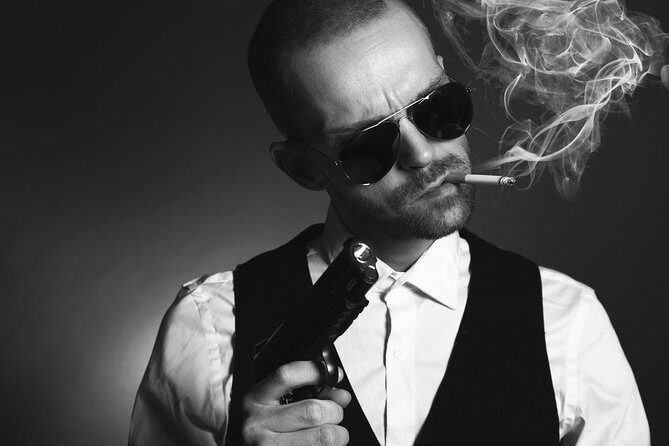
Berlin gets under your skin fast. This guided walk follows the city’s criminal trail from the late 1800s to today, using original locations and real street corners. I like how the stories mix the grim stuff with oddball moments that can even make you smile, and I also like the way the guide connects crime to everyday Berlin life, not just famous dates and names.
You’ll hear about the money side of organized crime too—protection extortion, prostitution, and receiving stolen goods—and how Berlin’s criminal police gained world fame. One thing to consider: the tour focuses on violence, death, betrayal, greed, and passion, so if darker topics hit hard, you may want to pace yourself.
In This Review
- Key Highlights to Look For
- Berlin’s Crime Stories Make Sense When You Walk Them
- Price and What You Actually Pay for at $18.52
- Meeting at Rosa-Luxemburg-Platz and Ending at Rotes Rathaus
- Volksbühne Berlin: A 1931 Crime With Big Political Gravity
- Scheunenviertel in the 1920s: When Everyday Life Turned Transactional
- Alexanderplatz: Why Berliners Call It Alex
- Alexa (The Shopping Center): The Past Hidden in a Modern Address
- Littenstraße and the District Court: A 1920s Defense Attorney Story
- Rotes Rathaus: The First Banking Scandal and the Mayor’s Role
- How the Guide Connects Organized Crime, Police Fame, and Modern Berlin
- What I Think About the Storytelling Style (And Who It Suits)
- Final Decision: Should You Book This Dark Berlin Criminal Tour?
- FAQ
- How long is the Dark Berlin Criminal Tour?
- What does the tour cost?
- Where does the tour start and end?
- What time does it start?
- Do I need to print tickets?
- How big are the groups?
- Is it dependent on weather?
- Is it near public transportation?
- Can I cancel and get my money back?
- Do most people find it manageable?
Key Highlights to Look For
- 2 hours, walking-focused route that keeps the momentum without dragging.
- Original locations across central Berlin, so the stories land where they happened.
- A mix of crime and comedy, including bizarre details that break the heaviness.
- Organized crime economics explained in plain terms (protection money, sex work, stolen goods).
- Police and scandal themes that connect streets to institutions like courts and city hall.
- Small group size with a maximum of 25 people, which helps the guide keep it interactive.
Berlin’s Crime Stories Make Sense When You Walk Them
Berlin has always been a place where power, money, and secrecy collide. What makes this tour work is that you don’t just hear about crime—you move through the exact spaces where it played out. In about two hours, you’ll go from late-1800s criminal patterns all the way forward, with the guide steering you through the way the city’s social cracks became criminal opportunity.
I also like the tour’s tone: it’s not one-note misery. The criminal past here includes cruelty and brutal violence, yes, but you’ll also get strange, human details—bits that feel almost surreal. That balance matters because it keeps the tour from turning into a lecture, and it helps you remember what you heard once you’re back on your own.
You can also read our reviews of more tours and experiences in Berlin.



Price and What You Actually Pay for at $18.52
At $18.52 per person, this is priced like an affordable, story-led walking experience rather than a museum ticket. And in practice, that means you’re paying for three main things: guided interpretation, location-based storytelling, and a route that’s short enough to fit into a normal day.
A couple of practical value points:
- It runs about 2 hours, so you’re not sinking half a day into transit plus sightseeing.
- The stops are essentially built around city spaces and key buildings, and the plan indicates no admission costs at the listed stops.
- You also get a mobile ticket, so you’re not hunting for printouts.
If you’re the type who books earlier, note that it’s commonly booked about 44 days in advance on average. That suggests it’s not always empty, and picking your date sooner helps.
Meeting at Rosa-Luxemburg-Platz and Ending at Rotes Rathaus
You start at Rosa-Luxemburg-Platz 1/u, 10178 Berlin, with the start time set for 2:00 pm. You’ll finish at Rotes Rathaus, at the Red City Hall entrance with direct access to the underground.
This matters because the route is easy to plug into a Berlin day. You don’t have to worry about getting stuck across town at the end, and you can likely connect quickly to other plans using the nearby transit. It’s also listed as near public transportation, which is a big deal in a city where weather and walking time can change your pace fast.
One more small planning note: this experience needs good weather. If rain or bad conditions shut it down, you’ll be offered a different date or a full refund. So check the forecast the day before and don’t plan it as your one “must happen” event if the sky looks unstable.
Volksbühne Berlin: A 1931 Crime With Big Political Gravity
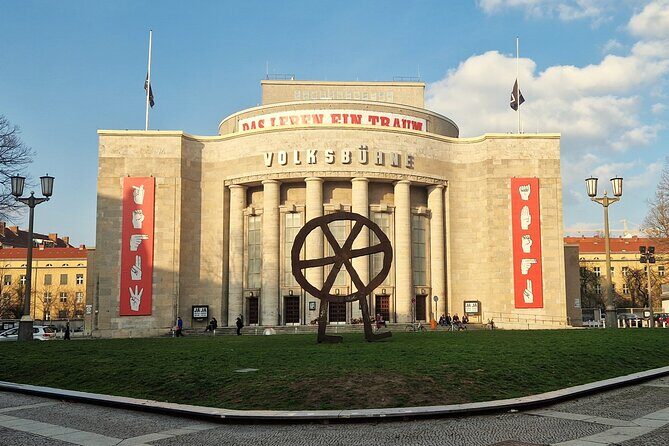
Your first major stop is Volksbühne Berlin. The tour highlights a specific event on August 9, 1931, when a future Minister for State Security of the GDR and a companion shot two police officers.
Why this stop is powerful on foot: it’s a reminder that criminal history isn’t only about gangs and street-level schemes. It also connects to shifting political power and how institutions responded. Even if you only know Berlin through art, nightlife, and post–Wall reunification stories, this kind of opening sets the frame: crime here isn’t separate from the state—it’s tangled in it.
The listed time is short at the stop, so don’t expect a slow-moving chat. Go in ready to listen, then let the guide connect the dots quickly.
Scheunenviertel in the 1920s: When Everyday Life Turned Transactional
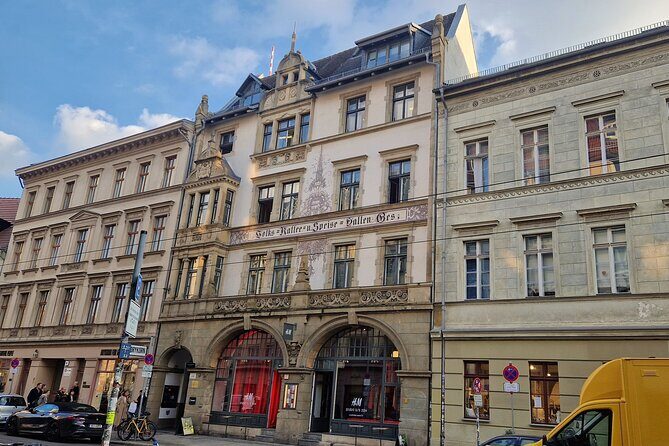
Next comes the Scheunenviertel, described as a 1920s neighborhood full of workers heading home after shifts—along with office managers in worn clothes, street life, and criminal characters mixed into the same urban reality.
The tour paints the area as a place where class, exhaustion, and opportunity overlapped. That’s not just atmosphere. The point is to show how criminal systems could flourish when people are under pressure and money matters at street level. You’ll also hear about prostitution and the trade in stolen goods as key income streams for organized crime. This stop helps make those themes feel concrete instead of abstract.
One consideration: because the tone is centered on violence and exploitation themes, you may want to emotionally brace for it. The tour doesn’t shy away from the darker side, and it doesn’t treat these topics like trivia.



Alexanderplatz: Why Berliners Call It Alex
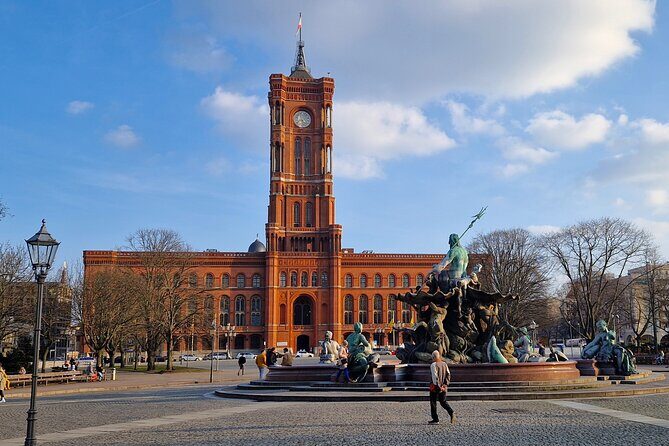
Then you shift to Alexanderplatz, affectionately known by Berliners as Alex. Here the guide focuses on two ideas: how the square got its name, and how a gang of young people managed to terrorize the whole city during the war years.
This stop is useful for two reasons. First, Alexanderplatz is one of those places you’ll likely pass anyway, so it’s a chance to learn something meaningful without adding travel time. Second, the tour uses the square to explain how fear and disorder can spread beyond the people directly involved—how public spaces become stages when criminals know they can multiply attention and panic.
It’s a short stop, so treat it like a focused briefing, not a long sightseeing break.
Alexa (The Shopping Center): The Past Hidden in a Modern Address

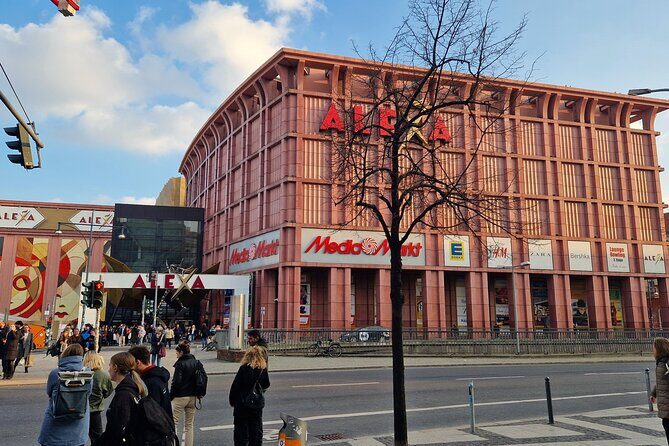
At Alexa, the tour does something I really like: it uses a modern shopping stop to point out that the pre-war building (and its story) still matters. The tour promises that few people know what building stood there before and why it led to world fame and high esteem.
This is the kind of storytelling that changes how you look at cities. You’ll see how history can sit right behind a storefront, waiting for someone to connect it. If you’re the kind of traveler who likes to understand what you’re walking past—not just what’s pictured in guidebooks—this stop will land.
A practical tip: shopping centers can be loud and crowded. Go with the idea that the guide will give you the essentials fast, and then you’ll move on.
Littenstraße and the District Court: A 1920s Defense Attorney Story
The tour moves to Littenstraße, where the district court of Berlin Mitte sits today. Here you’ll hear about one of the most famous defense attorneys of the 1920s in Berlin, and a case or influence tied to someone named Lola—the tour notes that the attorney was totally impressed by Lola, and you’ll learn the meaning of that connection on the walk.
Why this stop matters: it keeps the focus from being only about perpetrators. Courts and defense attorneys are part of the criminal system too. They show how the legal world responded, how arguments were made, and how reputation could shape outcomes.
You also get a natural contrast: street crime themes earlier, legal institutions now. That makes the tour feel more complete instead of one-dimensional.
Rotes Rathaus: The First Banking Scandal and the Mayor’s Role
The ending location is Rotes Rathaus, and this is one of the biggest “institution” stops on the route. The tour points to the first banking scandal in Berlin’s history in the 1920s, including the background behind a scandal where the mayor was involved.
This stop works because it ties the street-level money themes to the higher-level financial world. Earlier in the tour you hear about extortion, prostitution, and stolen goods as criminal income sources. Banking scandal is the upgrade in scale. You’re not just seeing crime as survival—you’re seeing crime as strategy and influence inside systems that are supposed to protect stability.
Ending here also makes sense logistically. Since the finish is at a major city landmark with underground access, you can wrap up and keep your day moving without extra planning.
How the Guide Connects Organized Crime, Police Fame, and Modern Berlin
Across the route, the tour aims to explain a simple idea: organized crime gained the upper hand in Berlin through money, networks, and control of the messy edges of daily life. The guide specifically highlights extortion of protection money, prostitution, and receiving stolen goods as major income sources.
Then the tour adds a second layer: how the Berlin criminal police achieved world fame, and how that fame ties back to surprising headquarters locations you’ll hear about during the walk. Even without turning this into an official history lesson, the tour uses these institutional moments to show how criminal investigations evolved—and how they were shaped by the cases unfolding around them.
I find that contrast keeps you mentally engaged. You’re not only asking who did what. You’re also asking how Berlin tried to respond, and how different systems interacted.
What I Think About the Storytelling Style (And Who It Suits)
The best feedback from people who rate this highly is simple: it’s spanning and interesting, it includes lots of details, and the guide links stories well to the actual places you’re standing in. One comment even notes it’s interesting for real Berliners too, which is a great sign. You want local insight, not generic “Berlin is old” framing.
You might especially enjoy this tour if:
- You like crime stories that are grounded in real locations.
- You prefer short, moving tours over sitting in one place.
- You want a sharper view of Berlin beyond the usual landmarks.
- You’re okay with themes like violence and betrayal.
You may want to skip it or reconsider the timing if dark topics are hard for you, or if you don’t handle walking while thinking about serious subject matter.
Final Decision: Should You Book This Dark Berlin Criminal Tour?
Book it if you want a compact, story-driven walk that uses Berlin streets to explain how criminal systems worked—socially, financially, and institutionally. For $18.52, the value is strong because you get a guided route across central landmarks in about two hours, with a format that’s easy to fit into your day and a mobile ticket that keeps things low-friction.
Consider skipping or adjusting your expectations if you’re sensitive to violent crime, exploitation themes, or if you prefer only “lighter” history. Also keep weather in mind, since this one depends on good conditions.
If you like history that feels lived-in, not dusty, this tour is a very practical way to see Berlin with sharper eyes.
FAQ
How long is the Dark Berlin Criminal Tour?
It runs for about 2 hours.
What does the tour cost?
The price is $18.52 per person.
Where does the tour start and end?
It starts at Rosa-Luxemburg-Platz 1/u, 10178 Berlin and ends at Rotes Rathaus (Red City Hall entrance).
What time does it start?
The start time listed is 2:00 pm.
Do I need to print tickets?
No. It uses a mobile ticket.
How big are the groups?
The tour has a maximum of 25 travelers.
Is it dependent on weather?
Yes. It requires good weather. If it’s canceled due to poor weather, you’ll be offered a different date or a full refund.
Is it near public transportation?
Yes. The meeting point is listed as near public transportation, and the end location has direct underground access.
Can I cancel and get my money back?
This experience is non-refundable and can’t be changed for any reason. If it’s canceled due to poor weather or because the minimum number of travelers isn’t met, you’ll be offered an alternative date/experience or a full refund.
Do most people find it manageable?
It’s noted that most travelers can participate. It’s a walking tour, so basic comfort for street walking helps.