REVIEW · BERLIN
Berlin sightseeing boat tour on the Spree
Book on Viator →Operated by Reederei BWSG · Bookable on Viator
A calm hour on the Spree beats walking. This cruise gives you waterside views of central Berlin with an easy, seated pace, plus German and English audio that guides you past major sights. I love the relaxed feel of floating through the city instead of clocking pavement all morning, and I also love the photo angles you only get from the water—think Museum Island and the Reichstag dome looking like they’ve been pulled straight out of a postcard. One drawback to keep in mind: the recorded narration can be hard to catch at the right moment if the volume is low or the English track lands a little late after the German.
For around $26.36 for about an hour, the value is strong if you want an orientation pass through Berlin’s core without breaking your legs. You’ll have a bar on board with drinks for purchase, and there’s a toilet on the boat. Still, a couple of real-world comfort points matter: sound quality and timing vary with crowd noise, and on some departures the onboard bathroom may not be operational.
This is a smart first-day pick. It helps you place landmarks along the Spree so your later walking routes make sense. Booking tends to happen quickly (about a week in advance on average), so I’d lock in a convenient departure time early—especially if you’re chasing good light for photos.
In This Review
- Key highlights and what to expect
- Boarding at Alte Börse: where the cruise starts and how to choose your seat
- Onboard comfort: bar service, covered seating, and the audio system
- Lustgarten and Berlin Cathedral: Neo-Baroque grandeur right at the waterfront
- The Humboldt Forum in Berlin Palace: culture in the shell of a royal building
- Mühlendammschleuse and Fischerinsel: a quick lesson on how Berlin began
- Nikolaiviertel: Berlin’s oldest settlement, rebuilt after wartime destruction
- The Berlin Television Tower: 368 meters of certainty
- Museum Island and the James Simon Gallery: five museums, one UNESCO core
- Reichstag and the glass dome: parliament architecture from river level
- Berlin Hauptbahnhof: modern rail scale in the middle of the city
- Federal Chancellery and HKW: government meets contemporary art on the Spree
- Price and value: is $26.36 for one hour worth it?
- Should you book this Spree boat tour?
- FAQ
- Where does the tour meet?
- How long is the boat trip?
- What languages are available for the commentary?
- Is there food or snacks included?
- Is there a toilet on board?
- Are service animals allowed?
- Is free cancellation available?
Key highlights and what to expect
- Seated sightseeing without the slog: You get city views with minimal effort, ideal if you want a break.
- German/English audio via GPS timing: The system triggers explanations as you pass sights, but timing depends on conditions.
- Photo-friendly river perspective: Museum Island, the Cathedral, and the Reichstag area look different from the water.
- Central Berlin in one hour: The route strings together major landmarks along the Spree.
- Bar service onboard: Drinks for purchase keep the experience comfortable, especially on cool or sunny days.
- Crowd and sound can affect learning: If the boat is full, you may miss parts of the narration.
Boarding at Alte Börse: where the cruise starts and how to choose your seat
You start at Anlegestelle Alte Börse / BWSG Berliner Wassersport und Service GmbH, Burgstraße 27, in Berlin-Mitte (10178). The meeting point is close to public transport, which helps if you’re combining the cruise with other city plans.
Seat choice is worth thinking about. If you care about photos, pick a spot with a clear line toward the sights along the riverbank. If you care more about hearing the audio, aim for an area where you’re not blocked by the people standing or leaning in front of you. On this kind of boat, crowd noise is real, so “closer to the speaker” matters more than you’d expect.
One more practical note: the tour is listed as a private tour/activity, meaning you should expect it to be arranged for your group rather than a random mix of different parties the way some public cruises are. That said, even with that, the boat can still feel tight when it’s busy.
You can also read our reviews of more boat tours in Berlin
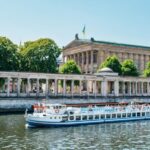
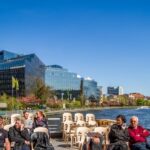
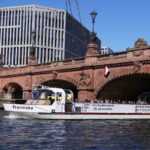
Onboard comfort: bar service, covered seating, and the audio system
This is a one-hour ride, so onboard comfort is less about “staying all day” and more about whether you can relax while the city scrolls by. The good news: the boat has toilet facilities, and the experience includes a bar where you can buy drinks. There’s also covered seating under deck, which is a big deal if weather turns or you just want to keep your phone dry.
Now, the sound. The commentary is delivered through onboard speakers, with German and English tracks. The system uses GPS-based triggering, so it’s designed to match what you’re passing. But the timing can drift a bit—especially if the boat is running full, if other passengers are loud, or if the onboard speaker volume is set low.
If you truly need clean English, there’s a workaround noted by the operator: you can request an audio guide that you hold to your ear, tuned for your language. That’s the best option if hearing the shared speakers is your top priority.
Lustgarten and Berlin Cathedral: Neo-Baroque grandeur right at the waterfront
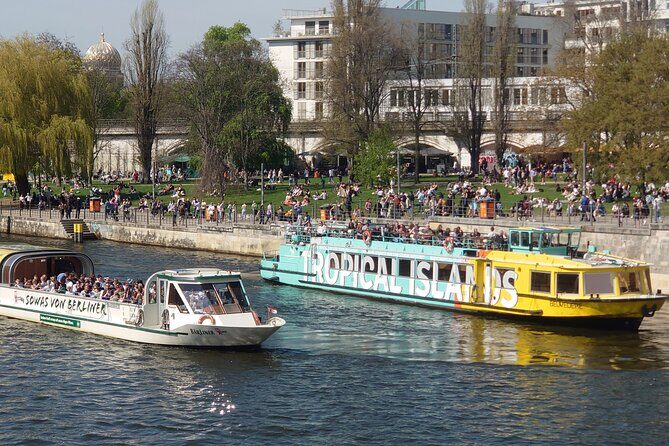
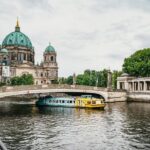
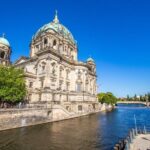
Your first major river landmark is the Berlin Cathedral at the Lustgarten on Museum Island. The official name is Oberpfarr- und Domkirche zu Berlin. It’s a Protestant church built between 1894 and 1905, designed by Julius Raschdorff. Style-wise, it leans Neo-Renaissance and Neo-Baroque.
Two things make this stop feel special from the water. First, it’s huge in scale—one of the largest Protestant churches in Germany by area—so from the Spree you get the full “statement” of its architecture. Second, it’s tied to European dynastic history as an important burial site. That combination (size plus significance) is why this cathedral works so well as an opening scene for the cruise.
Practical tip: if you want photos with the cathedral clearly framed, aim for a seat that lets you shoot across the river without people blocking your view. This area is close to the heart of the sights cluster, so it’s also one of the easiest places to recognize instantly when your audio kicks in.
The Humboldt Forum in Berlin Palace: culture in the shell of a royal building
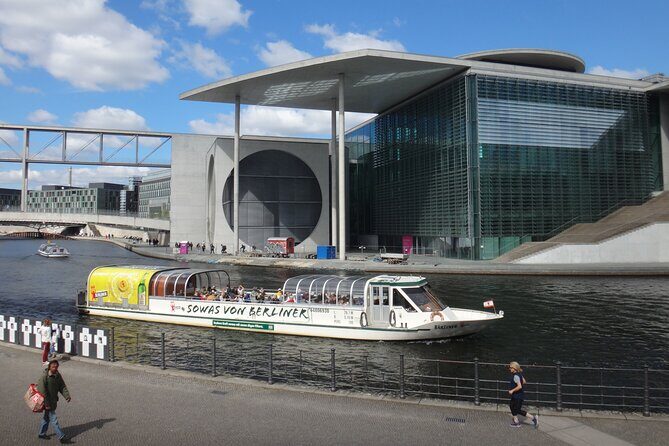
Next comes the Humboldt Forum in the Berlin Palace (proper spelling: Humboldt Forum). This is a universal museum in Mitte, and it connects several cultural institutions under one roof.
From the river, it’s a “big building moment.” Berlin Palace is massive, and the Humboldt Forum’s presence along the Spree helps you understand how central this part of the city is. The forum includes the Ethnological Museum and the Museum of Asian Art (both part of the Berlin State Museums), plus space for the Berlin City Museum exhibition and the Humboldt Laboratory from Humboldt University. It also hosts accompanying events, exhibitions, and guided tours.
If you’re the type who likes museums but hates committing to one specific ticket before you’ve even gotten your bearings, this stop is a good heads-up. The exterior alone tells you this is a major cultural hub, and the cruise gives you context before you decide whether to dive into it later.
Mühlendammschleuse and Fischerinsel: a quick lesson on how Berlin began
You pass Mühlendammschleuse, a lock in Mitte east of Mühlendamm on the Fischerinsel. This section sits in the Spree-Oder waterway system. It’s also historically tied to how Berlin formed: an early ferry connected Berlin and Cölln, and this area is where the city grew.
The lock itself began operating in 1942 and handles a drop of 1.51 meters. On a sightseeing boat, a lock can sound like a “boring engineering detail.” From the water, though, it becomes a useful anchor point—something practical that helps you picture the Spree not as a pretty backdrop, but as a working corridor that shaped Berlin’s development.
If you like details, this is your moment. Locks and waterways explain why Berlin’s best-known monuments end up clustered where they are. And because the ride is only about an hour, these quick context points matter.

Nikolaiviertel: Berlin’s oldest settlement, rebuilt after wartime destruction
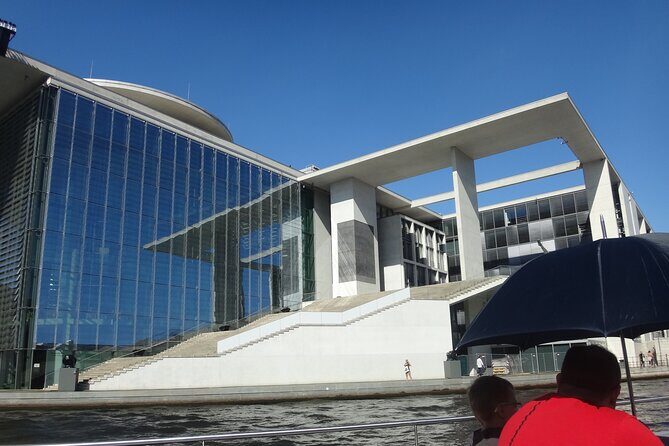
Then you glide past Nikolaiviertel in Mitte—Berlin’s oldest settlement area in the capital. Much of the area was almost completely destroyed during World War II. What you see today was rebuilt in 1980–1987 under architect Günter Stahn, as part of the city’s 750th anniversary celebrations in East Berlin.
Around the reconstructed Nikolaikirche, you’ll find a carefully arranged ensemble of historic-style townhouses and prefabricated buildings adapted to an almost medieval floor plan. It’s not just old-looking architecture; it’s also a demonstration of how cities choose to rebuild identity after catastrophe.
From the boat, the value is perspective. You see how these “old town” blocks relate to the modern city grid. That’s hard to get on foot without walking a lot—and you may not have time for that on a first day.
The Berlin Television Tower: 368 meters of certainty
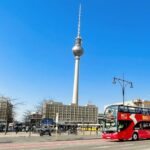
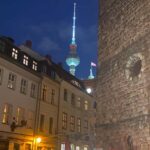
Next up: the Berlin television tower. At 368 meters, it’s the tallest building in Germany and the fifth tallest television tower in Europe. When it was completed in 1969, it was the second highest tower in the world. It’s also hugely visited, with over one million visitors a year, according to the provided details.
Sitting in a boat seat while this tower dominates the skyline is a particular kind of Berlin experience. The Spree lets you frame tall modern landmarks against water-level architecture. You’ll probably recognize it instantly, even if you’re not thinking about the numbers.
Photo tip: this is one of those sights where light matters a lot. In good conditions, you’ll get sharper silhouettes and less glare. If you’re flexible on timing, choose a departure time when the sun angle helps rather than fights the camera.
Museum Island and the James Simon Gallery: five museums, one UNESCO core
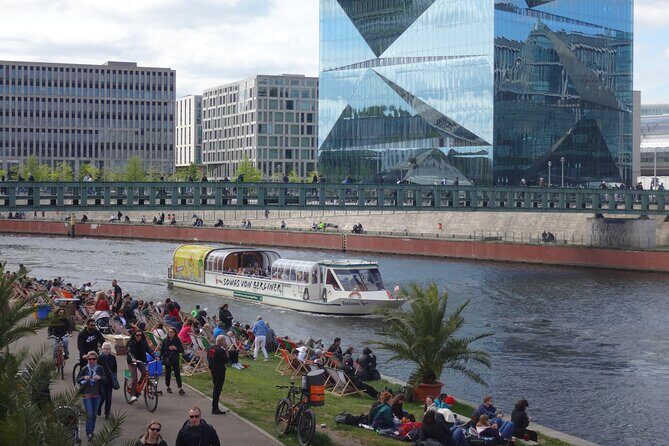
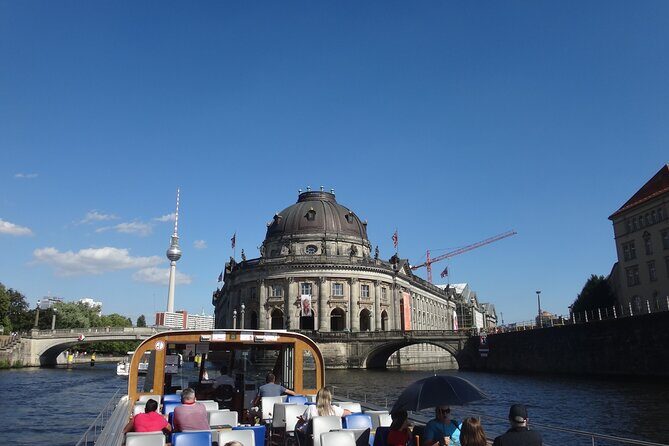
You’ll reach the heart of the Museum Island stretch. Museum Island is a UNESCO World Heritage listed ensemble made up of five major museums located on the Spreeinsel (the island in the Spree’s river system) in Berlin’s historic center:
- Old Museum
- New Museum
- Old National Gallery
- Bode Museum
- Pergamon Museum
Built between 1830 and 1930 under Prussian kings, it was planned by five architects. Since German reunification, it’s been renovated and expanded through the Museum Island master plan. As a modern visitor anchor, the James Simon Gallery opened on July 12, 2019, acting as a new visitor center.
From the water, Museum Island feels less like a museum district you’ll “try to understand” and more like a unified stage set. That’s the cruise’s real trick: it compresses distance and makes the geography click.
If you want your future museum plan to make sense, use this moment to decide: which building looks most interesting to you from this angle? Later, when you’re walking, you’ll feel like you already know the layout.
Reichstag and the glass dome: parliament architecture from river level
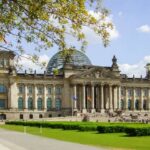
Then the cruise turns toward one of Berlin’s big political icons: the Reichstag building on Platz der Republik. Since 1999, this has been the seat of the German Bundestag.
It was built between 1884 and 1894 in Neo-Renaissance style by architect Paul Wallot. It served both the Reichstag of the German Empire and the Weimar Republic. After major damage—including the Reichstag fire in 1933 and World War II—the building was restored in a modernized form in the 1960s. From 1995 to 1999, it underwent a major redesign by Norman Foster for permanent parliamentary use.
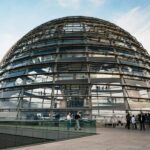
One detail you’ll likely notice from the river: the accessible glass dome above the plenary hall, based on an idea by Gottfried Böhm. Even if you don’t plan to go inside right away, the dome adds a “science experiment meets civic building” feeling that makes photos look dramatic.
Practical consideration: if the audio is late for you, don’t stress. The Reichstag area is visually obvious, and the exterior alone gives you the core idea: this is Berlin’s political center, redesigned for transparency and public view.
Berlin Hauptbahnhof: modern rail scale in the middle of the city
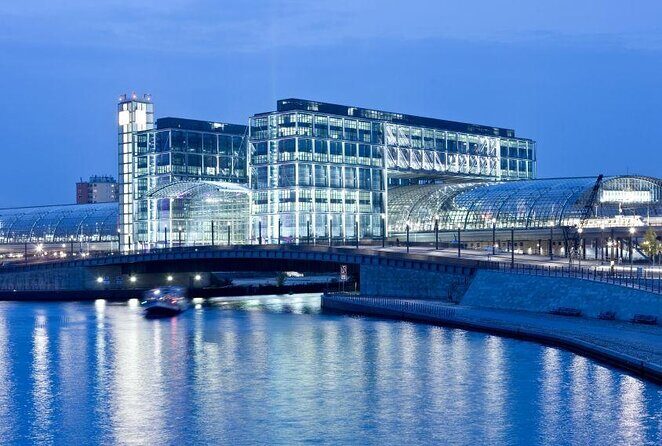
As you keep going, you pass Berlin Hauptbahnhof, Berlin’s main passenger station and the largest tower station in Europe. Around 330,000 travelers and visitors pass through daily, and about 1300 trains stop there each day.
It has 14 platform tracks and is a transfer point between long-distance and local passenger transport. The striking station building was designed by Meinhard von Gerkan. The larger north-south rail conversion began operating on May 28, 2006, tied to Berlin’s so-called “mushroom concept.”
From the boat, this is a reminder that Berlin’s center isn’t frozen in time. You’re seeing history and modern infrastructure at once. It’s also a quick way to understand Berlin’s current shape: major sights sit near major movement corridors.
If you’re planning train travel during your trip, noticing Hauptbahnhof on the cruise can reduce stress later. You’ll recognize it if you end up heading through there.
Federal Chancellery and HKW: government meets contemporary art on the Spree
Next is the Federal Chancellery, the supreme federal authority supporting the German Chancellor. The headquarters is in Berlin (and there’s a second office in Bonn). The details provided also note the new building in the Spreebogen area, separated from the Reichstag by Platz der Republik, and serving as the seat of authorities since 2001.
The Federal Chancellery building opens onto a central square opposite the Paul-Löbe-Haus. It’s part of the “Bund des Bunds” group of buildings at Spreebogenpark.
Then you finish the stretch with the House of World Cultures (HKW). This is an exhibition space for international contemporary art and a forum for current cultural discussions. It focuses especially on non-European cultures and societies. Since March 1989, it has been based in the former congress hall on the Spree’s banks. The building is famous enough to have a nickname: Berliners call it the Pregnant Oyster because of its shape.
From the water, both the Chancellery and HKW feel like Berlin’s “present tense.” They frame a story: this city remade itself physically and culturally, and the Spree is the line where you see that happen.
Price and value: is $26.36 for one hour worth it?
At $26.36 per person for about one hour, this cruise is best when you treat it as an orientation tool. If you want a calm, seated way to connect multiple sights along the Spree, the price makes sense because you’re buying convenience: you see a lot without walking it.
It’s also a value pick because you get more than “a boat ride.” You get:
- a scheduled sightseeing route through central landmarks
- onboard toilet access
- a bar for drinks
- audio commentary (German and English)
What’s not included is snacks, so if you get hungry, plan on having something before or after your cruise. Also, since audio timing and volume can vary, you should consider whether you want to use the shared speakers or request a personal audio guide if English clarity matters most to you.
Should you book this Spree boat tour?
Book it if:
- you want a low-effort way to see major Berlin sights in a single hour
- you like photography from water level and want a clear river perspective
- you appreciate narration but don’t want the pace or steep climbs of a walking tour
- it’s your first day and you’re trying to map where everything sits
Skip it (or at least adjust expectations) if:
- hearing the English explanation at exactly the right moment is your top priority
- you’re very sensitive to crowd noise or sound quality
- you’d rather spend your time with a route where a live guide can react instantly if timing gets off
If you book, a simple strategy helps: sit where you can see the riverbank sights clearly, and keep an eye on the audio timing. When the timing works, this is an easy hour that makes later exploring feel smarter, not harder.
FAQ
Where does the tour meet?
The meeting point is Anlegestelle Alte Börse / BWSG Berliner Wassersport und Service GmbH, Burgstraße 27, 10178 Berlin.
How long is the boat trip?
The duration is about 1 hour.
What languages are available for the commentary?
The experience is offered in English, and the onboard narration also includes German and English.
Is there food or snacks included?
Snacks are not included. Drinks are available for purchase onboard.
Is there a toilet on board?
Yes, there is a toilet on board.
Are service animals allowed?
Yes, service animals are allowed.
Is free cancellation available?
Yes. You can cancel for a full refund up to 24 hours before the experience’s start time.