REVIEW · BONN
Bonn: 24-Hour Hop-On Hop-Off Sightseeing Bus Ticket
Book on GetYourGuide →Operated by Willms-Touristik GmbH & Co.KG · Bookable on GetYourGuide
Bonn is a city with 2,000 years packed in. This hop-on hop-off bus ticket is an easy way to get oriented fast and then linger where you want, with multilingual audio guiding you through Roman roots, Bonn’s time as a capital city, and the international face of today. I especially like how the route threads through both big-name sights and quieter neighborhoods, so you don’t just tick boxes. One drawback to plan around: online info on departures can feel unclear, so check the posted timetables at stops if timing matters.
The open-deck setup makes it feel like you’re seeing Bonn in motion, and the 24-hour ticket means you can pace yourself instead of racing. You’ll ride past the south district’s late-19th-century streets, the Museum Mile area, the UN Campus, and the gateway views toward the Siebengebirge hills. Then you can jump off at up to 11 stops and turn the bus into your personal walking plan.
If you want a guided museum day with a human lecturer, this isn’t that. There’s no live guide—just the onboard audio—so it’s best if you enjoy learning at your own speed (and you don’t mind putting on headphones to catch the details).
In This Review
- Key things to know before you board
- A 24-hour Bonn loop that tells a real story
- How to use the 24 hours (so you don’t overthink it)
- Audio guide with headphones: the best part for independent travelers
- What the audio actually helps you understand
- Start at Budapester Straße: your fast orientation point
- Bonner Minster and Nussallee: old-town edges meet elegant streets
- Why this early stretch matters
- Museum Mile: the stop for culture lovers and “I want time” travelers
- Practical tip
- Bad Godesberg Redoute and Rhine bank: the spa-town flair
- The Siebengebirge gateway feeling
- Kennedyallee and Kameha Hotel: modern offices with a city feel
- UN Campus zone: where Bonn’s international role becomes visible
- Why this stop is worth even a short hop-off
- Museum König and Brassert Ufer: a smart ending loop
- How to finish your day without rushing
- Price and value: $28 can be a bargain if you actually use the hops
- A small reality check: seats and demand
- Who this Bonn bus is best for
- A few booking-day tips that can save you stress
- Should you book this hop-on hop-off bus ticket?
- FAQ
- FAQ
- How long is the Bonn hop-on hop-off bus ticket valid?
- How many stops are on the route?
- Where is the first stop / main starting point?
- Is a live tour guide included?
- What languages are available for the audio guide?
- Is the bus wheelchair accessible?
- Are dogs allowed?
- Can I smoke on the bus?
Key things to know before you board
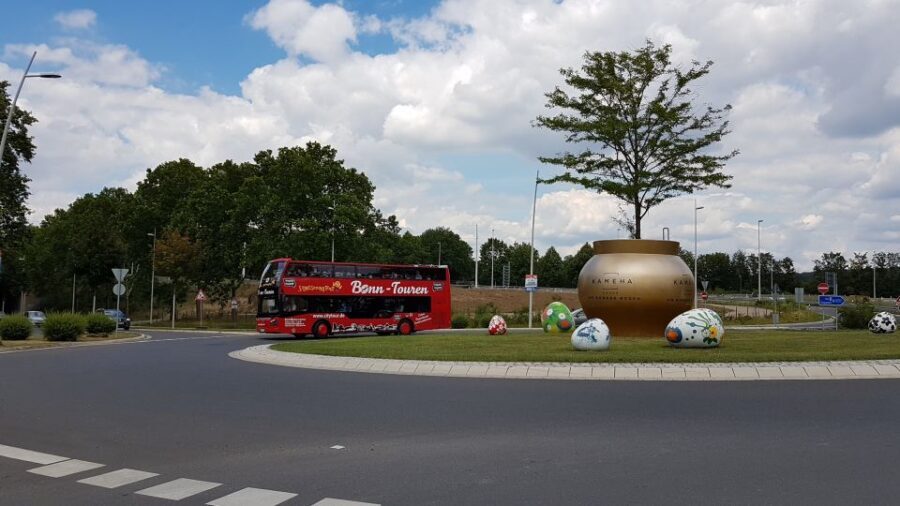
- 24 hours, 11 stops: Stay on for the big-picture loop, then hop off repeatedly
- Audio guide + headphones: Context in multiple languages without waiting for a live group tour
- Iconic to local mix: Museum Mile, UN Campus area, Rhine bank views, Bad Godesberg villas
- Self-paced pacing: Great for slow wandering, not great for people who need fixed plans
- No seat guarantees in peak demand: If it’s busy, come ready to stand or wait for the next ride
A 24-hour Bonn loop that tells a real story
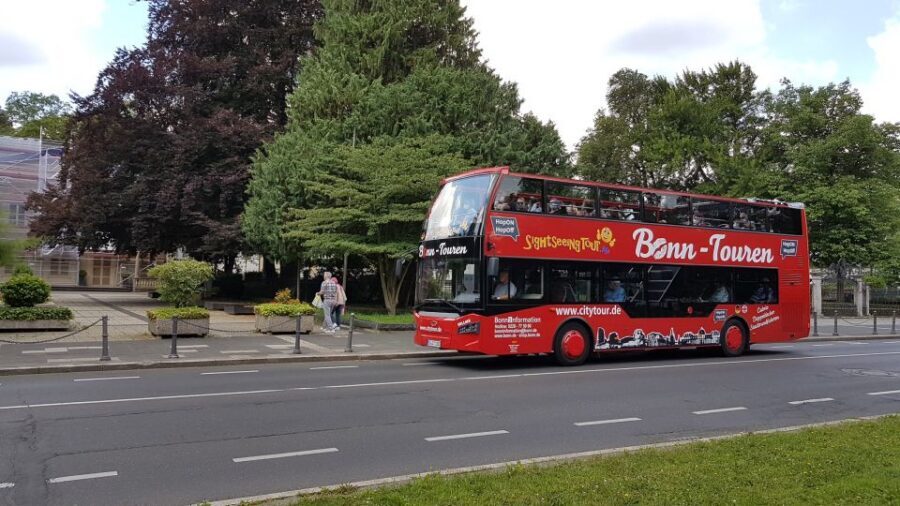
This is one-day sightseeing with flexibility built in. Your ticket runs for 24 hours, and the route includes 11 stops you can use in any order along the line. That matters in Bonn, because the city doesn’t really “fit” into one tight itinerary. It’s layered—Roman traces, a capital-era identity, and a strong modern role in international affairs—so having time to repeat areas is a plus.
From the start, the route is designed like a walking tour you can ride. You pass through major neighborhoods and landmarks, then you can get out where your interests click. I like that the design doesn’t force you into one museum-heavy rhythm. You can do a quick orientation ride first, then spend your best energy on the stops that feel worth the extra time.
You can also read our reviews of more tours and experiences in Bonn.

How to use the 24 hours (so you don’t overthink it)
I’d treat the day as two phases:
- Phase one: ride and orient. Stay on until you’ve seen the full sweep and can spot what you want to revisit.
- Phase two: hop off with intention. Pick 2–3 stops for deeper exploration and use the bus as your connector.
Because the audio guide is on board the whole time, you’ll get the context even if you’re only lingering briefly at a stop.
Audio guide with headphones: the best part for independent travelers
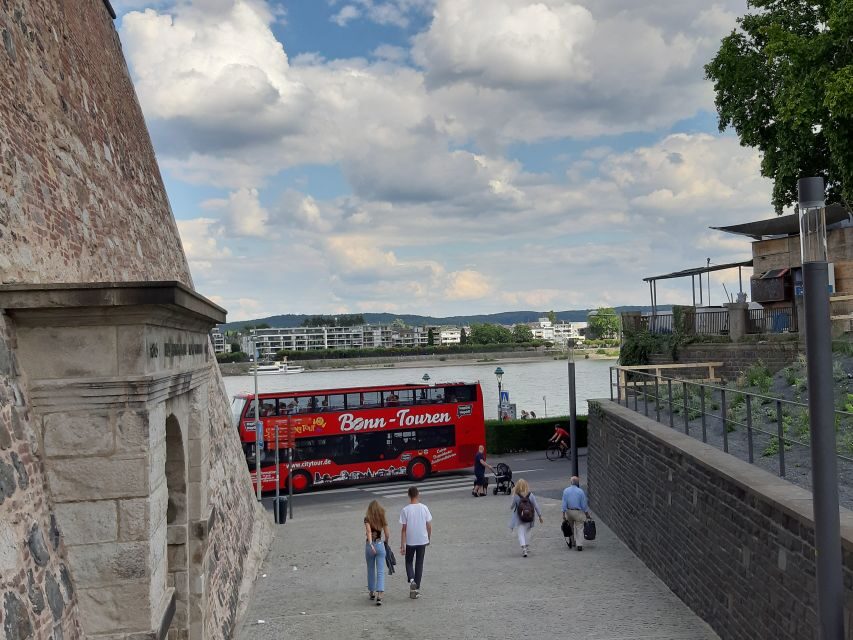
You get onboard audio commentary plus headphones, and the guide is available in Dutch, English, French, German, Japanese, and Spanish. Since there’s no live guide, the audio needs to be good—and it is built to keep you moving, not waiting.
One practical note: the audio experience depends on your ability to hear it. If someone nearby is talking loudly on a phone, it can drown out details you’d rather not miss. I’d keep your own phone on silent, and if you’re sensitive to noise, choose a quieter spot on the upper level (if you’re able to).
What the audio actually helps you understand
Bonn can be confusing if you only glance at monuments. The audio guide frames what you’re seeing in sequence, tying together:
- the city’s Roman-era origins,
- Bonn’s time as a country’s capital,
- the modern international zone around the UN Campus,
- and the way surrounding hills and Rhine views shape the city’s outlook.
That context is the difference between a “bus ride with buildings” and a ride that makes the city click.
Start at Budapester Straße: your fast orientation point
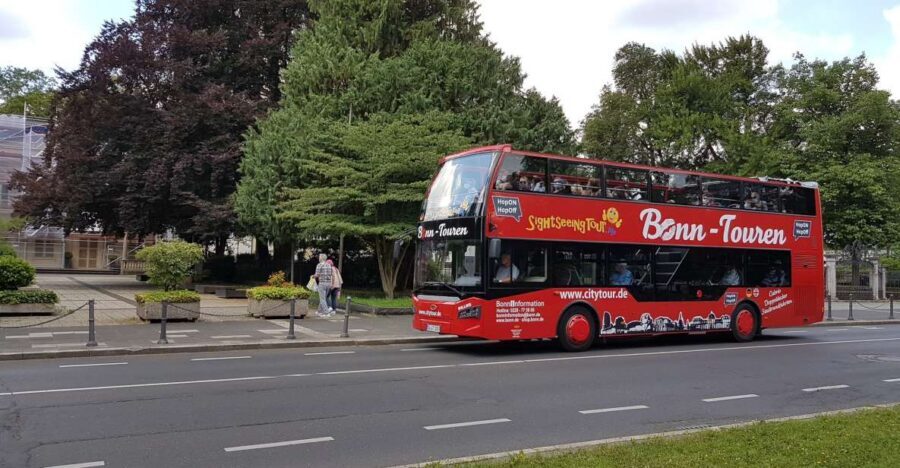
Your tour can begin at any stop, but the route’s first stop is at Budapester Straße / Corner Sternstraße. I like this area as a starting point because it’s easy to connect with city movement and it gives you a clean “before/after” comparison as you loop back later.
After you board, you’ll quickly get into the rhythm of Bonn: major streets, recognizable anchor points, then neighborhood character. Think of this as your chance to get bearings fast, before you decide where to spend your time on foot.



Bonner Minster and Nussallee: old-town edges meet elegant streets
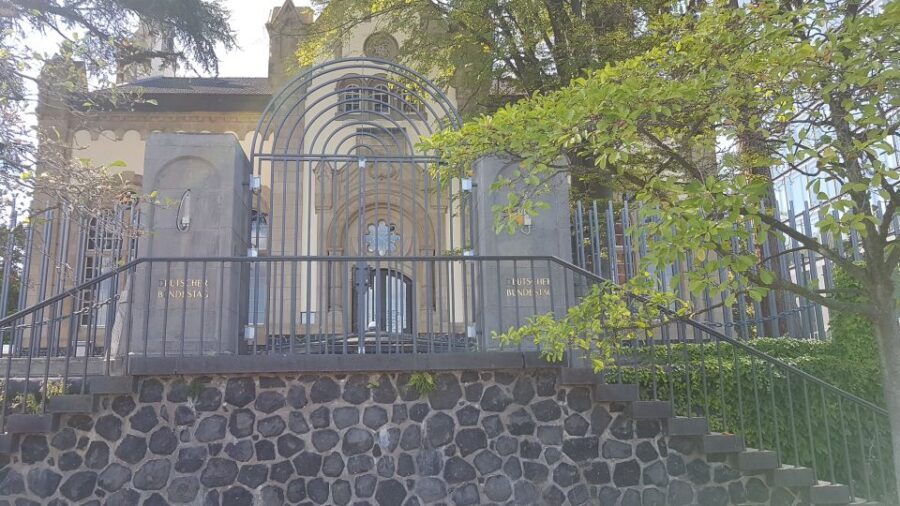
Next up, you’ll pass the Bonner Minster stop. Even if you don’t hop off, it’s a good early landmark because it sets the tone for Bonn’s older heart. If you do hop off, you’ll have the option to spend a little time at a historic anchor before your day shifts toward museum and international areas.
Then there’s Nussallee. This is one of those “walk-worthy” streets you’ll appreciate more once you’ve been oriented by the Minster area. Bonn often feels less like a single grand attraction and more like a set of connected neighborhoods, and Nussallee helps you see that.
Why this early stretch matters
If you’re only visiting one day, the first half-hour is crucial. You’re building a mental map for later. The bus gets you that map, and the stops here help you decide what you’re curious about—religious landmarks, elegant street life, or the museums and institutions that come next.
Museum Mile: the stop for culture lovers and “I want time” travelers
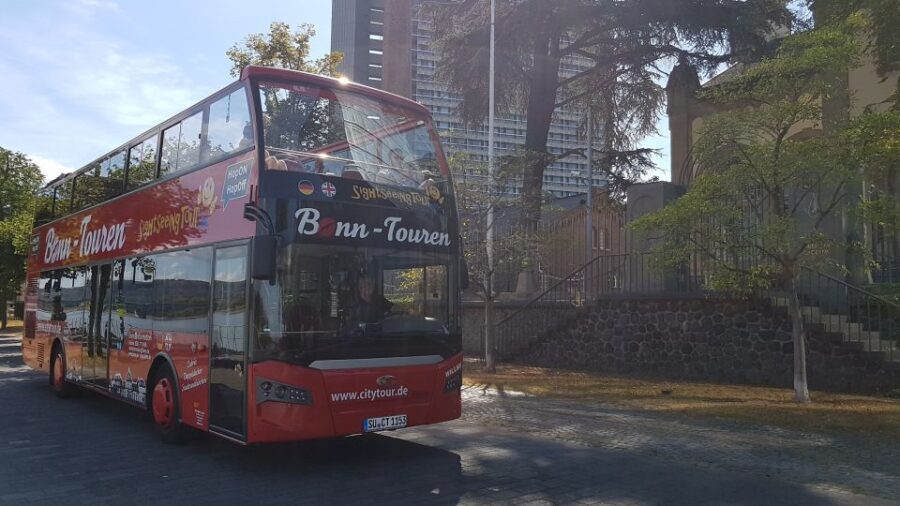
The Museum Mile stop is where your day can become very worthwhile—or very long, depending on your energy. This area is described as a home to renowned institutions, and it’s the part of the route that makes the bus feel smarter than just taking random city photos.
Why I like this stop: it’s built for free choice. You can stay onboard and watch the museum district slide by, or you can hop off and explore at a slower walking pace. If you have even a little interest in art and public culture, this is the zone where the bus becomes a launcher for your own mini plan.
Practical tip
If you’re planning to visit museums on foot, choose this stop for your “deep time” block. It’s the most obvious place on the route to turn short viewing into proper browsing.
Bad Godesberg Redoute and Rhine bank: the spa-town flair
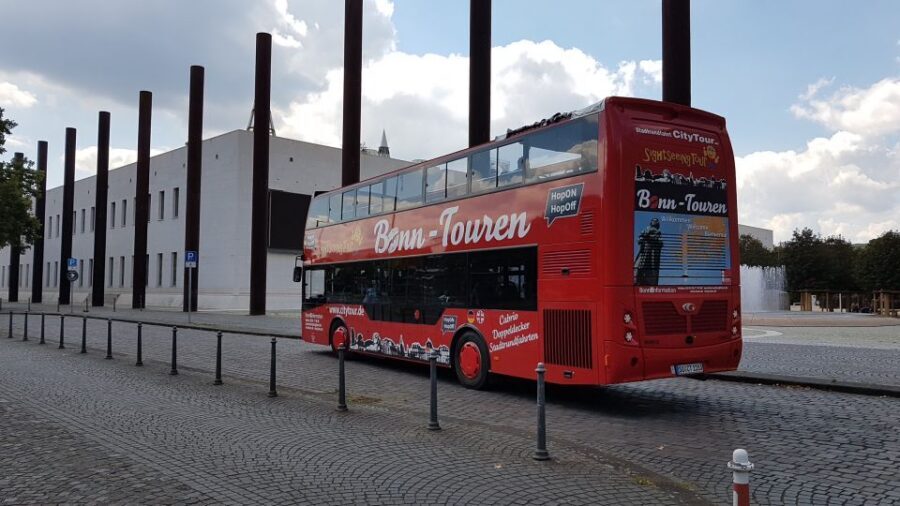
Next comes Bad Godesberg Redoute, followed by the Rhine bank stop. Bad Godesberg is described as a former spa and residence town, and you can feel that tone in the residential character and villa-like atmosphere around the area.
Then you hit the Rhine bank—and this is the moment to slow down if you like viewpoints and riverside air. The route links city history with the natural setting that Bonn uses as a framing device.
The Siebengebirge gateway feeling
The area is also positioned as a gateway to the Siebengebirge hills. Even when you don’t plan a full hike, having the bus route pass near these views gives you a sense of where Bonn turns from city streets into hill country mood. If your travel style includes “one good view break,” schedule it here.
Kennedyallee and Kameha Hotel: modern offices with a city feel
After the Rhine-side stretch, you’ll reach Kennedyallee and then the Kameha Hotel area. This part of the route helps you understand that Bonn isn’t frozen in its past. It also has that modern, office-and-institution rhythm that comes with being tied into national and international life.
If you hop off at these stops, you might find you’re more interested in the walk between points than in one single attraction. That’s a normal Bonn pattern, and the bus helps you connect those gaps without committing to a long trek.
UN Campus zone: where Bonn’s international role becomes visible
The route includes WCCB and the UN Campus-adjacent area (your audio guide ties this area to Bonn’s new international center). This is one of the more distinctive parts of the loop, because Bonn’s identity today isn’t just cultural—it’s diplomatic and global.
The audio explains the connection to the UN Campus and also references major corporate headquarters in the international center area, including Deutsche Telekom and Deutsche Post DHL. It’s a reminder that the city’s “big role” is not abstract. You can see it in how the institutions sit in the city structure.
Why this stop is worth even a short hop-off
If you’ve only ever seen the UN as a distant brand, seeing how it fits into a real urban neighborhood can surprise you. Even a quick look around the area helps the city’s story make sense.
Museum König and Brassert Ufer: a smart ending loop
The route continues to Museum König and then Brassert Ufer. Museum König stands out because it’s another major cultural anchor, and it also gives you a clean “last big choice” for your day. If you spent most of your time earlier in the Museum Mile zone, this might be your backup plan. If you skipped Museum Mile earlier, Museum König can become your main museum block.
Then comes Brassert Ufer. This stop is a strong choice for a final walk because it pairs well with the day’s overall rhythm: you started with historic context, moved through institutions and viewpoints, and finish with that river-adjacent feeling that makes Bonn feel calmer than its reputation might suggest.
How to finish your day without rushing
Aim to save one stop for your last hour where you can wander without a hard clock. Brassert Ufer is a good candidate if you want the “let the city settle” ending rather than the “last stop, back on the bus, done” ending.
Price and value: $28 can be a bargain if you actually use the hops
At about $28 per person for a 1-day ticket, the value depends on one thing: how many times you’ll actually hop off. If you treat it like a single bus loop only, it’s easier to feel like it’s just transport with audio. If you treat it like a flexible half-day plan that turns into a full day, it can be a very efficient way to cover a lot of Bonn in an organized way.
What you get is practical:
- 24 hours on the bus
- onboard multilingual audio
- headphones
- hop-on hop-off access at 11 stops
What you don’t get:
- a live guide
- attraction tickets
- food and drinks
So you’re paying mainly for route access and the audio context—not for admissions or a guided experience inside museums. If you already plan to spend time in open spaces and neighborhoods, and you’re selective about which museums to enter, this price can feel fair.
A small reality check: seats and demand
The bus doesn’t offer seat reservations, and in high demand, seating and rides can’t be guaranteed. That’s not unusual for city hop-on hop-off setups, but it affects comfort. If you’re sensitive to standing, go earlier in the day or be ready to take breaks by hopping off.
Who this Bonn bus is best for
This tour-style format fits people who like independent travel with structure. I think it’s a great match if:
- you’re visiting Bonn for the first time and want an overview without getting lost,
- you enjoy history with context you can listen to while moving,
- you want a plan that adapts to your mood (museums now, riverside later),
- you’re traveling with mixed interests—culture stops for some, viewpoints and neighborhoods for others.
It’s less ideal if you need a live guide for questions, or if you want a single fixed schedule with no flexibility.
A few booking-day tips that can save you stress
I’d plan around two common friction points:
- Departure times can be clearer at the stops than online. If you’re trying to catch a specific ride for midday plans, check the posted timetables on site.
- Group pricing and info might not be obvious at booking. If you’re traveling as a group, it’s worth asking directly what discounts apply rather than assuming everything is automatic.
Also remember: you’ll be learning through audio, so treat noise seriously. Pick a spot where you can hear, and don’t rely on signage alone to understand the story you’re hearing.
Should you book this hop-on hop-off bus ticket?
Book it if you want maximum Bonn coverage in one day without committing to a single museum-and-ticket program. For first-timers, the route hits the city’s main identity pillars: historic anchors, culture districts, the international center area, and the Rhine/surrounding hills atmosphere.
Skip it (or plan a different approach) if you know you’ll only stay onboard once, or if you’re expecting a live guide to manage your day. In that case, you may get more value from direct walking plans or museum-focused tickets with admissions included.
If you like flexible pacing, and you’ll actually hop off at more than just one or two stops, this $28 ticket is a practical way to see Bonn in a way that feels organized, not rushed.
FAQ
FAQ
How long is the Bonn hop-on hop-off bus ticket valid?
It’s a 24-hour ticket, so you can use it throughout the day once you’ve boarded.
How many stops are on the route?
The route includes 11 stops, and you can hop on and off at any of them.
Where is the first stop / main starting point?
The first stop is at Budapester Straße / Corner Sternstraße, but you can start at any of the 11 stops.
Is a live tour guide included?
No. This experience includes an audio guide on board, not a live tour guide.
What languages are available for the audio guide?
The audio guide includes Dutch, English, French, German, Japanese, and Spanish.
Is the bus wheelchair accessible?
Yes. The bus is barrier-free in the lower area and suitable for wheelchair users.
Are dogs allowed?
Yes, dogs are allowed at the lower bus level.
Can I smoke on the bus?
No. Smoking is not allowed.