REVIEW · BERLIN
Berlin: Modernist Architecture Tour in the Hansaviertel
Book on GetYourGuide →Operated by Beyond and Beneath Tours · Bookable on GetYourGuide
Berlin hides a whole architecture lesson in one block. This Hansaviertel walk strings together 19th-century elegance, a solemn Jewish memorial site, and the Cold War showpiece Interbau 1957, all in a calm pocket between the Spree and the Tiergarten.
I love two things most: the way the neighborhood’s design changes as the political era changes, and the guide’s energy. When the guide is Morgan, you get a lively, question-friendly explanation that keeps the story moving from old villas to bold modernist buildings. One possible drawback: this is about 2 hours of walking and standing with layered historical context, so it’s best if you’re comfortable staying on your feet.
In This Review
- Key things you’ll notice on the Hansaviertel modernist architecture tour
- Why Hansaviertel feels like a 20th-century time machine
- Meet at Biergarten der Tiergartenquelle: the easiest way to start
- Hansaviertel’s 19th-century villas and the names you’ll hear along the way
- A quiet memorial stop tied to Jewish life lost to Nazi persecution
- Interbau 1957: how West Berlin turned rubble into a Cold War showcase
- Modernist designs by Gropius, Niemeyer, Aalto, and friends
- Stop at Hansaplatz and wrap up in the neighborhood’s living center
- What this tour teaches you beyond architecture
- Practical stuff you should plan for (so the walk stays enjoyable)
- Should you book this modernist architecture tour?
- FAQ
- How long is the Berlin Hansaviertel modernist architecture tour?
- Where does the tour start and what landmark should I look for?
- Where does the tour end?
- What languages are offered?
- Is the tour wheelchair accessible?
- What should I bring?
- Is there an age recommendation?
- Is food included?
- Are museum or monument entry fees included?
Key things you’ll notice on the Hansaviertel modernist architecture tour
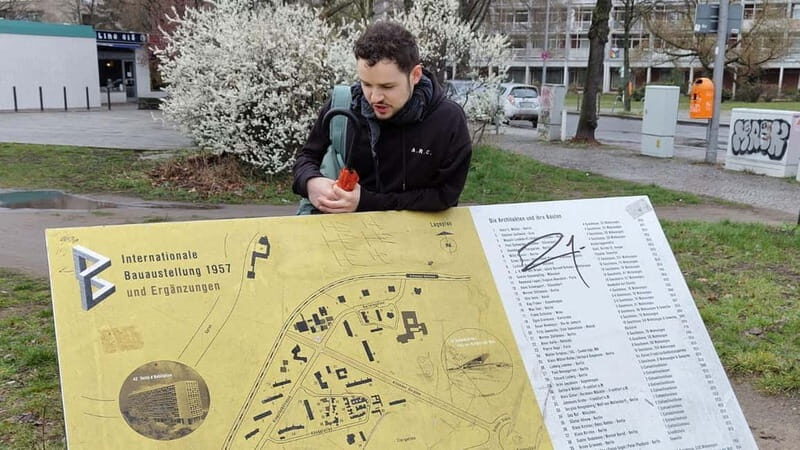
- Interbau 1957 in real life: rubble-to-future thinking, turned into a West Berlin architectural showcase
- Two eras in one neighborhood: start with late-1800s villas and gardens, then jump to Cold War modernism
- A memorial with weight: you’ll visit a site tied to a major Jewish community destroyed by Nazi persecution and wartime bombing
- Design icons you can spot: Walter Gropius, Oscar Niemeyer, Alvar Aalto, and other influential modernists
- A guide who adapts: you’ll hear details, but you’ll also get room for questions and follow-ups
Why Hansaviertel feels like a 20th-century time machine
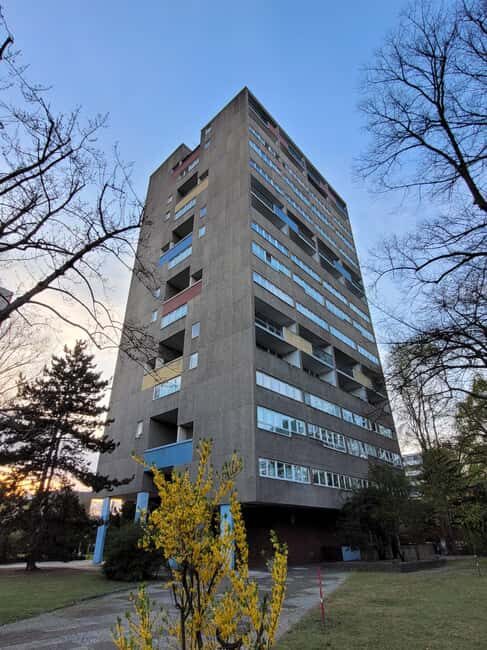
Hansaviertel is Berlin’s “wait, what am I looking at?” neighborhood—in the best way. You start with tree-lined streets and the vibe of a quiet residential area, but the buildings tell a different story. This is where post–World War II West Berlin tried to prove something: that the future could be planned, designed, and built with confidence, not only rebuilt.
Between the Spree and the Tiergarten, you get the rare experience of moving through decades without hopping on a train. The neighborhood reflects political competition too. In the Cold War mindset, architecture wasn’t just housing—it was messaging.
You can also read our reviews of more tours and experiences in Berlin.



Meet at Biergarten der Tiergartenquelle: the easiest way to start
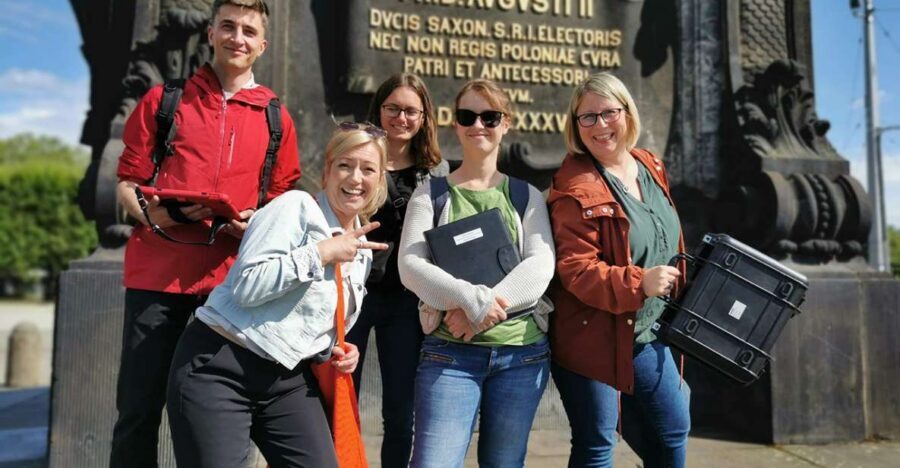
The tour starts at Biergarten der Tiergartenquelle, right by the Berlin-Tiergarten S-Bahn station (Exit Siegmunds Hof / Bachstraße). Look for the guide with the orange umbrella. This is a smart start because it gives you a simple reference point before you drift into the calmer side streets of Hansaviertel.
I like this kind of beginning: you’re not running across Berlin to “find the good part.” You’re already near the green space, and once the walk starts, the neighborhood’s scale makes sense.
Hansaviertel’s 19th-century villas and the names you’ll hear along the way
As you head into Hansaviertel, the first act is the late-19th-century one. Berlin was growing fast, and this area was developed as a middle- and upper-class enclave. Think villas, manicured gardens, and elegant street presence. It’s the kind of setting where you can understand why people wanted to live here before the world got its way with Europe.
A good walking tour doesn’t just list architects. It also gives you a human map. You’ll hear about famous residents tied to the district’s earlier identity, including Rosa Luxemburg, Nelly Sachs, and Käthe Kollwitz. For me, this is where the neighborhood stops being a postcard and starts becoming a place where real lives mattered.
You’ll also notice a helpful pattern: the further you go, the more the design logic changes. That makes the Cold War modernism section feel less like a random “now we’re in a different style” moment and more like a natural shift—one driven by history.
A quiet memorial stop tied to Jewish life lost to Nazi persecution
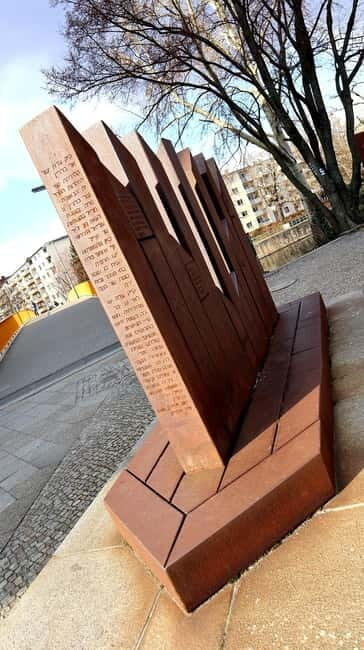
Then the tour takes a dramatic emotional turn—because a key part of this story isn’t about buildings at all. You visit a memorial at the site of one of Berlin’s most significant Jewish communities, tied to a neighborhood that was destroyed both socially and physically by the Nazi regime and the bombing that followed.
This stop matters for two reasons. First, it keeps the architecture from becoming an abstract design show. Second, it reminds you that urban change often comes with real human loss—even when the later plans are presented as progress.
Practically, it’s also a moment to slow down. If you tend to rush through monuments, give yourself space here. Bring a water sip, catch your bearings, and be ready for a heavier tone.
Interbau 1957: how West Berlin turned rubble into a Cold War showcase
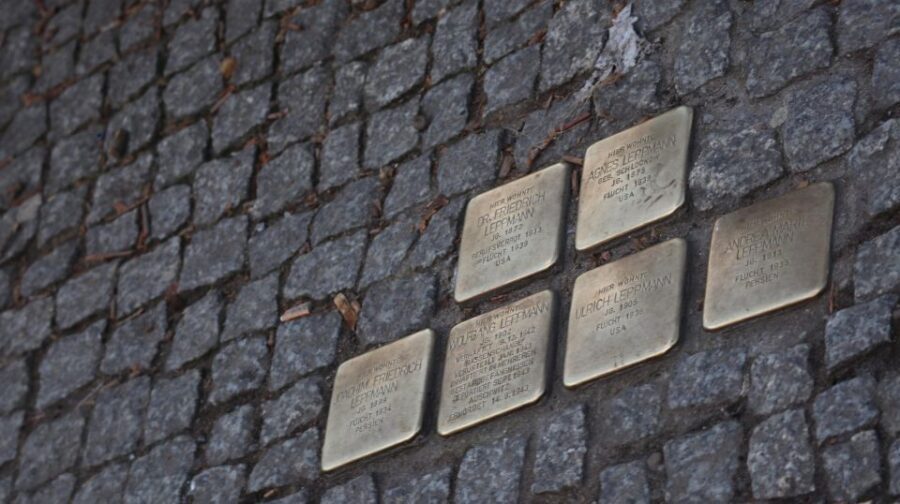
After the memorial stop, you get the Cold War pivot: in 1957, West Berlin hosted Interbau, an international architecture exhibition meant to reshape ideas about how a city could look and function after WWII.
Here’s the part I think you’ll appreciate most: the tour frames Interbau as more than “cool buildings.” It was an argument about the future—about what kind of life modern design should produce, and how a rebuilt city should signal new values.
The tour explains that this happened on land cleared by war. That fact changes how you read the neighborhood. You’re not looking at history as a distant timeline—you’re looking at it as a physical transformation. Concrete becomes a political tool. Planning becomes persuasion.




Modernist designs by Gropius, Niemeyer, Aalto, and friends
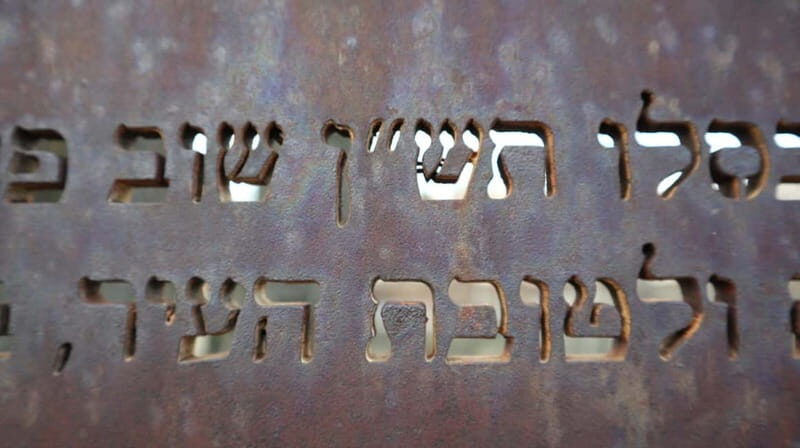
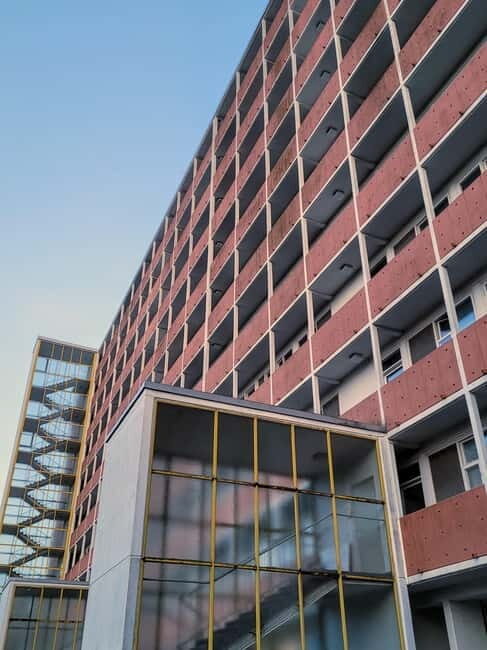
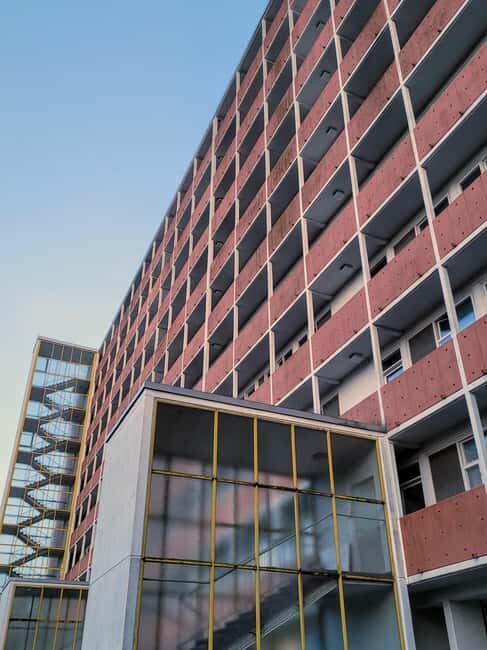
Now you move through the heart of Hansaviertel’s modernist identity. The neighborhood was redesigned by some of the most influential architects of the 20th century, including Walter Gropius, Oscar Niemeyer, and Alvar Aalto.
On paper, those names are impressive. On a walk, they’re better than impressive—they’re legible. You start noticing how modernism in Berlin doesn’t mean one single look. You’ll see bold experimentation: designs that feel experimental, sometimes even provocative, and always tied to an ideology of how space should work.
And while you’re admiring details, your guide’s job is to help you connect style to intention. Expect questions like: What did this architecture promise? What life did it hope to shape? Does it still feel modern? That’s exactly the right lens, because otherwise modern buildings can turn into “nice to look at” rather than “meaningful to understand.”
Stop at Hansaplatz and wrap up in the neighborhood’s living center
The tour’s finish point is Hansaplatz. It’s a fitting ending because it brings you back toward the neighborhood’s everyday rhythm instead of leaving you at some far corner. From there, the activity wraps up back near the meeting area, so you don’t get stuck planning your exit.
If you want to keep the theme going, this is a good moment to pair the walk with a quiet wander through the surrounding Tiergarten area. Hansaviertel’s magic is partly how it changes the pace of your day. You don’t just learn facts; you feel the shift in how space can guide mood.
What this tour teaches you beyond architecture
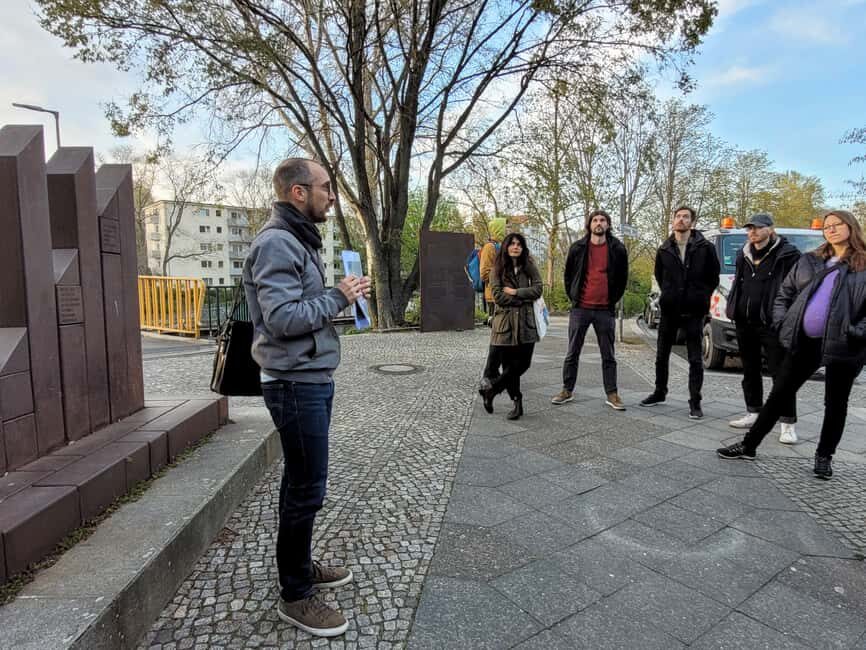
This kind of walking tour is valuable because it teaches you how to read a city like a document.
You’ll come away with a clearer understanding of:
- how Berlin’s social class ambitions shaped the earlier villa-era neighborhood
- how the Nazi period and wartime destruction erased community life in ways that can still be marked today
- how West Berlin’s Interbau modernism turned rebuilding into a Cold War argument about the future
- how architecture can be both practical shelter and political storytelling
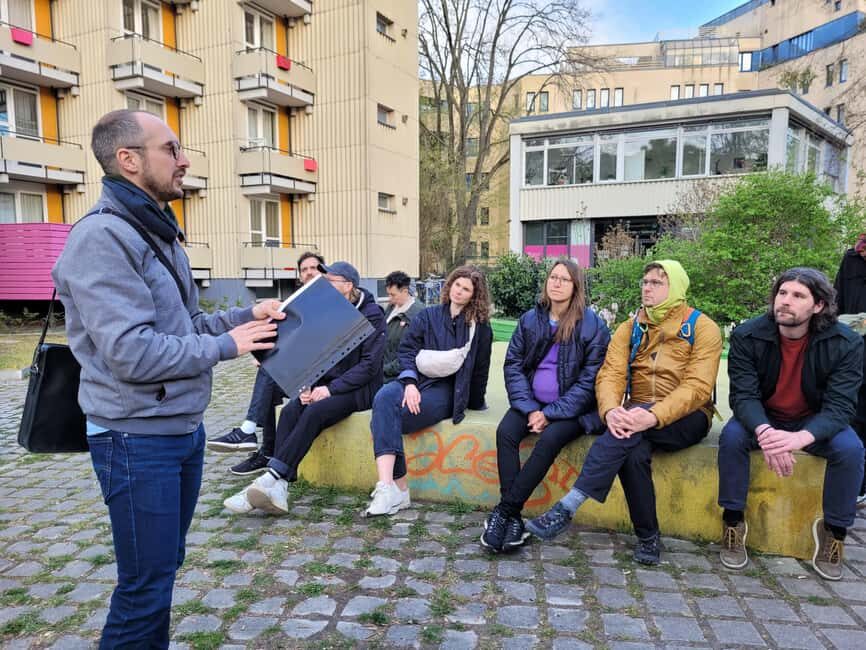
The best part is that you’re not stuck in a lecture. Since it’s walking, the buildings are always in front of you, and the guide can point out why a form or plan choice matters. When the guide is Morgan, the flow tends to be especially strong—lively explanations, lots of specifics, and easy back-and-forth if you’re the type who asks why.
Practical stuff you should plan for (so the walk stays enjoyable)
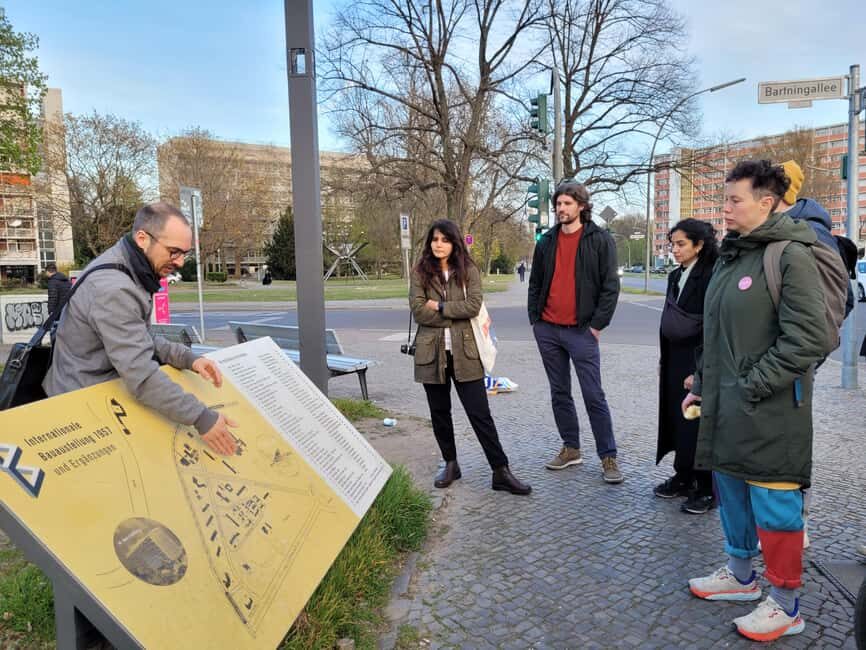
This experience runs about 2 hours, including the walking time. There’s a guided portion of about 1.5 hours once you’re in Hansaviertel. Expect standing and walking for most of it.
A few smart tips:
- Wear comfortable shoes. The area is walkable, but you’ll want support.
- Bring water, because you’ll be out on your feet.
- If you’re traveling with friends who prefer museums only, this might feel like more “street-level learning” than “indoor exhibits.” It’s still worth it, but set expectations.
The tour is wheelchair accessible, and it runs in German and English with a live guide. If you’re visiting with someone who needs accessible routes, this is one of the easier architectural experiences to choose because the main activity is just walking the neighborhood.
Should you book this modernist architecture tour?
Book it if you want architecture that has context—buildings tied to real events, real ideology, and real people. This is also a strong choice if you like Berlin’s lesser-seen side. Hansaviertel isn’t competing with the big-name sights; it’s quietly offering a smarter way to understand the city.
Skip it (or reconsider) if:
- you’re not comfortable with about 2 hours of walking and standing
- you dislike tours that mix architecture with heavier historical material
- you were hoping for interiors and museum-style viewing (this is an outdoor, guided walk)
If you’re on the fence, here’s my simple advice: if you enjoy seeing how design choices affect how you move through space, this tour will do that for you. You’ll walk out with a neighborhood you can “read” in your head.
FAQ
How long is the Berlin Hansaviertel modernist architecture tour?
It lasts about 2 hours total. The guided portion is listed as about 1.5 hours.
Where does the tour start and what landmark should I look for?
You start in front of the Berlin-Tiergarten S-Bahn station (Exit Siegmunds Hof / Bachstraße) next to the beer garden Biergarten der Tiergartenquelle. Look for the guide with the orange umbrella.
Where does the tour end?
The tour finishes at Hansaplatz and the activity ends back at the meeting point area.
What languages are offered?
The live guide offers German and English.
Is the tour wheelchair accessible?
Yes, it is listed as wheelchair accessible.
What should I bring?
Bring comfortable shoes and water.
Is there an age recommendation?
It’s recommended for ages 14 and up, and minors must be accompanied by an adult. It’s listed as not suitable for children under 14.
Is food included?
No. Food and drinks are not included.
Are museum or monument entry fees included?
No entry to museums or monuments is specified as included, so museum/monument entry is not included unless stated in the itinerary.