REVIEW · BERLIN
Berlin and National Socialism: Berlin under Nazism
Book on Viator →Operated by cultourberlin · Bookable on Viator
Berlin has a way of teaching history on the pavement. This tour connects the Third Reich era to modern-day Berlin through major sites that you can actually stand in front of. What makes it especially strong is how it turns a scary topic into a sense-making route you can follow without getting lost.
I love the tight 4-hour format: you cover a lot of ground without feeling like you’re trudging all day. I also like the Spanish-speaking guides—names like Julia, Júlia, Helena, and Celia show up in the feedback, and the explanations are praised as detailed and respectful.
One thing to consider: this subject is heavy, so if you prefer a lighter sightseeing pace, you might want to pair it with a more relaxed afternoon after.
In This Review
- Key highlights worth your attention
- Price and timing: what $25.54 buys you in Berlin
- Meeting at the Berlin TV Tower and getting your bearings
- Stop by stop: how the Third Reich shows up in today’s Berlin
- Bundestag: ruins, reconstruction, and the parliament returning
- Memorial to the Sinti and Roma Victims of National Socialism: genocide with names and scale
- Soviet Memorial Tiergarten: the war’s end, and who is remembered
- Tempelhof: an airport with a future-then-past story
- Topography of Terror: where the terror system gets explained
- Fuhrerbunker: the last-hours space (and the weight of it)
- Ending at the Memorial to the Murdered Jews of Europe
- Why this route works (and what to do with it)
- Guides: why the Spanish explanations matter
- Who should book this Berlin under Nazism experience
- Should you book this tour?
- FAQ
- How long is the tour?
- What time does the tour start?
- Is the guide Spanish-speaking?
- What’s the group size?
- Are admission tickets included?
- Is the Berlin public transport ticket included?
- Where does the tour start and end?
- Is it a mobile ticket?
- Can I cancel for a full refund?
Key highlights worth your attention
- A focused Third Reich route that helps you connect events, buildings, and memorials
- Entry tickets included for the stops that require them
- Small group size (max 25), which makes questions easier during the walk
- Mix of outdoor sites and the Topography of Terror museum
- Multiple memorial stops that broaden the story beyond leaders and battlefields
- Modern Berlin context like the Bundestag’s post-reunification reconstruction
Price and timing: what $25.54 buys you in Berlin
At about $25.54 per person for roughly 4 hours, this is priced like a value-forward history tour, not a museum-only ticket. You’re paying for a guided route that hits several major stops in one sitting, including admission where it applies.
The tour runs at 10:00 am and keeps things moving, so you’ll want your day plan to have some breathing room afterward. Also, the AB transport ticket isn’t included, so if you’re taking transit to get there, plan that cost separately.
And yes, the start point is very easy to find: the meeting point is at the Berlin TV Tower area (Panoramastraße 1A). It’s a helpful anchor when you’re arriving in a new city.
You can also read our reviews of more tours and experiences in Berlin.

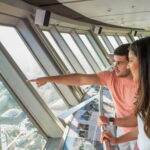
Meeting at the Berlin TV Tower and getting your bearings
Berlin’s big sights can feel like they’re scattered. Starting near the TV Tower gives you a clear visual reference point for the route ahead, so you’re less likely to drift or second-guess directions mid-tour.
You’ll also be setting expectations right away: the guide’s job here isn’t just to name buildings. It’s to connect the Third Reich era to what you see today—memorials, political spaces, and the physical clues left behind.
Stop by stop: how the Third Reich shows up in today’s Berlin
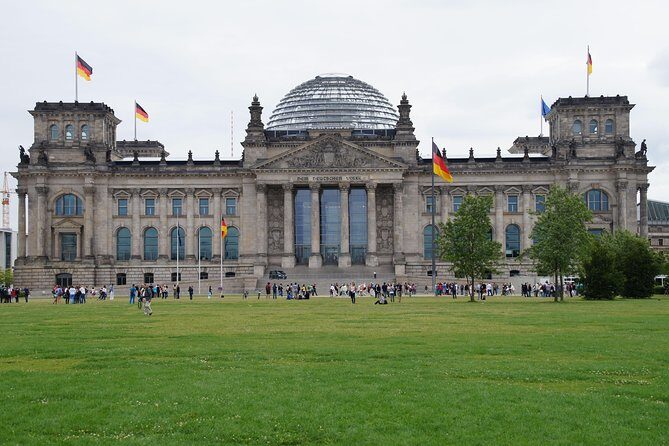
Bundestag: ruins, reconstruction, and the parliament returning
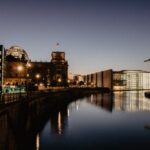
You begin with the Bundestag area, where the story runs in two directions: the damaged past and the rebuilt present. The building you see went through protection from the elements and partial renovation in the 1960s, and then—after German reunification on 3 October 1990—it was reconstructed under architect Norman Foster, reopening in 1999 as the meeting place of Germany’s parliament.
Why this matters for understanding Nazism: it reminds you that Germany didn’t just move on. The state was rebuilt, redesigned, and re-rooted in democratic governance. Watching how a site is transformed is often the fastest way to grasp the difference between regime propaganda and legitimate power.
A practical note: this is a major political landmark. If you’re expecting lots of time inside, manage expectations—this tour focuses on context and locations you can walk to.
Memorial to the Sinti and Roma Victims of National Socialism: genocide with names and scale
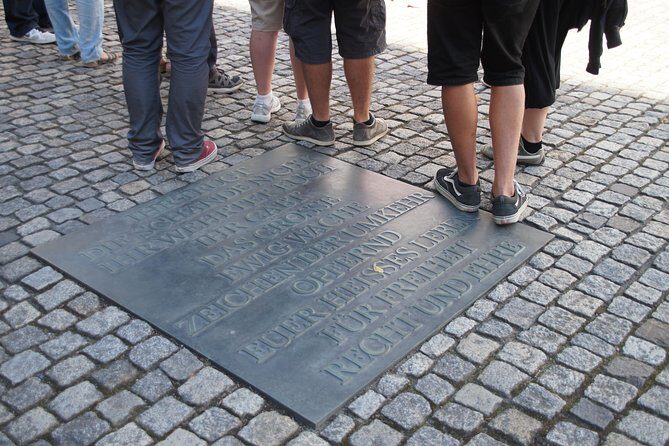
Next comes a memorial dedicated to the Sinti and Roma victims of National Socialism. It recognizes the Porrajmos genocide—reported as 220,000 to 500,000 people murdered—and it’s one of the stops that pushes the tour beyond the usual focus on leaders.
This is a powerful moment because it forces the timeline to widen. The Third Reich wasn’t only about war or borders; it was also about systematic persecution of entire groups. Memorials like this help you see that racism was not incidental—it was built into policy.
The visit window is short, so if you like to read every line carefully, arrive with a calm pace and don’t try to “finish” the whole memorial at full speed.

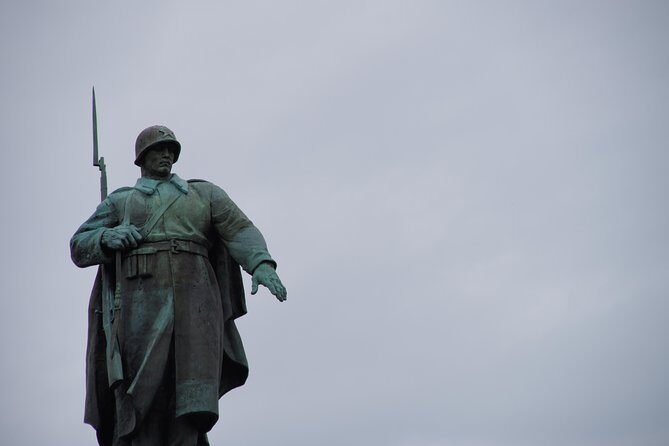
Soviet Memorial Tiergarten: the war’s end, and who is remembered
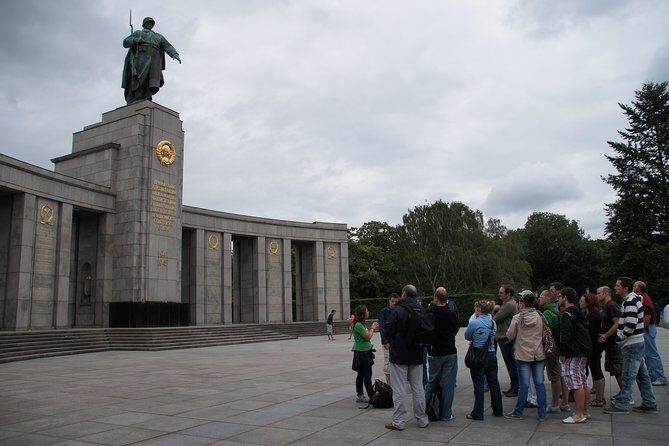
Then you’ll reach the Soviet Memorial in the Tiergarten, erected by the Soviet Union to commemorate war dead—especially the 80,000 Soviet soldiers who died during the Battle of Berlin in April and May 1945.
This stop adds an essential balance. If you only focus on Nazi Germany’s actions, you miss the broader human cost and the fact that Berlin’s final months were part of a wider catastrophe. It also illustrates how different countries shape remembrance after the fighting ends.
Short stop, big impact. Use it to connect the Nazi era to the war’s conclusion, and to remember that Berlin’s history is written by multiple nations.
Tempelhof: an airport with a future-then-past story
After that, you’ll stand near Tempelhof. This was one of the most important airports in the early 20th century, and in 1926 it was Europe’s largest, handling ten flights daily.
Why it belongs in a “Berlin under Nazism” tour: transportation infrastructure is never neutral. Airports, rail lines, and major facilities support power—whether through military planning, political display, or the machinery of a state operating at scale.
Even if you’re not an aviation fan, the key takeaway is about how modern systems can be repurposed. Berlin’s built environment tells that story if you know where to look.
Topography of Terror: where the terror system gets explained
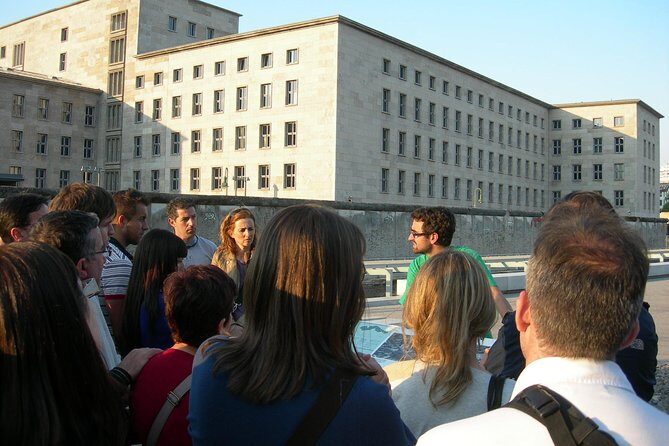
The tour then brings you to Topography of Terror, an indoor and outdoor history museum in Berlin. This is one of the stops with admission included, so you’ll get more than a quick look at exterior plaques.
This is also where the Nazi story becomes more understandable rather than just tragic. A site like this tends to focus on mechanisms—how terror was organized, how records and repression worked, and how violence was turned into governance.
The best way to use your time here is to let the guide give you the story thread, then watch for the moments when your brain clicks: you go from facts to connections. If your guide uses images or videos, that can help you picture systems that otherwise feel abstract.
Fuhrerbunker: the last-hours space (and the weight of it)
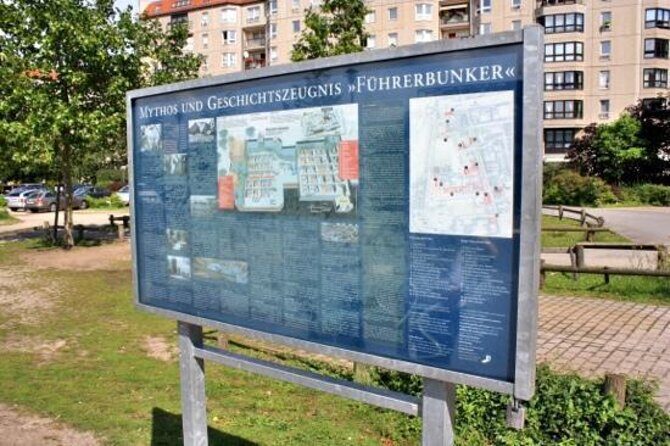
After the museum, you’ll head toward the area of the Fuhrerbunker, where Hitler had a refuge during his last hours alive.
This stop can feel intense for obvious reasons. It’s not history as a lecture; it’s history as place. You’ll likely talk about the collapse and the end of the regime, and how the final stage differed from the early ambition.
A small consideration: this area is about memory and context more than “tourist photos.” Keep your expectations realistic and treat it like a solemn part of the route.
Ending at the Memorial to the Murdered Jews of Europe
Your tour ends at the Memorial to the Murdered Jews of Europe. Ending here gives the route a grounded, remembrance-focused finish rather than stopping at the machinery or the final bunker.
This makes the whole experience feel more complete. You’re not only learning about Nazi institutions; you’re also leaving with a public space built to keep victims present in collective memory.
If you want to linger after the tour, do it. This is one of those places where slowing down helps you absorb what you’ve learned.
Why this route works (and what to do with it)
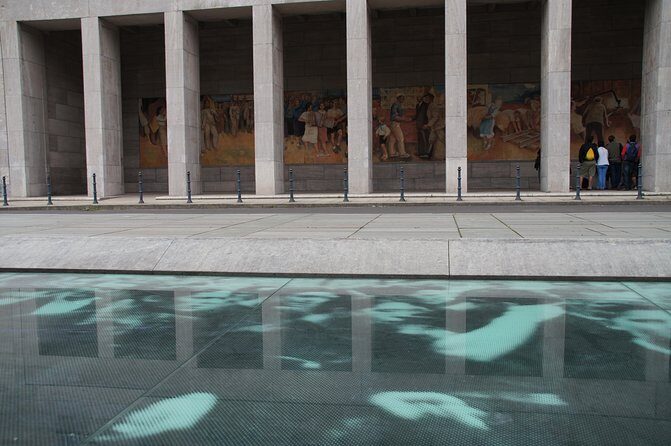
The best guided history tours do two things well: they help you move through the city, and they help you build cause-and-effect in your head. This one feels designed for both.
1) It’s not only “where” but “how it connects.”
Instead of jumping randomly between famous sites, the route includes political space (Bundestag area), targeted genocide remembrance (Sinti and Roma memorial), war-end memory (Soviet memorial), infrastructure (Tempelhof), and the terror system (Topography of Terror). That mix gives you a broader understanding of how a regime built power and how Berlin later processed the aftermath.
2) You get a human-scale sense of responsibility.
Memorials for Sinti and Roma victims and the Memorial to the Murdered Jews of Europe keep the focus where it belongs: on victims and lived consequences. That’s a crucial balance, especially on a tour that also touches political and military sites.
One possible drawback:
Because the tour packs multiple heavy stops into about 4 hours, you may feel mentally taxed if you’re sensitive to difficult content. If you’re doing it as part of a busy itinerary, schedule something calmer afterward—food, a park walk, or any low-stimulation plan.
Guides: why the Spanish explanations matter
The feedback you provided highlights a consistent theme: guides are praised for professionalism, respect, and the ability to make events feel connected rather than just listed.
Names that appear in the feedback include Julia, Júlia, Helena, and Celia. Multiple comments describe guides as attentive, friendly, and highly prepared—and one notes that using photos and videos helped place the theme in your mind. If you like learning with visuals, that’s a good sign.
This tour also seems to work well for people who want clarity. One comment describes the visit as didactic, and another mentions that the guide followed the group’s route and expanded information when possible. That suggests the guide style is not rigid.
Who should book this Berlin under Nazism experience
You’ll get the most out of this tour if you:
- Want a structured introduction to the Third Reich without designing your own map
- Prefer a guided route that includes memorial context, not only political buildings
- Are comfortable with a serious, emotionally heavy topic presented thoughtfully
- Like asking questions and getting detailed explanations in Spanish
It’s also a solid choice if you only have a short time in Berlin and want major stops covered in about 4 hours.
If you’re the type who hates museums and prefers only exterior sights, you may find the Topography of Terror segment a lot—but that’s also where the tour earns its “why it’s worth it” reputation.
Should you book this tour?
My take: yes, book it if you want a guided route that makes Berlin’s Nazi-era sites understandable in context, not just memorable. The value is strong because admission is included for key stops and the route covers multiple essential themes—genocide remembrance, terror mechanisms, war-end reality, and how modern Berlin rebuilt political life.
Skip or reconsider if you’re looking for a purely sightseeing day, or if you already know you’ll struggle with heavy subject matter. In that case, you might want a lighter history tour first, then come back later for this one when you have more mental space.
If you do book: wear comfortable shoes, bring water, and pace yourself mentally. This tour is the kind that sticks with you—because it’s built around the places where Berlin chose to remember.
FAQ
How long is the tour?
It runs for about 4 hours.
What time does the tour start?
The start time is 10:00 am.
Is the guide Spanish-speaking?
Yes. The tour includes a Spanish speaking guide.
What’s the group size?
The tour has a maximum of 25 travelers.
Are admission tickets included?
Yes. Admission tickets are included for the stops that require them, including Topography of Terror and the specified memorials on the route.
Is the Berlin public transport ticket included?
No. An AB transport ticket is not included.
Where does the tour start and end?
It starts at the Berlin TV Tower area (Panoramastraße 1A) and ends at the Memorial to the Murdered Jews of Europe (Cora-Berliner-Straße 1).
Is it a mobile ticket?
Yes, it’s a mobile ticket.
Can I cancel for a full refund?
You can cancel for a full refund if you cancel at least 24 hours before the experience’s start time.