REVIEW · BERLIN
Berlin and Car Culture Tour
Book on Viator →Operated by Berlin car culture · Bookable on Viator
A few street corners explain how cars changed Berlin. This Berlin car culture tour uses a tight loop of landmarks to connect the birth of motoring, the politics of technology, and the way modern electric cars are reshaping everyday life. You’ll walk through places like Potsdamer Platz and Leipziger Platz, with stops designed to feel like a timeline you can actually see.
I especially like two things: the clear car-history story (from early invention to modern mobility) and the fact that the stops include free admission tickets to what you’re viewing. It also helps that it stays small, with a maximum group size of 30, so the guide can keep the conversation moving.
One thing to consider: the tour does not include your daily public transport ticket for Berlin’s AB zone, and you’ll still need it to get between the meeting point and end point. If you’re planning to use transit anyway, build that into your budget.
In This Review
- Key highlights if you’re into Berlin and cars
- Why this Berlin automobile history route fits in about 3 hours
- Meeting at Potsdamer Platz and ending by Beusselstraße
- Stop 1: Potsdamer Platz, Germany’s oldest traffic light and the Benz moment
- Stop 2: Leipziger Platz and the electric-car future (Tesla included)
- Stop 3: Moabit, motor “timeless jewels” in Berlin
- What’s included (and why free entry matters for value)
- Transport reality check: the AB zone ticket is on you
- Group size, mobile ticket, and how that affects your experience
- The guide energy: what good storytelling changes
- Who should book this Berlin car culture tour
- Should you book this tour?
- FAQ
- Where is the tour starting point?
- Where does the tour end?
- How long is the Berlin and Car Culture Tour?
- What language is the tour offered in?
- Do I need a Berlin public transport ticket?
- Are entrance tickets included?
- Is there a maximum group size?
- Is there free cancellation?
Key highlights if you’re into Berlin and cars
- Oldest traffic light in Germany at Potsdamer Platz, paired with the early shock of the automobile
- Karl Benz invention context explained at street level, not just in a textbook
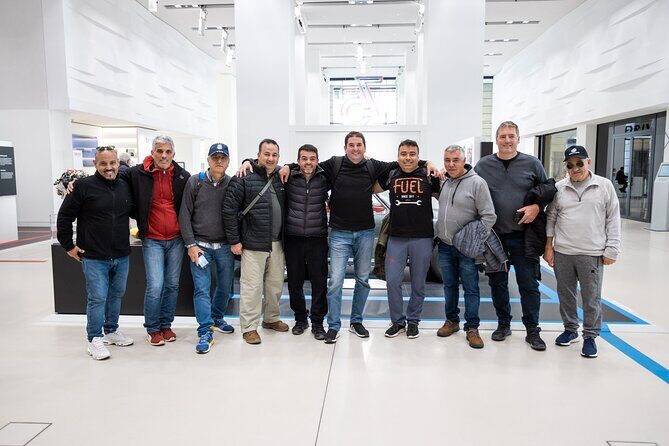
- Electric car showcase at Leipziger Platz, including time to see Tesla hardware made near Berlin
- Future-of-mobility debate that tackles both tech and politics without getting preachy
- Moabit motor-story time focused on “timeless jewels” and Berlin’s car-side surprises
- Small group feel (up to 30) plus a mobile ticket that’s easy to manage on the move
Why this Berlin automobile history route fits in about 3 hours
This tour is built for people who want meaning fast. Three hours sounds short, but the pacing works because you’re not trying to see every museum in Berlin. Instead, you’re using the city itself as the lesson plan: one stop for origins, one stop for today, one stop for the living texture of car culture.
You’ll also get a rhythm that’s easy to follow: brief time at each major point, then talk and questions where it matters. The stops are spaced so you can connect the dots as you move, rather than treating each location like a separate, unrelated attraction.
You can also read our reviews of more tours and experiences in Berlin.



Meeting at Potsdamer Platz and ending by Beusselstraße
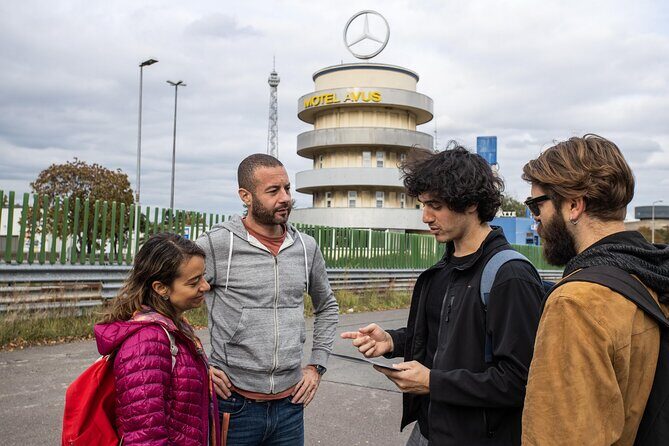
You start at Potsdamer Platz 10, 10785 Berlin and you finish near Beusselbrücke / Beusselstraße area, 10551 Berlin. That means it’s not a round-trip walk back to the first corner. If you’re pairing the tour with dinner or another activity, check your route planning so you’re not rushing to catch a connection right after.
The meeting area is in the core tourist zone, which is useful if you’re coming by public transportation. The tour listing notes it’s near public transportation, so you should be able to get there without a long walk from transit.
Stop 1: Potsdamer Platz, Germany’s oldest traffic light and the Benz moment
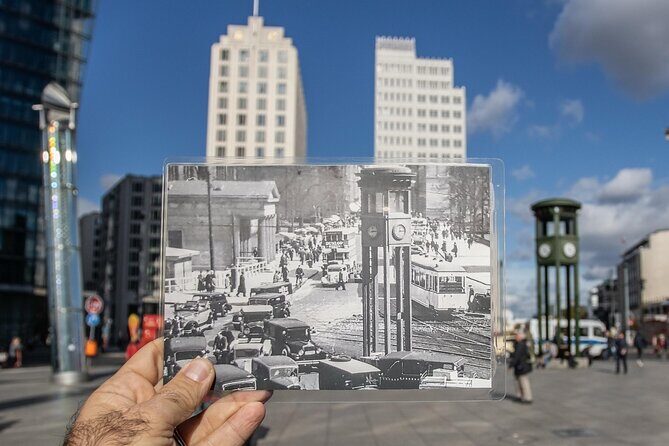
This first stop sets the tone: cars didn’t just appear—they caused a reaction. At Potsdamer Platz, you’ll get a history jump-start with two standout themes: the story of early motoring and the public shock that followed.
One anchor is the oldest traffic light in Germany, which is a neat reminder that road rules and traffic technology grew right alongside car culture. From there, the talk shifts toward Karl Benz’s invention and the furor it created when the automobile was new. It’s not only about the machine. It’s about how people reacted to change—especially change you could hear and smell.
What I think makes this stop especially useful for you is that it connects engineering to daily life. A traffic light isn’t a museum object; it’s a living piece of infrastructure. When you see it while learning why streets had to adapt, the story clicks faster.
A possible drawback: because this stop packs several ideas into a compact area, you’ll want to stay close to your guide during the key explanations so you don’t miss the context.
Stop 2: Leipziger Platz and the electric-car future (Tesla included)
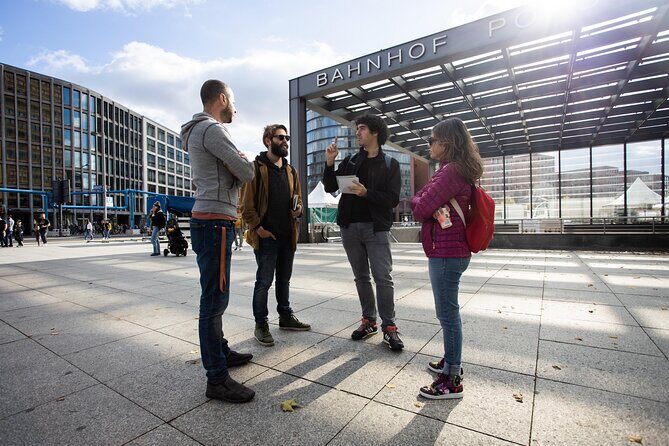
Next comes the “now” section at Leipziger Platz, where the conversation shifts from invention shock to modern momentum. Here, you’ll look at advanced electric cars and ask a very real question: is electric truly the future, or are we heading there for political reasons as much as technical ones?
This is also where you’ll get time in the cars and see a Tesla manufactured near Berlin. Even if you’re not a gearhead, seeing real electric design choices side by side helps you understand what the future looks like in physical form, not just as a headline.
I like that the tour frames this as discussion, not sermon. The idea is to weigh the practical reality of technology against the policy push behind it, including the question of when combustion engines might realistically be finished.
One consideration: electric-car talk can feel “product heavy” if you’re expecting pure historical storytelling. If that’s you, lean into the questions portion—ask what’s engineering, what’s regulation, and what’s likely to change next.
Stop 3: Moabit, motor “timeless jewels” in Berlin
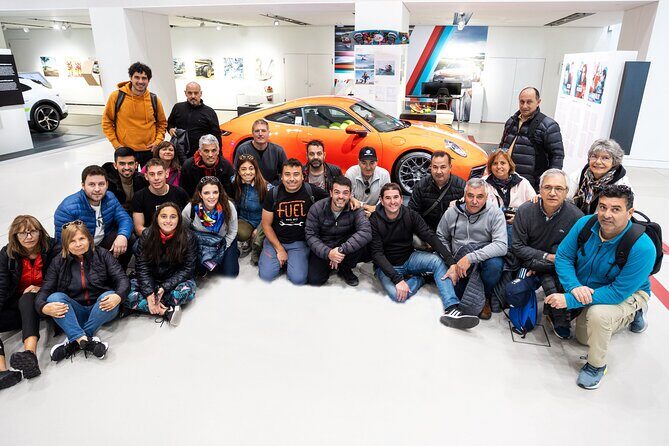
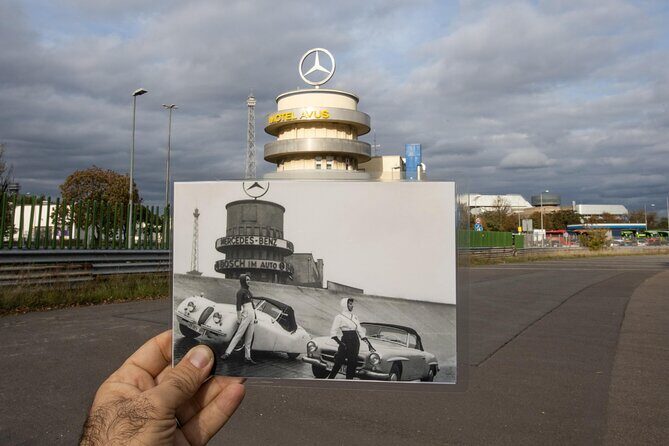
The final stop is in Moabit, and it leans into a different flavor of the story. Instead of focusing only on the invention-and-electric-car extremes, you’ll spend about 1 hour 30 minutes enjoying the tour’s “motor timeless jewels” theme—ideas and sights that help you feel how car culture sits within Berlin’s fabric.
This is the longest block of time on the itinerary, so it’s usually where the guide can slow down a bit. If you like learning through details—how places connect to systems, people, and technology—Moabit is where that payoff tends to land.
Because the exact sights within Moabit aren’t itemized in the details you provided, I’d treat this section as a thinking-and-observing stop. You’ll likely get more interpretive storytelling here than quick stop-and-snap sightseeing, which is a good fit if you want the “why” behind what you’re seeing.



What’s included (and why free entry matters for value)
The tour includes the entrance ticket to all the places we visit. That’s not a throwaway line—it directly improves your value. Car-focused tours sometimes add museum entry fees on top, and that can turn an okay price into a surprise total. Here, you’re paying one per-person amount and then covering the included access.
Price is listed at $50.57 per person for about 3 hours. Is that cheap? Not necessarily. But when you factor in:
- included entrances, and
- a guide-led route through multiple major landmarks, and
- a small group cap (30),
it lands closer to a “good structured experience” price than a budget-only deal.
If you’re traveling with friends, the value also improves because everyone can share the cost of your time saving. The guide does the connecting-the-dots work so you don’t have to research each stop first.
Transport reality check: the AB zone ticket is on you
Here’s the practical part: you need a daily transport ticket for Berlin AB zone, and it’s not included. That’s important because it can change the final cost depending on how many transit rides you’ll take that day.
Plan for this by buying the right ticket before you arrive. Then, use your public transport to link up with the meeting point at Potsdamer Platz, and to smoothly handle the end near Beusselstraße/Beusselbrücke.
Also, because the tour ends away from the start, keep one simple rule: don’t schedule a tight connection immediately afterward unless you’ve checked your route ahead of time.
Group size, mobile ticket, and how that affects your experience
This tour caps at 30 travelers. That’s a sweet spot for a street-history type experience. Big tours can be loud and generic. Smaller groups usually mean you can hear the guide and ask questions without feeling like you’re shouting over a crowd.
You’ll also receive a mobile ticket, which is handy in Berlin where you’re constantly moving and checking your phone for directions. Less paperwork, fewer chances to misplace things.
The tour is offered in English, so it’s straightforward if you want the explanations without translation friction. And it’s marked as “most travelers can participate,” which is a good sign for general flexibility—though if you have specific mobility needs, you should still confirm details directly with the provider.
The guide energy: what good storytelling changes
One of the strongest signals from the tour experience is how the guide approach makes history feel alive. In particular, a guide named Martin Sacan is described as having expertise and passion, with storytelling and detailed insights that keep the tour engaging and informative.
That matters because a car history tour can go two ways: a list of facts, or a narrative you can follow. Strong storytelling helps you understand not just what happened, but why Berlin cared about it—then and now.
Even if you don’t obsess over automobiles, you’ll probably appreciate the way a guide turns street-level landmarks into cause-and-effect: early technology leads to infrastructure. Infrastructure leads to rules and design choices. Those choices shape what you see today.
Who should book this Berlin car culture tour
This is a great match if you:
- like city history that’s grounded in real streets, not only inside buildings
- want a car-focused Berlin route that connects past to present
- enjoy debate-style topics like electric cars versus combustion engines
- prefer small-group guiding with time for questions
It’s also a good option if you’re limited on time. Instead of trying to piece together motoring history on your own, you get a structured loop across key areas.
If you’re only interested in cars as objects and you hate discussion, you might find the future-mobility talk more conversational than expected. But if you enjoy thinking about how technology changes daily life, you’ll likely have a strong time.
Should you book this tour?
Yes, I’d book it if you want a short, focused experience that uses Berlin as the classroom. The biggest reason: entrances are included, and the itinerary is built around clear themes—origins at Potsdamer Platz, electric mobility at Leipziger Platz, and a longer, slower “car culture” feel in Moabit.
Before you go, do two things:
- Make sure you’ve got the Berlin AB zone transit ticket ready.
- Check your schedule since the tour ends near Beusselstraße/Beusselbrücke, not back at Potsdamer Platz.
If you’re on the fence, this also has a friendly safety net: free cancellation is available up to 24 hours in advance for a full refund. That makes it easier to plan your Berlin days without panic.
FAQ
Where is the tour starting point?
The tour starts at Potsdamer Platz 10, 10785 Berlin, Germany.
Where does the tour end?
The tour ends near Berlin Beusselstraße / Beusselbrücke, 10551 Berlin, Germany.
How long is the Berlin and Car Culture Tour?
It lasts about 3 hours.
What language is the tour offered in?
The tour is offered in English.
Do I need a Berlin public transport ticket?
Yes. A daily transport ticket for AB zone is necessary, and it is not included.
Are entrance tickets included?
Yes. The tour includes the entrance ticket to all the places we visit.
Is there a maximum group size?
Yes. The tour has a maximum of 30 travelers.
Is there free cancellation?
Yes. You can cancel for a full refund up to 24 hours in advance. If you cancel less than 24 hours before the start time, the amount paid is not refunded.