REVIEW · WIESBADEN
Wiesbaden: Guided City Walking Tour
Book on GetYourGuide →Operated by City Guide Anastasiia Degtiar · Bookable on GetYourGuide
Wiesbaden has a quiet charm that rewards slow walking. This guided stroll ties together the city’s Roman roots and its elegant Art Nouveau side, with enough local humor to keep it light while still teaching you something. You’ll move at a comfortable pace and hit the main sights without turning it into a checklist.
I especially like the small-group size (up to 10 people). It makes the guide’s stories feel personal, not like they’re being shouted over a crowd. I also like that the walk hits the spa culture head-on, so the thermal springs and refined public buildings make more sense as you go.
One consideration: this tour isn’t set up for mobility impairments or wheelchair users. If walking distances and uneven streets are a concern, you’ll want to plan for alternatives.
In This Review
- Key highlights worth showing up for
- Why Wiesbaden’s spa-city style makes this tour worth it
- Starting at Schloßplatz: the easiest place to find your guide
- Roman roots and Art Nouveau facades: how the guide connects styles
- Thermal springs and spa traditions: the story behind the water
- Theater and the Kurhaus: elegance at walking speed
- The route ends in Kurpark: a graceful finish for lingering
- Small-group pace and what makes it feel memorable
- Price and value: about €20 for a tight, story-led walk
- Who this tour suits best (and who should reconsider)
- Should you book this Wiesbaden city walking tour?
- FAQ
- Where is the meeting point?
- How long is the walking tour?
- What main places will we visit?
- What’s the group size?
- Which languages are available?
- How do I recognize the guide?
- Is the tour wheelchair accessible?
- Are drones, alcohol, or audio recordings allowed?
Key highlights worth showing up for
- Up to 10 people means more questions and a calmer pace
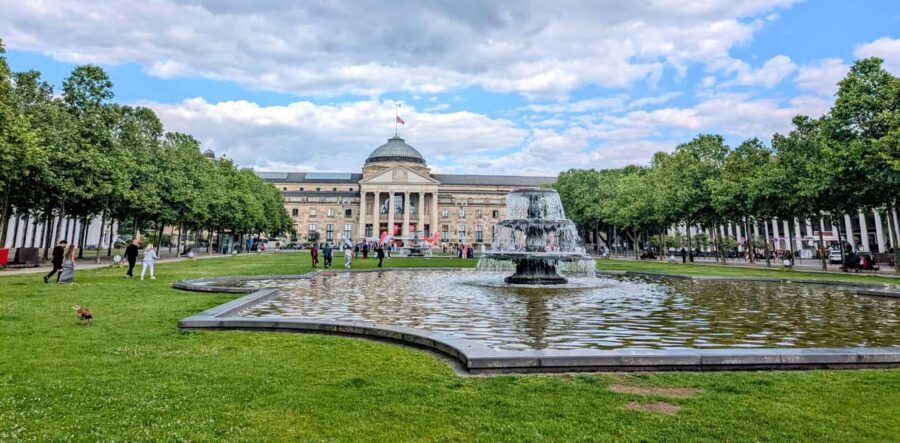
- Schloßplatz, Kurhaus, Theater, and Kurpark are handled in a tight walking route
- Roman-to-Art Nouveau storytelling connects architecture to the city’s past
- Thermal springs stop explains why Wiesbaden’s water culture matters
- Funny, amusing local facts make the tour easier to remember
- German and English guide with a clear meet-up at Schloßplatz
Why Wiesbaden’s spa-city style makes this tour worth it
Wiesbaden looks polished at first glance, but it’s more interesting than it seems. The city grew around its thermal springs and healing reputation, which shaped where people built their grand public spaces. That’s why a walking tour works so well here: you can literally see how water culture turned into architecture.
This tour is built to help you connect the dots. The guide doesn’t just point at buildings; they explain what’s behind the shapes, styles, and big-city swagger. You’ll also get plenty of amusing facts along the way, so the lesson sticks without feeling like homework.
And because it’s small-group friendly, the whole experience stays human. You’re not dodging a mass of people while trying to understand what you’re looking at.
You can also read our reviews of more walking tours in Wiesbaden

Starting at Schloßplatz: the easiest place to find your guide
You’ll begin at Schloßplatz, near the fountain and opposite the new Rathaus (Town Hall). If you like tours that make the start simple, this one is. The meeting spot is clear, central, and easy to orient from.
Look for the Stadtführerin with a red umbrella and a name tag. That detail matters because it saves time and stress—no wandering around the square hoping you spotted the right group.
This first stretch also sets the tone. You’re already in the city’s formal center, so the guide can quickly frame what Wiesbaden is known for—springs, elegance, and layers of history—before you even get far.
Roman roots and Art Nouveau facades: how the guide connects styles
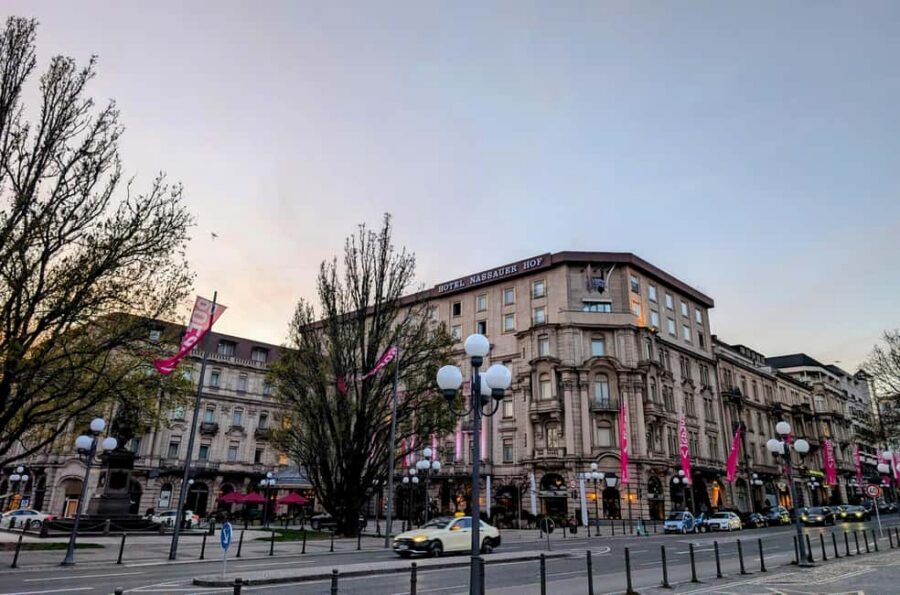
Wiesbaden isn’t only about pretty streets. It has Roman roots, and the tour uses that thread to help you understand why the city developed the way it did. You’ll learn about the early influence, then the walk shifts toward the more recognizable later looks.
The Art Nouveau component is where a lot of visitors go “Oh, that’s why it looks so… specific.” Instead of leaving you with a vague description, the guide ties the architecture to the city’s character. You’ll see how decorative design, public life, and the city’s identity line up in real space.
I like this approach because it turns sight-seeing into recognition. When you later spot a detail on your own, you’ll already know what to look for and why it matters.
Thermal springs and spa traditions: the story behind the water
A big reason to do a guided walk here is that Wiesbaden’s identity runs on thermal water. The tour includes a visit connected to the thermal springs, so you’re not just seeing buildings—you’re learning what made them important in the first place.
The best part is the context. When the guide explains spa traditions alongside the places themselves, the city stops feeling like an outdoor museum. You understand how people used these spaces, how the reputation of the springs influenced public life, and why the center of town grew around that energy.
If you’re the type who enjoys practical culture—how everyday habits shape streets—this stop will land well. Even if you don’t plan to use the springs yourself, the explanation makes Wiesbaden’s “spa-city elegance” feel logical, not random.
Theater and the Kurhaus: elegance at walking speed
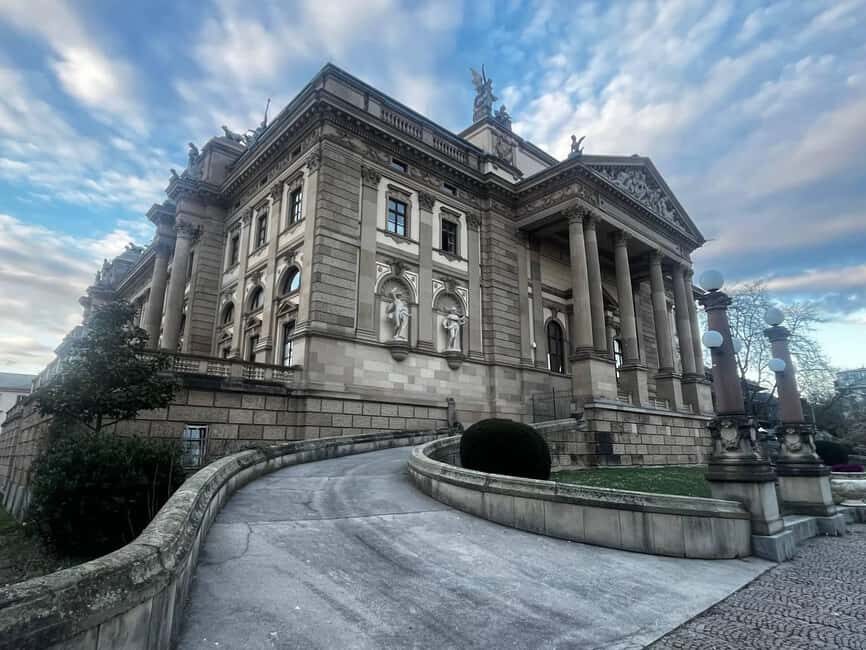
From the center, the tour moves through the area tied to the theater and the Kurhaus. These stops are perfect for appreciating Wiesbaden’s refined, civic side. They also give the walk variety: less “standing and reading,” more “look up, notice details, listen, move.”
The Kurhaus is one of those places where first impressions can be misleading. It looks grand and formal, but once the guide gives you the background, you understand the role it played in the city’s public rhythm. The Theater area adds a different flavor, showing how Wiesbaden wasn’t only about health—it was also about culture and social life.
The value here is pacing. You’re not sprinting from one landmark to the next. You have time to take in the setting, then hear what makes it meaningful.





The route ends in Kurpark: a graceful finish for lingering
The tour ends in Kurpark. That’s a smart finish because it gives you a natural transition from guided interpretation back to free strolling. After you’ve learned the story, the park area becomes more than scenery—it feels like part of the same design logic.
Kurpark also works well if you want an easy next step. You can keep walking, find a café, or just take a breather and process what you saw. I like tours that end somewhere pleasant, not somewhere random.
One more practical note: the experience is listed at 2.5 hours, but it’s described as lasting about 2 hours. Either way, it’s long enough to feel substantial, but short enough that you won’t lose your whole day to walking.
Small-group pace and what makes it feel memorable
The tour caps at 10 people, which is a major quality control feature. In a crowd, even a great guide turns into noise management. Here, you’re more likely to hear the details clearly and get answers if you ask something.
The route also seems carefully planned. The focus stays on iconic landmarks plus a few lesser-seen angles the guide can point out. That mix helps you leave with both “I saw the big stuff” and “I noticed things I would’ve missed.”
From the overall feedback, the pace is often described as just right. That matters because the wrong pace can ruin a walking tour: too fast, and you retain nothing; too slow, and you start tuning out. This one aims for steady, comfortable movement with time at each stop.
Price and value: about €20 for a tight, story-led walk
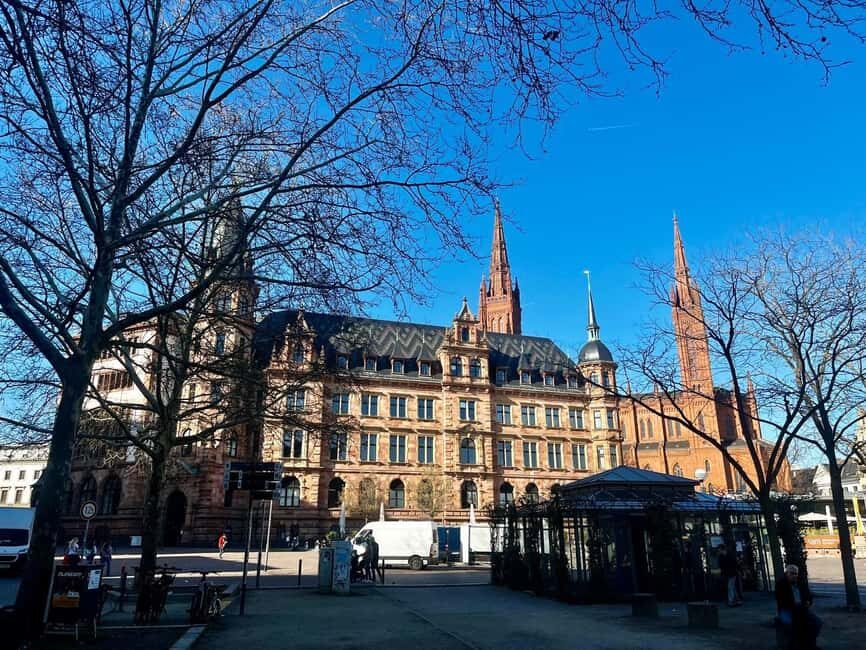
This tour costs €20 per person. That price makes sense because you’re paying for more than a route—you’re paying for local interpretation tied to specific stops: Schloßplatz, thermal springs, Theater, Kurhaus, and the walk to Kurpark.
At this level, the value isn’t in luxury. It’s in efficiency. You get a structured walk that saves you the guesswork of figuring out what to notice and which historical threads connect. You also get the small-group format, which is where you often feel the money at work—less crowd pressure and more guide attention.
If you’re in Wiesbaden for a short visit, this is an efficient way to get oriented quickly. If you’re staying longer, it’s still useful because it teaches you the “how to look” skill for the city’s architecture and spa layout.
Who this tour suits best (and who should reconsider)
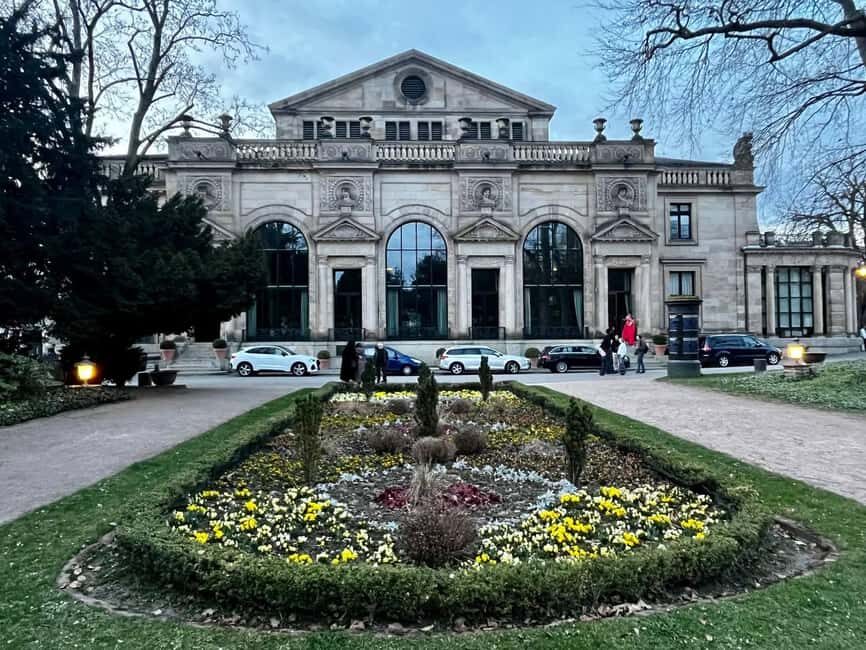
This guided walk is a strong match for first-timers in Wiesbaden and anyone who likes context while sightseeing. If you care about architecture, you’ll appreciate the Roman-to-Art Nouveau thread. If you care about culture, the thermal springs stop and the Kurhaus/Theater focus will keep the story grounded.
It also fits well if you want a relaxed morning or afternoon activity with a clear start and finish. The meeting point at Schloßplatz is easy, and the end in Kurpark gives you space to decompress.
On the other hand, the tour isn’t suitable for wheelchair users or people with mobility impairments. Since that limitation is explicit, I wouldn’t treat it as a maybe.
Should you book this Wiesbaden city walking tour?
Book it if you want Wiesbaden explained in a way that feels practical, not academic. The small group, the clear central meet-up at Schloßplatz, and the combination of Roman roots, Art Nouveau architecture, thermal springs, and the Kurhaus area make it a solid “story-led orientation” walk.
Skip it if mobility is an issue, since the tour isn’t designed for wheelchair access. Also skip it if you prefer unguided wandering only; this experience is specifically built for listening, noticing, and learning as you walk.
FAQ
Where is the meeting point?
You meet on the Neben dem Springbrunnen at Schloßplatz, near the new Rathaus (Town Hall). The guide holds a red umbrella and has a name tag.
How long is the walking tour?
It runs for about 2 hours, with the experience listed as 2.5 hours. The exact flow can depend on the pace of the group.
What main places will we visit?
The tour includes Schloßplatz, a stop connected to the thermal springs, the Theater and Kurhaus area, and it ends in Kurpark.
What’s the group size?
The group size is up to 10 people.
Which languages are available?
The live guide offers German and English.
How do I recognize the guide?
The guide will wear a name tag and carry a red umbrella.
Is the tour wheelchair accessible?
No. It is not suitable for wheelchair users or people with mobility impairments.
Are drones, alcohol, or audio recordings allowed?
Drones are not allowed. Alcohol and drugs are not allowed, and audio recording is also not allowed.