REVIEW · MECKLENBURG VORPOMMERN
Tour through the historic old town of Stralsund
Book on Viator →Operated by DARSSBAHN · Bookable on Viator
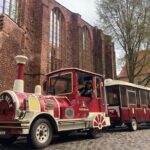
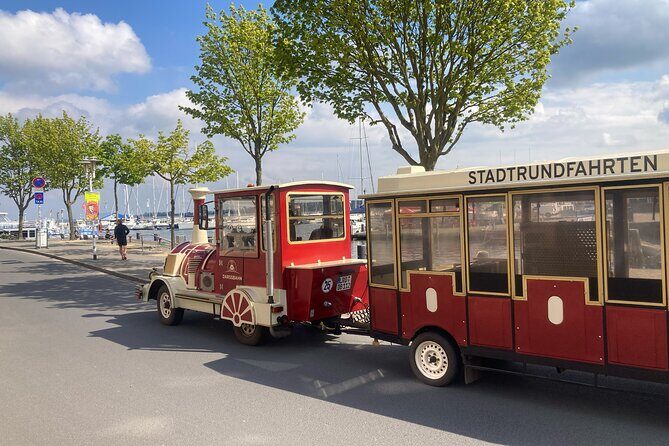
Hop on a 45-minute Stralsund ride. I like how the DARSSBAHN little train turns the historic old town into a smooth loop, starting at the fish market ferry bridge in front of the harbor island and gliding past maritime scenes, churches, and centuries-old buildings with German explanations along the way. You get a fast orientation without needing to map every turn yourself.
I love the architecture sampler: over 500 listed gabled houses, plus churches and monasteries that you can spot again and again as the route winds through the streets. I also like that you’re shown the harbor side up close—small canals, sailing boats, and fishing boats around the harbor island—so Stralsund looks like the Hanseatic port city it is.
One thing to consider: this is a short circuit at about 45 minutes, so if you want long stops, deep reading, or a slow wander, you’ll need to plan extra time after the ride.
In This Review
- Key things to know before you go
- Why the DARSSBAHN little train is a smart way to see Stralsund old town
- Getting your bearings at Hafen – Stralsund (fish market ferry bridge)
- Ozeaneum: seeing the museum district without changing your plan
- More than churches and bricks: the harbor island and maritime views
- Route walkthrough: Hansa-Gymnasium, the old harbor bar, and the Scheelehof
- Külpstraße to Neuer Markt: town hall views, ponds, fortifications, and ramparts
- Heiliggeist Monastery and Schwedenkai: finishing with a spiritual and waterfront note
- Hearing the city explained: German narration and a driver who talks
- Price and timing: 45 minutes that actually help you plan the rest of your day
- Who this tour is best for (and who might want something else)
- Should you book the Stralsund old town train tour?
- FAQ
- How long is the DARSSBAHN old town tour in Stralsund?
- Where does the tour start and end?
- What language are the explanations during the tour?
- How do I get the ticket?
- How many people are in the group?
- Is the tour dependent on the weather?
- What is the price per person?
Key things to know before you go
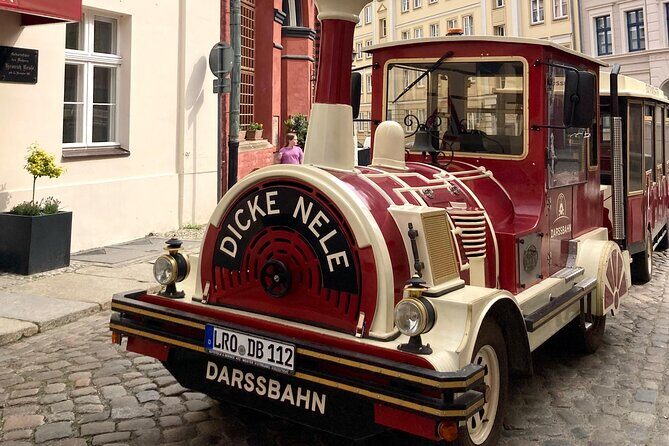
- A 45-minute orientation loop that connects the harbor island with the old-town core
- Ozeaneum is on the route, so modern Stralsund shows up right alongside the medieval vibe
- Over 500 listed gabled houses plus churches and monasteries, seen from a moving perspective
- Neuer Markt and fortifications come into view for that Hanseatic power feeling
- Heiliggeist Monastery and Schwedenkai close the trip with a water-and-stone finish
Why the DARSSBAHN little train is a smart way to see Stralsund old town
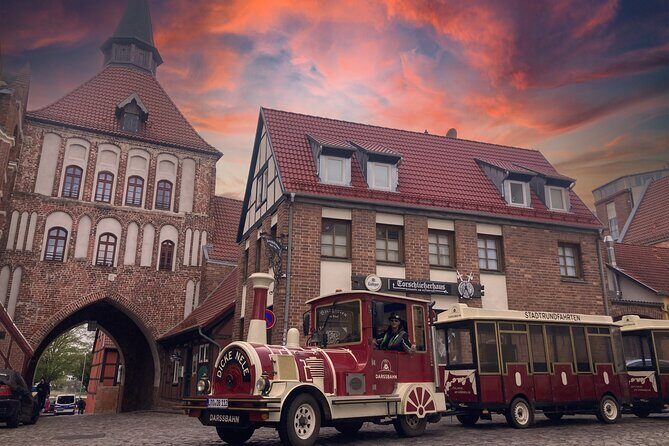
Stralsund has that classic North German look—brick, gables, canals, and the sea always nearby. The trick is that the old town can feel dense: it’s easy to get “sight overload” if you walk nonstop. This little-train format fixes that problem. In one stretch of time you get a lot of landmarks, and the route does the heavy lifting for you.
At $16.22 per person for roughly 45 minutes, the value is in coverage. You’re not paying for one viewpoint. You’re paying for a route that strings together the harbor island, major squares, and named buildings. It’s a good choice when you want to understand the layout first, then explore on your own later.
And there’s a practical bonus: the ride is capped at a maximum of 40 people, which usually means you can hear the explanations better and not feel stuck in a huge crowd funnel.
You can also read our reviews of more tours and experiences in Mecklenburg Vorpommern.

Getting your bearings at Hafen – Stralsund (fish market ferry bridge)
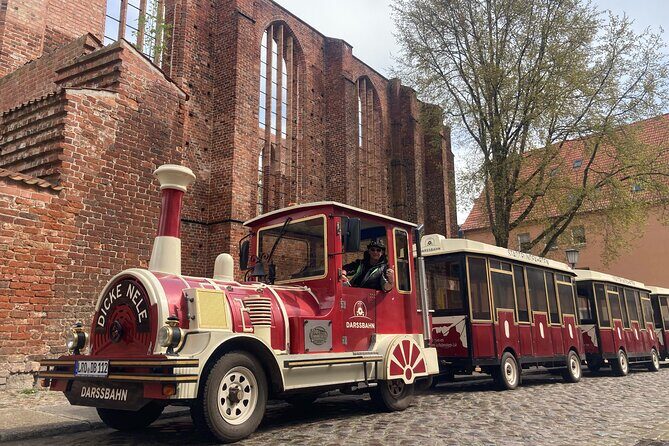
The tour starts and ends at the same place: Hafen – Stralsund, 18439 Stralsund, Germany. From there, the train begins near the ferry bridge at the fish market, in front of the harbor island. That matters because it puts you where Stralsund’s water story starts. You’re already in the port area before the tour begins, so your first views match the theme.
A few logistics points that are actually useful:
- You’ll have a mobile ticket.
- It’s near public transportation, so you don’t need to plan a special taxi run just for the start.
- Service animals are allowed.
- Confirmation comes at booking time.
If you like to take photos, arrive a touch early. You’ll want a clean angle at the start, especially since the route passes waterfront areas and narrow streets where perspective changes fast.
Ozeaneum: seeing the museum district without changing your plan
One highlight that’s easy to miss when you plan Stralsund as “just old town” is Ozeaneum, one of the largest and most modern museums in the north. This tour passes by it during the ride, so you get a sense of where the modern cultural landmark fits into the city fabric.
You shouldn’t expect museum time here—this is a guided circuit, not a ticket-and-stay experience. Still, the fact that Ozeaneum sits on the route is a clue: Stralsund doesn’t treat the past as a theme park. It’s an active city with current attractions right alongside historic streets.
If you’re the type who likes to pair a short orientation with one “real” attraction, this is a handy setup. You’ll know which direction to go later if Ozeaneum is on your must-do list.
More than churches and bricks: the harbor island and maritime views
Stralsund is famous for its historic center, but the harbor-side details are what make it feel alive. During the ride you’ll see the maritime side around the harbor island, including small canals and sailing boats and fishing boats.
This matters because gabled houses and churches can blur together if you’re walking all day. The water views act like visual punctuation. They break the scene into readable chunks: brick, then water, then brick again. That rhythm helps you remember what you saw.
The tour also references major architectural volume: over 500 listed gabled houses, plus numerous churches and monasteries. Even if you can’t count them (and you won’t), the scale tells you something: Stralsund isn’t just “pretty.” It’s preservation at work.
Photo tip: keep your eyes moving. The route includes both narrow streets and waterfront angles, and the best shots tend to appear when you’re looking one block ahead, not at the biggest sign.
Route walkthrough: Hansa-Gymnasium, the old harbor bar, and the Scheelehof
Once the ride gets going, it heads toward Hansa-Gymnasium. From there, you pass by the oldest harbor bar in Europe (as described on the route). Even if you don’t stop for a drink, it’s a great marker for the kind of long-lived street culture that lives next to the monuments.
Then the train goes into the narrow streets of the old town, past Scheelehof. Narrow streets are where the mood shifts. The buildings feel tighter, the gables look taller, and details are closer to your line of sight. On a moving ride, you won’t catch every name carved into stone, but you can still register the vibe fast.
The next notable stop is in Külpstraße, where you can look at the historic town hall facade. That’s a big one. Town hall facades are often the “face” of a city—places where power, wealth, and design meet. Getting a quick look from the train helps you spot it again later if you decide to walk back for closer photos.
Külpstraße to Neuer Markt: town hall views, ponds, fortifications, and ramparts
After the Külpstraße highlight, the tour continues past ponds, city fortifications, and ramparts toward Neuer Markt.
This is where the ride gives you context, not just scenery. Fortifications and ramparts explain why Stralsund’s old town looks the way it does. You’re not seeing buildings in isolation—you’re seeing a city shaped for defense and trade.
Neuer Markt is the turning point for the “square” phase of the tour. The ride makes a lap there, giving you time to register the space and street connections. If you’re the kind of person who likes to understand how people move through a place, this loop-lap format helps. You come away with a mental map: where the open square is, where the streets funnel into it, and where you might want to explore on foot afterward.
One practical note: squares can be easier for photos than narrow lanes, but sun and angle matter. If the weather is good, try to time your camera when the train slows or straightens for views.
Heiliggeist Monastery and Schwedenkai: finishing with a spiritual and waterfront note
After the Neuer Markt portion, the tour continues toward Heiliggeist Monastery and Schwedenkai. This is a nice pairing: religious architecture on one side, waterfront structure on the other.
Heiliggeist Monastery represents another layer of old-town life—monasteries weren’t just religious spaces; they were tied to care, community, and centuries of daily rhythms. Even from a moving perspective, a monastery stop on a route like this signals that the city’s importance goes beyond trade.
Then comes Schwedenkai, which brings you back to the water. The “kai” element helps reinforce Stralsund’s maritime identity. If you’ve been taking in gables and stone, this final stretch helps tie it back to the harbor reason the city became what it is.
You end back where you started at Hafen – Stralsund, so you can easily keep exploring without needing to find a new meeting point.
Hearing the city explained: German narration and a driver who talks
The tour includes numerous explanations of the city’s history in German. That means you’ll be learning while you’re looking. It also means you don’t need to read every sign to get something out of the experience.
The ride’s biggest praised strength is the people side: a super driver who explains a lot and shares tips. When a guide actively points out what matters—rather than listing facts in a monotone—you tend to remember the highlights.
If you’re not fluent in German, don’t worry too much. Look for the visual anchors as the train moves: church silhouettes, town hall facade moments, square openings. Your understanding won’t require perfect language. The route structure does a lot of the teaching for you.
Price and timing: 45 minutes that actually help you plan the rest of your day
This experience costs $16.22 per person and runs for about 45 minutes. It’s booked on average 6 days in advance, which usually means it’s a popular time-saver for first-time visitors.
Here’s how I’d think about value:
- You’re paying for guided orientation that hits multiple top sights in one shot.
- You’re paying for a format that works even if your legs are tired or the streets feel tight.
- You’re paying less for time, more for efficient seeing.
The weather part matters. This tour requires good weather. If it’s canceled due to poor weather, you’ll be offered a different date or a full refund. That’s important because a closed-in, rainy version isn’t described. So check the forecast. If the sky looks good, this is one of those “do it early and enjoy the rest of the city later” plans.
Who this tour is best for (and who might want something else)
This little train is a strong fit if you:
- want an easy first pass through Stralsund’s old town and harbor island
- like seeing many landmarks without coordinating a self-guided route
- want a plan that works well for people who prefer a shorter outing
It may be less ideal if you:
- crave long stops at one site (this is designed as a moving circuit)
- want a museum experience rather than city views (Ozeaneum is passed by, not entered on this ride)
If you’re visiting Stralsund for a day or two and want your bearings fast, this is the kind of plan that makes your later walking more meaningful.
Should you book the Stralsund old town train tour?
I’d book it if your goal is simple: get a clear sense of Stralsund’s layout and identity in under an hour. The DARSSBAHN route gives you the harbor island feel, the gabled-house scale, and key points like Neuer Markt plus highlights such as the town hall facade in Külpstraße. It’s also a good bet if you want the learning piece delivered by a guide who can actually explain.
Skip it or pair it carefully if you’re the kind of visitor who needs extended time at specific sights. This works best as an opener—or a quick refresher—then you explore on foot afterward.
If the forecast looks good, this is an efficient, low-stress way to understand why Stralsund feels so special: water, stone, and Hanseatic architecture all in one loop.
FAQ
How long is the DARSSBAHN old town tour in Stralsund?
The tour lasts about 45 minutes.
Where does the tour start and end?
It starts at Hafen – Stralsund, 18439 Stralsund, Germany and ends back at the same meeting point.
What language are the explanations during the tour?
The tour includes city-history explanations in German.
How do I get the ticket?
You’ll receive a mobile ticket.
How many people are in the group?
The tour has a maximum of 40 travelers.
Is the tour dependent on the weather?
Yes. It requires good weather. If it’s canceled due to poor weather, you’ll be offered a different date or a full refund.
What is the price per person?
The price is $16.22 per person.