REVIEW · ROTHENBURG
Rothenburg Scavenger Hunt and Sights Self-Guided Tour
Book on Viator →Operated by Explorial · Bookable on Viator
Rothenburg becomes a game on your phone. This self-guided scavenger hunt turns the streets into a set of mini missions, with on-site questions, hint-driven navigation, and photo tasks that keep your focus moving. I like that it works for kids and adults alike, and you learn Rothenburg facts while you’re hunting for the next spot. One catch: the average time estimate can feel short; I’d plan for extra walking in case you want to finish every task.
You start at Spitalbastei and receive an access code for the app after purchase, so you’re not waiting around for a meeting time or an in-person guide. The format is 100% outdoors, and you can pause, snack, and restart as you want because there’s no strict end time.
It’s offered in English, and the activity is private (only your group plays), which makes it easier to keep everyone engaged without slowing down for other people.
In This Review
- Key things to know before you start
- Entering Rothenburg by hunting clues, not tickets
- Spitalbastei: your straightforward launch point
- Plönlein and the photo tasks that turn corners into moments
- Klingen Gate Bastion and St. James Church: learning by reading what’s there
- The pacing reality: plan for 1–2 hours, but expect up to 3
- App controls and clue strategy (so you don’t get stuck)
- Value for money: $13.26 for an activity that gets you walking
- Who this Rothenburg hunt suits best
- Practical logistics: when you can play and what to expect
- Should you book the Rothenburg scavenger hunt?
- FAQ
- How long is the Rothenburg scavenger hunt?
- Where does the tour start and end?
- Is there an in-person guide?
- What language is the experience offered in?
- How do I access the tour in the app?
- Do I have to finish within a set amount of time?
- Is it private or shared with other people?
- Is it fully outdoors?
- Is it near public transportation?
Key things to know before you start

- Access-code app play: After you buy, you get a code and launch the game from the start point.
- Find, question, and photograph: You’ll use hints to reach sights, then answer questions tied to what you see on-site.
- Points-based fun: Photo tasks earn points, and the game structure helps keep energy up for groups.
- Iconic stops on the route: Expect missions around places like Plönlein, Klingen Gate Bastion, and St. James Church.
- No time limit pressure: The hunt is designed so you can go at your pace and take breaks.
- Private group experience: You play with just your own party, so you can coordinate without compromise.
Entering Rothenburg by hunting clues, not tickets
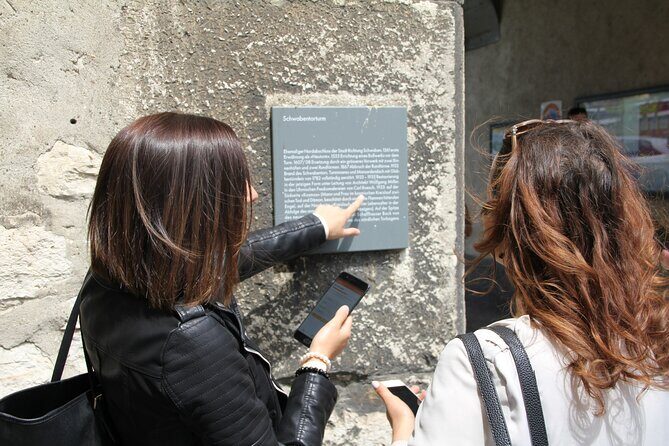
This is one of those tours that changes the way you see a place. Instead of wandering with no plan, you follow a simple loop: go find the next location, read what you can see there, answer a question, and then move on. That sounds basic, until you’re walking the old streets with a purpose and your brain stays switched on.
What makes it work well is that the tasks are grounded in the town itself. Most answers are hidden in signs or pictures at the site, so you’re not Googling. You’re practicing the slow-travel skill of noticing details—letters, symbols, small informational cues—that you would otherwise skim past.
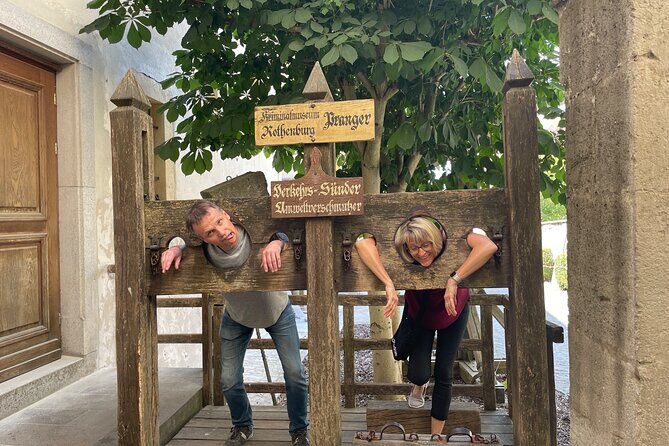
The photo tasks also matter. They’re not just “take a picture.” They push you to be creative with framing and timing, and that tends to make the walk feel lighter—especially with kids or mixed-age groups.
You can also read our reviews of more guided tours in Rothenburg
Spitalbastei: your straightforward launch point
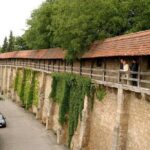
You meet at Spitalbastei in Rothenburg ob der Tauber, and the activity ends back where you started. That round-trip setup is more practical than it sounds. It means you don’t have to worry about logistics like a one-way transfer, and you can cleanly return to the main area if you need a break.
The good news for navigation: the app includes a map function to help you get where you’re going. In a place like Rothenburg, where lanes can twist and every corner looks “historic,” that built-in guidance saves time and reduces frustration.
One more practical advantage: because this is private and self-guided, you can set your own rhythm. If one person wants to zoom ahead to the next clue and the rest are still enjoying the view, you can regroup when it makes sense. That flexibility is part of the value.
Plönlein and the photo tasks that turn corners into moments

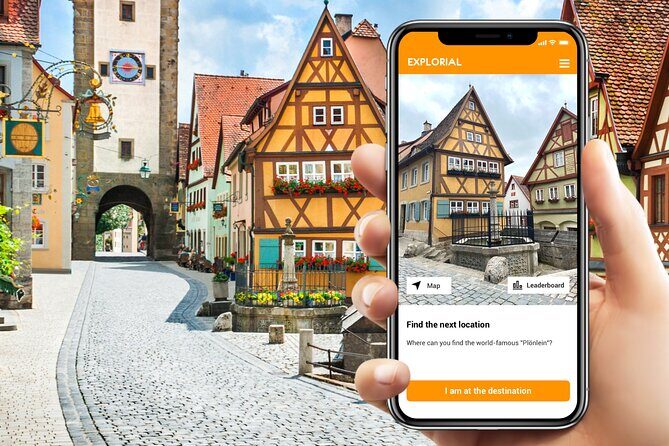
At some point, your game brings you to Das Plönlein, one of the most recognizable photo stops in Rothenburg. Even if you’ve seen it on a postcard, the scavenger hunt approach makes it feel fresh, because you’ll likely spend extra time there working through tasks rather than doing a quick snapshot and moving on.
This matters for two reasons. First, stopping longer helps you notice how the space works—angles, sightlines, and little visual relationships that are easy to miss when you’re rushing. Second, photo tasks keep the focus on doing, not just looking. You’re basically converting a sightseeing pause into an activity.
If you’re traveling with kids (or anyone who gets restless), mission-style stops like this are often the difference between a “tour” and a “win.” The game gives permission to slow down, play with the scene, and laugh at bad shots.
Klingen Gate Bastion and St. James Church: learning by reading what’s there
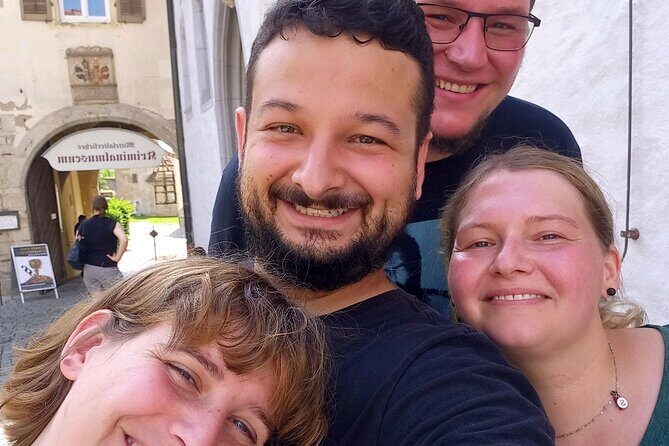
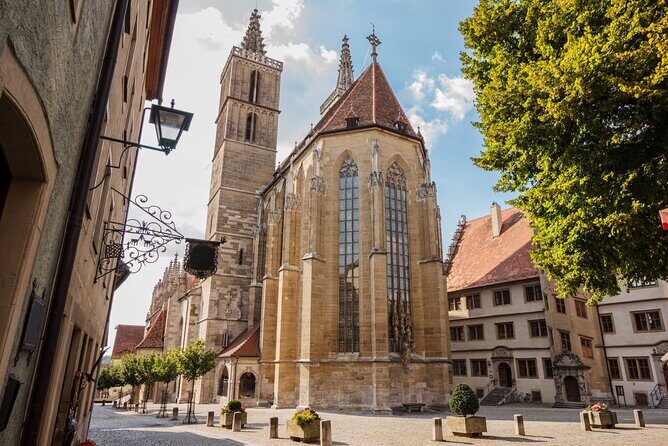
The route also includes places such as Klingen Gate Bastion and St. James Church. The key idea here is that the questions are usually answered using what you can see at the site—signs, pictures, and other visual hints.
That’s a smart way to learn because you’re connecting information to the real object in front of you. You’re not reading a lecture in the abstract; you’re matching facts to details you can actually verify. It also makes the experience feel less like a scavenger hunt for its own sake and more like active sightseeing.
I especially like how the questions can nudge you into noticing the town’s visual storytelling. Churches, gates, and streetscapes all have clues built into them, and the hunt pushes you to “work through” what you’re seeing instead of assuming you’ll remember it later.
The pacing reality: plan for 1–2 hours, but expect up to 3
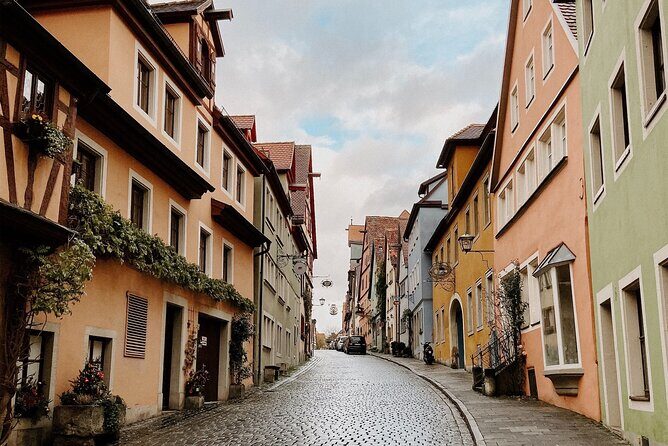
The experience is designed to last about 1–2 hours on average, and there’s no time limit. That setup is great because it removes pressure. You can take a longer break, stop for a snack, or redo a photo task if you’re not happy with the first try.
Still, the estimated time can feel optimistic. If you want to complete everything carefully—especially photo missions—give yourself a wider window. A few extra minutes at each stop turn into a long walk by the time you loop through the town.
My practical advice: treat the hunt like a flexible afternoon stroll. You’re not failing if you don’t finish in one go. Since there’s no need to race, you can come back later and pick up where you left off.

App controls and clue strategy (so you don’t get stuck)
The whole experience runs through the app, from navigation to hints. You’ll use the app’s map function to reach the next location, then follow hints to find the exact spot that triggers the question.
Here’s how to keep it smooth:
- When the app gives a hint, pause and look around before you speed up. Signs and pictures can be subtle.
- If the group splits up for a moment, set a quick meetup rule like back at the entrance or within one minute of each answer attempt.
- For photo tasks, check your framing and take a couple tries. You’re playing for points, and quick reshoots can be the difference between “done” and “fun.”
The structure also helps with group dynamics. Some tasks are individual, but the points system can make it feel like teamwork. It’s the kind of setup that keeps everyone engaged without forcing constant group coordination.
Value for money: $13.26 for an activity that gets you walking
At $13.26 per person, this is priced like an inexpensive add-on with a built-in payoff: guided movement without the cost of a human guide. For that money, you get:
- App-based navigation
- On-site questions tied to sights and clues
- Creative photo tasks
- A game structure that encourages you to actually stop and look
That’s why it feels like good value. You’re basically paying for a self-directed “reason to explore” plus a learning layer. If you would otherwise wander aimlessly for an hour or two, the cost can feel easy to justify.
It’s also budget-friendly for families. If you’ve got multiple people who might otherwise want different activities, a scavenger hunt gives a single shared plan that still leaves room for each person’s pace.
Who this Rothenburg hunt suits best
This works best when you want more than just passive sightseeing. If you like walking with a challenge, you’ll probably enjoy it. If you prefer quiet museums and minimal effort, it might feel a bit too game-like.
It’s a strong fit for:
- Families, especially with kids who need momentum to stay interested
- Friends or small groups who like friendly competition through points
- Solo travelers who want structure so they don’t miss key sights
- People who enjoy trivia but don’t want a lecture-style tour
Because it’s outdoors and has no in-person guide, it also fits travelers who like flexibility. You’re free to pause, rest, and keep going without waiting for anyone else.
Practical logistics: when you can play and what to expect
The activity runs daily (12:00 AM–11:30 PM) during the listed operating window, so you can choose a time that matches your energy level. It’s near public transportation, and it’s 100% outdoors, so bring weather-appropriate clothing.
Also, service animals are allowed, and the experience is private. That combination matters because it reduces the “crowd factor” and makes it easier to move at your own speed.
Should you book the Rothenburg scavenger hunt?
Book it if you want a low-cost, high-engagement way to see Rothenburg at walking pace. I’d especially recommend it if you’re traveling with kids, a mixed group, or friends who enjoy small challenges. The combination of point-scoring photo tasks and on-site question prompts makes it feel fun without turning the town into a theme park.
Skip it if you hate mobile apps, get annoyed when you have to hunt for clues, or only want a guided explanation of major sights. Since it’s self-guided and outdoors, you’ll be doing the work—finding and reading signs—rather than having someone summarize everything for you.
If you’re on the fence, here’s the deciding rule I use: if you’d enjoy a “choose your own pace” city walk, this is a great match.
FAQ
How long is the Rothenburg scavenger hunt?
It lasts about 1–2 hours on average, with no strict time limit, so your pace can stretch it longer.
Where does the tour start and end?
It starts at Spitalbastei, 91541 Rothenburg ob der Tauber, Germany, and ends back at the same meeting point.
Is there an in-person guide?
No. It’s self-guided, played outdoors, and you don’t need an in-person guide or other guests.
What language is the experience offered in?
The experience is offered in English.
How do I access the tour in the app?
After you buy the ticket, you receive an access code that you can use in the app.
Do I have to finish within a set amount of time?
No. The experience is not limited in time, so you can explore at your own pace and take breaks.
Is it private or shared with other people?
It’s private. Only your group will participate.
Is it fully outdoors?
Yes, it’s played 100% outdoors.
Is it near public transportation?
Yes, it’s near public transportation.