REVIEW · RUST
Private: Outdoor Escape Game Schluchsee: The Lost Village
Book on Viator →Operated by Berggeheimnis · Bookable on Viator
Puzzles meet the lake at Schluchsee. I like how The Lost Village ties the game to Schluchsee’s own story beats, and I like the puzzle flow—some simpler steps, some that make you regroup. One consideration: if you’re very practiced at escape rooms, a few challenges may feel fast, and one group can hit an unexpectedly tough first task.
This is a 3-hour outdoor escape game with a time-jump plot: in 1928, plans to build a dam threaten to bury a village under water, and a suitcase later appears as a clue connected to Amalie, the mayor’s daughter. You’ll follow the story through mysterious letters, locked boxes, and a haze of questions that you solve step by step as you walk.
For logistics, you start at the Tourist-Information Schluchsee (Fischbacher Str. 7) and end right back where you began. The experience works best in good weather, and you’ll have a mobile ticket; it’s also set up as a private activity, so only your group plays.
In This Review
- Key highlights before you go
- The Lost Village game: Schluchsee’s 1928 mystery in a 3-hour walk
- Starting at Tourist-Information Schluchsee and pacing your route
- How the puzzles work: backpack materials, reading tips, and the right amount of challenge
- Local history isn’t wallpaper: how the 1928 dam plot connects to real places
- Value and budgeting: is $105.63 per person worth it?
- Who should book The Lost Village (and who should consider a different activity)
- Quick practical notes that affect your day
- Final verdict: should you book this outdoor escape game?
- FAQ
- Where does The Lost Village start and end?
- How long is the outdoor escape game?
- Is this a private activity?
- What is the basic story of the game?
- What kind of puzzles should I expect?
- Do you have to solve everything without breaks?
- Is it easy to get to?
- What ticket do I receive?
- What happens if the weather is bad?
- What is the cancellation window?
Key highlights before you go
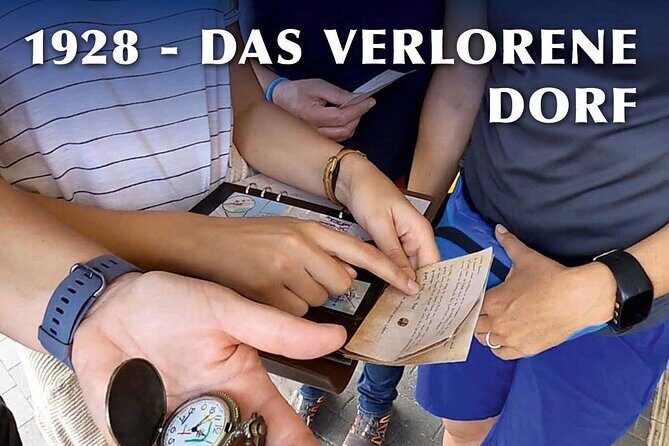
- A time-travel mystery (1928 to almost 100 years later) with concrete story props
- Real outdoor walking time (about 3 hours) with a clear start-and-finish loop
- Puzzle design with a mix of easy and trickier moments that most groups can solve
- Fishing-backpack style materials and a strong, hands-on feel
- A pause option that makes lakeshore breaks and picnic time realistic
- Private group play, with up to 48 participants possible for other games at the same time
The Lost Village game: Schluchsee’s 1928 mystery in a 3-hour walk
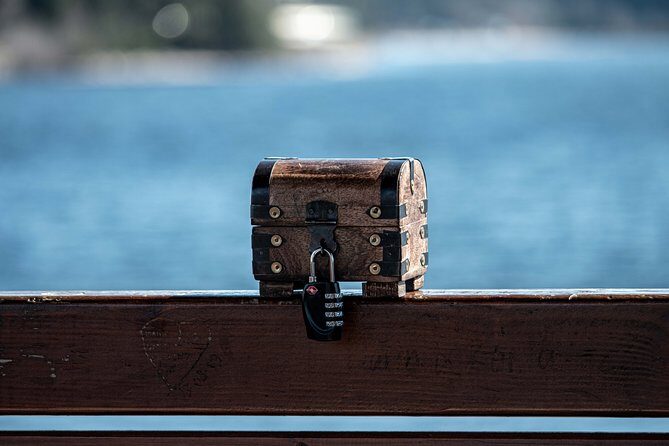
Think of this as an outdoor “escape room” where the walls are the lakeshore paths and the clues are folded into local history. The Lost Village is built around a dam in 1928 and the shockwave it creates for a remote village community. Then time jumps forward: nearly a century later, a suitcase shows up—linked to Amalie, the mayor’s daughter—and suddenly all those old questions start making sense.
You’re not just reading a plot. You’re actively solving it. The story pieces you encounter—mysterious letters, locked boxes, and other puzzle items tied to the narrative—turn the walk into a sequence of mini-problems. By the end, you’re meant to unravel what happened to the lost village and why the choices made in 1928 still matter.
The pace is long enough to feel like an event, but short enough to stay focused. Most people are looking at about three hours total, which is handy if you want something more engaging than a standard stroll.
You can also read our reviews of more tours and experiences in Rust.


Starting at Tourist-Information Schluchsee and pacing your route
Your start point is the Tourist-Information Schluchsee at Fischbacher Str. 7, and the activity ends back at that same meeting spot. That simple loop matters more than it sounds. You don’t need to worry about getting lost on the way home or trying to find a different pickup location.
The route itself is designed to be walked outdoors as you solve. From what the game experience suggests—and what groups consistently highlight—the surroundings are part of the mechanism, not just scenery. You’re using the environment to orient, and you’re stopping long enough to handle the puzzles without turning it into a sprint.
One practical plus: the game includes moments where you can slow down. In particular, there’s a pause option that allows for breaks—one reason picnic time on the lakeshore feels doable rather than forced. If you’re traveling with teens, family members of mixed ability, or anyone who gets hangry during puzzle stretches, that feature is genuinely useful.
How the puzzles work: backpack materials, reading tips, and the right amount of challenge
The game revolves around hands-on puzzle materials, and you’ll carry a set of supplies tied to the story. One detail I especially liked in the way it’s described by past participants is the fishing-backpack style kit—basically, a portable prop system that keeps the experience from turning into “paper only.” The result is a more physical, game-like feel as you move.
Difficulty is meant to land in a workable middle. Many groups report that some puzzles are easy and others are trickier, but they eventually get solved. People also praise the instructions, which helps because outdoors you can’t rely on an attendant standing over your shoulder. If you want a smoother start, the best move is to listen carefully and treat the first steps as part of the story setup, not just the first locks.
There’s also a built-in safety net: tips are available if you can’t get anywhere. That matters because outdoor escape games can be frustrating when the game has no “soft landing.” Here, you don’t have to guess forever.
Still, here’s the fair warning. One group experience shows that a first task can be unsolvable for some teams—enough to abandon the second half. That doesn’t mean the game is broken; it’s just a reminder that puzzle design has a learning curve. If your group hates trial-and-error, you may want to keep expectations flexible and be ready to use tips earlier rather than later.
Local history isn’t wallpaper: how the 1928 dam plot connects to real places
What makes The Lost Village worth your time is the way it ties story elements to the feel of Schluchsee itself. The plot isn’t an abstract template. It’s specific: 1928 dam plans, a reservoir that would bury a village, and a family link through Amalie, the mayor’s daughter. Almost a hundred years later, the suitcase appears as a physical thread connecting the eras.
That structure gives you two good outcomes. First, the story gives direction. You’re not wandering and hoping clues appear; you’re moving with a narrative reason for each step. Second, the history provides texture. When you’re solving a letter clue or working through a locked-box moment, the game is trying to make you feel like you’re uncovering something that belongs to this exact area.
Some past participants also call out strong integration with local history and love for the way the game materials fit the setting. They describe the experience as one of their best “escape walk” styles so far, which lines up with the overall design goal: collaboration outdoors, with the environment adding meaning instead of acting as background noise.
Value and budgeting: is $105.63 per person worth it?
At $105.63 per person, this isn’t a budget impulse buy. But you are paying for several things at once: a guided-style puzzle flow, a complete outdoor narrative, and a private-format experience where only your group plays.
The value question mostly depends on how many people are in your group and what you consider a good use of time. If you want something that lasts around three hours and gets everyone doing something together—rather than splitting up for separate activities—this tends to make sense. It’s also family-friendly and group-friendly in design, with a cooperative focus built into the concept.
It’s also rated highly: a 4.5 rating with about 91% recommending it, based on the provided summary data. That’s not a guarantee, but it’s a strong sign that the puzzle design and story integration land well for most teams.
One subtle budgeting point: because it’s outdoor and weather-dependent, your cost is more “time-sensitive” than an all-weather museum visit. If the day is looking iffy, plan backups or be ready to reschedule.
Who should book The Lost Village (and who should consider a different activity)
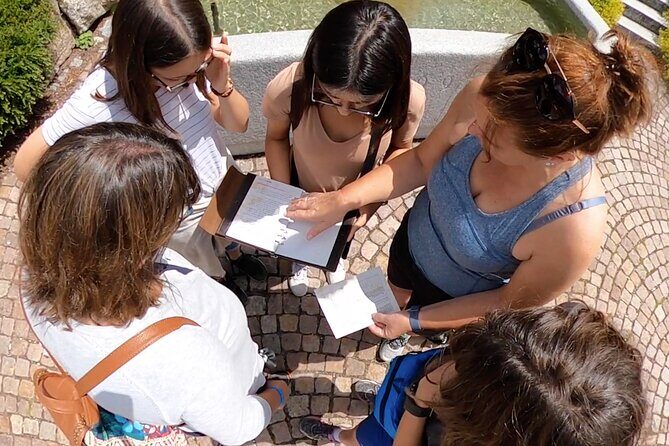
This is a strong fit if your group enjoys puzzle-solving and prefers being outside. It’s also a good choice for mixed ages because the game is designed for collaboration and most travelers can participate. If you’re bringing puzzle fans and people who just want a fun walk, the “some easy, some trickier” structure can help everyone contribute.
It’s especially good for:
- Friends who like working as a team
- Families who want an activity with a built-in story arc
- Colleagues looking for something different than a standard outing
- Escape-room fans who don’t mind outdoors and want a new style
You may want to think twice if:
- Your group hates anything that involves reading clues carefully and trying combinations
- You’re expecting a guided tour where someone explains everything as you go (this is puzzle-led)
- You’re traveling with very limited mobility or anyone who needs a fully flat, fully seated experience (the data only says most travelers can participate, not that it’s universally easy)
Quick practical notes that affect your day
You start and end at the same Tourist-Information Schluchsee location, so the day feels tidy. The experience also runs near public transportation, which helps if you’re not renting a car.
You’ll get a mobile ticket, so plan to have your phone handy. And because the activity requires good weather, keep an eye on forecasts. If it’s canceled due to poor weather, you’ll be offered a different date or a full refund.
Final verdict: should you book this outdoor escape game?
If you want a 3-hour outdoor experience that blends local storytelling with real puzzles, I think The Lost Village is a solid booking choice. The strongest reasons to pick it are the hands-on puzzle materials, the clear story premise centered on 1928 and Amalie, and the fact that teams usually describe a satisfying “we solved it” feeling rather than nonstop frustration.
Book it if your group enjoys teamwork and you’ll actually use the tip system if needed. Skip it if you’re looking for a passive sightseeing tour or if weather flexibility is hard for you.
If that sounds like your trip style, this is one of the better ways to spend time around Schluchsee: you walk, you solve, and you leave with a story you can retell.
FAQ
Where does The Lost Village start and end?
You start at Tourist-Information Schluchsee, Fischbacher Str. 7, 79859 Schluchsee, Germany. The activity ends back at the same meeting point.
How long is the outdoor escape game?
It lasts about 3 hours (approx.).
Is this a private activity?
Yes. Only your group participates.
What is the basic story of the game?
In 1928, plans to build a dam cause turmoil for a remote village because the reservoir would bury it under water. Much later, a suitcase appears as a legacy connected to Amalie, the mayor’s daughter, and you solve the mystery through letters and locked-box clues.
What kind of puzzles should I expect?
Expect an outdoor escape game format with puzzles that range from easier steps to trickier ones. If you get stuck, there are tips you can use.
Do you have to solve everything without breaks?
There is an option to pause the puzzle, which can help you take breaks such as picnics on the lakeshore.
Is it easy to get to?
The meeting point is near public transportation.
What ticket do I receive?
You’ll have a mobile ticket.
What happens if the weather is bad?
This experience requires good weather. If it’s canceled due to poor weather, you’ll be offered a different date or a full refund.
What is the cancellation window?
Free cancellation is available up to 24 hours in advance for a full refund, based on local time.