REVIEW · HEIDELBERG
Heidelberg at Night – Photo Walk
Book on GetYourGuide →Operated by Perfect Light Photo Art Gallery GmbH & Co. KG · Bookable on GetYourGuide
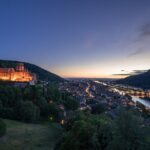
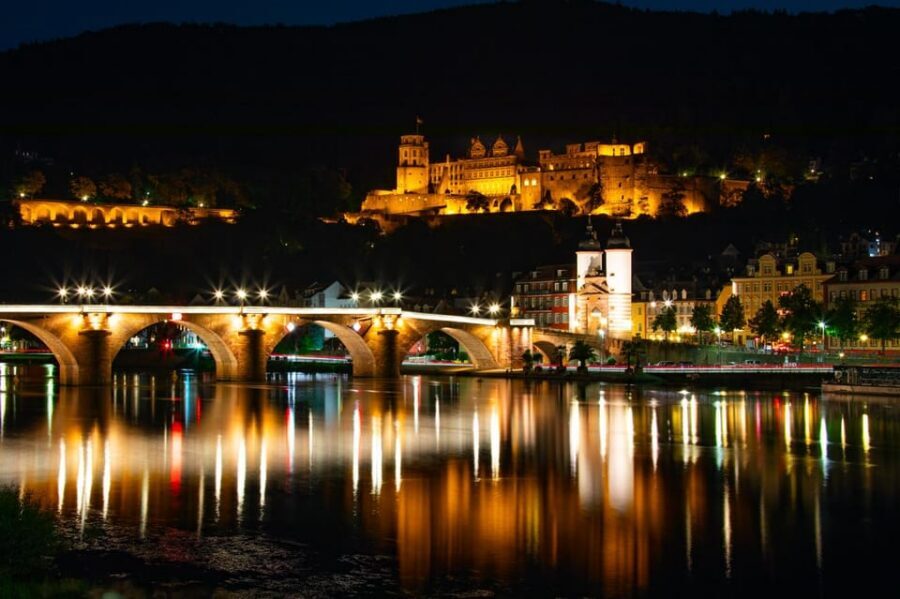
Night in Heidelberg is pure photo fuel. This 4-hour walk is built around the changing light, so you can photograph the Castle, Old Bridge, and Neckar Valley as the city shifts from sunset color into real darkness. You’ll get guidance to help you turn those postcard views into strong pictures, not just snapshots.
Two things I especially like: the blue-hour-to-night timing that gives you multiple versions of the same sights, and the relaxed coaching style that leaves time to experiment. You also follow a route that goes through the Philosophenweg and down into the old-town lanes, so you’re not just standing at the most obvious viewpoint.
One thing to consider: the walk covers about 6 km with some steep ascents and descents, and it’s not listed as suitable for people with mobility impairments. If you’re moving slowly or avoiding hills, you may want the private option designed for flatter paths.
In This Review
- Key points worth showing up for
- Blue hour to night timing in Heidelberg (and why it matters)
- Meeting at Neuenheimer Marktplatz and how the start is set up
- The 6 km route: Philosophenweg views plus steep climbs
- Heidelberg Castle and the Old Bridge at night: what you’ll practice
- Heiliggeistkirche, Market Square, and Kornmarkt photo stops
- Finding Neckar Valley views when the sky gets dark
- Your night-photo gear checklist (and the part people forget)
- Price and value: is $93 worth it for a Heidelberg night walk?
- Who should book this photo walk (and who should skip it)
- Should you book Heidelberg at Night?
- FAQ
- How long is the Heidelberg at Night photo walk?
- Where does the tour start and end?
- What sights will we photograph during the walk?
- Is the walk difficult?
- What camera gear should I bring?
- Do I need a tripod?
- What should I bring besides my camera?
- What about accessibility and mobility?
Key points worth showing up for
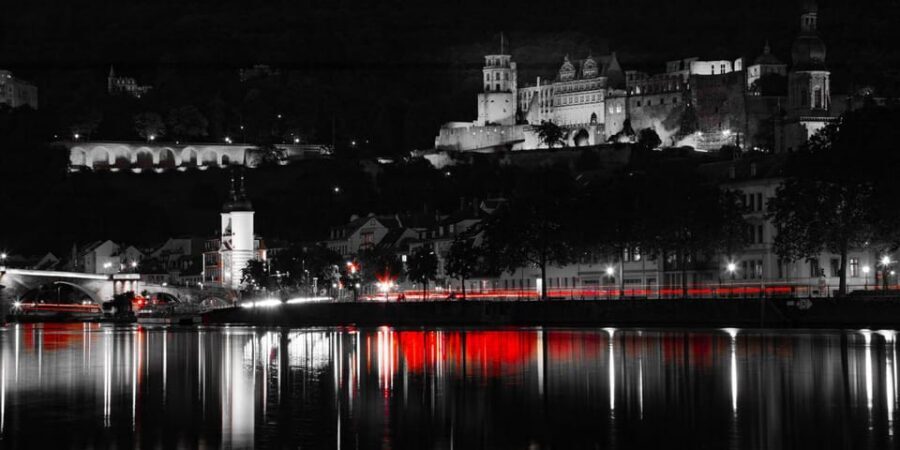
- Start near sunset, then work into blue hour and night, so you get several lighting moods for the same monuments
- Hands-on guidance from an experienced photographer, focused on camera settings and making better choices on the fly
- Motifs go beyond the big icons, with alleyways and angles that help you find less obvious compositions
- Long-exposure readiness: a tripod and flashlight are part of the night-photo reality here
- A route built for photos: about 6 km on foot, with steep sections, plus options for tailored routes
Blue hour to night timing in Heidelberg (and why it matters)
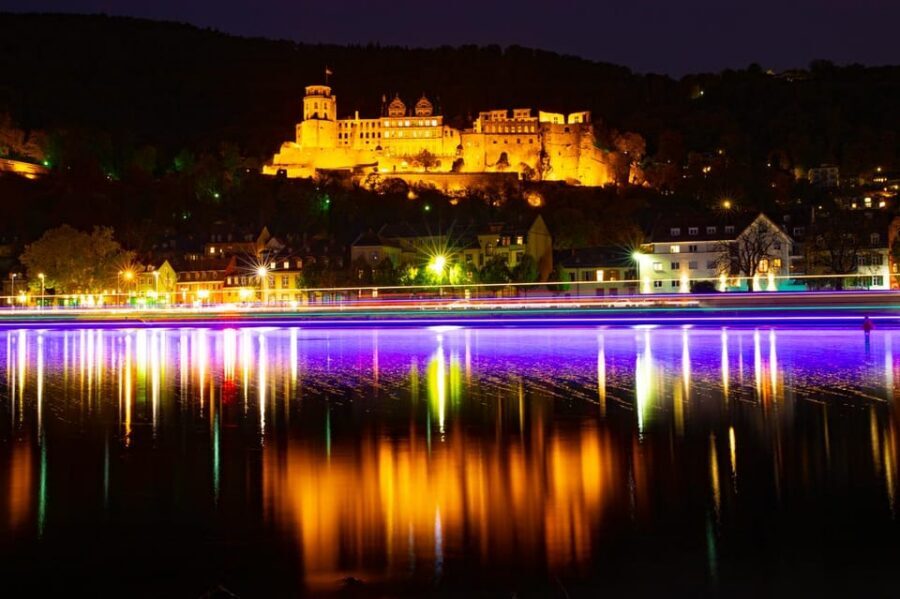
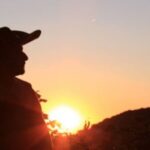
This tour is designed around one simple fact: light is not one thing. You’ll start around sunset, then you’ll keep photographing as the color in the sky deepens. That blue hour phase is where Heidelberg’s Old Town, bridges, and castle views often look the most magical, because the sky turns darker while the city lights begin to glow.
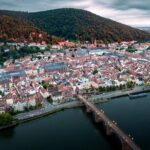
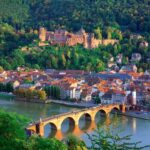
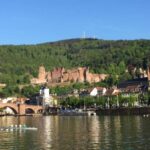
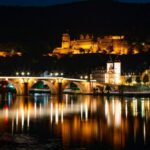
The payoff for you is practical. Instead of arriving at night after the best twilight is gone, you’ll shoot at the moment when reflections start showing more clearly and street lighting becomes a compositional tool. The tour specifically calls out views of the historic center with Heidelberg Castle, the Old Bridge, the Heiliggeistkirche, and the Neckar Valley, which means you’re not waiting for one perfect photo—you’re working a whole sequence.
Blue hour also rewards patience. You’ll be given time to try different angles and settings rather than being rushed from stop to stop. That is one of the smartest values in a photo walk like this: the guide isn’t just pointing; they’re helping you choose.
You can also read our reviews of more walking tours in Heidelberg
Meeting at Neuenheimer Marktplatz and how the start is set up
You meet at Neuenheimer Marktplatz, at the address listed for the Perfect Light Photo Art Gallery (Ladenburger Straße 21, 69120 Heidelberg). The tour starts and ends at the same place, which makes logistics easier when it’s dark and you’re hauling gear.
One comfort detail you’ll appreciate: the tour includes the ability to safely store luggage at the start and finish points. There’s also a toilet available at the start and finish, but not along the way. In a night shoot, that matters more than you think. If you’re carrying a tripod, water, and layers, you’ll want to travel light once the walk begins.
Language options are also useful. The guide provides live tour support in English and German, and the experience is offered in private or small groups. That usually translates into more helpful back-and-forth about your camera and your questions—especially during tricky low-light moments.
The 6 km route: Philosophenweg views plus steep climbs
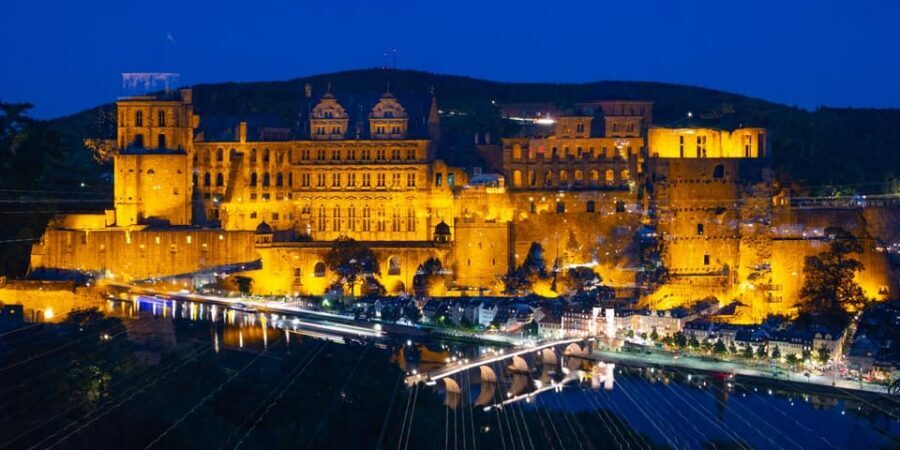
Plan for a real walking route: about 6 km over roughly 4 hours, with some steep ascents and descents. That’s not just a “nice stroll” style tour, and it changes what you’ll enjoy.
Here’s what you get when the terrain is part of the plan:
- Scenic viewpoints become reachable without needing extra transport.
- You’ll likely find more dramatic sightlines, especially along the Philosophenweg approach and the old-town lanes that sit up and down from the river.
Here’s what to watch:
- If you’re not comfortable with hills at dusk, take it slow. Wear shoes you trust, because you’ll be stopping frequently to compose and shoot.
- The tour is not suitable for people with mobility impairments as listed. If mobility is a concern, the private option is mentioned as a way to tailor the route to use flat paths.
If you’re the kind of traveler who likes walking anyway, you’ll find the route helps you see Heidelberg from more than one level—something you can’t get from a typical daytime bus stop itinerary.
Heidelberg Castle and the Old Bridge at night: what you’ll practice
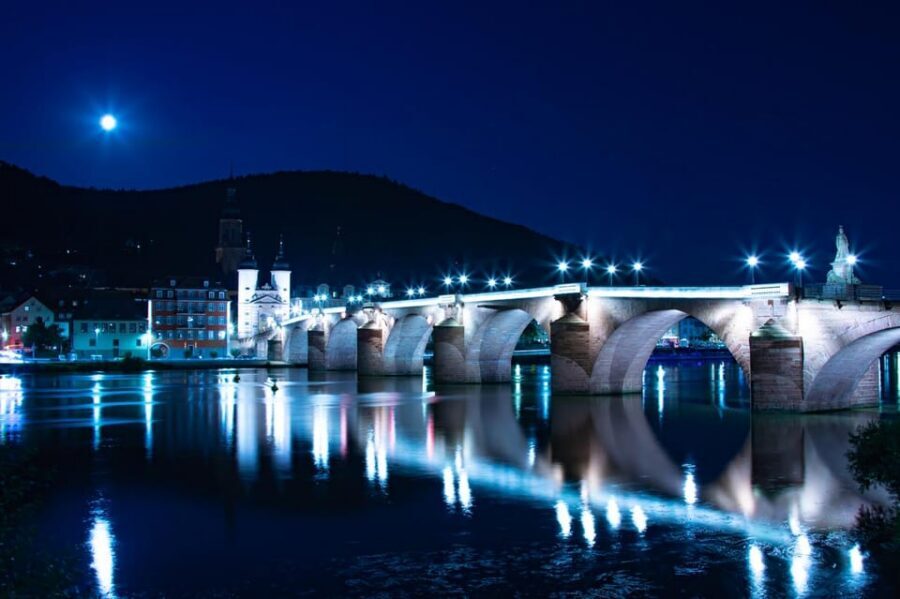
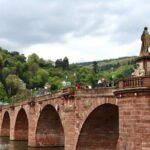
Two names dominate the attraction list for a reason: Heidelberg Castle and the Old Bridge. In night photography, these are ideal subjects because they give you built-in contrast—dark silhouettes, bright windows and lights, and strong shapes against the sky.
What the coaching is likely to help you do (and what you should try to apply):
- Make the most of long exposures: at night, you’ll want sharper structure with controlled blur from flowing water or moving lights.
- Use your settings deliberately: the tour notes you should have a camera where you can manually set aperture and shutter speed. That’s the difference between “hoping” and “knowing.”
- Stabilize your camera: they specifically state that a tripod is necessary for blue hour and low-light work.
Also, the guide doesn’t just cover technique in theory. The tour is built around timing and sightlines. You’ll photograph famous scenes and then move to creative positions where the guide helps you see alternative angles and compositions.
If you’re bringing a phone camera only, don’t panic. The tour says the best sides of Heidelberg can be captured with a good cell phone too, but you’ll have fewer options for long-exposure effects. With a tripod and a manual camera, you’ll be able to work more confidently with night results.
Heiliggeistkirche, Market Square, and Kornmarkt photo stops
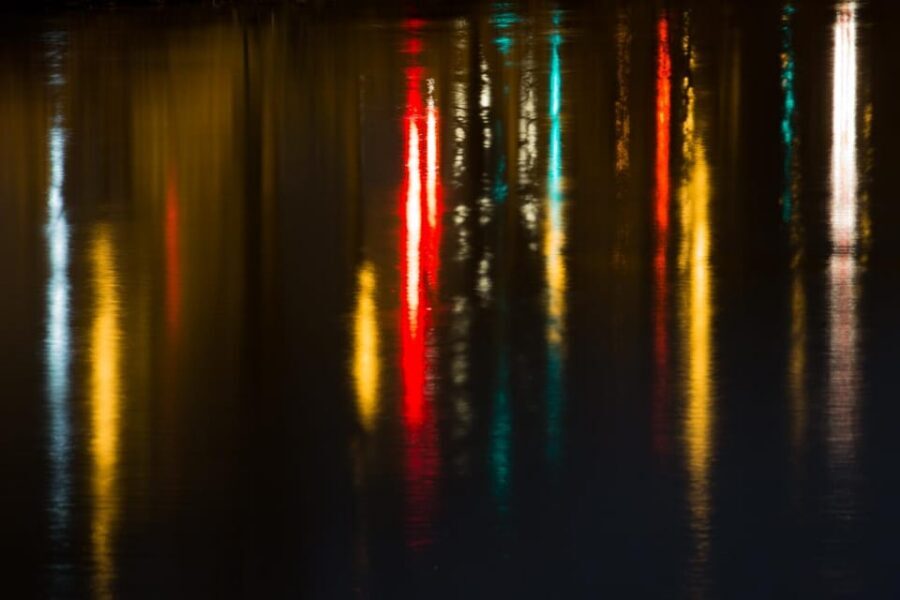
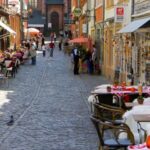
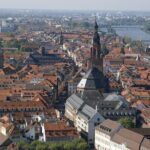
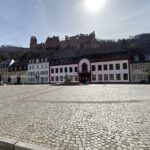
Not every great photo is a castle-and-bridge wide shot. This walk includes classic Old Town anchors such as the Heiliggeistkirche, the Old Bridge, the Market Square, and Kornmarkt—plus the historic alleyways between them.
Why those stops are valuable for your pictures:
- Churches and squares give you geometry. At night, straight lines and light placement help you build more structured frames.
- The listed sites are in the historic center, so you can capture both landmark views and human-scale scenes.
- Alleyways let you practice something useful: composing with leading lines and partial views instead of always centering the biggest object.
The tour specifically mentions discovering unknown motifs and new perspectives. That’s a big deal if you already know the “top view” angles from postcards or Instagram. A guided photo walk works best when it nudges you toward angles you wouldn’t try on your own—especially once it’s dark enough that you’re forced to slow down and think about light sources.
One more practical note: because this is a walking tour, you’ll likely be adjusting your gear quickly between stops. The guide’s coaching is a good moment to learn how to switch from handheld shooting to tripod setups without losing your sense of timing.
You can also read our reviews of more evening experiences in Heidelberg
Finding Neckar Valley views when the sky gets dark
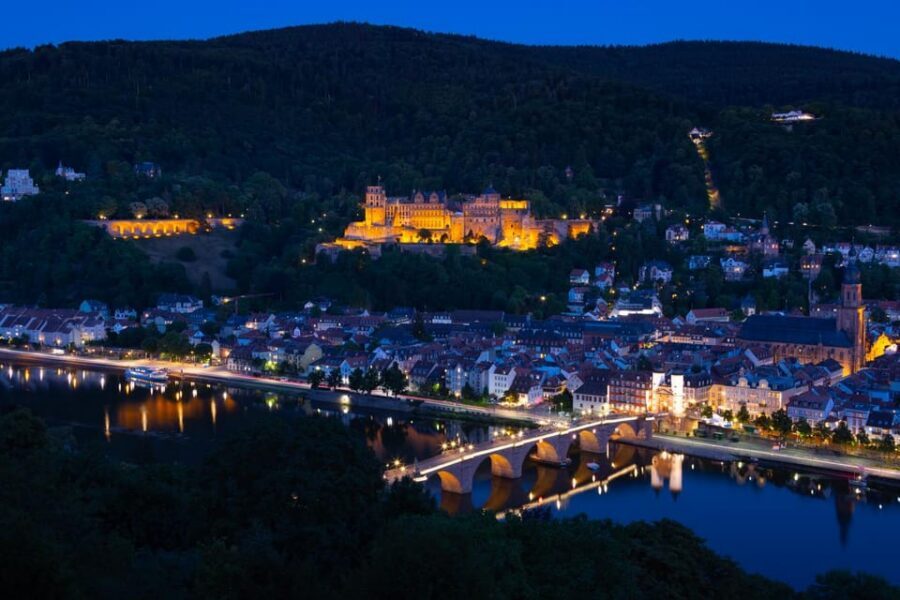
The Neckar Valley is part of the highlight list, and it’s the kind of subject that changes minute by minute. During twilight, you’ll often get a visible gradient in the sky and a warmer glow around the river. Later, those colors fade, but the river and city lights can become more graphic.
You’re not just photographing water. You’re photographing depth. River valleys add layers—distance, reflections, silhouettes, and the way light spreads across the scene.
This is also where the tour’s blue hour start helps you. If you wait until full night, you may lose the sky tones that make valleys look dimensional. Here, the planning helps you catch both moods: early evening glow and deeper night contrast.
Your night-photo gear checklist (and the part people forget)
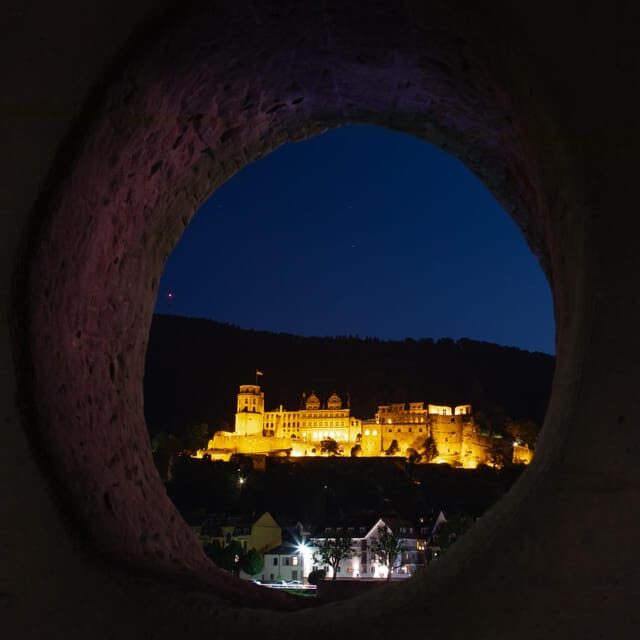
Here’s what the tour expects you to bring for serious results:
- Camera you’re comfortable with, ideally one where you can control aperture and shutter speed manually
- A focal length range that covers wide to telephoto (ideally roughly 16 mm to 200 mm; medium focal lengths can still work well)
- A tripod for long exposures in blue hour and low light
- A flashlight or headlamp for navigating safely and working your setup
- Comfortable, weatherproof clothing and shoes with traction
- A storage device for the photos you’ll likely shoot more than you planned
Tripod hire is offered by prior arrangement, which is handy if you travel light and don’t want to carry one. Still, assume you’ll need one. The tour specifically says a tripod is necessary to take long exposures in the twilight/night conditions.
One small but smart prep: bring layers. You’ll be outside near sunset into the evening, and even when the air is fine earlier, it can feel colder once you’re still and working with a tripod.
And a reality check that’s actually useful: the tour notes weather and light conditions cannot be influenced and therefore cannot be guaranteed. So you’ll get the best version of the plan when skies cooperate, but the time structure and coaching should still help you create good images even if the light is less dramatic.
Price and value: is $93 worth it for a Heidelberg night walk?
At $93 per person for about 4 hours, the value hinges on what you get beyond a self-guided photo chase.
What you’re paying for:
- A guided walking route that puts you at major motifs (castle/bridge/old town landmarks) and through photo-friendly areas like Philosophenweg and alleyways
- Coaching by an experienced photographer, not just route directions
- A structured window that starts around sunset so you can shoot blue hour and then night
What you’re not paying for:
- Optional equipment rental (like a tripod, if you arrange it)
- Optional professional image editing
To judge if it’s worth it for you, ask this: do you want to learn camera choices in real conditions, or do you just want to take photos while you wander? If you already know how to manage exposure, you may find you’re mostly buying access to good timing and viewpoints. If you’re newer (or even a hobbyist who wants cleaner results), the coaching component is where the money tends to pay off quickly—especially in low light.
Also, small-group or private options matter. When a guide can help you troubleshoot settings and composition at your pace, you’ll likely shoot more confidently instead of guessing.
Who should book this photo walk (and who should skip it)
This experience fits you well if:
- You want Heidelberg’s night sights (Castle, Old Bridge, Neckar Valley) with guidance on how to photograph them
- You have at least basic knowledge of camera settings, or you’re eager to learn and practice during the walk
- You don’t mind hills and are comfortable walking for 4 hours
You might skip it if:
- You need a fully flat walking route (the standard version includes steep ascents/descents)
- You don’t want to deal with night navigation and bringing flashlight/headlamp and potentially a tripod
- You expect the tour to be only casual, no-gear, handheld photography
One more fit check: the tour isn’t framed as a mobility-friendly option, so if mobility is a concern, ask about the private route designed around flatter paths.
Should you book Heidelberg at Night?
Yes, if your goal is better night photos of Heidelberg’s signature scenes, and you’re willing to bring the basics (tripod, flashlight/headlamp, comfortable shoes, weatherproof layers). This tour’s biggest strength is the way it ties together timing, major motifs, and on-the-ground coaching, so you’re not stuck making one lucky shot.
If your priority is just to see the city from famous viewpoints with minimal effort, consider cheaper self-guided options. But if you want photos you feel proud of, this is the kind of guided, timing-focused walk that helps you turn Heidelberg’s evening look into real results you can take home.
FAQ
How long is the Heidelberg at Night photo walk?
The tour lasts about 4 hours.
Where does the tour start and end?
It starts and ends at Neuenheimer Marktplatz, at Perfect Light Photo Art Gallery (Ladenburger Straße 21, 69120 Heidelberg).
What sights will we photograph during the walk?
The walk includes views and photo opportunities around Heidelberg’s Old Town, with stops tied to Heidelberg Castle, the Old Bridge, Heiliggeistkirche, Market Square, Kornmarkt, and the Neckar Valley.
Is the walk difficult?
It’s about 6 km and includes some steep ascents and descents.
What camera gear should I bring?
Bring a camera you’re comfortable with and familiar with. The tour notes that manual control of aperture and shutter speed is ideal, and a tripod is necessary for blue hour and low-light long exposures.
Do I need a tripod?
A tripod is necessary for long exposures in blue hour and low light. Tripod rental may be available if you arrange it in advance.
What should I bring besides my camera?
You should bring comfortable shoes, weather-appropriate clothing, a flashlight or headlamp, and a storage device for your photos.
What about accessibility and mobility?
The tour is not suitable for people with mobility impairments. A private tour option is mentioned where the route can be tailored to use flatter paths.