REVIEW · FUSSEN
Füssen: Private Guided Walking Tour
Book on GetYourGuide →Operated by Travmonde OÜ · Bookable on GetYourGuide
Füssen is small, but it packs big stories into 90 minutes. This private walking tour is a smart way to get the town’s Roman to medieval threads in the right order, with High Castle and St. Mang’s monastery as the anchors. Two things I especially like: you get context you can actually use before Neuschwanstein, and the guide keeps the walk practical and easy to follow. The main drawback to note is that the tour focuses on walking and viewpoints, so entrance fees are not included.
What I think makes this one worth your time is the way it connects landmarks to the people behind them: prince-bishops, a patron saint (Magnus of Füssen), and even a treaty that helped shift Europe’s power game. You’ll also get a real-feeling sense of the town’s pace thanks to cobbled lanes, pastel shops, baroque churches, and the river running through the center.
If you’re hoping for a fully seated, inside-only museum tour, this isn’t the best match. It’s built for comfortable shoes and steady strolling through historic streets.
In This Review
- Key highlights you’ll care about
- Füssen on foot: why the town feels made for walking
- Getting oriented at Schrannenplatz (and starting in the right place)
- High Castle: the prince-bishops’ power story, told from the outside
- Treaty of Füssen and the Romantic Road: connecting local to regional
- St. Mang’s Benedictine monastery: the 9th century you can still feel
- Roman roots, town walls, and cobbled alleys: reading the town like a map
- How this tour sets up your Neuschwanstein day
- Private group, 90 minutes: who this fits best
- Price and value: $310 per group up to 15 people
- What the guide brings: clear storytelling and practical touches
- Who should book this Füssen walking tour (and who should skip it)
- FAQ
- FAQ
- How long is the Füssen private guided walking tour?
- What is the price and how many people can be in a group?
- Where do we meet for the tour?
- What languages are available for the live guide?
- Are entrance fees included in the price?
- Can I cancel and get a full refund?
- Is this tour suitable for wheelchair users or mobility impairments?
- Should you book this Füssen private guided walking tour?
Key highlights you’ll care about
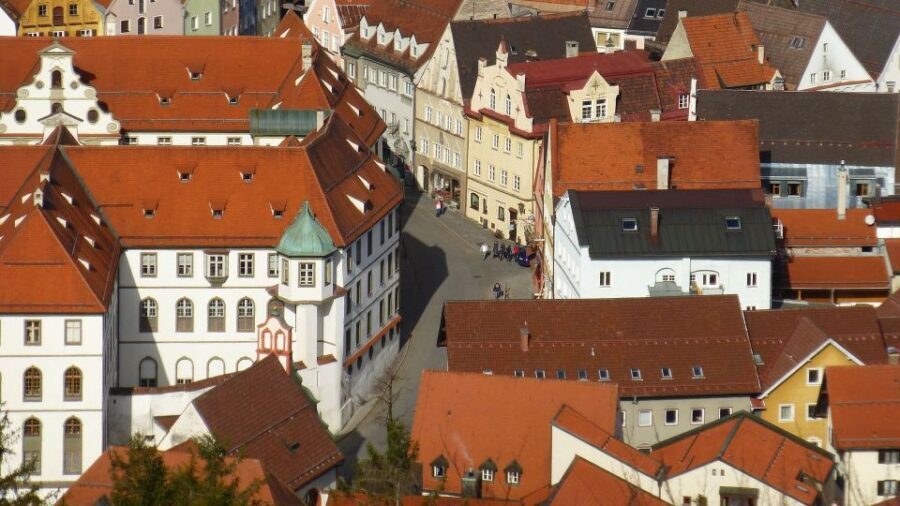
- High Castle viewpoint time: the prince-bishops’ summer residence angle makes the big walls make sense.
- Treaty of Füssen context: you’ll learn why this town mattered to imperial ambitions.
- St. Mang’s 9th-century storyline: monastery history is tied to what you’re seeing.
- Magnus of Füssen, the patron saint: the town’s spiritual identity becomes easier to understand.
- Roman roots in town form: the older layers show up in the way the center is shaped.
- Guided for your group only: you can adjust on the spot with your guide.
Füssen on foot: why the town feels made for walking
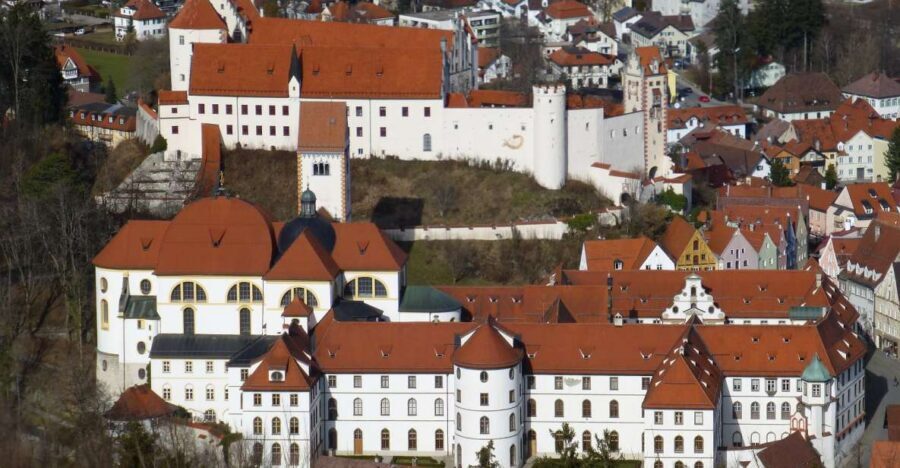
Füssen is one of those places where a guided walk doesn’t just save time—it adds meaning. The center is compact, the streets are old, and the details repeat in a satisfying way: cobblestones underfoot, pastel shopfronts, and churches with that unmistakable Bavarian baroque feel. Add in the river running through the center, described for its striking turquoise look, and you get a town that feels both historic and very livable.
And then there’s the clever connection to the town name itself. You’ll hear how Füssen ties to “Feet,” which is more than a fun fact. It fits the experience: you’re not touring a theme park. You’re moving through a town built to be seen slowly, with frequent little “pause and look here” moments that a guide can point out.
The practical upside? With a 90-minute private format, you can use it as a pre-game. Even if Neuschwanstein is your headline stop, Füssen helps you understand the region’s mindset—religion, power, and architecture—so your castle visit later lands better.
You can also read our reviews of more walking tours in Fussen

Getting oriented at Schrannenplatz (and starting in the right place)
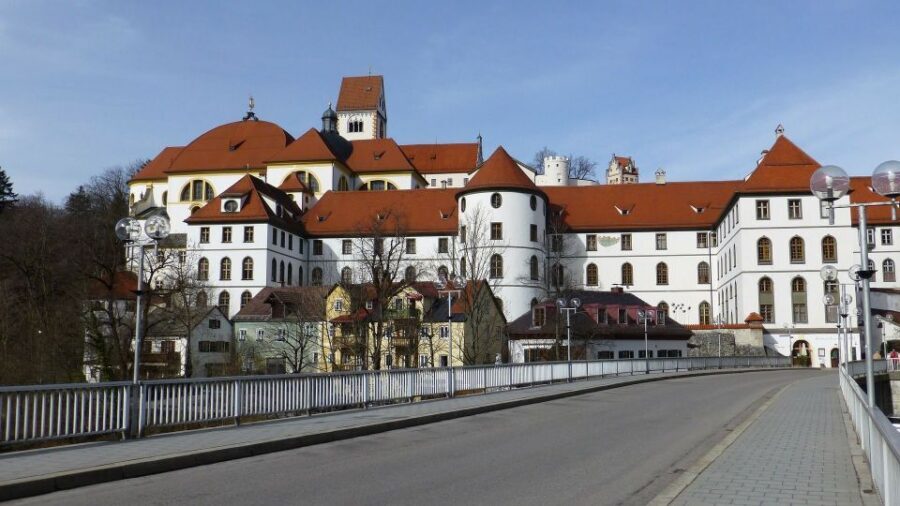
Your meeting point is Schrannenplatz at Schrannengasse 10 in Füssen. This is the kind of start that works well for a short tour: you’re positioned near the heart of town, ready to walk into the medieval streets without a long transfer.
From the start, expect your guide to set the tone: where you’re going and why those stops matter. That matters because Füssen has multiple layers—Roman beginnings, monastic influence, prince-bishop authority, and later ties to the broader region. Without a guide, you can still enjoy the scenery. With a guide, you’ll start spotting relationships between buildings and eras as you go.
This is also where you’ll get the “comfortable shoes” reminder that’s actually useful. With cobbled lanes and historic street textures, your feet will feel it more than you expect, especially if you’re wearing stiff shoes. Bring footwear you can walk in for an hour and a half without fuss.
High Castle: the prince-bishops’ power story, told from the outside
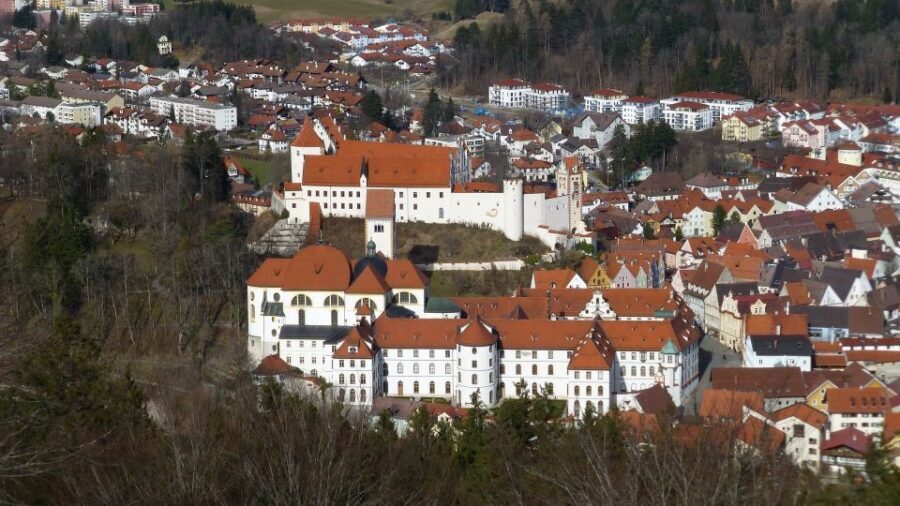
High Castle is the big draw of this walk, and not just because it looks dramatic. What makes it click is the framing: it was the former summer residence of the prince-bishops of Augsburg. That’s a mouthful, but your guide will translate it into something you can see—local power, religious authority, and politics folded into one stone setting.
You’ll spend time appreciating the castle grandeur and the way it dominates the town’s visual line. Even if you never step inside an expensive venue, seeing how the structure relates to Füssen’s layout helps. You start to understand why a town would invest in fortification and residence in the first place: it wasn’t only for comfort. It was for influence.
One of the best parts is the connection your guide makes to the Treaty of Füssen—the story of how it ended imperial ambitions. That’s the kind of detail that can feel abstract if you just read a plaque later. On this walk, it gets anchored in real places and real power dynamics, so you’re not just hearing dates—you’re learning what they changed.
Potential drawback: because entrance fees aren’t included, you might not access everything inside High Castle or related sites. That said, for many people, the best “value moment” here is the guided interpretation from key spots, which doesn’t require ticketed time to still feel meaningful.
Treaty of Füssen and the Romantic Road: connecting local to regional
Füssen doesn’t live in a bubble. Your guide will help you trace the town’s place in wider routes and themes, including the Romantic Road. This is useful because Füssen is often treated as a stop on the way to something bigger. Here, you learn why it deserved attention on its own.
The Treaty of Füssen thread is the main reason this portion works. Imperial ambitions ending is not just a dramatic phrase; it’s a change in direction. Your guide will tie that shift to how the town was positioned socially and politically, which makes the medieval environment feel less random.
You’ll also get the sense of Füssen as a crossing point: where old power meets later travel culture. That’s exactly why Romantic Road travelers often feel an extra jolt here. The town looks like a postcard, yes—but it’s also a place with the kind of historic weight that turns a quick photo stop into a real understanding of the region.
St. Mang’s Benedictine monastery: the 9th century you can still feel
St. Mang’s Benedictine monastery is where Füssen turns more spiritual and more personal. The tour highlights the monastery’s 9th-century history, and that timeframe matters because it predates much of what most visitors assume they’re seeing.
What I like about this stop is that it’s not presented as a cold list of dates. Your guide ties the monastery to what it meant for daily life in the region—religion as an institution, Christianity as a community force, and monastic organization as something that shaped culture over centuries.
From there, you’ll also hear about Magnus of Füssen, the town’s patron saint. If you want the quickest route to understanding why a town has certain symbols, dedications, and traditions, start with its patron. Your guide’s explanation helps you make sense of what you might otherwise miss: the way faith and identity show up in everyday architecture and story.
Even if you’ve visited other monasteries in Bavaria, this one tends to land well because it connects the monastic past directly to Füssen’s larger narrative—Roman roots, medieval power, and later ties to major routes.
You can also read our reviews of more guided tours in Fussen




Roman roots, town walls, and cobbled alleys: reading the town like a map
You’ll discover Füssen’s ancient Roman roots, and you’ll get them in a way that’s practical. Instead of treating Roman history like a separate lecture, your guide helps you see how older foundations influenced how the center became what it is. You learn to spot the logic behind the street shape and the sense of enclosure that makes the town feel walled.
That brings you to the atmosphere of the historic town wall and the old-world charm of cobbled alleyways. It’s easy to think of walls as only defensive. On this tour, the walls feel more like a framework: they define the walking experience and explain why the town developed the way it did around its boundaries.
The river is part of this “read the town” approach, too. You’ll notice how the water shapes the center visually and emotionally. The turquoise description isn’t just aesthetic; it gives you a way to remember where you are as you walk back and forth between eras.
In short: you end the walk knowing how to navigate mentally. Next time you wander on your own, you’ll recognize the pattern instead of just absorbing images.
How this tour sets up your Neuschwanstein day
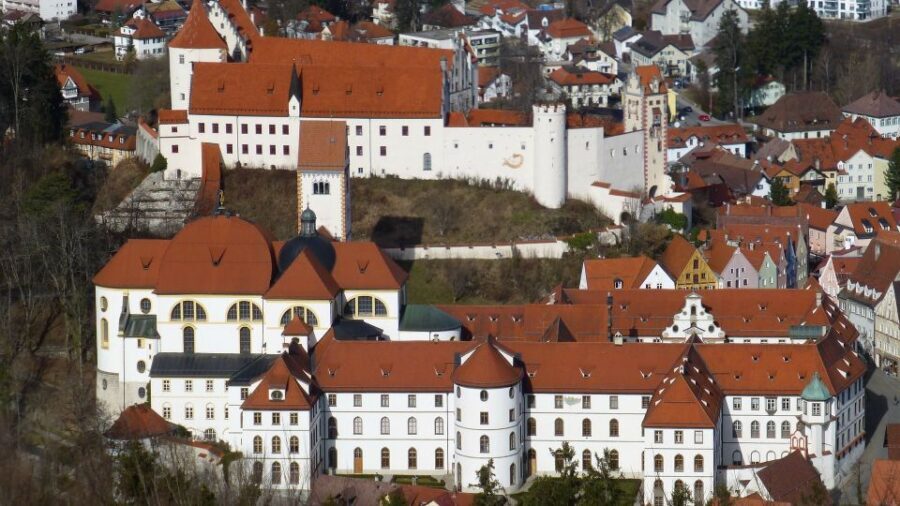
Because Füssen is the nearest town to Neuschwanstein Castle, many itineraries treat Füssen like a quick base. This private walking tour makes that base smarter.
Here’s the payoff: High Castle’s prince-bishop story and the Treaty of Füssen give you the political and religious backdrop. St. Mang and Magnus give you the spiritual identity. Add the Roman and medieval layers, and suddenly Neuschwanstein isn’t just a flashy fairytale stop. It’s connected to a region that shaped power, belief, and architecture over a long timeline.
Also, you’ll likely leave with food ideas. A guide named Sandra—known for being friendly and very knowledgeable—was highlighted for providing recommendations for lunch and dinner after the tour. Even without copying a specific restaurant plan, that’s a useful model: use the guide as your last-minute local filter so you don’t waste time hunting.
If you’re planning Neuschwanstein soon, this 90-minute walk is a high-leverage first step.
Private group, 90 minutes: who this fits best
This is a private group tour. That matters because walking tours can become repetitive when the group is big. Here, your guide is with your group only, which helps you ask questions and steer the pace.
It also matters for families, couples, and small friend groups. In 90 minutes, you want attention, not crowd management. This format keeps the experience focused enough that you remember what you learned instead of just collecting scenery.
The tour is in English and German, so it’s easier to place if you want one of those languages. You can also customize on the spot with your local guide, which is a big deal in a place like Füssen where weather and energy levels change the best route.
One caution: it’s not suitable for people with mobility impairments and it isn’t designed for wheelchair users. With cobblestones and historic uneven streets, that’s not surprising. If walking comfort is limited, you’ll want a different option.
Price and value: $310 per group up to 15 people
The price is $310 per group, for up to 15 people, and the duration is 90 minutes. That sounds high if you treat it as a solo tour. But it’s more reasonable when you think in groups.
Here’s the quick math:
- With 15 people, you’re paying about $21 per person.
- With 4 people, it’s about $78 per person.
- With 2 people, it’s about $155 per person.
So the value depends mostly on your group size. If you’re traveling with friends, this can be a bargain way to get a guided historic walk. If you’re solo or just two people, you’re really paying for private interpretation and a guide who can tailor the pace.
One more value note: entrance fees are not included. That’s normal for walking tours, but it matters for your expectations. You might be able to see and learn a lot without buying tickets, but if you plan to enter venues, budget extra.
What the guide brings: clear storytelling and practical touches
The best walking tours teach you how to look, not just what to know. In this Füssen experience, the guide’s style is practical and story-driven—especially with topics like medieval dates and the Christian beginnings of the town.
Sandra is one example that came up in feedback: she’s described as very knowledgeable about Füssen and Bavarian history, friendly, and able to keep the tour structured and interesting. Another practical detail that stood out is that umbrellas were brought when needed. That kind of small preparation can turn a soggy day into an easy one.
Also, when your scheduled guide can’t make it, a replacement stepping in smoothly is a sign of a well-run operation. In a short 90-minute format, you don’t want delays or a rushed handoff. This is where private guidance tends to shine—when it’s handled well.
Who should book this Füssen walking tour (and who should skip it)
Book it if you:
- Want a guided orientation to Füssen’s layers before Neuschwanstein
- Like history that connects politics, religion, and buildings you can actually see
- Have a small group and want attention without crowd pressure
- Want your guide to tailor the walk on the spot
Skip it if you:
- Need step-free or wheelchair-friendly access (it’s not suitable)
- Want lots of ticketed indoor time and long museum stops
- Prefer unstructured wandering with no historical framing
FAQ
FAQ
How long is the Füssen private guided walking tour?
It lasts 90 minutes.
What is the price and how many people can be in a group?
The price is $310 per group, up to 15 people.
Where do we meet for the tour?
The meeting point is Schrannenplatz, Schrannengasse 10, 87629 Füssen, Germany.
What languages are available for the live guide?
The live tour guide is available in English and German.
Are entrance fees included in the price?
No. Entrance fees are not included.
Can I cancel and get a full refund?
Yes. You can cancel up to 24 hours in advance for a full refund.
Is this tour suitable for wheelchair users or mobility impairments?
No. It is not suitable for people with mobility impairments or for wheelchair users.
Should you book this Füssen private guided walking tour?
If you’re heading to Neuschwanstein and you want Füssen to feel like part of the story—not just the place you sleep—you’ll likely enjoy this. The mix of High Castle, St. Mang’s monastery, Magnus of Füssen, and the Treaty of Füssen gives you context fast, and the private setup keeps it focused for your group. Just match your expectations to the format: it’s a walking tour with entrance fees not included, and the streets aren’t set up for wheelchair use. For groups, the $310 price can turn into real value—especially when you’ll actually use the guide to understand what you’re looking at while you walk.