REVIEW · COLOGNE
Explore Cologne’s best Street Art Quarter
Book on Viator →Operated by LocalBini - The go-to platform for Experiences by Locals in Europe · Bookable on Viator
Street art turns Cologne into an open-air gallery. This 1.5-hour walk through Ehrenfeld mixes famous walls with real neighborhood corners, guided in English for up to 8 people.
I like that it’s a small-group format, so the pacing feels human and you get context for what you’re seeing. I also love how each stop links artists and styles to specific street locations—so you learn without it turning into a lecture.
One drawback: at about $152.67 for roughly 90 minutes, you’ll finish while you still want to linger, especially if you like to zoom in on details.
In This Review
- Key things I’d plan around
- Why this 90-minute street art walk feels worth your time
- What you’ll actually learn (not just see)
- Starting at Goethe-Apotheke im Helioshaus: architecture first, art after
- The practical benefit of this opener
- Heliosstraße: paste-ups, utopian wall ideas, and fast-changing art
- Why Heliosstraße is a key stop
- Bürgerzentrum Ehrenfeld: social messages and mosaic-like detail
- What I’d watch for at this stop
- Lessingstraße and HNRX: when graffiti energy meets a love note
- Tip for getting more out of Lessingstraße
- Roa’s monochrome animals and Ain Café: mortality, vitality, and community art
- Why the monochrome shift hits hard
- Schönsteinstraße: resistance memory on a street corner
- How to approach this kind of mural
- Ehrenfeld train station: Freedom versus playful nostalgia
- Why station art can feel more powerful
- “Animals” and “Maria” in the heart of the action
- Practical note for photo fans
- City Leaks Festival area and the Goldmund finish: art that invites you to rest
- How to use the last 20 minutes
- Price and logistics: what $152.67 buys you in real terms
- Duration is the big lever
- Who this tour suits best (and who might not love it)
- Quick FAQ
- FAQ
- How long is the street art quarter tour in Cologne?
- What language is the tour offered in?
- What is the group size?
- Where does the tour start and end?
- Is food or drink included?
- Can I cancel for a full refund?
- Should you book this Cologne street art quarter tour?
Key things I’d plan around
- Max 8 people: enough space to hear the guide, not a crowded herd.
- Artist-name to wall-meaning link: you’re not just looking; you’re learning street styles.
- Ehrenfeld route by foot: you get a feel for the area beyond a single mural stop.
- Big walls plus small gestures: from paste-ups to monochrome animal portraits.
- A landmark pharmacy building break: architecture and street art share the same story.
- Ends at Goldmund Literatur Café: a nice landing spot after all that walking.
Why this 90-minute street art walk feels worth your time
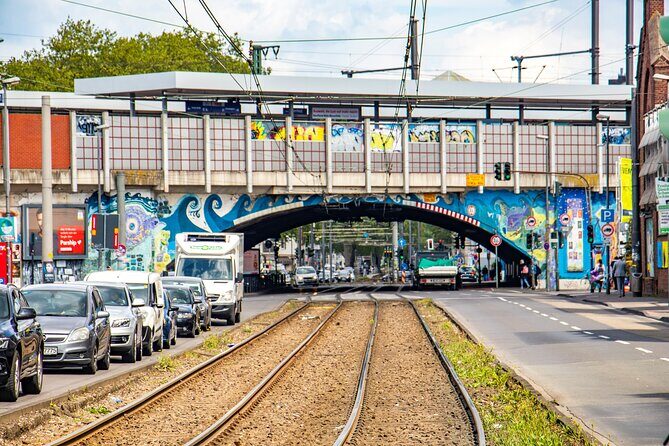
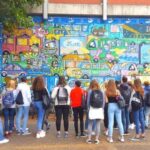
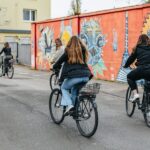
Cologne’s best street art quarter isn’t all one long mural street. It’s a patchwork of walls, stairways, train-station corners, and community spots—so walking it on foot helps you connect the dots fast.
This tour is built for momentum. In about 1 hour 30 minutes, you get a tight sequence of stops that cover street art styles you’ll notice again later as you explore on your own. If you’re the type who gets itchy when a tour overstays its welcome, you’ll probably appreciate the pace.
A few more Cologne tours and experiences worth a look
What you’ll actually learn (not just see)
The point here isn’t to memorize an artist list. You learn what different street art approaches look like in real life—paste-ups that show up quickly, graffiti-style work, large mural storytelling, and monochrome pieces with heavy mood.
That matters because you’ll start recognizing how the art is made and why it’s placed where it is. And once you can read that, Cologne’s walls become more interesting on your own time.
Starting at Goethe-Apotheke im Helioshaus: architecture first, art after
You begin at Goethe-Apotheke im Helioshaus on Venloer Str. This is a landmark in its own right: a classical architectural jewel from 1884, now used for medical practices.
Look closely here. The arched façade details, ornate interior stair elements, and light-filled atrium create a strong contrast with what comes next on the street—before you even hit the murals, you’re training your eye to notice composition and form.
The practical benefit of this opener
This first stop works as a warm-up. It helps you settle into the neighborhood, understand the route rhythm, and get your bearings before the art gets louder and more immediate.
If you’re visiting Cologne for only a short time, this is a smart way to start your street art day without feeling like you jumped straight into chaos.
Heliosstraße: paste-ups, utopian wall ideas, and fast-changing art
Next you head to Heliosstraße, where the focus turns to Cologne’s wall culture in full swing. Expect a mix of styles, including ephemeral paste-ups—pieces that feel temporary by design.
You’ll see work connected to Sei Leise, known for quick, paper-based street interventions. Then there’s Alexander Isakov’s mural world, which leans toward utopian architecture themes, pushing the imagination beyond the street level you’re standing at.

Why Heliosstraße is a key stop
Heliosstraße shows you street art’s range. You’re not just seeing one look; you’re seeing how different artists treat space—whether they build big persuasive imagery or add smaller, more fleeting moments that still grab attention.
One drawback to this style of stop: some pieces may look slightly different depending on timing and weather, since paste-ups can be truly short-lived. That’s part of the deal.
Bürgerzentrum Ehrenfeld: social messages and mosaic-like detail
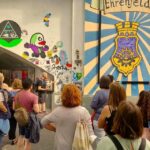
From Heliosstraße, the tour moves to Bürgerzentrum Ehrenfeld. This is where the murals shift from style study into meaning study.
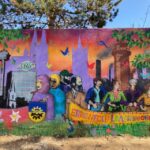
You’ll encounter Captain Borderline’s socially critical masterpieces here, plus the mosaic magic of Barbara Deppner. The idea isn’t to force one interpretation; instead, you learn how these artists use scale, texture, and placement to make you think.
What I’d watch for at this stop
Look at how the message sits in the street scene. Socially charged art often “argues” with its surroundings—whether it’s calling out unfairness, questioning power, or pointing at what a neighborhood cares about.
If you prefer street art that feels like it has something to say, this is one of the most satisfying stops on the route.
Lessingstraße and HNRX: when graffiti energy meets a love note
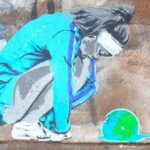
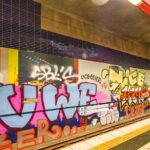
Then comes Lessingstraße, an urban canvas with graffiti energy. Here, you’ll see work connected to HNRX, plus Just Love—a playful ode to borderless creativity.
This stop is useful because it shifts your understanding from mural storytelling to street-mark language. Graffiti-style work often prioritizes motion, color, and identity, and you start seeing why that style fits certain corners better than others.
Tip for getting more out of Lessingstraße
Take 20 seconds and look at edges and layering. Many graffiti pieces are built like visual sandwiches—overlaps, fills, and touch-ups that show what the wall looked like before and after.
If you rush, you’ll miss that the “tag” or “piece” is only part of the story. The wall itself becomes the history.
Roa’s monochrome animals and Ain Café: mortality, vitality, and community art
Next, you’re guided toward Roa’s monochrome murals. These works are known for animal portraits that feel stark and honest—often tying mortality to something unexpectedly alive in the form.
Nearby, you’ll also spot the kind of art that springs up around cafés and community corners, including works adorning Ain Café. This matters because it shows street art isn’t trapped in the “big mural” category. It thrives in everyday spaces where people actually gather.
Why the monochrome shift hits hard
Color usually grabs first. But monochrome work makes you slow down. You start reading the shape language—the way a creature’s ribs, limbs, and shadowed surfaces communicate texture and weight.
If you’re a photographer, this section is also easier to frame: the palette tends to stay controlled, which helps when you’re trying to capture the whole piece.
Schönsteinstraße: resistance memory on a street corner
You’ll then move to Schönsteinstraße. This is where Captain Borderline’s memorial comes in, tied to the Edelweißpiraten resistance fighters.
This stop adds a different layer to your street art understanding. Instead of purely aesthetic expression, the art becomes remembrance—something the neighborhood passes every day, whether they notice it consciously or not.
How to approach this kind of mural
Spend a moment reading the placement. Memorial art often uses location like an argument: it belongs where people can see it repeatedly, not only when tourists happen to wander by.
If you like street art with emotional weight, don’t rush this one.
Ehrenfeld train station: Freedom versus playful nostalgia
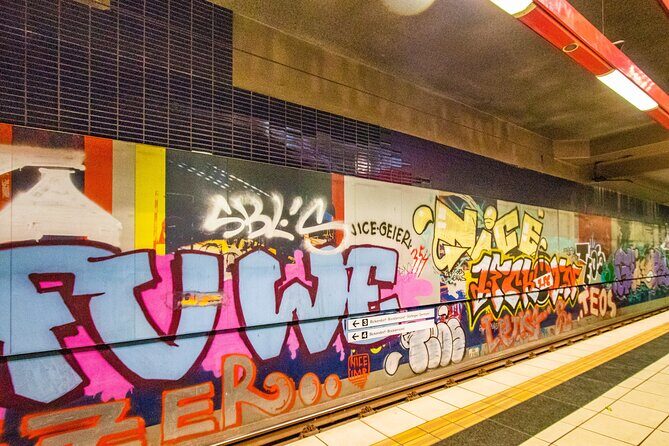
The route continues to Ehrenfeld train station, where street art meets transit reality—busy foot traffic, quick glances, and the art forced into daily motion.
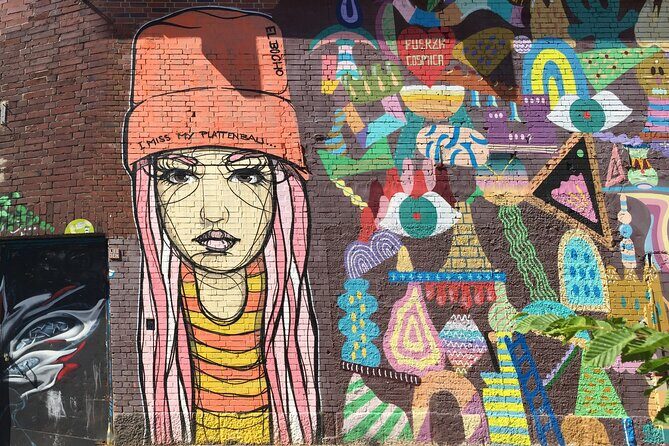
Here, you’ll encounter Huami’s Freedom and El Bocho’s playful I miss my Plattenbau. The contrast is the point. One piece addresses hope and self-determination; the other leans into memory and humor about everyday housing life.
Why station art can feel more powerful
When art is placed where people commute, it’s harder to treat it like decoration. You’re seeing it under practical conditions—people reading in seconds, moving on, then coming back later without planning it.
That gives the street art a kind of momentum. It’s not waiting for you; it’s already part of the neighborhood tempo.
“Animals” and “Maria” in the heart of the action
You’ll also catch Captain Borderline’s Animals along with Faith47’s religiously inspired Maria. These pieces bring the tour to a point where themes cross paths: street animals, spiritual symbolism, and the way large murals can pull a crowd even when nobody stops to talk.
It’s a good reminder that street art in Cologne isn’t limited to one mood or one political lane. The same city can host spiritual imagery, critique, humor, and dark monochrome, all close enough to compare within one walk.
Practical note for photo fans
Because this route is concentrated, you’ll want to keep your camera ready but not glued to the lens. Many of the most meaningful moments are in the gap between pieces—seeing how one work answers the next, or how a style changes as the street changes.
City Leaks Festival area and the Goldmund finish: art that invites you to rest
Near the end, you reach the City Leaks Festival area—described as an urban garden-like art environment. Here, you’ll see works connected to M-City’s The Eye and SYM1’s Captain Ehrenfeld.
Then you finish at Goldmund Literatur Café on Glasstraße 2. The spot is made for winding down, and it’s a nice way to turn “street art hunting” into a full experience with a calm end point. There’s even a note about grabbing cake there, which is a perfectly reasonable reward after 90 minutes of looking up.
How to use the last 20 minutes
Once you hit the festival area, don’t treat it like a speed run. Give yourself permission to stand back and look at the space as a whole, then circle back for details when the light is right.
And if you still have energy, Goldmund is a solid place to plan your next neighborhood walk without rushing back to transit.
Price and logistics: what $152.67 buys you in real terms
At $152.67 per person, this isn’t a budget street art tour. But it also isn’t an all-day investment. You’re paying for a concentrated route, small-group attention (max 8), and a guide who keeps the tour moving while explaining what you’re seeing.
Is it good value? If you’re the kind of traveler who benefits from context—artist styles, placement choices, and how the art “talks” to the street—then paying for focus can feel fair, even if the duration is short.
If you’d rather spend two or three hours lingering and studying walls at your own speed, the price can feel steep for a fast walk. In that case, you might prefer to do a self-guided loop afterward, using this route as your starting map.
Duration is the big lever
This tour runs about 1 hour 30 minutes. That’s a sweet spot for first impressions. But if you want slow looking—like sketching details or photographing repeatedly—you’ll likely want to extend your time on your own after you finish at Goldmund.
Who this tour suits best (and who might not love it)
This works especially well for you if:
- You’re short on time in Cologne but still want a real neighborhood route.
- You like street art more when you understand the style behind it.
- You want a manageable group size so you can hear explanations.
It may be less satisfying if:
- You dislike guided walks and prefer to wander without structure.
- You want long stop times at every wall.
- You’re hoping for a museum-style slow viewing pace.
Quick FAQ
FAQ
How long is the street art quarter tour in Cologne?
The tour lasts about 1 hour 30 minutes.
What language is the tour offered in?
It’s offered in English.
What is the group size?
The experience has a maximum of 8 travelers.
Where does the tour start and end?
It starts at Goethe Apotheke, Venloer Str. 389, 50825 Köln, Germany, and ends at Goldmund Literatur Café Restaurant, Glasstraße 2, 50823 Köln, Germany.
Is food or drink included?
No, food, drinks, or snacks are not included.
Can I cancel for a full refund?
Yes. You can cancel up to 24 hours in advance for a full refund.
Should you book this Cologne street art quarter tour?
I’d book it if you want a focused hit of Ehrenfeld street art with clear explanations and a route that takes you from landmark architecture to train-station walls and back to a café finish. The best part is how the stops help you read the art—so it’s not just pictures on a phone, it’s street culture you can understand.
I’d skip it or pair it with extra time elsewhere if your main goal is slow looking. With a short 90-minute window and a premium per-person price, you’ll likely want to continue exploring on your own right after the tour ends at Goldmund.