REVIEW · EISENACH
Eisenach: Private Guided Walking Tour
Book on GetYourGuide →Operated by Travmonde OÜ · Bookable on GetYourGuide
Strolling Eisenach feels like reading time. This private 90-minute walk connects Martin Luther and Johann Sebastian Bach to Wartburg Castle and the town’s streets, and I especially love how the guide makes Luther’s teenage years real at the Luther Museum. I also love the big junction point of culture at St. George’s Church, where Bach’s baptism and Saint Elizabeth of Thuringia’s wedding both live in the same walls.
The only real consideration is pacing. At 90 minutes, you’ll cover the key sights and stories, but entrance fees aren’t included, so if you want to go inside every museum or castle feature, you may need a follow-up stop. The route is also walk-focused and best on comfortable shoes, since Eisenach sits in a hilly setting.
In This Review
- Key things to love about this Eisenach walking tour
- Eisenach: the town where Luther and Bach share street corners
- Starting at Bach House on Frauenplan 21
- Wartburg Castle viewpoints and why UNESCO matters in a walking tour
- The Luther Museum view: teenage years, Cotta family rooms, and real schooling dates
- St. George’s Church: Bach baptism, Saint Elizabeth’s wedding, and Luther’s church role
- Preachers’ Church and the shared school where Luther and Bach both studied
- Reuter-Wagner Museum: Richard Wagner memorabilia and the death mask
- Eisenach’s automotive tradition: the first BMW in 1929
- The Tiny House: a half-timbered house only 6 feet 8 inches wide
- How the 90 minutes actually play out: tight route, big connections
- Price and value: $294 per group up to 15
- Who this Eisenach walking tour fits best
- Should you book this Eisenach Private Guided Walking Tour?
- FAQ
- How long is the Eisenach private guided walking tour?
- Where do we meet the guide?
- Is this tour private?
- What group size is it priced for?
- What languages are available?
- Are entrance fees included?
- Can the tour be customized?
- Is the tour suitable for people using wheelchairs?
- Is there a cancellation option if my plans change?
- Can I reserve without paying right away?
Key things to love about this Eisenach walking tour
- Luther Museum (Cotta family years): See where Luther stayed and attend to the restored rooms from 1498 to 1501.
- St. George’s Church facts that stick: Bach baptized in 1685, Saint Elizabeth married at age 14 in 1221, plus Luther as a choirboy.
- One school, two giants: Learn how both Luther and Johann Sebastian Bach attended the school in the Preachers’ Church cloister.
- Wagner connection in a dedicated museum: Find the Reuter-Wagner Museum’s big collection, including Wagner’s death mask.
- BMW and the Tiny House in the same tour: First BMW assembly in 1929, then the narrowest inhabited half-timbered house in Germany.
- Private guide, with flexibility: Your local guide stays with your group only and can customize on the spot.
Eisenach: the town where Luther and Bach share street corners
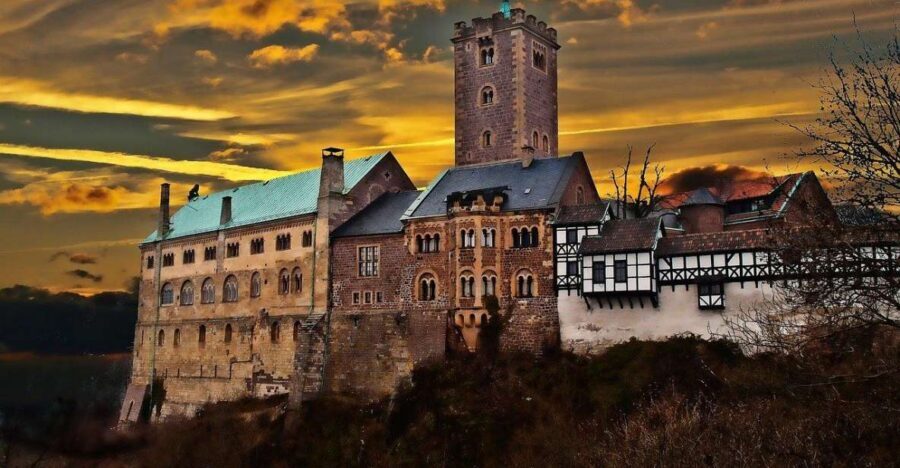
Eisenach has a special trick. In many German places, Luther or Bach are visitors from another chapter. Here, they’re tied to the streets you walk, the churches you pass, and the castle that looms above. The town sits at the foot of Wartburg Castle, and that physical geography helps the stories make sense fast.
You’ll hear how Martin Luther was connected to Eisenach and how Johann Sebastian Bach was born there. You’ll also connect the dots between religious life, courtly life, and later cultural fame. Even if you don’t know any dates right now, the tour gives you a timeline you can carry in your head while you’re walking uphill or around corners.
And yes, you get more than just church-and-castle talking points. Eisenach also has an automotive tradition, and the day ends with an architectural oddity: the Tiny House, famous for its extreme width. That left turn from Reformation-era stories to 20th-century industry is one of the reasons the tour feels memorable.
Starting at Bach House on Frauenplan 21
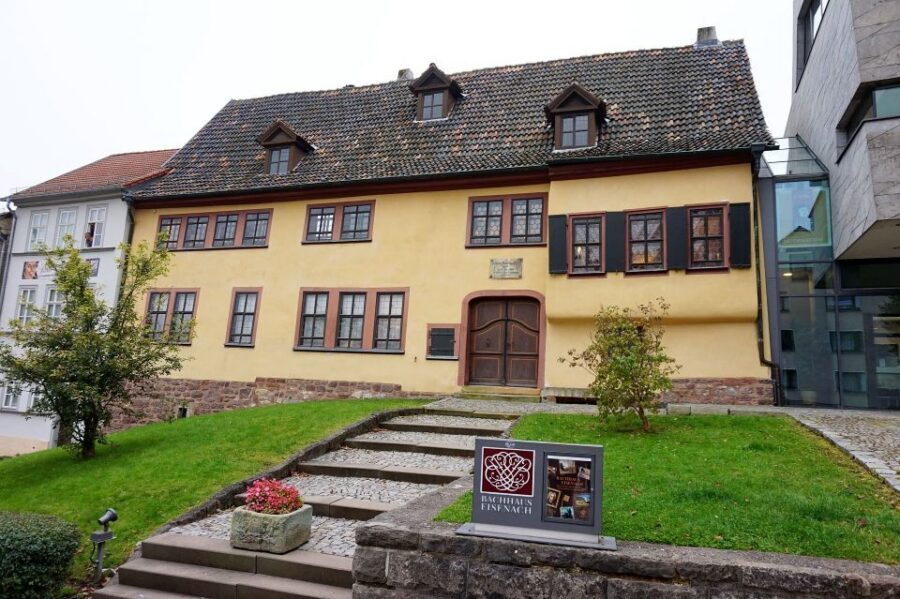
I like starting a walking tour at a place that anchors the theme. This one begins at the Bach House on Frauenplan 21 (meet in front of it). It’s a clean way to set the mindset: you’re not just sightseeing in Eisenach, you’re walking through the places tied to Bach’s life.
From there, your guide leads you into the older fabric of town life—churches, schools, and the routes connected to major historical events. Because the tour is private, you’re not stuck in the back listening to whoever talks loudest. You can ask for clarity when something feels confusing, like how a specific church relates to both Luther and Bach.
This starting point also matters because Bach isn’t just a composer name here. You get a concrete link to his birthplace and early education, which you then see repeated in later stops. That repetition makes it easier to remember.
Wartburg Castle viewpoints and why UNESCO matters in a walking tour
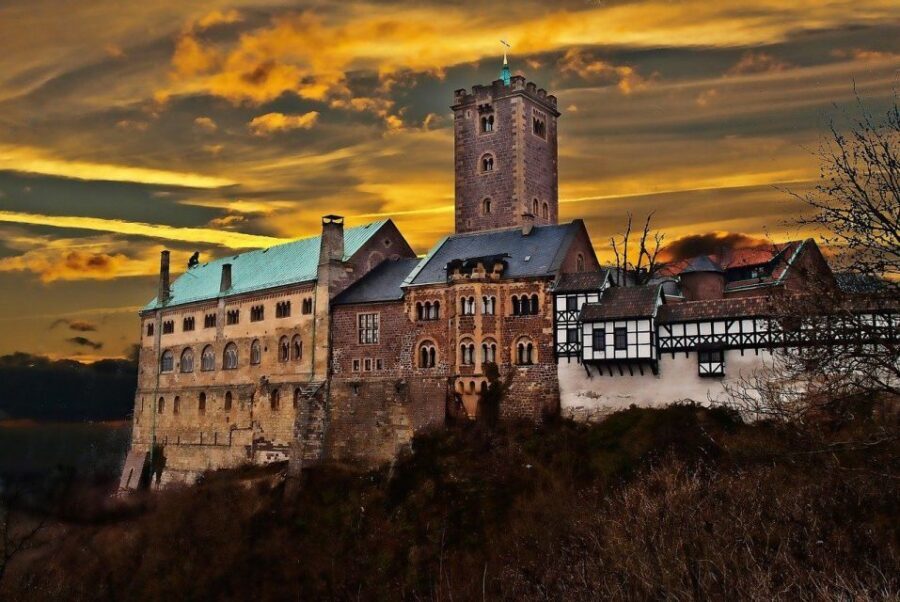
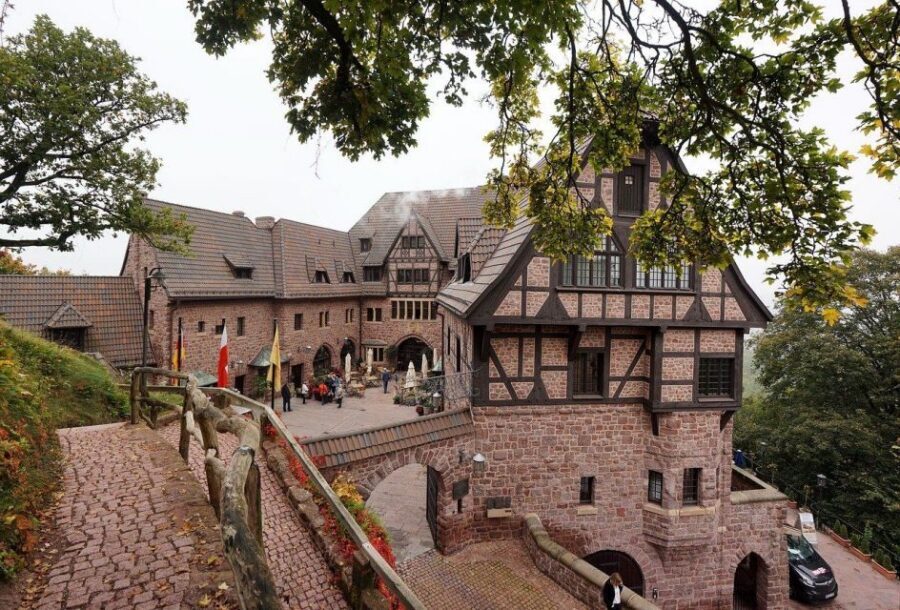
You don’t need a full castle ticket to understand why Wartburg Castle dominates Eisenach. The tour approach is practical: you explore the connection between the town and the castle, so the UNESCO story becomes more than a label.
Wartburg Castle is a UNESCO World Heritage site, and your guide uses that status to frame why the site matters. Think of it as a shortcut to importance: this wasn’t just a fortress; it became a key setting for cultural and political life. As you look toward it from the town level, you get a sense for how power and everyday life were stacked vertically here.
One thing to watch: because entrance fees aren’t included, your experience may be viewpoint-and-context heavy rather than “fully inside every room.” If you want to step into the castle spaces themselves, you’ll likely need to plan that separately. Still, for many people, the street-level connection is the best value part of a short guided walk.
The Luther Museum view: teenage years, Cotta family rooms, and real schooling dates
Martin Luther’s story in Eisenach isn’t vague. The tour highlights the Luther Museum, tied to his time as a teen when he stayed with the Cotta family to go to school from 1498 to 1501.
What I like about this stop is that it turns biography into something you can picture. Your guide helps you understand what “living there” meant, and you’re looking at the restored rooms—two rooms are brought back to their original condition. That’s the kind of detail that makes Luther feel less like a textbook figure and more like an actual person with a routine.
Even if you’ve read about Luther’s Reformation phase, this part of the tour gives you the earlier groundwork: education, local influence, and the way Eisenach fed his path. It’s also a good moment to take photos, because you’re moving through a town setting where the past is close enough to touch.
St. George’s Church: Bach baptism, Saint Elizabeth’s wedding, and Luther’s church role
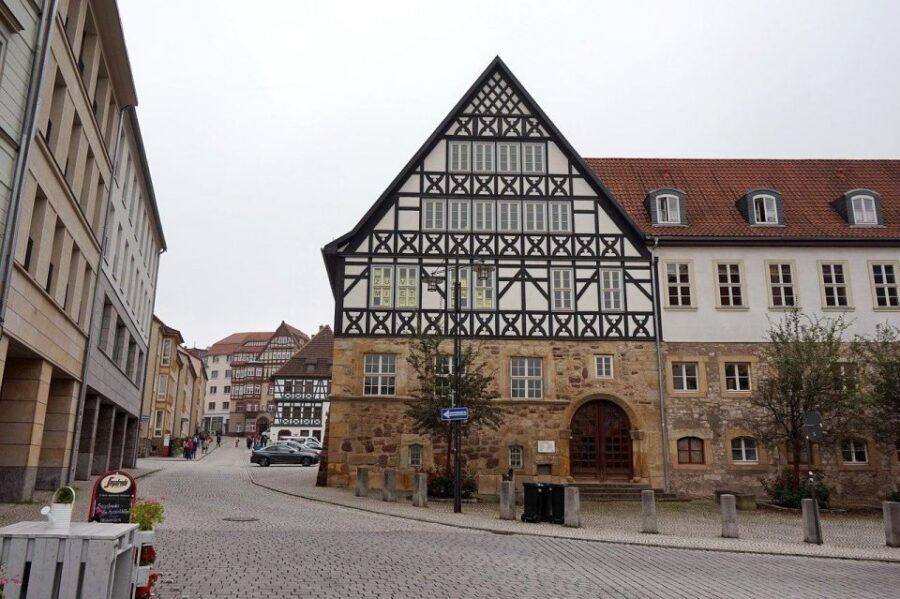
If you want one stop that makes Eisenach feel oddly concentrated, it’s St. George’s Church. This is where the town’s big religious and musical threads cross.
Your guide points out that Johann Sebastian Bach was baptized here in 1685. That alone is enough to make the church feel important. But it gets more layered: Saint Elizabeth of Thuringia was married at age 14 there in 1221.
Then comes the part that helps you understand how a place can keep working across centuries. Members of the Bach family served as organists for 132 years, and Martin Luther was a choirboy here. Your guide also connects Luther to a specific historical travel moment: he preached in this church on his way to and from the Diet of Worms in 1521.
A drawback to consider: churches can mean fewer visual “wow” moments for people who only want dramatic interiors. But if you enjoy facts tied to architecture—how roles like choirboy, organist, and preacher shape the building’s identity—this is the highlight.
Preachers’ Church and the shared school where Luther and Bach both studied
Next, the tour pulls you to the Preachers’ Church, tied to schooling. This former space was a 13th-century cloister, later used as a school where both Luther and Johann Sebastian Bach attended.
I like this stop because it’s about education as a shared thread rather than a separate trivia list. Your guide helps you see the continuity: the same kind of place—religious space turned schooling space—helped form two major cultural lives.
If you’re the type who likes “why these people mattered” rather than only “what they did,” this part of the tour helps. It shows that institutions can outlast the individuals passing through them. And it helps you connect the Luther Museum and St. George’s Church to a broader theme: learning in Eisenach wasn’t an isolated event.
It’s also a good breather stop in a 90-minute day. You’ll often find it less about dates and more about structure and how these spaces were reused.
Reuter-Wagner Museum: Richard Wagner memorabilia and the death mask
Eisenach doesn’t limit itself to Luther and Bach. It also holds a strong Richard Wagner footprint through the Reuter-Wagner Museum.
This museum is highlighted for having the biggest exhibit of Wagner memorabilia, including Wagner’s death mask. If you’ve only seen Wagner through performances or recordings, the museum gives you a more human, physical sense of how fame leaves artifacts behind.
I find it helps to treat this as a tonal shift. The tour starts with Reformation-era life and medieval and church settings. Then it moves into 19th-century celebrity culture. You’re not abandoning earlier themes. You’re watching how Eisenach continued to matter long after Luther and Bach.
Since entrance fees aren’t included, you’ll want to decide how much time and budget you want to spend going inside the museum. Even if you don’t, the tour’s explanation gives you context so that a later independent visit feels easier.
Eisenach’s automotive tradition: the first BMW in 1929
Then you hit a completely different kind of history: industry.
Eisenach is the place where the first BMW rolled off the assembly line in 1929. The city’s factory produced cars for more than 100 years, and your guide ties this to how Eisenach evolved from medieval and religious importance into modern manufacturing.
This is one of my favorite contrasts on the tour. Germany’s big stories often get locked into one time period—kings or composers or wars. Eisenach keeps flipping the page without changing the location. You see how the town’s identity keeps getting refreshed.
A practical note: automotive history can feel like “names on a poster” if the guide doesn’t connect it to real places. Here, the walking format helps because it keeps the context tied to town streets rather than a lecture room.
The Tiny House: a half-timbered house only 6 feet 8 inches wide
Just when you think you’ve seen every kind of historical stop, the tour shows you the Tiny House. It’s known as the narrowest, inhabited, half-timbered house in Germany, measuring only 6 feet, 8 inches wide (2 meters).
Even if you’re not into architecture, this stop works because it creates instant visual reality. It’s hard to forget a house that narrow, and it gives you an easy “I was there” memory after a day full of churches and castles.
I also like it because it balances the tour. Your earlier stops are heavy with historic meaning. Here, the focus becomes everyday human scale—how people lived in tight spaces—and how towns adapt their buildings across time.
If you have limited time in Eisenach, this is also a good final anchor. It’s brief, visual, and it gives your brain a rest from dates.
How the 90 minutes actually play out: tight route, big connections
This tour is 90 minutes, so it’s designed for momentum. You won’t spend long stretches inside ticketed sites (since entrance fees aren’t included), and you’ll likely spend more time getting the right explanations at each stop than lingering to read every panel.
That can be a good thing. Eisenach is full of story density, and a short guided walk prevents you from getting stuck in one church and missing the other connections—like how Bach ties to baptism at St. George’s Church while the shared school appears at Preachers’ Church.
Also, your guide can customize on the spot. That matters if your group leans one way—more Luther, more Bach, more art/museum culture, or more the BMW-and-industry angle. With a private group, you’re not fighting for space to ask questions.
Comfort and pacing are your two keys. Bring comfortable shoes, and accept that you’re walking through a hilly town. If you need full wheelchair access or have mobility limits, this activity isn’t listed as suitable.
Price and value: $294 per group up to 15
Let’s talk money in plain terms. The price is $294 per group up to 15 for 90 minutes with a private guide.
Value-wise, it can be very good if you have a group, because you’re paying for the guide and private time, not per person in a packed lineup. If you travel as a family or small group, the cost per person drops quickly, and you get real conversation time rather than standing behind strangers.
If you’re traveling solo or as a couple, the price may feel high compared with a free-town-walk. In that case, ask yourself what you want: if you want a focused route connecting Luther + Bach + Wartburg + Wagner + BMW + the Tiny House into one coherent timeline, you’re paying for that mental stitching. If you only want one theme, you might do better picking a smaller set of stops on your own.
My rule: for Eisenach, this tour is worth it when you want structure and interpretation within a short time frame.
Who this Eisenach walking tour fits best
This tour makes the most sense if you like story-driven sightseeing and you enjoy historical connections more than checklist landmarks.
It’s a strong choice if:
- You want Luther and Bach links explained clearly, stop by stop.
- You have limited time and want a guided route through multiple eras.
- Your group includes different interests, since Wagner and BMW show up alongside the religious sites.
- You prefer dialogue and questions, which works well on a private guide format.
It’s less ideal if:
- You need wheelchair access or have mobility impairment concerns, since the tour is not suitable for wheelchairs.
- You want to spend long hours inside major attractions, since entrance fees aren’t included and the schedule is short.
Language options are English and German, so you can match your comfort level easily.
Should you book this Eisenach Private Guided Walking Tour?
I’d book it if you want Eisenach to feel like one connected story instead of a pile of separate sights. The combination of Luther Museum, St. George’s Church, shared schooling at Preachers’ Church, plus Wagner memorabilia and the BMW 1929 link gives you a wide-angle view of how the town evolved.
I’d hold off or plan extra time separately if you know you’re determined to go inside every major stop. Because entrance fees aren’t included, your guided portion may feel like the “best context” phase, then you decide what to ticket on your own.
If you’re walking with a group and want a fast, high-impact way to understand Eisenach, this private format is a smart use of time. Put on good shoes, bring questions, and let the guide stitch the timeline for you while you walk the hills.
FAQ
How long is the Eisenach private guided walking tour?
It lasts 90 minutes.
Where do we meet the guide?
Meet the guide in front of the Bach House, Frauenplan 21, 99817 Eisenach, Germany.
Is this tour private?
Yes. It’s a private group experience with your local professional guide only with your group.
What group size is it priced for?
The price is $294 per group up to 15 people.
What languages are available?
The live guide offers English and German.
Are entrance fees included?
No. Entrance fees are not included.
Can the tour be customized?
There is possible customizing on the spot with your local guide.
Is the tour suitable for people using wheelchairs?
No. It is not suitable for people with mobility impairments or wheelchair users.
Is there a cancellation option if my plans change?
Yes. There is free cancellation up to 24 hours in advance for a full refund.
Can I reserve without paying right away?
Yes. There’s a reserve now & pay later option.