REVIEW · DRESDEN
Dresden: Team duel, 13-game battle
Book on GetYourGuide →Operated by Team-Duell · Bookable on GetYourGuide
Team duels in Dresden, minus the museum fatigue.
This is a 150-minute, points-based competition with 13 games that mix memory, knowledge, skill, and sports. It’s built for ages 12 and up, and it runs like a TV show: rounds, scoring, and one clear winner.
What I like most is how every round feels different, so the pace stays up the whole time. I also love that it’s designed so people can contribute even if they are not the fastest or the most athletic. One possible drawback: if you hate competitive games, you might find the team pressure a bit intense for the first few minutes.
In This Review
- Key moments that make Team Duell Dresden work
- How 150 minutes in Dresden turns into a real team battle
- The 13 games: memory, quiz, skill, and sports
- Memory and knowledge rounds
- Skill and coordination challenges
- Sports-style games
- Quick note on the buzzer-style moment
- The point system and the trophy payoff
- What the facilitation feels like (and why it helps)
- Group size and age: who this is for in Dresden
- Price and value: what $235 per group up to 6 really covers
- Practical rules you’ll want to know before you go
- How to time your day in Dresden around 150 minutes
- The “so fun it’s teamwork” factor (why it’s popular)
- Should you book Team Duell Dresden?
- FAQ
- How long is Team Duell Dresden?
- How many people can join?
- What age is it for?
- What languages are used?
- What’s included in the price?
- Is food included?
- Can I add more players?
- Is the event wheelchair accessible?
- What should I bring, and what do I need to avoid?
Key moments that make Team Duell Dresden work
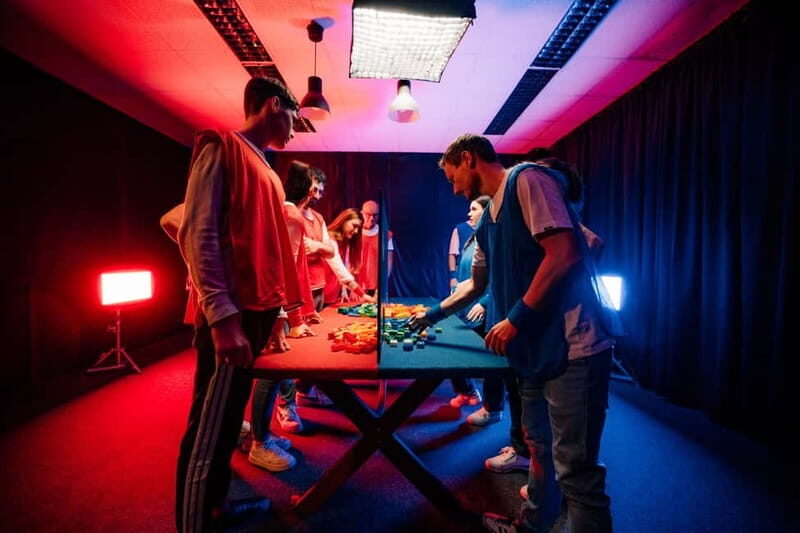
- 13 game rounds across memory, knowledge, skill, and sports
- Points pile up like a real competition show, ending with a trophy
- Friendly facilitation in German and English keeps things moving
- Built for groups from 2 to 80 people, so it scales well
- Wheelchair accessible format so more people can join the fun
How 150 minutes in Dresden turns into a real team battle
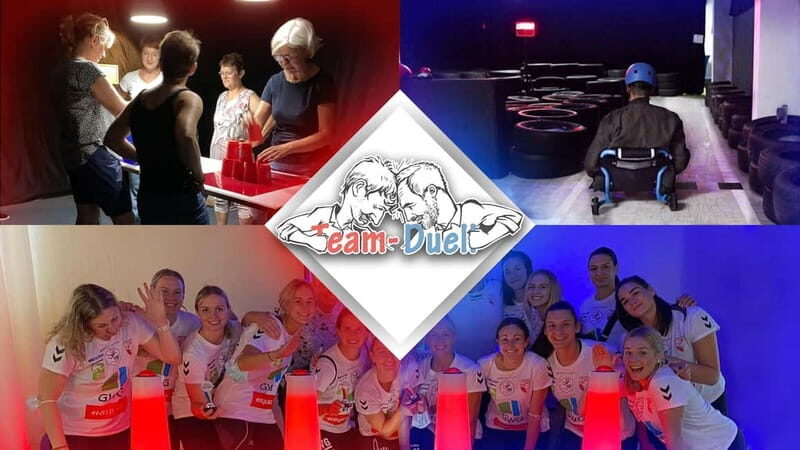
Team Duell Dresden is the kind of activity that makes planning easy and downtime rare. You get a structured event with a finish line: 150 minutes, a set of rounds, and a winner based on points. No wandering. No guessing what’s next. You’ll be doing something almost the entire time.
It also feels like a friendly version of “serious competition.” You’re not there to watch. You’re there to play. The rounds are mixed enough that one person’s strength usually helps the team, whether that strength is quick recall, steady hands, or sports-style coordination.
The “TV show” format matters more than it sounds. It keeps instructions clear, creates a rhythm, and prevents the awkward lull that can happen at long group events. In practice, it means you’ll likely get comfortable fast, and the energy stays on.
If your group is the type that likes puzzles, quick challenges, or light rivalry, you’ll click with this right away.
You can also read our reviews of more tours and experiences in Dresden.



The 13 games: memory, quiz, skill, and sports
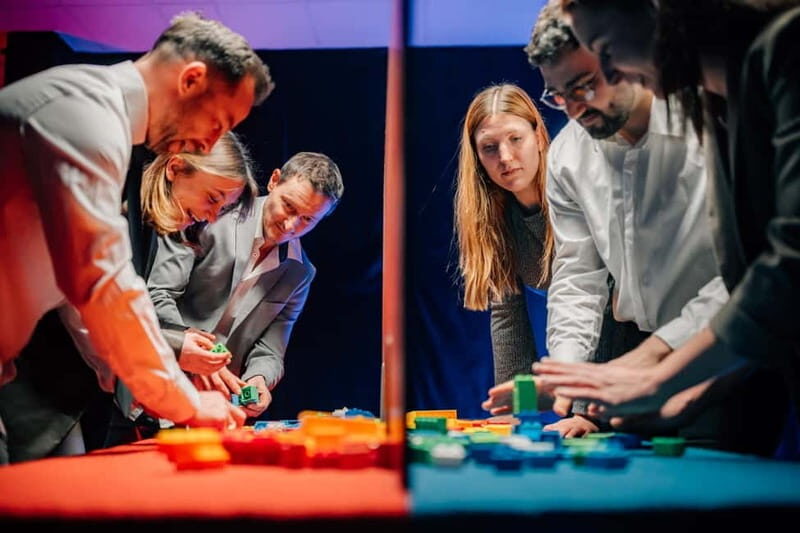
The core idea is simple: 13 games, multiple categories, and team play throughout. Even with no single “signature” game, the variety is the point. You’re not stuck in one format for the whole event.
Here’s how the categories translate into what you’ll feel during the day:
Memory and knowledge rounds
These parts test recall and quick thinking. Expect short challenges that reward paying attention and communicating with your team. If your group is the talk-it-out type, you’ll likely do well because teamwork is built into the structure.
From the feedback I’m drawing on, the memory and quiz elements are popular because they keep the playing field wide. One person doesn’t need to dominate physically to contribute.
Skill and coordination challenges
Skill rounds focus on control and accuracy more than brute strength. You’ll usually want someone who stays calm and consistent, plus teammates who can watch, spot cues, and help with strategy.
A nice detail here is fairness. The event is set up so participants get comparable chances in the different rounds, not just one “athletic” lane where only the strong win.
Sports-style games
These rounds bring in a more physical flavor. That doesn’t mean you have to be a sports star. It means the team can switch roles depending on the game—someone who’s quick to react might take the lead in one round, while another teammate contributes by guiding the team through what to attempt next.
A theme you’ll notice in the experience is that it moves between mental and physical challenges. That keeps energy balanced, which helps for groups with mixed ages and abilities.






Quick note on the buzzer-style moment
One of the most specific pieces of feedback was about buzzer games and the wish to pick categories. That suggests buzzer rounds exist and follow a set format. If you care about strategy or category control, just know it may not work the way you’d expect in a custom quiz.
The point system and the trophy payoff

Everything runs through scoring. You’ll go through the rounds together, collect points as your team finishes each game, and then you’ll reach a final winner based on total points.
This matters because it changes the vibe from “casual games” to a real shared goal. It gives your group something to rally around without requiring outside knowledge. You’re not studying before you arrive. You’re playing and learning as you go.
At the end, the trophy is a concrete reward. It’s not just a participation nod, and that’s exactly what makes the event memorable. Even if you don’t win, you still leave with the feeling that your team worked toward something specific.
What the facilitation feels like (and why it helps)
The event includes support and facilitation, led by staff who speak German and English. That’s not a small detail. In competitive games, people need fast answers: how do we start, what are the rules, what’s the scoring method, and what happens if something goes wrong?
Good facilitation keeps the event fair and keeps the pace moving. In the feedback, the instruction and Betreuung (care/support) came up as friendly and helpful. That’s the difference between an event that feels organized and one that starts strong and then drifts.
You can also count on a clear run-up. You should arrive 20 minutes before your appointment to get oriented and avoid being rushed.
Group size and age: who this is for in Dresden
Team Duell Dresden is designed for a wide range of group sizes: 2 to 80 people. That makes it a practical choice for families, friend groups, schools, youth groups, and team outings that don’t want to sit around.
It also has a clear age guideline: suitable for participants aged 12 and over. It also notes it’s not suitable for children under 7, so there’s no “tiny-kids only” angle here. Think teenagers, families with older kids, and mixed-age groups where adults still want fun.
One reason this matters: the variety of rounds helps mixed groups. Someone who’s not into fast physical games can still contribute on quiz and skill rounds, and someone less comfortable with quizzes can still help in coordination challenges.
If your group has very different ability levels, this kind of event tends to work better than single-sport activities.
Price and value: what $235 per group up to 6 really covers

The price is listed as $235 per group up to 6 for a duration of 150 minutes. That sounds straightforward, but the value comes from the structure.
You’re paying for:
- a set of 13 guided games
- all materials
- facilitation and support
- the Team Duel trophy for the winning team
So the cost isn’t just “someone shows you games.” It’s an organized, scored program with staffing and equipment for multiple rounds. For groups who want a planned activity without hunting down vendors, reservations, or time slots at several places, this can be efficient.
You can also add players at €30 per person if needed (and the event must be booked separately for extra players). That flexibility is useful if your group is close to that top end.
One practical budgeting point: the event does not include food and says bringing your own food isn’t allowed. Cold drinks aren’t included either, though you can buy them on-site. So plan for a snack strategy before or after, depending on your day.
Practical rules you’ll want to know before you go
This experience runs on safety and simplicity, so rules are strict. The event explicitly prohibits:
- weapons or sharp objects
- smoking
- pets (assistance dogs allowed)
- intoxication, alcohol and drugs
- red wine
- food (and bringing your own food)
- firework, explosive substances, and making fire
- unaccompanied minors
That’s a lot of “no,” but it also explains why events like this typically feel smooth once you’re inside. There’s less risk of disruptions, and teams can focus.
Also, bring a credit card. The event notes it in what to bring, and payment is handled via an invoice after booking, with payment in advance required.
How to time your day in Dresden around 150 minutes
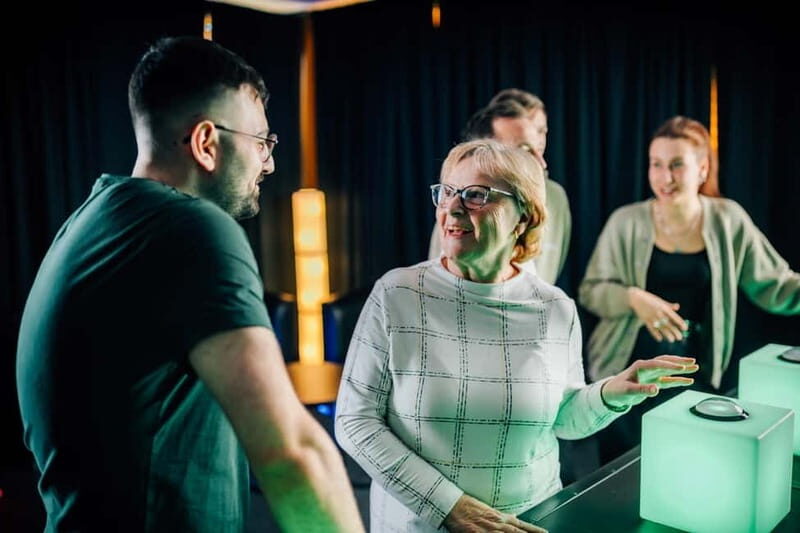
At 150 minutes, you’re looking at a little over two hours. That’s ideal if you want something active without committing your whole day.
A good plan is to schedule it with a flexible buffer before and after. Because you’ll arrive 20 minutes early, your real time block is closer to about 170–180 minutes including orientation.
If you’re pairing it with sightseeing, pick a time when you won’t be rushed back to catch transport. This is the kind of activity that can build energy fast, and you’ll want your group to finish without needing to sprint immediately to the next stop.
The “so fun it’s teamwork” factor (why it’s popular)
What makes Team Duell Dresden work, even beyond the games themselves, is that it’s about coordination. Many rounds can only be mastered together, so your group has a reason to communicate in the moment.
That’s especially helpful for:
- families who need a shared activity that isn’t screen-based
- friend groups who want something structured instead of “maybe we’ll do something”
- teams looking for a low-stakes bonding event with friendly competition
- school and youth groups that want movement and cooperation
The most praised aspects from the feedback you provided line up with this: varied, well-mixed rounds; sports plus quiz plus skill; and staff who handle questions with patience.
There’s also a practical win: the event gives everyone a chance. One feedback point called out that the games give equal chances, which is exactly what you want when your group has mixed strengths.
Should you book Team Duell Dresden?
If you want a Dresden activity that’s active, structured, and built for group energy, I’d book it. It’s a strong fit when your group values teamwork, enjoys quizzes and challenges, and wants a clear winner without needing any special skills.
I’d hesitate only if your group strongly prefers quiet sightseeing, or if you really dislike competitive scoring. Also, if food matters to your schedule, remember food is prohibited during the event and you’ll need to plan drinks and snacks around it.
If you’re traveling with a mixed-age group, or you want something that works for a range of abilities, Team Duell Dresden is a smart bet.
FAQ
How long is Team Duell Dresden?
The event lasts 150 minutes.
How many people can join?
It’s suitable for groups from 2 to 80 people.
What age is it for?
It’s suitable for participants aged 12 and over, and it’s not suitable for children under 7.
What languages are used?
The instructor and facilitation are available in German and English. Some content may be shown in its original language.
What’s included in the price?
You get the 2.5 hours of gaming, all games and materials for the duels, support and facilitation, and the Team Duel trophy for the winning team.
Is food included?
No. Food isn’t allowed, and bringing your own food isn’t permitted. Cold drinks aren’t included, but you can buy them on-site.
Can I add more players?
Yes. Extra players cost €30 per person and must be booked separately.
Is the event wheelchair accessible?
Yes, the event is listed as wheelchair accessible.
What should I bring, and what do I need to avoid?
Bring a credit card. Avoid weapons or sharp objects, smoking, pets (assistance dogs allowed), intoxication, alcohol and drugs, red wine, food, fireworks or explosives, and making fire.