REVIEW · MUNSTER
Crime show city tour by rickshaw including guide
Book on GetYourGuide →Operated by Leezen Heroes · Bookable on GetYourGuide
Münster becomes a crime map in one hour. I like the rickshaw pace—it keeps you moving without rushing—and I really like how the tour ties TV scenes to real places, including Antiquariat Michael Solder, the Wilsberg antique stop.
One thing to keep in mind: it’s short. With a 1-hour format and no attraction entry included, you’ll see a lot of exteriors and street-level “spotting,” but you won’t get deep inside everything.
In This Review
- Key things you’ll notice on this Münster crime rickshaw tour
- Münster Through Crime-Show Details
- What 1 Hour on a Private Rickshaw Really Means
- City Hall Meeting Point: Getting Oriented Fast
- Prinzipalmarkt: The Photo Stop That Sets the Tone
- Münster Cathedral: Location-Spotting With a Purpose
- Antiquariat Michael Solder: Wilsberg’s Real-Life Stop
- Münster Palace and Aasee: The City Breathing Room
- Erbdrostenhof: Another Corner With a Story Angle
- How Film Crews Change What You See
- Learning What Really Happened in Münster
- Price and Value: Is $40 a Good Deal?
- Who Should Book This Münster Crime Show Tour
- Should You Book This Crime Show Rickshaw Tour?
- FAQ
- How long is the Crime Show City Tour by Rickshaw?
- Where does the tour start?
- Is the tour private?
- What language is the guide speaking?
- Are attraction entry fees included?
- Can I take photos during the tour?
- What is included in the price?
- Is there a cancellation option?
- Do they offer a warm-weather or cold-weather comfort option?
Key things you’ll notice on this Münster crime rickshaw tour
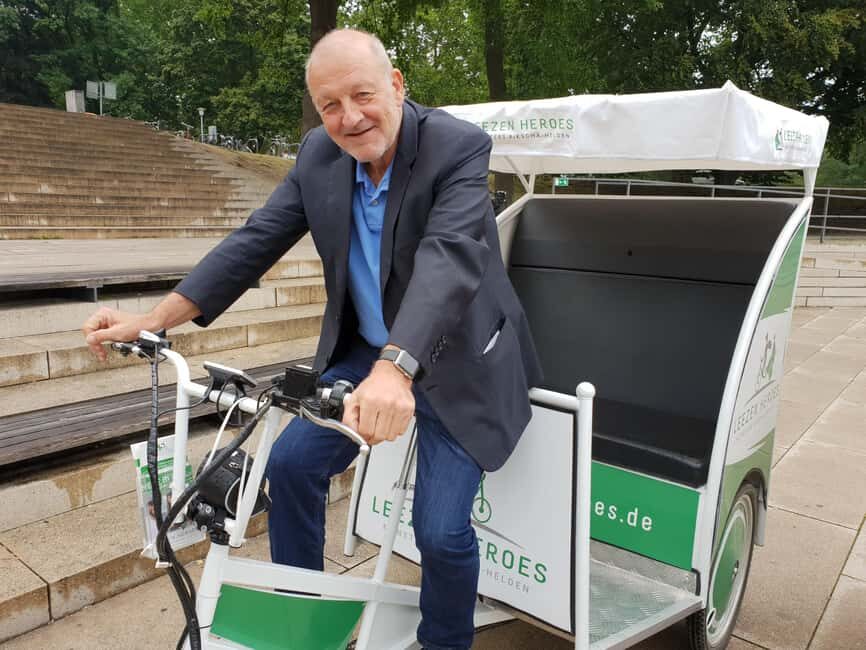
- Tatort and Wilsberg filming locations shown as real places you can actually photograph
- Wilsberg’s work and home spots pointed out, so you can match the show to the street
- Thiel and Boerne locations connected to how and where crimes are solved on screen
- Antiquariat Michael Solder as a dedicated photo-and-info stop
- Filming tricks explained, so you can understand why a scene looks the way it does
- Photo stops whenever you want, while you stay comfortable in a private pedicab
Münster Through Crime-Show Details
If you love German TV crime, Münster is the kind of city that rewards attention. The streets are walkable, the landmarks are obvious, and the buildings feel set-like without trying. This tour turns that into a game with a purpose: you’re not just sightseeing. You’re learning where the screen-makers place their stories.
What makes the experience feel smart is the pairing of classic Münster visuals with crime-show context. You’ll see long-running locations associated with Tatort and the Wilsberg world, then get the background that helps you connect what you recognize on TV to the real geography. Instead of a dry lecture, the guide keeps it moving and points out what to look for.
And yes, you do get the fun stuff: the tour focuses on where Detective Wilsberg lives and works, plus where Thiel and Boerne solve crimes. That detail matters because it changes your angle from I’ve seen that building to I know why this corner matters.
You can also read our reviews of more guided tours in Munster
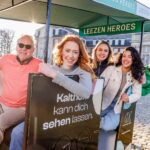

What 1 Hour on a Private Rickshaw Really Means
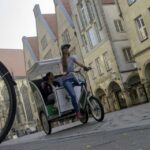
The duration is 1 hour, and that’s a feature, not a bug. This format is built for fast orientation: you get key stops, quick guided context, and enough time to take photos without burning half a day. You can think of it as a guided “crime map” run-through that helps you decide what you want to explore later on your own.
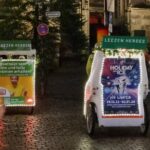
You’re on a private pedicab (rickshaw), so you’re not stuck in a long queue with strangers. That also means the guide can adjust pacing to your interests, especially if you’re the type who wants an extra minute to frame a shot.
Do note the reality check: no attraction entry is included. Some places are best enjoyed from the outside anyway, but if you were hoping for a museum-level experience, this won’t be that. It’s a locations-and-stories tour.
City Hall Meeting Point: Getting Oriented Fast
You start at Historic City Hall, right in the city core. The meeting point is practical: meet the guide in front of City Hall, standing next to the rickshaw. That matters because parking, platforms, and street-level pickup can be confusing in older European centers—this one is straightforward.
Before you roll out, the guide’s job is to set expectations: you’ll see famous Münster landmarks, plus the TV-connected spots that crime fans usually want most. The quick start also helps you feel settled. You’re not waiting around, and the tour doesn’t feel like it begins late.
Prinzipalmarkt: The Photo Stop That Sets the Tone
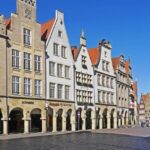
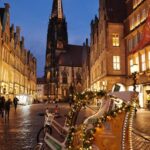
The first big landmark stop is Prinzipalmarkt, one of Münster’s most recognized squares. Even if you’ve never watched the shows, the square gives you a sense of the city’s center—brickwork, façades, and that classic North German vibe.
What I like about this stop is that it works as your mental baseline. You get orientation in a place that’s visually “sticky,” so later, when the guide points out film-linked corners, you can actually place them in your head. You also get a short visit and guided tour time that fits the 1-hour pace.
This is also a good moment to take a wide photo. In a short tour, wide context shots matter. They help you remember the layout later when you’re scrolling through your photos at home.
Münster Cathedral: Location-Spotting With a Purpose
Next comes Münster Cathedral, another obvious centerpiece that makes the city feel instantly real. The stop is built for photos plus guided context, not for a long stop-and-stare.
For crime-show fans, cathedral exteriors can be especially useful. The architecture is dramatic, and TV productions often use landmarks like this because they read clearly on camera. Here, the guide helps you see the difference between the show’s framing and the street reality—why a shot looks one way when you’re standing a few meters to the left or right.
Practical tip: if you’re taking photos, take one from where the rickshaw naturally stops first, then do a second one if the guide gives you a chance to reposition. Small angles can change everything with wide landmark shots.
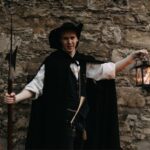
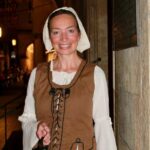
Antiquariat Michael Solder: Wilsberg’s Real-Life Stop
This is one of the tour’s headline moments: Antiquariat Michael Solder, explicitly connected to Wilsberg. The name matters because it’s not just a vague “the shop from the show.” It’s a real place you can find and photograph.
The tour treats this stop as more than a postcard moment. You’ll get a photo opportunity plus guided time designed around the Wilsberg setting—how the location functions in the story world and what you’d be looking for if you’re trying to match what you’ve seen on screen.
What I love here is the conversion from fandom to clarity. Instead of you guessing how the show used Münster, the guide gives you anchors: the spot, its role, and how it shows up in the crime universe.
If you’re traveling with someone who isn’t fully into crime dramas, this stop can still work. It’s visually distinctive and gives you something concrete to point at without needing deep knowledge of plotlines.
Münster Palace and Aasee: The City Breathing Room
After the crime-show hits around the center, the tour moves to more open-air, slower-feeling places. First is Münster Palace, with a longer visit time than some of the quick stops. That extra time matters because palace grounds and nearby architecture often give you a better sense of scale than a street corner does.
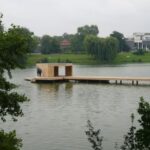
Then you reach Aasee, where you get both photo time and guided context, plus scenic drive time. This is a smart shift. The show-related stops give you the thrill of recognition, and Aasee gives you the reset: water, open space, and calmer surroundings.
It also helps you understand the city beyond filming. Münster isn’t just a set of recognizable façades; it’s a place people actually live and walk. Aasee does a good job of showing that side—without turning the tour into a long nature walk.
If your feet are tired, this part is even better. You’re still on a rickshaw, so you can keep moving comfortably while still getting meaningful time at a major landmark.
Erbdrostenhof: Another Corner With a Story Angle
The tour includes Erbdrostenhof as a photo stop. This is the kind of stop that works best on a short tour. It adds variety without chewing up time, and it gives crime fans extra chances to spot architecture and street layout.
Even when a stop feels brief, the guide’s role is to link the location back to the crime-show world. That way, each quick photo pause doesn’t feel random. It builds your overall “Münster crime geography.”
How Film Crews Change What You See
A big part of the value here isn’t only where filming happened. It’s what film crews do to make scenes work. The tour is designed to explain the filming tricks that affect what ends up on screen.
This is useful because it changes how you watch the shows afterward. You start noticing angles, entrances, and the way camera framing hides or emphasizes parts of a location. Even if you’re not a technical viewer, you’ll enjoy the practical side: why a place looks slightly different in an episode than it looks in real life.
This also helps you get more out of your photos. When you know the reason for the framing, you can recreate the composition better when you’re back in the city later.
Learning What Really Happened in Münster
Crime fans usually want more than fictional drama. This tour also focuses on real crime stories connected to Münster—what happened and why the locations matter.
The careful part is the tone. You’re not being shoved into grim details. Instead, the real-world context adds weight to the TV locations you’re seeing. It helps you connect Münster’s identity as a crime setting to real local stories and real geography.
That makes the tour feel less like cosplay and more like storytelling rooted in place. You’ll walk away understanding why Münster became so central to German crime TV—and why those filming spots keep showing up.
Price and Value: Is $40 a Good Deal?
$40 per person for a 1-hour private rickshaw tour in Münster is a solid value if you fall into one of these groups: crime-show fans, first-time Münster visitors, and people who like learning while moving.
Here’s the practical value breakdown:
- You’re getting a live German guide and a private rickshaw. That’s more personalized than a group walking tour.
- The stops are targeted: city center landmarks, Wilsberg-specific location, palace, Aasee, and another photo stop.
- You’re not paying for attraction entry, which keeps costs predictable. You’re paying for guidance and time at key exterior locations.
If you’re expecting long indoor visits or a museum day, $40 won’t feel like the right match. But if you want a focused “spot the show” experience with real context, it’s priced like a smart activity you can do early in your trip.
One more value signal: the experience is repeatedly praised for how well the guide handles a short time frame. In particular, the German guide Barbara is noted for being friendly and for sharing extra helpful Münster information, even for people who don’t mainly watch Tatort.
And there’s a small comfort detail that came up in a recent booking: a warm water bottle and blanket were described as a thoughtful touch. That’s the kind of practical care that makes a short tour feel extra well handled.
Who Should Book This Münster Crime Show Tour
This tour is best for people who like recognition with explanations. If you can’t stand tours that feel like a checklist, this one’s structured around story connections and photo stops, so the time stays engaging.
You’ll also enjoy it if:
- you’re a crime-show fan who wants to match Münster to what you’ve seen on screen
- you want an easy first look at the city center without long walks
- you like photography but don’t want to spend an entire day chasing the perfect angle
- you’re traveling with someone who enjoys TV culture but might not want an all-day sightseeing grind
Because the guide leads in German, it’s ideal if you’re comfortable with German or you don’t mind following along through a mix of place names and explanations. If you want a highly language-based experience, consider that limitation.
Accessibility note: one booking specifically mentions that there is a solution for wheelchair users if you ask. If accessibility matters for you, contact the provider ahead of time so the guide can plan accordingly.
Should You Book This Crime Show Rickshaw Tour?
If you’re choosing between a quick city tour and a crime-focused one, I’d book this if you care about filming locations and story context. The 1-hour length is ideal for getting oriented, taking photos, and learning the filming logic behind what you see on TV.
Skip it only if you need long indoor visits, you expect full attraction entry included, or you’re looking for a nature hike instead of a story-and-location route. This is a “see it, place it, understand it” kind of experience.
For many people, doing this early in your Münster trip pays off. You’ll leave with a clearer mental map and a shorter list of places you actually want to revisit on your own.
FAQ
How long is the Crime Show City Tour by Rickshaw?
The tour lasts 1 hour.
Where does the tour start?
Meet your guide in front of Historic City Hall. The guide will be standing next to the rickshaw.
Is the tour private?
Yes, it’s listed as a private group.
What language is the guide speaking?
The live tour guide speaks German.
Are attraction entry fees included?
No. Entry to attractions is not included.
Can I take photos during the tour?
Yes. The tour allows photo stops, and you can stop for photos as you go.
What is included in the price?
Included: the guide and a private rickshaw tour.
Is there a cancellation option?
Yes. Free cancellation is available up to 24 hours in advance for a full refund.
Do they offer a warm-weather or cold-weather comfort option?
In at least one recent booking, a warm water bottle and a blanket were mentioned as a helpful extra. If you’re traveling in colder months, it’s worth asking what’s provided.