REVIEW · COLOGNE
Cologne: Old Town Virtual Reality Walking Tour
Book on GetYourGuide →Operated by TimeRide GmbH · Bookable on GetYourGuide
Cologne’s Old Town gets a sci-fi makeover in just 90 minutes, and that combination is exactly the point. You get a live guide plus VR headset moments at key squares, so you’re walking real streets while the city’s past pops into view.
I especially like the balance: you still walk between landmarks at a relaxed pace, and you also get clear story beats that stretch from Roman Cologne to the Middle Ages, World War II, and today’s traditions. The other big win is how it’s guided by people who know how to pace the experience, with guides like Carlo and Kat(h)rin earning standout praise for making the VR feel fun and well-prepared.
One thing to consider: the tour is in German, and you’ll need to be comfortable pausing at stations to put on the headset and follow along (this isn’t a quick “see everything” sprint).
In This Review
- Key things to know before you go
- How the VR time machine works on a real walking route
- Starting point at TimeRide Köln: what to do when you arrive
- Alter Markt: a classic square turned into a history lesson
- Heumarkt: shorter walk, big story energy
- Roncalliplatz: where the route starts to feel like a guided “show”
- Cologne Cathedral: photo stop plus a sense of what building meant
- St. Kolumba: a quieter stop that can feel surprisingly powerful
- Hohe Street: finishing strong with a fast wrap-up view
- What you’ll actually learn from the 2,000-year storyline
- Price and value: is $38 worth it?
- Who this tour suits best
- Booking tips that make the day smoother
- Should you book the Cologne Old Town Virtual Reality Walking Tour?
- FAQ
- FAQ
- How long is the Cologne Old Town Virtual Reality Walking Tour?
- Where do I meet the guide?
- What is included in the ticket price?
- Is the TimeRide museum entrance included?
- How far do we walk?
- How many stops are there?
- What language is the live guide?
- Is this tour suitable for children?
- What should I bring for the tour?
- What happens during the VR portions?
- Is there a cancellation option?
Key things to know before you go
- Live guide + VR headsets at stations keeps the story moving without relying on app-only audio.
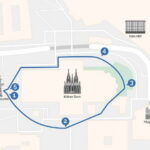
- Seven stops cover roughly 2,000 years of Cologne in a tight, walkable route.
- Short walking segments add up to about 2.1 km, so you’re not stuck trekking for the full 90 minutes.
- Cologne Cathedral gets a photo stop, then the walk continues to nearby sights.
- It’s designed for ages six and up, so it can work well for families who can handle VR pauses.
- The guide experience can be very personal in smaller groups, as one guide-led session reportedly ran with just the two guests.
How the VR time machine works on a real walking route
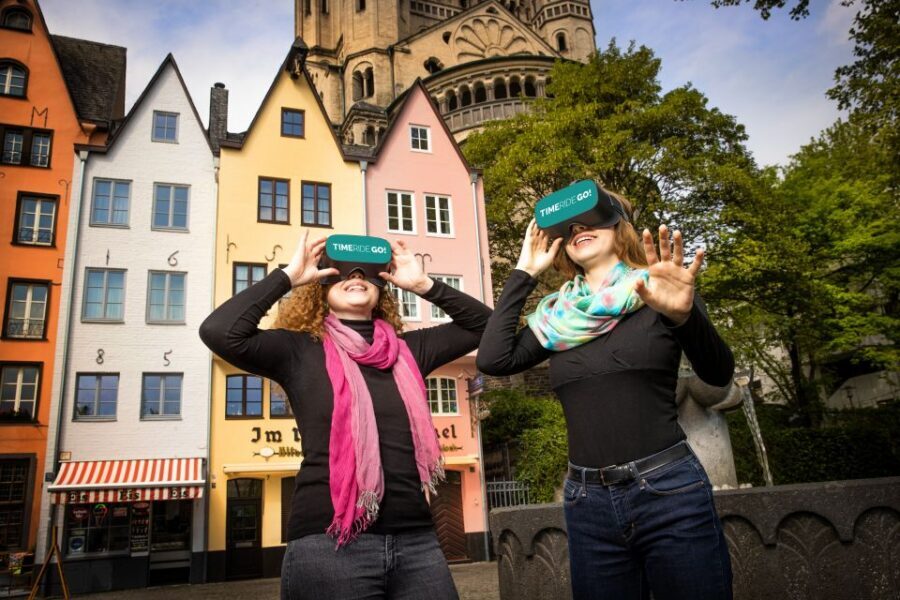
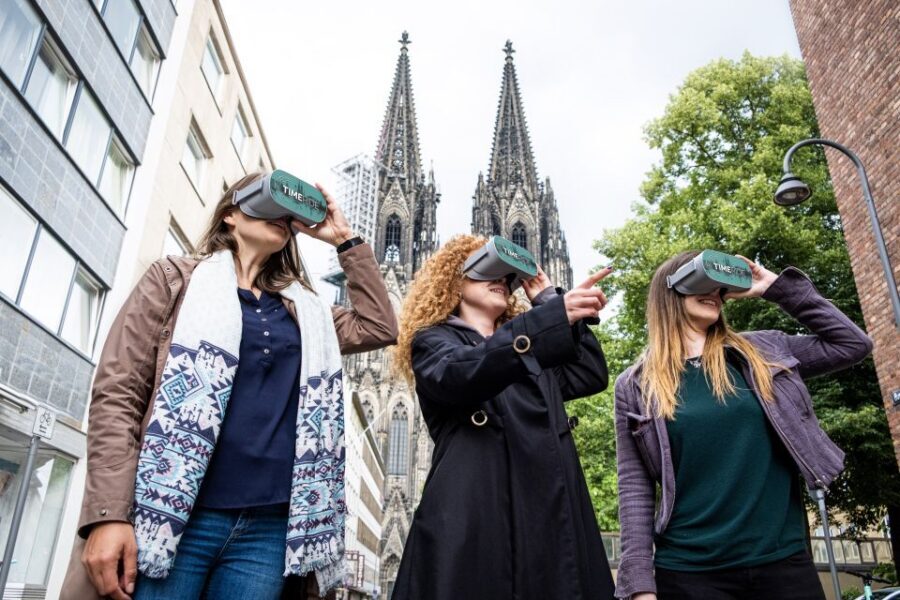
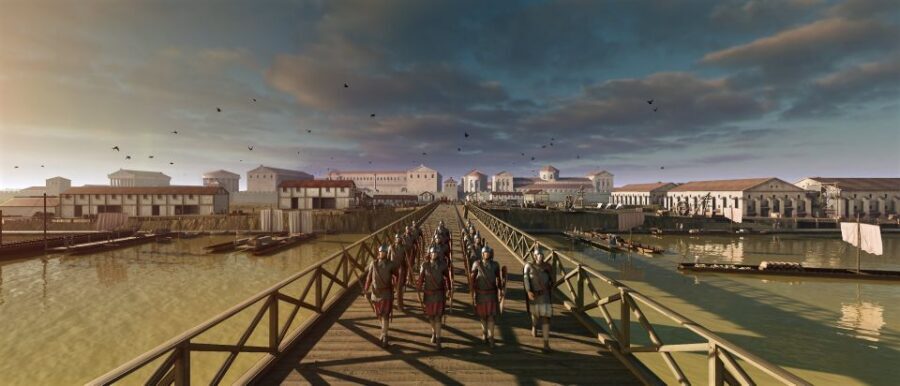
This tour is built around a simple idea: you look at today’s streets, then you literally switch your view into the past. At each of the main stops, you put on a pair of VR glasses/headset and look directly into reconstructed scenes tied to Cologne’s timeline. The guide then stitches it all together so you’re not just watching futuristic visuals—you’re understanding why that spot matters.
What I like about the pacing is that it’s not one long headset session. You walk a bit, stop, then put the glasses on for the “time travel” moment. Then you’re back to walking and learning. That rhythm helps a lot, especially if you’re visiting with kids or you’re the type who gets impatient with tours that are all talk.
One detail that affects the experience: the moment you switch into VR depends on what station you’re at. A review mentioned the guide led them through without the glasses until a specific point, and then they used the headset to get the historical views. So if you’re hoping for constant VR the whole time, know it’s tied to stops, not continuous.
You can also read our reviews of more walking tours in Cologne


Starting point at TimeRide Köln: what to do when you arrive
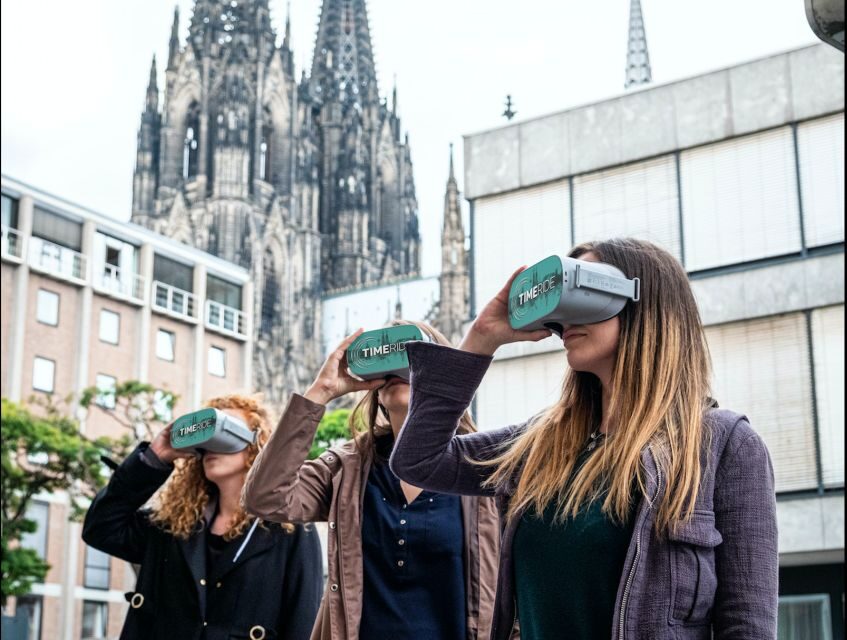
You meet your guide in front of TimeRide Köln. That’s where the tour begins, and it’s also where the experience connects to the VR facility (though the tour includes the headset and the guide, not a separate museum entrance).
If you’ve never done guided VR before, here’s what helps: arrive with comfortable shoes and wear weather-appropriate layers. You’ll be outdoors between stations, so the day’s conditions affect how pleasant the walking segments feel. Also, plan to follow instructions quickly at each stop—headset on, look as directed, then move on.
Alter Markt: a classic square turned into a history lesson
The first major stop is Alter Markt, and you’ll spend about 15 minutes there. This is the kind of square that makes sense as a “start anchor” for a story. It’s central, walkable, and easy to imagine why people gathered there over centuries.
In the VR part at this stage, your goal isn’t to memorize every architectural detail. It’s to get your mental timeline lined up. The tour is structured to trace Cologne’s development beginning with the Roman founding period, then moving toward the Middle Ages, later the impact of World War II, and finally how traditions return in modern times.
A practical note: since you’ll be switching between walking and VR, your best strategy is to keep your questions simple. Ask how the scene connects to what you’re looking at right now on the street, not how everything works technically inside the headset.
Heumarkt: shorter walk, big story energy
Next up is Heumarkt, again with about 15 minutes allotted for the stop and walk time. Heumarkt works as a mid-route reset. You’ve already got context from Alter Markt, and this is where the guide can push the story forward without you feeling like you’re chasing the past across huge distances.
What matters here is momentum. In a 90-minute tour, you don’t want to lose the thread. Heumarkt is the kind of stop where you’re likely to start seeing patterns: how Cologne’s identity changes across eras, and why later events shape what you see today.
Expect the tour to keep connecting the dots. You’re not just learning dates; you’re learning how Cologne’s built environment and customs evolved. That’s the real value of using VR at outdoor landmarks—it lets you understand how a place could look different and still feel like the same city.
Roncalliplatz: where the route starts to feel like a guided “show”
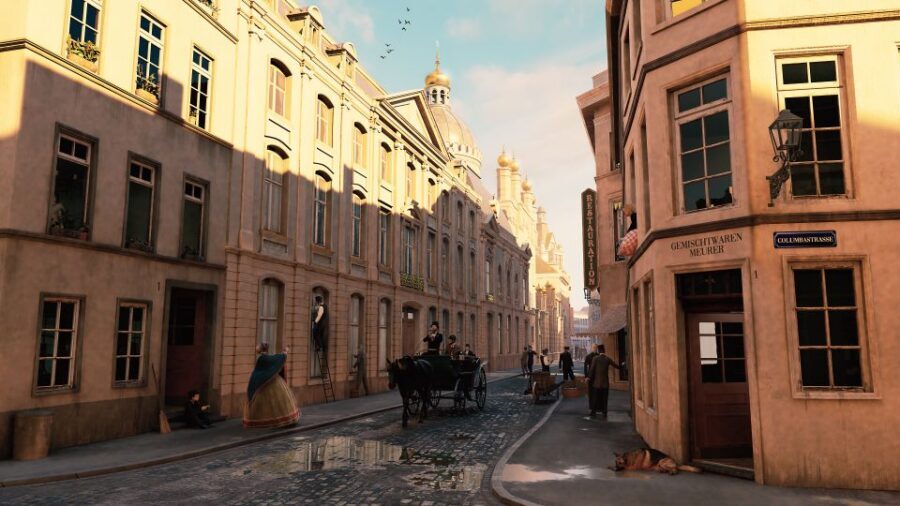
Then comes Roncalliplatz, another roughly 15-minute segment. This stop feels like a hinge between “intro history” and “main transformation moments.” By now, you’re used to the rhythm: listen, walk, pause, headset on.
This is also a good moment to pay attention to how the guide tells the story. In the reviews, guides like Carlo and Kat(h)rin were praised for being well-prepared and professional—less memorizing facts, more making the experience easy to follow. If your guide has a strong storytelling style, this stop is often where that shows.
If you’re traveling with kids (age six and up), this is a good checkpoint to judge whether they can handle the VR pauses. The tour is designed for this age range, but VR still requires a few minutes of stillness each time the glasses go on.




Cologne Cathedral: photo stop plus a sense of what building meant
At Cologne Cathedral, you’ll have a photo stop, plus guided sightseeing and time in the area (about 15 minutes). This is one of the biggest emotional anchors in the route, and it’s also where the story’s Middle Ages chapter becomes tangible.
The tour’s historical arc highlights the cathedral’s massive construction project in the Middle Ages. That matters because it turns the cathedral from a “must-see building” into something you can understand as an enormous communal effort—something built over long stretches of time, with consequences that echo even after later destruction.
When you’re at the cathedral stop, use the photo time for what will help later. Take one wide shot to remember where you were in the route, and one closer shot for scale. Later, when the VR scenes show older or transformed views, those quick photos help your brain connect the present-day structure to what you saw through the headset.
St. Kolumba: a quieter stop that can feel surprisingly powerful
Next is St. Kolumba, Cologne. You’ll spend time walking and getting the guided experience here, again about 15 minutes. This stop tends to matter for a different reason than the cathedral: it can help you see how the city’s character continues after major events.
The tour includes the dramatic disruption of World War II and then moves into renewal—how Cologne’s customs return in a modern way. St. Kolumba is a strong match for that theme because the area gives you a sense of continuity rather than only “big spectacle.”
In other words, don’t treat this as just another stop on the map. Treat it as a “what survived, what changed” moment. Even if you don’t catch every detail, you’ll walk away with a clearer sense of how the past is carried forward in Cologne, not just displayed.
Hohe Street: finishing strong with a fast wrap-up view
The final stop is Hohe Street, with only about two minutes listed for sightseeing. That short timing tells you what the tour designers want: a quick landing point back into everyday Cologne life.
You’ll leave this section feeling like you’ve been in a guided time sequence and then gently brought back to the present. If you still have energy, this is the perfect time to do a little self-guided wandering nearby—use Hohe Street as your springboard for your next meal stop, shopping break, or a final look at the cathedral area from a new angle.
What you’ll actually learn from the 2,000-year storyline
The tour is built around a timeline that spans key eras:
- Roman Cologne at its founding phase
- The Middle Ages and the cathedral’s construction
- World War II destruction
- The revival of customs, including today’s carnival festivities
The best part is how those chapters are tied to specific places you can see. VR here isn’t just entertainment; it’s an interpretation tool. It helps you understand how the same neighborhood can hold different versions of the city depending on the century—what people built, what people rebuilt, and what traditions survived long enough to come back.
For history lovers, this is a smart way to avoid the usual problem: reading plaques and still not understanding the big picture. For families, it’s a smart way to keep attention because the story comes through visuals, not just explanations.
One more value point: the route covers about 2.1 km total, which makes it doable for a lot of visitors in one sitting. It’s not a full-day hiking plan; it’s a concentrated experience that fits neatly into a normal day of sightseeing.
Price and value: is $38 worth it?
At $38 per person for 90 minutes, this sits in the mid-range for a guided tour with VR. The key question isn’t just the cost—it’s what you’re getting.
You’re paying for:
- A live guide
- A virtual reality headset experience
- A structured walk with stops designed for the story
That combination is what makes the price feel reasonable. If you were doing the landmarks on your own, you’d still spend time finding context. If you were doing VR alone, you’d miss the “standing on the street where it happened” effect. Here, the VR and the walking reinforce each other.
Also note what’s not included: entrance to the TimeRide museum. That means you’re not paying for an open-ended museum visit as part of the tour fee. If you want extra time inside the facility, you’d need to plan for that separately.
Who this tour suits best
This one fits best if you want:
- A guided Old Town walk with clear storytelling
- Visual history you can understand quickly
- A format that works for families with kids age six and up
It may be less ideal if you prefer long, slow museum-style visiting or if you dislike stopping and switching between headset use and street walking.
Language is another factor. The tour runs with a German live guide, so if you don’t speak German, your enjoyment may depend on how much the visuals carry you through. The guide role still matters here.
Booking tips that make the day smoother
A few practical ideas before you lock it in:
- Wear shoes you can walk in for short segments without fuss.
- Dress for weather because you’ll be outside between stations.
- If you want to remember more, do this earlier or later based on your style. One review recommended doing it nearer the end of your trip so it sticks better, likely because you’ll have fewer competing experiences.
Also, consider group size. One account described getting lucky and having a small group with the guide essentially focused on them alone. That kind of personal attention can turn a standard tour into something more memorable—though you can’t count on it every time.
Should you book the Cologne Old Town Virtual Reality Walking Tour?
I’d book it if you want a time-friendly history experience that doesn’t require you to know Cologne already. The structure—seven stops, headset moments at the right times, and a live guide connecting the eras—makes it a strong first or second look at the Old Town.
Skip it if you want a purely outdoor, no-equipment walk, or if you’re not comfortable with the idea of pausing for VR at multiple stations. If German language is a barrier, weigh how much you’ll rely on visuals versus the guide’s explanations.
For the right traveler—history-minded, short-attention-span friendly, and curious about how VR can make buildings and streets tell a story—it’s an efficient, genuinely fun way to see Cologne across centuries.
FAQ
FAQ
How long is the Cologne Old Town Virtual Reality Walking Tour?
The tour lasts 90 minutes.
Where do I meet the guide?
You meet your guide in front of TimeRide Köln.
What is included in the ticket price?
The tour includes a live guide and a virtual reality headset.
Is the TimeRide museum entrance included?
No. Entrance to the TimeRide museum is not included.
How far do we walk?
The tour covers approximately 2.1 km.
How many stops are there?
There are seven stops during the 90-minute tour.
What language is the live guide?
The live tour guide is in German.
Is this tour suitable for children?
It’s for everyone aged six and over. Children under 6 are not suitable.
What should I bring for the tour?
Bring comfortable shoes and weather-appropriate clothing.
What happens during the VR portions?
At the stations, you put on glasses and look directly into the past to experience scenes tied to Cologne’s history.
Is there a cancellation option?
Free cancellation is available up to 24 hours in advance for a full refund.