REVIEW · COLOGNE
Cologne: Crime on the Rhine guided tour
Book on GetYourGuide →Operated by Kölngeflüster · Bookable on GetYourGuide
Crime and justice in Cologne, on foot.
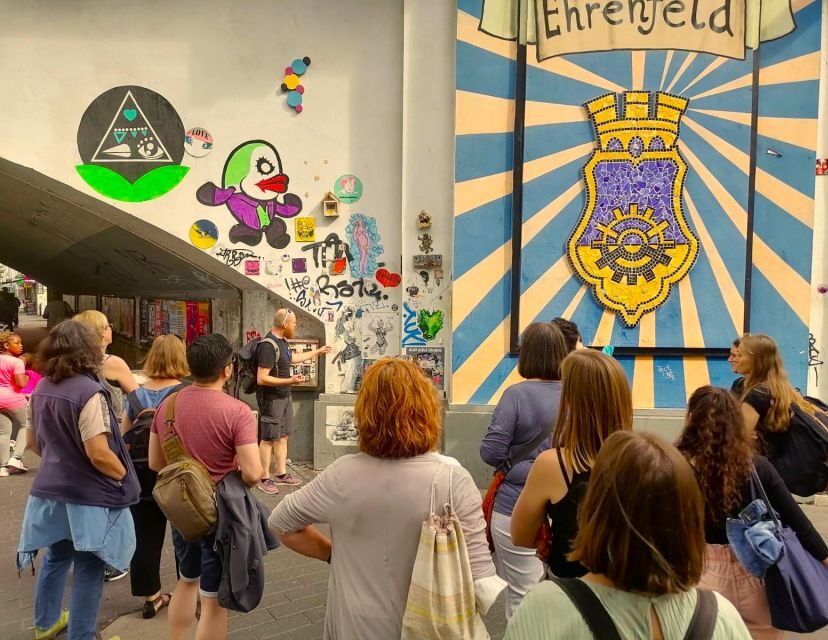
This Crime on the Rhine guided tour turns Cologne’s city center into a living courtroom, using real locations and real cases to explain how violence, honor, and punishment played out over centuries. I like that the story stays grounded in place, not generic facts, and the vibe is direct—an unvarnished true-crime walk with real consequences, not a horror theme park. Crime on the Rhine also has a practical rhythm: it’s tight, focused, and built for listening while you walk.
Two things I especially like: the way the guide connects multiple eras through specific incidents, and the street-level payoff when you reach places like Roncalliplatz and the Finance Court. Even the short, memorable case details—like why a book purchase ended at the gallows or how alcoholism nearly wrecked a baker—keep the tour moving. One possible drawback: some of these spots don’t have much left to physically show you, so your best experience comes from following the story closely, not from expecting intact ruins or monuments. And if you’re picky about audio, one comment suggested the guide could speak louder at times.
In This Review
- Key Things You’ll Notice on This Cologne Crime Walk
- Kreuzblume Meet-Up: Starting a Crime Story in Cologne’s Center
- Kölngeflüster Guide Style and Why the Timing Works
- Cathedral Chaos: How a Scuffle Led to an Execution That Failed
- Roncalliplatz and the Archbishop’s Prison: Power Behind the Stone
- Finance Court and the Last Death Sentence Imposed in West Germany
- Breite Straße and the Gladbeck Hostage-Takers: Crime Moves into the Streets
- Hühnergasse: The Story Behind a Street Name
- From Bakers to Books: Why “Small” Cases Hurt Big
- Real Expectations in a City Scarred by War
- Who This Tour Suits Best (and Who Should Skip It)
- Price and Value: What $17 Gets You in 2 Hours
- Should You Book This Crime on the Rhine Tour?
- FAQ
- What’s the duration of the Cologne Crime on the Rhine guided tour?
- Where is the meeting point?
- What language is the tour in?
- Is the tour accessible for wheelchair users?
- Does the tour run in bad weather?
- Is the tour suitable for children?
- Are pets allowed?
- Is the tour a city walk or does it include transport?
- How much does it cost?
- Is there a refund if I cancel?
Key Things You’ll Notice on This Cologne Crime Walk
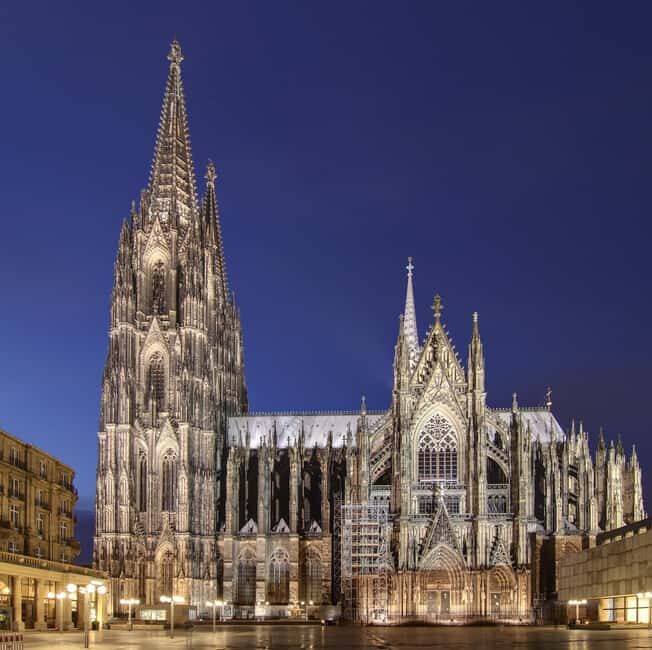
- Kreuzblume start point: You begin right in the action at Kardinal-Höffner-Platz, near Café Reichard, setting a centered pace from the first minute.
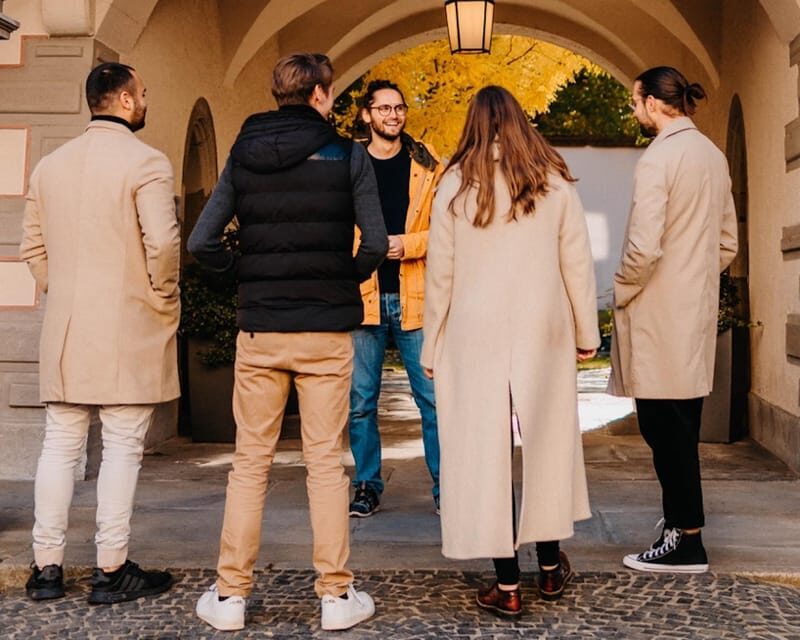
- Kölngeflüster guide identity: The guide wears a Kölngeflüster name tag, so you can spot them fast and start without delay.
- Cathedral scuffle to botched execution: One case links a messy argument to a punishment that didn’t go as planned.
- Roncalliplatz as the archbishop’s prison: You see how power and confinement overlapped in the past.
- Finance Court and the last West German death sentence: A heavy moment handled with clarity and location-based context.
- Street names with stories, including Hühnergasse: You’ll hear why everyday places earned a darker reputation.
Kreuzblume Meet-Up: Starting a Crime Story in Cologne’s Center
The tour meets at Kreuzblume, opposite Café Reichard, at Kardinal-Höffner-Platz (50667 Cologne). That’s a good starting spot because it puts you in the center of things quickly, with minimal fuss before the stories begin. It’s a 2-hour city walk, and you’ll want comfortable shoes because you’re on foot the whole time.
This is also a tour that runs even in rain or snow, so plan on weather-appropriate clothing and expect the walk to be more “real city” than “under-cover sightseeing.” The tour language is German, and some content may be shown in its original language—so if you understand German well, you’ll get more texture from the details. If your German is basic, you can still follow the outlines, but the extra bite of the original phrasing might be lost.
You can also read our reviews of more guided tours in Cologne
Kölngeflüster Guide Style and Why the Timing Works
The guide you’ll follow is identified by the Kölngeflüster name tag. I like this setup because it removes the usual morning hassle of finding the right group and checking the sign in time. More importantly, the 2-hour length is just enough time to hit several major cases without dragging you through a long, repetitive loop.
You should also know what the tour is built to do: connect crimes to places, and punishment to the society around them. It’s not only about who did what. It’s about how Cologne handled evil when it was close enough to matter—cathedral-adjacent incidents, court-related outcomes, and street-level episodes that became part of the city’s memory.
One review point to keep in mind: in a city like Cologne—heavily affected by World War II—you may not be able to look at the exact physical remains you expected. When there’s not much left, the guide’s storytelling becomes the main “site.”
Cathedral Chaos: How a Scuffle Led to an Execution That Failed

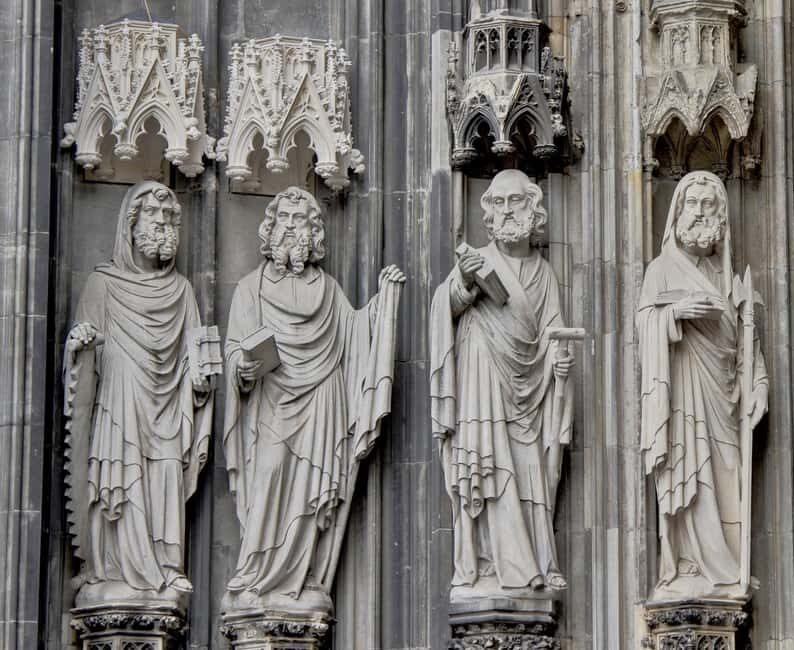
One of the most intriguing case threads you’ll hear about starts with trouble connected to the cathedral. The tour asks a specific, sharp question: why did a scuffle inside the cathedral lead to an execution that failed?
That’s not a random stunt. It’s a window into the way authority, ritual spaces, and legal punishment could collide. A cathedral isn’t just a building—it’s a symbol. So when violence or confrontation happens in that environment, it raises stakes. The idea of a failed execution also hints that justice wasn’t always smooth, even when the system claimed certainty.
What I like about this part is the balance: you’re not just told that something brutal happened. You learn how the attempt at punishment played out and what went wrong. It’s the kind of detail that makes you think, not only flinch.
Roncalliplatz and the Archbishop’s Prison: Power Behind the Stone
Next, you’ll get to know Roncalliplatz, described as the archbishop’s prison. This stop matters because it turns the idea of punishment from a distant concept into something tied to local control. The archbishop’s prison suggests the blending of spiritual authority and physical confinement—where discipline could be justified, administered, and enforced by those with influence.
When you stand in the area and hear the case context, the story becomes more concrete. You start to see how Cologne worked: not as one single court or one single law, but as overlapping systems that could trap people in different ways.
And this is where the guided format helps. If you’re reading about these things on your own, it’s easy to treat them like separate trivia. On the tour, the stories build on each other, showing how different kinds of crime and punishment were treated through time.
Finance Court and the Last Death Sentence Imposed in West Germany
Another standout location is the Finance Court, tied to the last death sentence imposed in West Germany. This is the kind of fact that instantly changes the tone of a walk. The tour doesn’t treat it like a sightseeing moment; it treats it like a historical weight you’re meant to understand where it happened.
I appreciate the value here because the tour connects a milestone with a real address in the city. That’s more meaningful than reading about an abstract political shift. You’re forced to confront the transition from earlier systems of punishment to what came after—using the location as your anchor.
This part is especially important if you’re the type of person who likes your travel stories grounded: you want names, places, and measurable moments, not just atmosphere.





Breite Straße and the Gladbeck Hostage-Takers: Crime Moves into the Streets
The tour also brings you to Breite Straße and connects it to the Gladbeck hostage-takers. This is a useful contrast with the older cases in the walk. It shows how crime stories can keep evolving, and how the city’s streets can carry modern trauma just as much as medieval scandal.
If you’re hoping for only medieval darkness, this is where the tour shows its range. The tour’s promise is crimes and their punishment across different epochs, and the Gladbeck link gives you that more recent bridge without losing the walking-city format.
What you’ll get here is a practical kind of understanding: crime isn’t only a courtroom story; it lives in streets, routines, and the places people pass every day. The guided context helps you read the city differently after you hear it.
Hühnergasse: The Story Behind a Street Name
One of the most “Cologne” moments is the focus on Hühnergasse and the story behind it. Street names are often treated like background details, but this tour treats them like clues. You’ll learn that something as ordinary as where you walk can be tied to a darker reputation.
That’s the reason street-focused true-crime tours work: the city stays ordinary until a guide gives you a reason to look closer. Then you notice how the tone changes. You start seeing how language, labels, and local memory can preserve crime stories even when the original events are gone.
This stop is also where you may feel the limits of physical survival in Cologne. If there’s not much left to see, the value is in what your guide puts into the place with words.
From Bakers to Books: Why “Small” Cases Hurt Big
A few case examples give you a sense of how varied the stories are. You’ll hear about a scenario where buying a book ended at the gallows, and you’ll also hear about a case where alcoholism almost ruined a baker. Those details matter because they refuse to limit the tour to grand villains.
In real history, “crime” isn’t always only gangsters with dramatic costumes. Sometimes it’s people at the edge of survival, impulse, addiction, or public shame—pulled into punishment by systems that can be harsh, public, and unforgiving.
I like that the tour includes both shocking outcomes and human-scale ruin. It keeps the walk from turning into a single-note list of executions.
You’ll also hear about a murder during a pope’s visit and why honor mattered in the Middle Ages, plus the detail that a cassock once dressed a murderer. Those themes connect religion, social standing, and justice into something you can actually picture on the streets.
Real Expectations in a City Scarred by War
One review mentioned the hope that more remained at historical sites to actually see. That’s a fair thing to expect in a city that went through massive destruction in World War II. Cologne today still looks like a living modern city. Some specific locations won’t have dramatic remnants you can point at.
So here’s the mindset that pays off: treat this as a guided interpretation walk. If you’re looking for perfectly preserved medieval “crime scenes,” you may feel slightly disappointed. If you enjoy the way the city becomes a map for the mind, you’ll likely feel more satisfied.
Also, if you’re the type who needs loud, crisp narration, pay attention early. One comment suggested the guide could speak a bit louder. If you know you struggle with audio in outdoor settings, consider arriving slightly closer to the guide group so you catch every key detail.
Who This Tour Suits Best (and Who Should Skip It)
This tour is not suitable for children under 16, and it also comes with rules aimed at keeping the stories respectful. Pets aren’t allowed (assistance dogs are allowed), and you should not bring alcohol or drugs. Party groups and bachelor/bachelorette party groups are also not allowed.
So who fits best? If you like true-crime storytelling with real locations, and you enjoy legal-and-historical context, you’ll enjoy this format. If you’re uncomfortable with executions and murder details, you might decide to skip it—the tour is clearly positioned as not for the faint of heart.
Language matters too. It’s German-only, so if you’re comfortable listening in German, you’ll likely get the most out of the original phrasing content and the nuance of the stories.
Price and Value: What $17 Gets You in 2 Hours
At about $17 per person for a 2-hour guided city walk, the value is strong if you actually like city-center storytelling. You’re not paying for museum tickets or long transport. You’re paying for a guide to connect multiple case threads to specific places, and that kind of “walking interpretation” can be hard to replicate on your own without time and research.
Also, this tour is concentrated. You’re getting several distinct themes: cathedral conflict leading to a failed execution, an archbishop’s prison at Roncalliplatz, the Finance Court tied to the last death sentence in West Germany, street-level links like Breite Straße and Gladbeck, and the street-name story behind Hühnergasse.
For the money, you’re buying narrative density. If that’s your style, it’s a solid deal.
Should You Book This Crime on the Rhine Tour?
Yes, if you want a Germany city walk where history is told through crimes and punishment tied to real addresses. You’ll likely like the guided pacing, the range of time periods, and the way the tour turns ordinary streets into case files. The strongest draw for me is that you don’t just hear about one era—you get many angles of how justice and power worked.
Skip it if you need lots of visible remains at each stop, or if outdoor audio is a dealbreaker for you. Also skip if you’re sensitive to execution and murder stories, since the tone is direct and serious.
FAQ
What’s the duration of the Cologne Crime on the Rhine guided tour?
The tour lasts 2 hours.
Where is the meeting point?
You meet at Kreuzblume, opposite Café Reichard, at Kardinal-Höffner-Platz, 50667 Cologne.
What language is the tour in?
The live guide speaks German.
Is the tour accessible for wheelchair users?
Yes, the tour is wheelchair accessible and listed as an accessible tour.
Does the tour run in bad weather?
Yes. It takes place even in rain or snow.
Is the tour suitable for children?
No. It is not suitable for children under 16.
Are pets allowed?
Pets are not allowed, but assistance dogs are allowed.
Is the tour a city walk or does it include transport?
It’s a city walk.
How much does it cost?
The price is listed as $17 per person.
Is there a refund if I cancel?
Free cancellation is offered up to 24 hours in advance for a full refund.