REVIEW · BADEN WURTTEMBERG
Ulm Private Walking Tour With A Professional Guide
Book on Viator →Operated by Global Guide Services · Bookable on Viator
Ulm feels like a city of angles and stories. This private 1.5-hour walk strings together Ulm’s biggest landmarks with fun facts, so you get a clear sense of what matters without getting lost in details. I really like the undivided attention of your guide, and you can ask questions as you go.
I also like that the tour isn’t just postcard stops. You’ll hear about the city’s history and quirky oddities, including the world-famous leaning spots and even Albert Einstein, all tied to what you’re standing in front of.
One thing to consider: it’s a brisk walking circuit, so the stops are more “see and understand” than “linger and browse.” If you want long stays at each site, this format might feel a bit tight.
In This Review
- Key things I’d circle on your Ulm map
- Getting oriented fast at Ulm Minster Plaza
- Town Hall murals and the 16th-century astronomical clock
- Ulm Minster: why this steeple towers over everything
- Dolphin Fountain and those 52 inter-crossing jets
- Butchers Tower and Ulm’s leaning tower, measured not guessed
- Fishermen’s Quarter: the name is misleading on purpose
- The Crooked House: Guinness-level tilt and why it was built that way
- Finishing in Neu-Ulm for river panoramas
- Price and group size: is $299.18 per group worth it?
- English guide style and what Steffan gets right
- What to expect on the ground: pace, route, and planning
- Should you book the Ulm Private Walking Tour?
- FAQ
- How long is the Ulm private walking tour?
- Is the tour in English?
- How big is the group for a private tour?
- Where do I meet and where does the tour end?
- Do I need transportation during the tour?
- Is there a mobile ticket?
- What’s the cancellation window?
Key things I’d circle on your Ulm map
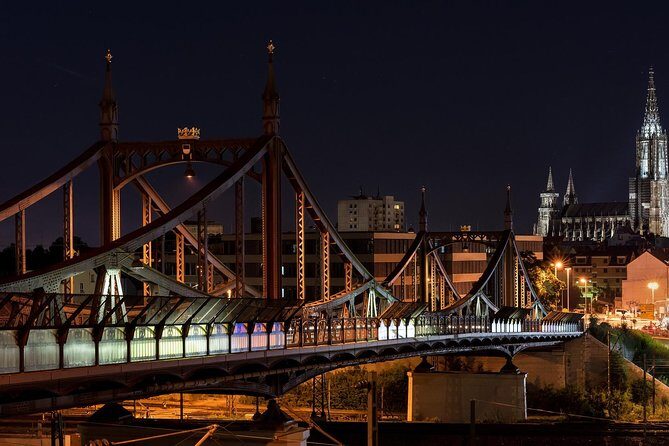
- Ulm Minster’s steeple scale: world-tallest church steeple and a 500-year build story
- The dolphin fountain’s water math: 52 inter-crossing jets and the look of wet-metal reflections
- A real leaning comparison: Ulm’s lean is measured at 2.05 meters and 3.3°
- Fishermen’s Quarter, clarified: merchants and ship owners, not struggling fishermen
- The Crooked House in Guinness terms: a rooftop angle of 9 to 10° over the Blau
- Neu-Ulm panorama ending: a riverside walk with a wide view back to old town
Getting oriented fast at Ulm Minster Plaza
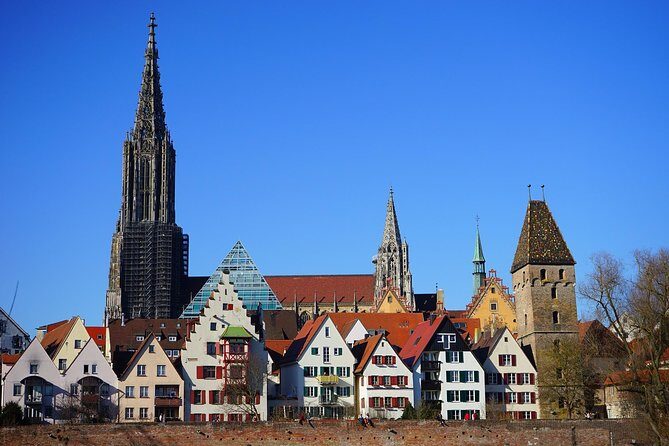
Most walking tours start with a vibe. This one starts with a landmark. You meet at Ulm Minster, Münsterplatz 21, and the guide sets your bearings right away, pointing you toward the Town Hall area before you even begin the main loop.
From the first moments, you’ll get a simple thread to follow: Ulm’s identity is tied to religious power (Ulm Minster), civic pride (the Town Hall), and trade/river life (fountains, quarters, and leaning buildings). That makes everything else easier to read as you walk.
If you like your city tours with a bit of personality, you’ll appreciate how the guide blends facts with quirky sights. Even better, this is private, so it’s not a loud group shuffle where you can’t ask follow-ups.
You can also read our reviews of more tours and experiences in Baden Wurttemberg.


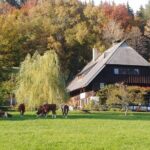
Town Hall murals and the 16th-century astronomical clock
The tour begins with a view of the Town Hall and its bright, colorful murals. This is more than decoration: the exterior murals were extended to the older part of the building and show virtues, commandments, and vices. So you’re not just looking at pretty walls—you’re seeing what the city wanted people to remember.
Next comes the Town Hall’s 16th-century astronomical clock. It’s the kind of detail that changes your perspective: instead of a random civic building, you start seeing it as a place where time, authority, and daily life all intersected.
Practical tip: if you’re bringing a camera, this is an easier first stop for photos. You’re outdoors, with a strong view line, and you’re early enough to avoid the “we’ll photograph it later” problem that happens when you start too late.
Ulm Minster: why this steeple towers over everything
Then you head to Ulm Minster, and the guide frames it as an honest-to-goodness record holder. Ulm Minster is noted as the world’s tallest church, and the steeple took around 500 years to finish. You’ll also hear that it was the 4th tallest building until the 20th century.
Standing nearby, it helps to have that timeline in your head. Half a millennium is hard to picture, and the tour format makes it easier to connect the long build period to the finished result you’re seeing now.
You’ll learn why Ulm Minster is one of the city’s most important landmarks. Even if you don’t go inside (the tour is walking-focused), you’ll still come away with a clear explanation of what makes it significant, and how it fits into the rest of the city story you’re hearing.
If you’re a photo person, aim to spend a minute looking before you shoot. From the right angles, the steeple reads differently, and the guide’s comments often help you find the “this is what you should notice” line of sight.
Dolphin Fountain and those 52 inter-crossing jets
Close by, you stop at the Dolphin Fountain. This is where Ulm’s playful side shows up, even though the details are technical. The fountain has a complex structure created by 52 inter-crossing jets of water, and the reflections on the wet metal are part of what makes it so striking.
Here’s why that matters: it turns a fountain from a quick photo stop into a mini science lesson. You get to see how water patterns and surface reflections work together, so your pictures look better because you understand what you’re capturing.
One practical note: the fountain is described as particularly attractive when floodlit at night. If you have flexibility, choosing a departure later in the day could help you catch that mood. Even in daylight, though, the structure earns its keep as a “wow, how did they build that” stop.
Butchers Tower and Ulm’s leaning tower, measured not guessed
Next, the tour shifts to one of Ulm’s most famous “lean” stories. The guide takes you to the “leaning tower of Ulm” and the Butchers Tower, which used to be part of Ulm’s fortifications.
If you’ve only heard the Pisa comparison, you’ll probably like the correction here. The Ulm lean is described as 2.05 meters toward the northwesterly direction (3.3°). That’s different from Pisa’s 5.1°, and the numbers give the whole thing credibility.
You also get a sense of how the fortifications shaped the city. A tower isn’t just a tilted shape in a postcard—it’s a piece of defensive planning, and your guide’s context helps it make sense in the larger map of Ulm.
Photo tip: when a building leans, your body position matters. Take a few steps along the approach path so you can line up the tower with the ground. It makes your angles look more dramatic and your photos less like accidental snapshots.
You can also read our reviews of more guided tours in Baden Wurttemberg
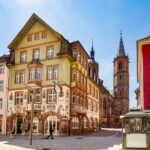
Fishermen’s Quarter: the name is misleading on purpose
Then comes what the tour calls the most romantic part of Ulm: Fishermen’s Quarter. The walk takes you through narrow streets, streams, bridges, and old houses, so the vibe changes from “records and monuments” to “human-scale river town.”
Here’s the twist you’ll remember: don’t be fooled by the name. The owners of the houses weren’t poor fishermen. They were merchants and ship owners who made money trading goods along the Donau, and the old houses reflect that wealth.
That detail changes how you view the architecture. Instead of seeing it as quaint, you start seeing it as evidence—proof of who lived there and why. That’s the kind of explanation that makes a short walking tour feel worth it.
If you enjoy walking through places where the city design tells you about economics and everyday life, this stop is one of the most satisfying. It connects the river, the trade routes, and the buildings without needing museums or long detours.
The Crooked House: Guinness-level tilt and why it was built that way
By far, the emotional hit of the tour is the Crooked House. Its rooftop leans at an angle of about 9 to 10° over the river Blau. In 1997, it was listed in the Guinness Book of Records as the world’s most extremely leaning hotel.
But the best part isn’t just the record. The construction makes sense when the guide explains the purpose: the house was built narrow at the bottom and wider in the upper stores. That design is tied to fishing-related use—repair of nets and fish storage.
You’ll also hear about a boat landing at the base of the house, with the upper stores serving like a roof. In other words, this wasn’t a random gimmick. It was a practical response to the river life happening right there at ground level.
When you see it from the right viewpoint, the leaning stops feeling like a weird accident and starts feeling like a snapshot of how people used the river. Expect strong photo angles here, but also expect to pause and listen—the story is what makes the view click.
Finishing in Neu-Ulm for river panoramas
The tour ends across the river side toward Neu-Ulm, with a walk along the river for a wide panorama view of old town Ulm. This “goodbye shot” is genuinely useful. After you’ve been collecting landmarks one by one, the river view helps you connect them in your mind.
You’ll likely notice the city looks different from this angle—not just taller or older, but more layered. And because the tour wraps here, you’re not forced to backtrack to your starting point to get a final sense of place.
If you like taking a last look before you head off on your own, plan to take a little extra time at the river edge. Even a quick pause makes the whole tour feel more complete, like you closed the loop.
Price and group size: is $299.18 per group worth it?
The price is $299.18 per group (up to 15) for about 1.5 hours in English. That pricing structure matters. It’s not priced per person, so the cost per head drops as your group grows, and that makes a private tour feel more realistic for families, couples with friends, or small groups traveling together.
You’re paying for three things: (1) a local guide with your group only, (2) an efficient route that covers major highlights in a short time, and (3) context that you’d have to hunt down on your own. With this kind of walking tour, the “value” isn’t just the landmarks—it’s the explanations that turn them into a coherent story.
Private attention also matters in a practical way. If you have questions—about the clock, the leaning buildings, or why Fishermen’s Quarter isn’t what the name suggests—your guide can answer you on the spot instead of moving the group along.
At the same time, if you’re traveling solo and expecting a long, slow tour with lots of free time, you might feel the 1.5-hour time limit. In that case, this works best when you want a fast, guided hit of Ulm’s top highlights.
English guide style and what Steffan gets right
The tour is offered in English, and it’s private. Your guide stays with your group the whole time, so you can pace the discussion to your interests.
One guide name you might hear mentioned is Steffan. In the feedback I’ve seen tied to this experience, Steffan stands out for being engaging with Ulm’s history and patient with questions. That’s exactly what you want from a private walk: you don’t just get facts, you get answers.
If your schedule allows multiple departure times throughout the day, pick one that fits your energy level. If you love photography, consider timing that gives you the best light for the fountains and record-leaning buildings. If you’re more into explanations, any departure time can work as long as you arrive ready to walk.
What to expect on the ground: pace, route, and planning
This is a no-transportation-needed walking tour. The route covers several key sights, and you should expect a moderate walking pace through the town center and riverside areas. Comfortable shoes are a safe bet for anyone, even if you’re not an athlete.
You’ll see Town Hall, Cathedral Ulm Minster, the Dolphin Fountain, Butchers Tower, Fishermen’s Quarter, the Crooked House, and Neu-Ulm. The guide also covers city history plus specific topics like Albert Einstein and the Guinness Book of Records connection.
Your first stop gets you oriented, your middle stops hit the records and odd angles, and your last stop gives you a broad city view. That arc is why the tour feels efficient. You finish with a mental picture instead of a pile of disconnected photos.
Should you book the Ulm Private Walking Tour?
Yes—if you want a guided, story-led overview of Ulm’s top highlights in about 1.5 hours. This is especially appealing if you like seeing the same city through different lenses: religion and records at Ulm Minster, playful tech at the Dolphin Fountain, and river-trade logic at Fishermen’s Quarter and the Crooked House.
It’s also a good match for small groups because the price is per group up to 15, which makes private attention feel more practical. If you’re the type who likes questions and quick explanations on the street, you’ll probably love the format.
If you’d rather spend half a day exploring slowly at your own pace, or you’re hoping for long inside visits (not stated here), then you might feel the time is too short. But for a focused introduction to Ulm, this walks-and-stories approach is a strong pick.
FAQ
How long is the Ulm private walking tour?
It lasts about 1 hour 30 minutes.
Is the tour in English?
Yes, the tour is offered in English.
How big is the group for a private tour?
Your tour is private, and it’s listed as up to 15 people per group.
Where do I meet and where does the tour end?
You start at Ulm Minster, Münsterplatz 21, 89073 Ulm, Germany. The tour ends at 89 Ulm, Germany.
Do I need transportation during the tour?
No transportation is needed. It’s a walk tour.
Is there a mobile ticket?
Yes, the tour includes a mobile ticket.
What’s the cancellation window?
Free cancellation is available up to 24 hours in advance for a full refund.