REVIEW · COLOGNE
Traces of World War II and Nazism in Cologne – Private tour
Book on GetYourGuide →Operated by Cologne Tours · Bookable on GetYourGuide
Cologne remembers in stone and silence. This private tour threads World War II and the Nazi era through the real streets of the city, from the sites of persecution to the places that still stand after the bombings.
I especially like two things: the memorial-focused stops that give names and stories to victims, and the way your guide makes the history feel connected to what you see today in central Cologne.
One consideration: the tour is listed as 2 hours, but timing can feel tight if your session runs a bit shorter (so comfortable shoes and a flexible mood help).
In This Review
- Key moments you’ll care about
- Cologne after the bombings: why this walk hits differently
- EL-DE Haus and the NS-Dok area: the Gestapo headquarters in plain sight
- Memorials to Nazi victims: walking through memory, not around it
- Edith Stein and Mucki: turning names into context
- Cologne Cathedral: wartime role and the question of survival
- Alt St. Alban Church: another Cologne witness point
- Operation Millenium and the first mass deportation: specific events, not vague darkness
- How the pace works in a 2-hour private format
- Price and value: what $153 (up to 2 people) really buys
- Who should book this Cologne WWII and Nazism tour?
- Should you book Traces of World War II and Nazism in Cologne?
- FAQ
- Where does the tour start, and how do I find the guide?
- How long is the private tour?
- What is the price for this experience?
- Is this tour private?
- Which languages are available?
- Is the tour wheelchair accessible?
- What’s included in the price?
- Are tickets or extra expenses included?
- What should I bring?
- What are the cancellation and payment options?
Key moments you’ll care about
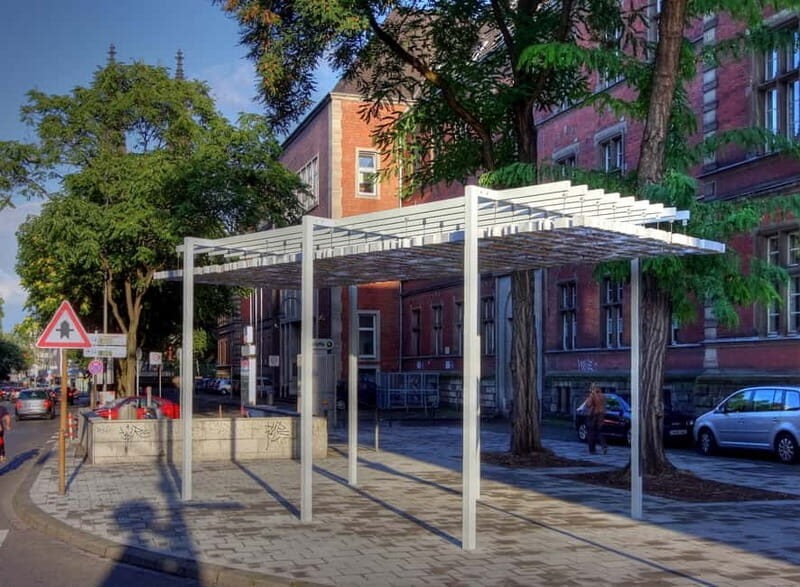
- EL-DE Haus / NS-Dok start point: former Gestapo headquarters turned museum and memorial center
- Victim memorials across the city: focused on Nazi victims, not just general WWII talk
- Cologne Cathedral’s wartime role: why it survived becomes part of the story
- Edith Stein and Mucki: named individuals bring the period down to human scale
- Operation Millenium and early deportation: specific Nazi actions covered in context
Cologne after the bombings: why this walk hits differently
Cologne got hit hard. The city centre was reportedly 90% destroyed during the Second World War raids, which means you’re not only looking at monuments, you’re also looking at choices made during reconstruction. That’s the quiet shock of this experience: history isn’t stuck in a museum case. It’s in the street plan, the buildings you can still recognize, and the parts that clearly had to be rebuilt.
What you’re really doing on this private tour is learning how a modern city tries to live with its past. The Nazi era is covered from a local point of view, with memorials and specific sites tied to what happened here, not just distant generalities. If you like history that has a map attached to it, this style works.
And because it’s a private group, you can move at your pace and ask follow-ups when something clicks—or when it doesn’t. That matters with heavy topics.
You can also read our reviews of more private tours in Cologne


EL-DE Haus and the NS-Dok area: the Gestapo headquarters in plain sight
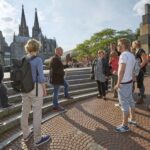
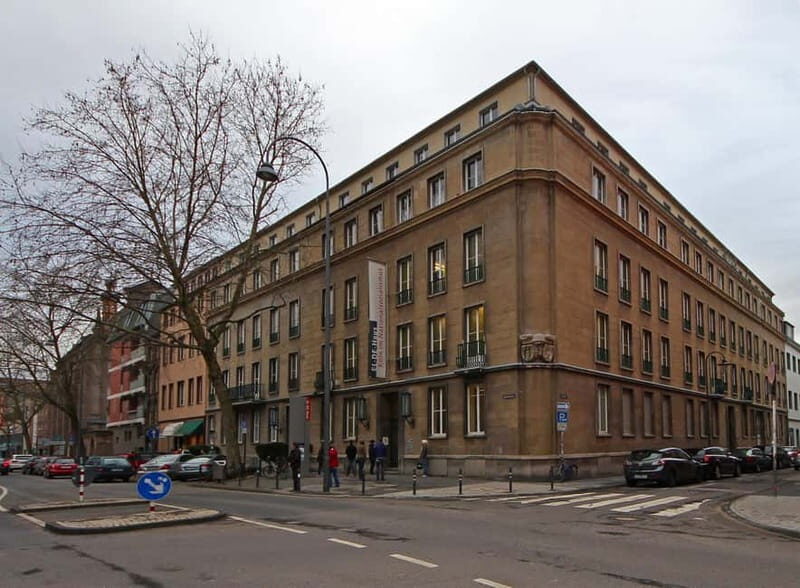
The tour starts around EL-DE Haus, with the meeting point set outside the NS-Dok at Appellhofplatz (your guide holds a red umbrella). This is a strong start because it puts you at a place tied directly to Nazi repression: the former Gestapo headquarters, now used as a museum and memorial centre.
Even if you’ve read about the Gestapo, seeing how a place is repurposed can be jarring. The building becomes a teaching tool: this is where fear was organized, and now it’s where the focus shifts to memory and documentation. I like that your guide doesn’t treat it like a scary photo-op. The point is comprehension—how power worked and what that meant for victims.
Also, don’t rush this opening segment. The way it’s framed tends to set the tone for the rest of the walk—why memorials exist, and why the city’s changes matter. If you’re the type who likes to understand the “why” behind each stop, you’ll appreciate this grounding first location.
Memorials to Nazi victims: walking through memory, not around it
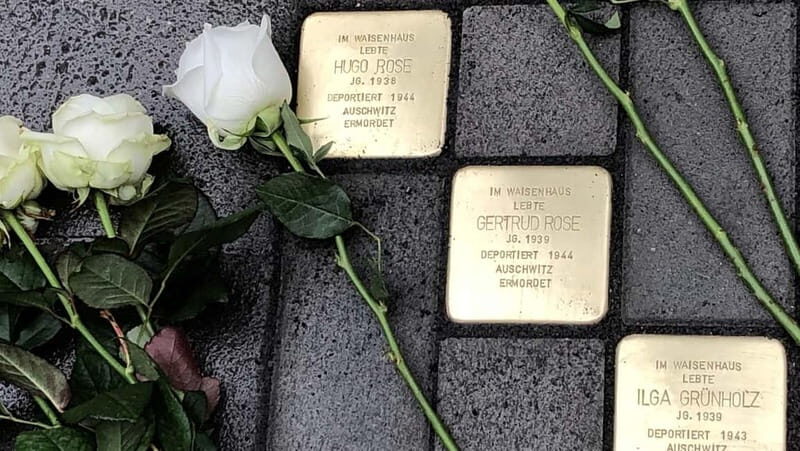
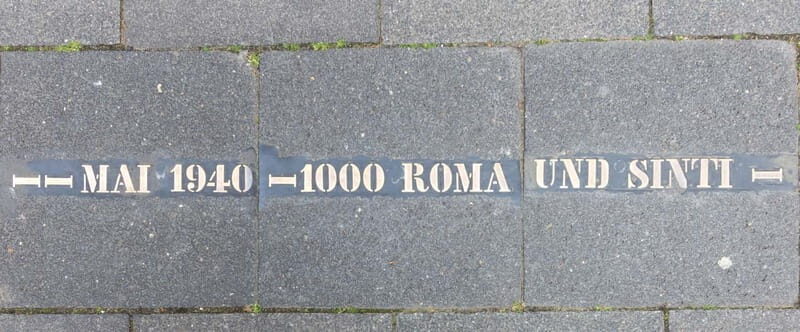
After the Gestapo site, the tour focuses on memorials connected to Nazi victims. This is where the experience earns its weight: it’s not only about events and dates. It’s about remembrance in public space.
There are a few different kinds of commemoration you’ll learn to recognize. One major takeaway is how memorials work when they’re spread out rather than concentrated in one place. The tour includes discussion of the world’s largest decentralized memorial, which helps you understand a powerful idea: remembrance can be woven into everyday routes, not only reserved for special trips.
Your guide will also connect the memorials to Cologne’s WWII reality. Since so much of the city centre was destroyed, the postwar rebuilding didn’t just restore buildings—it restored meaning. Memorials help explain what was lost and what the city chose to keep visible.
Practical tip: look up from the pavement now and then. On a memorial tour, details at street level can matter—markers, building context, and how a site relates to what’s around it today.
Edith Stein and Mucki: turning names into context
One of the most human parts of the tour is the discussion of Edith Stein and Mucki. It’s easy for WWII and Nazism to become a blur of institutions and official actions. Bringing in specific people interrupts that blur.
This matters because names help your brain build a timeline that isn’t only about policy. Instead, you start connecting local events to lives. Your guide’s local point of view keeps it from feeling like history floating in space.
In some versions of this tour approach, guides use visual aids to connect then-and-now. In particular, guides like Nico, Mikolas, and Sophia are noted for being engaging and for making the story easier to grasp—some sessions include pictures from the war period so you can see the transformation and aftermath directly. If you have a tendency to tune out when history turns abstract, that visual support can be the difference between “interesting” and truly memorable.
Cologne Cathedral: wartime role and the question of survival
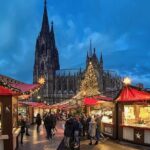
One stop that almost always draws attention is Cologne Cathedral. The tour doesn’t treat it as background scenery. You’ll learn about the Cathedral’s role during the war and, importantly, the question of why the Cathedral is still standing when so much else didn’t survive.
That’s a compelling arc for visitors: standing in front of a landmark that survived while the city around it was devastated forces you to think about more than luck. It invites questions about planning, damage, and how different parts of a city endure under pressure.
A practical way to use this stop: don’t just look up at the architecture. Look at your surroundings too. Notice how the Cathedral relates to what’s around it now, and imagine how the area would have felt in the war years. Your guide helps connect those dots, so you’re not left guessing.
If you’re traveling with someone who usually finds memorial tours too heavy, this is one of the easiest places to break tension through awe and place-based understanding.



Alt St. Alban Church: another Cologne witness point
The walk also includes Alt St. Alban Church. This stop works as a second perspective on the same broad story: war affects more than politics; it affects institutions, neighborhoods, and places people associate with daily life, faith, and community.
The key value here is balance. After intense sites tied to Nazi persecution, shifting to a church allows the tour to widen the frame. You get a clearer sense of how Cologne’s identity continued, even as the city went through unimaginable disruption.
You might not leave with a single “wow” fact about the church, but you’ll likely leave with a stronger sense of how the city’s places functioned as witnesses—silent, but still part of the historical record.
Operation Millenium and the first mass deportation: specific events, not vague darkness
The tour doesn’t just say the Nazi era was horrific. It includes discussion of Operation Millenium and the first mass deportation by the Nazi regime (presented as key historical topics for Cologne’s story). Hearing these topics in a city walk format can make them easier to anchor mentally.
This is another reason the tour is worth your time even if you’ve studied WWII before. You’re not just absorbing general history; you’re placing specific actions into a geographic and cultural context.
One thing I appreciate is that your guide typically connects the actions back to why local memorials exist. Without that link, event-focused history can feel cold. With it, you start to understand the memorials not as decoration, but as the city’s attempt to tell the truth in public.
How the pace works in a 2-hour private format
This experience is designed to cover a lot of ground in a short window—about 2 hours—and it often feels fast in a good way. Guides such as Nico and Sophia are praised for making the time move quickly while still covering major sites and explaining how the past connects to present-day modernization.
Because it’s private, the walk tends to feel smoother than a large-group tour. You’re less stuck in a crowd rhythm and more able to follow the story at your pace.
Still, keep your expectations realistic. One account notes a session running around 1 hour 15 rather than a full 2 hours, which can make the price feel less justified if you’re looking for a longer, more relaxed pacing. To protect yourself from disappointment, wear comfortable shoes, and treat the tour like a focused “great hits” walk rather than a slow museum day.
Price and value: what $153 (up to 2 people) really buys
The price is $153 per group for up to 2 people for a private 2-hour tour, led by an English/Spanish guide. That structure often offers better value than you’d expect, because two people can effectively split the cost of private interpretation.
Here’s what you’re paying for:
- A guide who walks you to major, relevant sites tied to Nazi victims and WWII aftermath
- Direction to memorials you may not find or understand on your own
- A narrative that connects places like the former Gestapo headquarters, Cologne Cathedral, and memorial topics such as the decentralized memorial and specific events like Operation Millenium
What you’re not paying for: tickets or extra expenses. So if any stop requires paid entry, budget extra. The good news is that a guide-led memorial approach often helps you decide what’s worth paying for based on your interests.
If you’re a couple, a parent-child duo, or two friends who want a shared history walk without joining a big group, this format can be a strong value. If you’re traveling solo, it’s still a great fit if you want private pacing, but you’ll feel the cost more.
Who should book this Cologne WWII and Nazism tour?
This tour is a good match if:
- You want Nazi-era history tied to real Cologne locations, not just general WWII storytelling
- You like memorials that name victims and explain why remembrance matters
- You prefer a private guide who can keep the pace manageable and answer your questions
- You’re comfortable with heavy subject matter and want context that helps you process what you see
It may be less ideal if:
- You want a long, slow visit with lots of time inside museums or churches
- You dislike walking or have mobility constraints that make urban transitions tough (the tour is listed as wheelchair accessible, but you still need to be comfortable with walking between stops)
For first-timers in Cologne, it also works as a powerful orientation. You understand what shaped the city—and why certain landmarks and memorials matter.
Should you book Traces of World War II and Nazism in Cologne?
If you want a focused, map-based way to understand how Cologne carried the shock of WWII and the reality of Nazism, I think this is a smart booking. The most convincing strengths are the Gestapo headquarters setting (EL-DE Haus / NS-Dok) and the memorial approach that stays centered on victims and remembrance. Add in guides like Nico, Mikolas, and Sophia being praised for clear explanations and engaging delivery, and you’ve got a tour that tends to land.
My main reason to hesitate would be timing expectations. Because it’s short, the experience can feel rushed if your session ends up closer to 1h15. If that would bug you, book with the mindset of a concentrated overview and come ready with questions.
FAQ
Where does the tour start, and how do I find the guide?
The meeting point is outside the NS-Dok at Appellhofplatz. The guide will have a red umbrella.
How long is the private tour?
The tour duration is 2 hours.
What is the price for this experience?
It costs $153 per group up to 2 people.
Is this tour private?
Yes, it’s a private group tour with a private guide.
Which languages are available?
The live tour guide is available in English and Spanish.
Is the tour wheelchair accessible?
Yes, the tour is listed as wheelchair accessible.
What’s included in the price?
A private tour guide is included.
Are tickets or extra expenses included?
No, tickets or extra expenses are not included.
What should I bring?
Wear comfortable shoes.
What are the cancellation and payment options?
You can cancel up to 24 hours in advance for a full refund, and you can reserve now and pay later to keep plans flexible.